

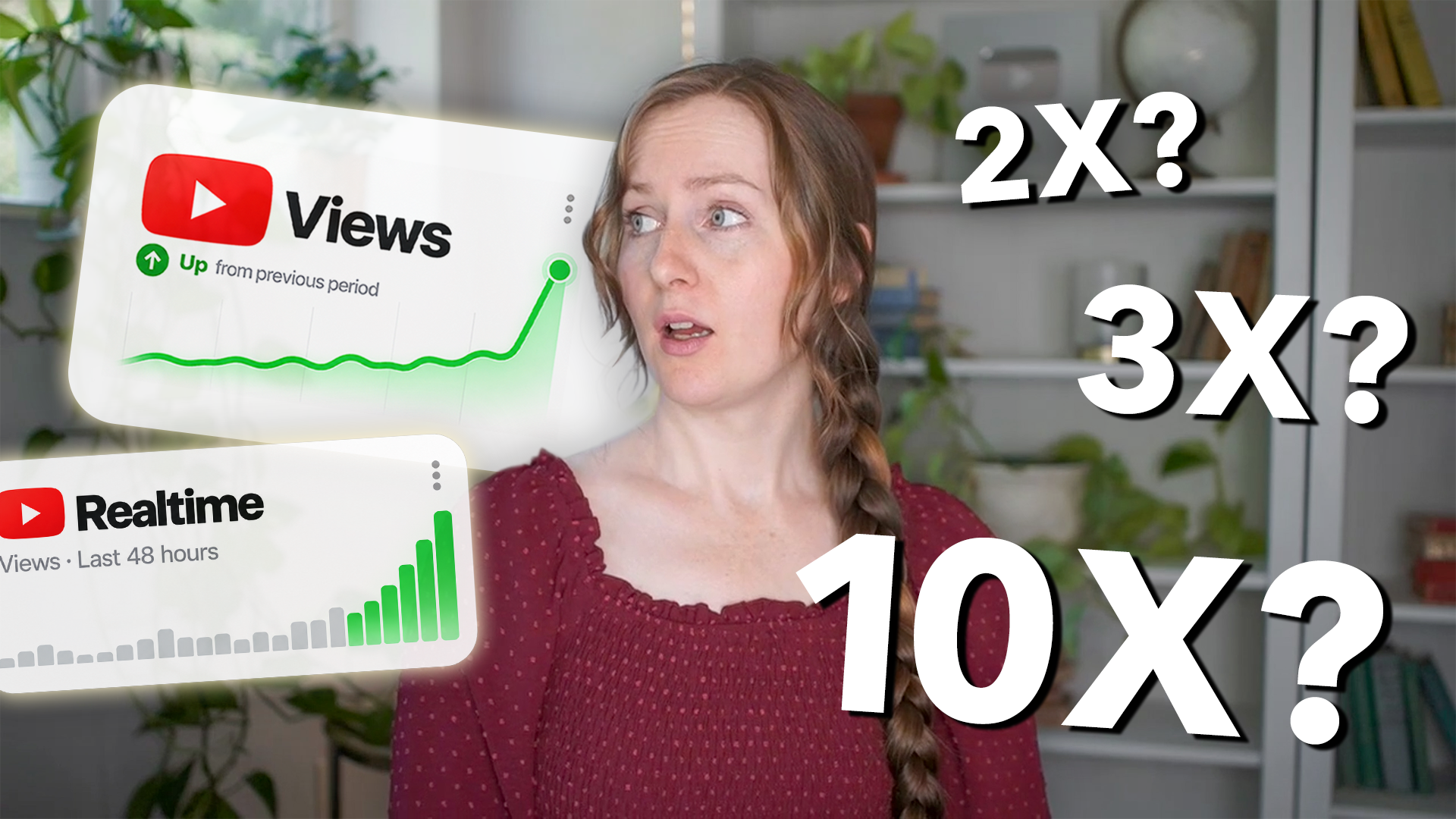
BUT, your old view count didn’t disappear
Here’s the good news, if you actually want to know how your videos are performing: YouTube is keeping the original metric too. They’re calling it “engaged views,” and you can find it in YouTube Analytics under advanced mode.
So if you want to see how many people watched for more than a split second, that number still exists. It’s just not the one under your video anymore. And it’s not the headline number in your regular analytics dashboard either. Both of those will now show the new, more inclusive count – the one that includes every view, even the ones that lasted a single frame.
Does this change your monetization?
No. And this is worth being clear about, because the two questions people ask first are whether this gets their channel monetized faster, and whether it means more money.
Getting monetized depends on subscriber count and watch hours, not view count. It never has been, and this change doesn’t touch that at all.
As for how much you actually earn – YouTube says this directly: “This change will not impact creators earnings or how they become eligible for the YouTube partner program.” Creator earnings are based on engaged views and engaged watch hours. Which, based on how YouTube describes it, sounds like the same three-second-plus counting method they’ve always used for revenue.
So your view count is about to go up, but your revenue isn’t.
My honest take on the reasoning & change
YouTube wrapped up their announcement by saying this gives creators “a clearer picture of their overall exposure” and makes it easier to “confidently express their true scale and value to brand partners and sponsors.”
I get why they’re framing it that way. But a view that lasts less than three seconds doesn’t help anyone, so counting them is pretty pointless.
What I actually care about is, firstly, impressions – how many people my video got suggested to in the first place. And then, of those people, how many watched for at least three seconds. Anything shorter than that and they didn’t really watch the video, so it’s not a number I put any real weight on.
Where this change will have a somewhat helpful impact is brand deals. Before this update, a YouTuber’s numbers could look smaller next to a TikToker’s or an Instagram creator’s, even when the actual audience and impact were comparable. Now those numbers will be on the same scale. That means that when a brand is deciding between partnering with a YouTuber or a TikTok creator, they’ll finally be comparing apples to apples.
And that is a real win for creators trying to land partnerships. It just isn’t a sign that your specific video did better than it actually did.
