

I’ve said many times that we have an incredible group of people in the Millionaire Money Mentors (MMM) forums.
Not only are they genuinely nice, interesting, and generous people — I have yet to meet a stinker — but many of them are also doing amazing things and living fascinating lives.
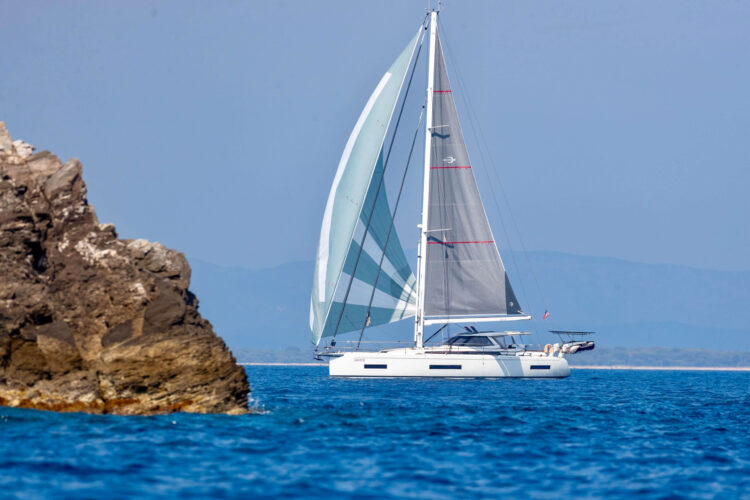
One MMM couple has chosen a lifestyle that certainly qualifies: They are traveling the world aboard their sailboat.
This is a topic I’ve written about a couple of times. First, I looked at whether retiring on a cruise ship could be an affordable option. Later, I got a bit more specific and examined the costs of living on a sailboat.
This couple is actually doing it. They are living aboard their sailboat, traveling from place to place, seeing the world from the water, and experiencing a lifestyle that most of us will only ever read about.
Naturally, I wanted to hear more. So I asked them to share their story with ESI Money readers.
I won’t give away any of the details because they are best told by the people living them. Over the next several posts, Sailor (husband) and the Admiral (wife) will share their adventures and give us an inside look at this very unique way of life.
In the very last post they will answer questions from ESI Money readers about this lifestyle. So please leave your questions in the comments below!
I think you’re going to enjoy this series.
With that said, let’s get started…
—————————————
By Sailor and The Admiral
Sailor /ˈsālər/ – the crew of a sailing vessel
Admiral /ˈadm(ə)rəl/ – a commander, the person in charge
Sitting in the cockpit of our sailboat with our coffee mugs in hand, we study the still turbulent waters as the sun begins to peek over the mountain. Our morning ritual of coffee in the cockpit has become a touchstone for us. It’s usually a quiet time of reflection and connection. It is our time to slowly start each day, and connect on a personal level before the day’s activities get our attention. This morning is different. We haven’t slept, and our nerves are still frayed. We are exhaling and absorbing that we just nearly lost our floating home, along with everything we own.
Just 7 hours prior, we awoke to the sound of gusting winds rattling the boat’s rigging. We immediately jumped into the cockpit to inspect our surroundings. As we saw another boat gliding quickly towards the rocky shore, we empathized with them, knowing their anchor was dragging in the storm. In hopes that there were people on board, we tried to get their attention with our spotlight. No luck.
Then, we noticed. We were moving too, as were numerous boats, small and large, in the bay around us. Our anchor skipped along the sea floor slippery with sea grass, and the shore was suddenly less than 150 feet astern. Fully alert, we moved rapidly to protect our home from being washed ashore. The driving rain and howling winds made audible communication impossible. With The Admiral on the bow and Sailor at the helm, we relied on established hand signals and the interpersonal partnership experience built over thousands of miles at sea.
We spent the next several hours lifting our anchor, dodging boats to escape the crowded chaos, and then zigzagging across the bay, waiting for the sudden storm to dissipate. Just before sunrise, with barely enough light to make out the shoreline, we found another place to drop anchor and hopefully hold this time. We were soaking wet, ragged from the storm, and exhausted. The coffee was definitely needed.
In moments like these, we wonder why we chose this life. But still, we are here, living at sea. The coffee. The cockpit. The adventure. Sometimes, too much of it!
___________________
In preparation to sell the last of our respective businesses, we spent time reflecting on the possible paths forward. Friends would ask about our future professional ambitions. Were we ready to finish on a high point and retire? We struggled with such questions, especially since we were still a couple of decades from the traditional retirement age.
Looking at our surroundings, the comfortable and easy life, and the daily activities of others who were no longer working, we knew we needed something more. Financially, all math and formulas said that we no longer needed to work for income. The bigger questions we asked were around what would keep us learning, growing, and challenging ourselves.
When is enough enough?
For a married couple, where both are coming from a background of extreme scarcity, the definition of “enough” is… complicated. Beyond the intellectual and mathematical answers, there are many emotional triggers that personal accomplishments unveil. Psychologically, wealth might provide safety, but there is no amount of money in the bank account that will quench the insatiable fears that scarcity etched into the subconscious.
We often asked ourselves these questions along the journey to financial independence. How much money do we need to overcome our ingrained scarcity mindset? How many personal possessions and toys will we gather? A newer car? A bigger house? How many “what if” scenarios can we construct that will stop us questioning whether our wealth would be enough to cover an unexpected expense?
We did the math a hundred different ways. We calculated based on Probability Modeling, Cash Flow Modeling, the 4% Rule, the Income Replacement Ratio. We read books about retirement spending. We studied every Millionaire Interview for approaches, gaps, and lessons. We considered our loved ones and what we felt compelled to gift while we were still alive, or leave as inheritance when the time comes. We talked through our respective causes that inspire us to make a positive difference in the world. We reflected on making an impact, what that means to each of us, and how money plays a role in leaving a legacy.
After much toiling over the financial models, and much deep emotional inner work, we made a deliberate choice. There was more to the world, and to ourselves, to be discovered. There were dreams of a different life that we finally had the financial freedom to pursue.
Monetary scarcity can be assuaged by prolific perseverance to earn, save, and invest. That trajectory and associated results are simple to measure and chart. What would it take to release the white-knuckle grip of life’s trauma we both worked so hard to face and overcome? How would we, each on our own terms, construct the emotional depth to pursue life’s accomplishments not reflected in numbers and dollar signs?
We chose to let go of the ease and routine, and the comfortable scaffolding which could have made our trajectory stable and predictable. We wanted to add more layers to our story, each for our own reasons.
Our decision to leave Dallas wasn’t about running from anything that was broken. We had built something genuinely exceptional, financially plentiful, and enough to ride the coattails of our accomplishments for the next 50 years. We could have continued living off the reputation of what and who we used to be. On paper, we each had enough professional success, enough community capital, enough recognition to never need to prove anything again.
We had spent decades building our identities as successful entrepreneurs and leaders in the business community. We had accomplished enough. We had accumulated enough wealth that made the numbers add up, no matter how we did the math. What we hadn’t done was explored enough, adventured enough, played enough.
___________________
Sailor was always an explorer at heart. Growing up in a landlocked communist country, that was uncommon. Looking out of his bedroom window, the current in the nearby Danube was the flowing manifestation of the Iron Curtain. That physical border with the West was just a half mile away. The electric fences, trip wires, and the country’s armed guards ready to shoot its own citizens — should anyone attempt to escape — made it more plausible to set foot on the moon one day than to walk the Austrian countryside across the river. The rest of the world was within sight, yet unreachable.
So he reached for it the only way he could. He read about Greek mythology and the gods who ruled the sea, about the naval battles fought across the ancient Mediterranean, about a world far older and far larger than the one fenced off outside his window. The boy who could not cross the border a half a mile away visualized crossing oceans, visiting distant lands, and learning foreign languages. The dream of exploring the world was something only imagined, never experienced first hand, but it was deeply rooted.
___________________
The Admiral navigated her challenging childhood through self-reliance and adaptability — skills that would prove useful throughout her entrepreneurial years. Growing up in a poverty stricken broken home in the USA suburbs came with its own borders and inaccessible territory. When childhood friends talked about family support and parental guidance, the dark reality of her homelife stayed carefully tucked away. Relocations multiple times per school year provided frequent opportunities to reinvent her story with new classmates. Oftentimes, going home meant returning to a roadside motel room, or sleeping in an unfinished house, sneaking away at sunrise to leave no trace before the construction workers came.
The ocean was always a place to escape. As a child in dozens of cities around Florida, a local beach was always within reach. Sitting on the sand with her feet in the ocean waves brought peace, as she pondered the expansiveness and perspective. While she embraced the ocean as a respite from the chaos of early life, the idea of sailing was nowhere on the horizon. But her heart longed for freedom, independence, and adventure.
___________________
Coming together later in life, we had each already built our careers and paved our own independent paths. We found sailing to be a common activity that fed both of our souls. Starting with a small racing dinghy on a local Dallas lake, we joined a sailing club and learned the basics of boat handling, sail trim, terminology, and seamanship.
As entrepreneurs, having a goal and healthy competition was always a great motivator. We competed in a number of local races to put our budding skills to the test. In many of our first races, we “finished in place” — the compassionate way of describing “we’re not waiting for you to cross the finish line”. With many hours on the water, and a few instances of tipping into the lake, we honed our read of the winds and sailing techniques. After the first year, we found our names etched a number of times on the regatta trophies at the sailing club. We chuckled as we realized, once again, when we put our minds to something, we excel.
In those early sailing years, we also chartered larger sailboats a few times to explore the idea of extended stays onboard. We liked it. A lot. We felt a sense of calm waking up at sea, and enjoyed the challenge of choosing a destination and harnessing the energy of nature to take us there. Upon mutual reflection, we concluded that we were cruisers, not racers. While the racing was a great teacher of skills, we had enough competition in life through our respective businesses. Sailing, for us, represented a different way of life and a new way of looking at the world. With that clarity, the steps began to unfold to make the newfound passion take shape.
Before long, we were shopping for our own live-aboard capable sailboat. Any location would do, as long as it was on, or had access to, an ocean. We found our perfect “cottage on the water” in Portland, Oregon. The Columbia River turned out to be the perfect training ground for learning to live at anchor, manage provisions and repairs, and gain experience. It was a relatively controlled marine environment with enough to explore for the planned duration of visits.
The vision of an escape for a week or two once per quarter in between our demanding international travel schedules was thwarted by COVID. All travel ceased and “work from home” became “work from anywhere”. We embraced our fiberglass bubble as our space to isolate, yet explore. Each subsequent year, we spent more and more extended time on board, and pushed our learning further. In 2021, we sailed upstream the full navigable 400 nautical mile distance of the Columbia and Snake Rivers all the way to Idaho! 2022 took us to Puget Sound and British Columbia. In 2023, Alaska. There was a growing realization that we were discovering a slow-travel lifestyle preference, not just a pastime.
During our 8-month journey through the Inside Passage, exploring Southeast Alaska, Haida Gwaii, and circumnavigating Vancouver Island, we met many long-term cruising sailors. We enjoyed learning about their lives and what brought them to choose this lifestyle. They openly shared the insights they had gained, and talked about the self-awareness the lifestyle created. One particular message was consistently clear and always stood out. Nearly everyone lamented: “We wish we had started 10 years earlier!”
No matter the age, there was a common thread amongst the sailors of having waited too long before making the decision to go explore, and pursue new horizons. The hesitation came from the incessant feeling that more planning was needed. Delaying retirement to earn a few more years’ salary, or making yet another upgrade on the boat, all with the assumption there would be plenty of time to enjoy life and explore.
Such authentic conversations always led us to reflect that living on a boat is physically demanding and requires strength and health, which wanes with age. The realization hit hard — seeing our new friends with the sadness in their eyes, knowing they were reaching the unavoidable end of their cruising years. We spent many mornings in the cockpit with our coffee absorbing this inevitable truth.
Those conversations stayed with us. The people we met who had waited too long were not warning us about the sailing. They were warning us about the waiting. We had not found ourselves on a sailboat cruising Southeast Alaska through a single leap of faith. Each step had been a deliberate one — the sailing club, the charters, the cottage on the water, each season venturing a little further than the last. We kept our options open at every stage, never stepping further than we were ready, and allowing each choice to progress towards the next. We had built the conviction and the capability. What remained was the decision to commit.
___________________
What started as a cottage on the water intended for a week or two at a time turned into stays that lasted for many months. This was more than a weekend getaway, it was a lifestyle that was fully immersive, and fed each of our wanderlust and sense of adventure. With our final business sale coming into focus, a decision was made. This cruising lifestyle was going to be a part of our future. We wanted a boat that could be our long-stay home. We had been studying the options, learning more about the latest construction methods, safety equipment, and the creature comforts of modern live-aboard sailing vessels.
We signed a contract on a new sailboat. One that was well-known in the cruising community as a world-traveling, sea worthy, safe, and comfortable vessel. The new boat would be delivered to us on the Mediterranean coast of France.
The excitement of advancing our joint dream in a new boat was curbed by the complications of maintaining two concurrent lives. Being fully present in one life was interrupted by worries and logistics of managing the second home. When in the city, worries about boat maintenance issues, security, and weather events were always top of mind. When on the boat, the desire to feel present in our Dallas community, and the constant disappointment of declining social invitations, made it clear that our attention and focus was divided. Considering the increasingly untenable struggle of these two lives in North America, the impending stress of splitting our time between two homes on two continents loomed large.
That fall day on the rocks of Botany Bay, Vancouver Island, fog and mist enveloped the coast line. The Admiral spoke the words: “I think we should sell the Dallas house”. With that one statement, our question “When is enough enough?” resurfaced with new magnitude. This decision demanded giving up nearly all of our material possessions and starting anew. Gulp!
___________________
It is a consequential commitment to sell a home that we curated into a perfect respite. It is a different dimension to execute such a decision and determine what to do with all of our precious belongings, many of which were treasured mementos from around the world. The cross country road trip back to Dallas gave us 3 days to mull over our plan.
Many of the sailing friends we had met while cruising had storage units filled with furniture they were unlikely to ever use again. What would we keep? What was important to each of us? For our decision process, we needed a mental framework. Is this a lifestyle change that will last a season or two? We knew that our choices to move aboard and abroad were intended as long-term commitments. We selected a placeholder of 10 years, which was an important touchstone for the many decisions as we deconstructed our lives.
After a decade of living on the ocean, traveling from country to country, we would be changed. Our world view, our desires, our priorities. Everything will be different. Will we want the same sofa? The same bedroom furniture? Will we want a house in the city, or will we want a sea side bungalow? With no idea what the future would bring, we agreed that holding onto the material possessions that filled our current home made no sense. When the time comes to establish a new home, we will decide then what fits and we will acquire accordingly.
Upon our arrival in Dallas, we began the deconstruction process. Everything we owned was evaluated through the lens of whether it would be useful in our new full time life aboard, and whether it would fit into the limited luggage we were taking along. Each one of our belongings was put to the test of “earning its place in the suitcase”.
The house was listed for sale. Every room of our 2,800 square foot home was slowly disassembled and dispersed. The systematic reduction of possessions was a full time job. Every morning, we would each pick a room, or a closet, or a section of the garage. Throughout the process, everything remained tidy enough to welcome Realtor viewings and host several open house events. Within four short months, we upended our lives.
The universe aligned in the last two weeks. First we accepted an offer on the house, and then, just two days before our flight, both of our cars drove away on the same day with their new owners at the wheel.
A friend came to drive us to the airport on that Monday morning in February. We stared at the six suitcases, two carry-ons, and one backpack in the otherwise empty house. We felt complete, and we were ready, yet still a bit terrified by what we had just done. The emotional flood of tears on the way to the airport coexisted with the feeling of untethered possibility. What we carried forward was who we were, not all of the things we used to own.
___________________
Our mornings, with coffee in the cockpit, are our time to reflect. Some mornings, it is debriefing after a challenging or harrowing experience. Some mornings, it is looking over the Aegean blue water, listening to the birds express their greetings of a new day. We often reflect on the decisions that brought us here.
Had we taken the more traveled path, had we committed to another business venture to build more wealth, how would our lives evolve? Would we choose differently if we had 10% more wealth, or 20% more? Or, would we regret not following our hearts to pursue a crazy dream that makes us wake up every day feeling alive, and pushed just enough beyond our comfort zone?
Of course, there are days when we wonder why we chose such a challenging way to “retire”, when comfort and ease were readily available. We ask ourselves if we are still up for this, still having fun, still committed to this lifestyle. So far, the answer is a resounding “yes”, even if there are terrifying moments that make us ask the question again and again.
___________________
Sailor recently shared parts of the above story at a personal finance conference. He asked the difficult questions and challenged conventional thinking. People were moved to tears. Not by the story itself, but by what it forced them to ask themselves. The inward reflection raised many emotional questions.
When to step out of the accumulation phase, and follow whatever calls next? What else is there to life beyond earning more, saving more? What dreams await to be pursued if the emotional pull of “not enough” were to shift? Which dreams are best pursued while still young and healthy? The question has its own puzzle: When is enough enough? What is it that we need “enough” of?
Our guest post series is not here to sell anything. We have no active business ventures or fundraisers. We’re here because throughout our respective paths from scarcity to enough, communities of like-minded people helped us along the way. We continue to experience the power of community, learning from one another, providing support and perspective. The energy of self-reflection created in that conference room planted the first seeds of writing our stories. We offer our journey as the impetus to stop waiting and make the necessary decisions to pursue whatever calls you.
In the follow-up posts, Sailor and The Admiral will each share their unique paths that led them to this unconventional life. This dream didn’t start on a boat, and isn’t about sailing. It is about making the decision to step off the pursuit of more to follow a dream — whatever that dream may be.
We will also share the unvarnished truth about our life aboard in the Mediterranean, as we have already traveled over 6,000nm across 8 countries. Hint: Not once have we missed the thousands of possessions that we sold or gave away.
—————————–
That’s it for today. Stay tuned as there’s more to come in this series!
