

 Recession Profit Secrets · Learn more →Advertisement · Affiliate link — we may earn a commission.
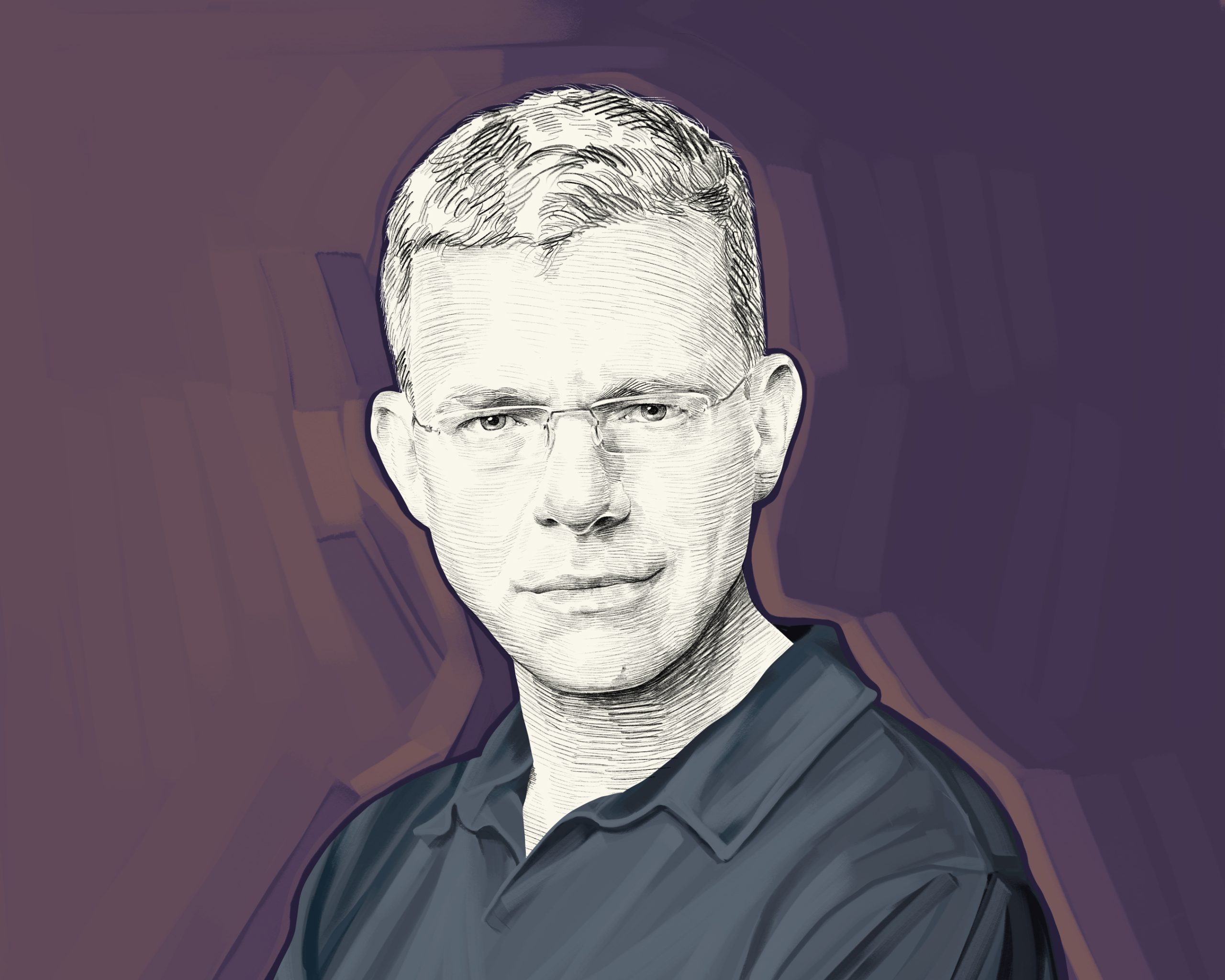
Max Levchin (@mlevchin) is a serial entrepreneur, computer scientist, philanthropist, and active investor in more than 100 startups. He is the founder and CEO of Affirm, the payment network that empowers consumers and helps merchants drive growth. He is also the co-founder and chairman of Glow, a data-driven fertility company. Max was one of the original co-founders of PayPal, where he served as the chief technology officer until its acquisition by eBay in 2002. In 2002, he was named to MIT Technology Review’s TR100 as one of the top 100 innovators in the world as well as Innovator of the Year.
Max’s full bio
Books, people, tools, and resources mentioned in the interview
Legal conditions/copyright information
Max Levchin, PayPal and Affirm — The Path from The Soviet Union to Building Multi-Billion Dollar Companies (Plus: Real-World Socialism vs. Capitalism)
Additional podcast platforms
Listen to this episode on Apple Podcasts, Spotify, Overcast, Podcast Addict, Pocket Casts, Castbox, YouTube Music, Amazon Music, Audible, or on your favorite podcast platform.
Transcripts may contain a few typos. With many episodes lasting 2+ hours, it can be difficult to catch minor errors. Enjoy!
Tim Ferriss: Max, it’s nice to see you. And I wanted to kick this off with a thank you, believe it or not, from what you put into my last book, Tribe of Mentors.
And it was in response — you had several responses to this, but it was in response to the metaphorical billboard question. What would you put on a giant billboard? Anywhere with anything on it, what would it say and why? Any quotes you think of often or live your life by? And there was one that I had never come across because I had never seen the movie Ronin, and the line was, “Whenever there is any doubt, there is no doubt.” And I have come back to this after watching the movie so many times, it’s hard for me to even give you an accurate account or even estimate of account, but perhaps we could give people some context.
Why was this one of your answers to that question?
Max Levchin: It’s a great quote. I love that quote.
Tim Ferriss: Yeah, it’s so good.
Max Levchin: The next line in the movie, “that’s the first thing they teach you.” I’m showing off. I guess I love that quote so much too. It’s a great quote. Encapsulates so many different flavors, right? It’s like don’t doubt yourself. The real meaning here is you know the answer. You may be too scared, too embarrassed, too unprepared to sort of embrace the fact that you know the answer, but you know the answer. So let’s not mess around. You know the answer.
So that’s layer one. Layer two is, make a decision already. Layer three is, even if it’s unpleasant, you’re going to have to do it anyway so don’t delay. There’s just like so many flavors of the same idea over and over again, encapsulated beautifully in just a few words. And so I think it’s a great, succinct line. The other thing, I’m a huge fan of studying leadership.
Fan of leadership sounded weird. So I love leadership related lessons, and there are two movies where leadership I think is — I’m sure there are more than two, but like two of the movies that I fall back on for leadership content is Ronin and Seven Samurai. And Seven Samurai is hard to quote because it’s in Japanese, and you quote a translation, unless you’re a native speaker, which I’m not. But Ronin is in English and so it’s great to quote. There’s a lot of other great lines, but that’s the best one.
Tim Ferriss: And one of the layers of explanation that you added to it, which I ended up applying, it made it very concrete for me, which I think you’ve already done, but it was, “When you aren’t sure…” I’m quoting from what you put in the book here is, “When you aren’t sure about a key employee or a co-founder, odds are exceedingly low your mind will be changed for the better.” And the way I translated that for myself and I kept thinking of this, and I modified it slightly for myself. If there is any doubt, there is no doubt, just to say that if you are analytically trying to convince yourself of something that doesn’t feel right, you have to cross-examine that “intuition” sometimes, but chances are you know the answer, particularly, at least in my experience with employees and hires. It’s always, “I should have done that a lot sooner,” at least in my very limited experience, you have infinitely more experience with that. So thank you for that.
And on the Japanophile angle of things, having lived there, I’m still very close to my host family who I stayed with when I was 15. I’m no longer 15, I think some people will realize, but I was wondering, have you ever seen the movie Paprika? This is an old anime. It’s from 2006, I believe, and if you haven’t, it might be interesting.
It will be not too much of a spoiler because there’s so much around it, but here’s the basic premise. “Psychiatrists invent a device called the DC Mini that allows therapists to enter and record patients’ dreams and then when the prototypes are stolen by an unknown dream terrorist, A, B, and C starts to happen.”
What’s crazy about this is that there are actually researchers in Kyoto, in Japan, who have been using fMRI and waking dream subjects to try to use machine learning to then correlate brain activity to content. And they’ve made some surprising progress with being able to do that. It’s still very, very low resolution, but I don’t know how far away we are from being able to do something like is depicted in Paprika, which is pretty crazy.
Max Levchin: I used to be a voracious consumer of both manga and anime and it turns out that time is still a zero-sum game for most things. So I’ve drifted off my weekly supply of Japanese content production, but I will definitely make room for that one. The thing with fMRI and brain modeling, at least last I looked and before I sort of picked to do the thing that I’m doing now with Affirm, I actually looked pretty seriously into — I’m a huge sort of a closet fan of brain computer interface and all sort of surrounding ideas and opportunities.
So I’ve looked on and off at fMRI and all the other sort of stuff in the domain, and it just seems that your cranium is too dense. It’s hard to get signal other than like very superficial connectivity from — and you have to like shave your head, which you’ve done, but —
Tim Ferriss: Yeah, I faced that one.
Max Levchin: I’m not yet prepared. And of course you have to experiment on yourself. Otherwise, what’s the point? But I’m actually pretty excited about some of the newer things happening in brain computer interface, specifically in things like ultrasound, because I think we’re finally looking at — penetrating is a scary term. I don’t mean that like physically penetrating, but getting into a few inches into your brain versus just scanning the current of the top of the skull is exciting.
Tim Ferriss: Yeah, for sure. And looking at neuromodulation, things like focused ultrasound could hit, say, the nucleus accumbens for various substance abuse issues or addiction issues and so on. That’s pretty exciting.
Max Levchin: That is definitely front and center of a lot of really cool research. I feel like we’re hanging around within the same — pseudoscientific also sounds wrong, but probably hanging out in the same circles.
Tim Ferriss: Yeah. So I want to actually stay on the fiction thread for a minute because I was actually hanging out with one of our, I suppose, many overlapping connections, Luke Nosek and I asked him what I should ask you since you guys go way, way, way back. And here’s a question. So this is from him. Well, first of all, I mean, obviously he’s a huge fan. Oh, man, so many early memories. I miss working with him, but here’s the question. Something I always wondered is that we all had Cryptonomicon as required reading. So I want you to explain that. I love that book. Went to the financial crypto conference, Max wanted to use cryptography to make a new money system.
How close were we to really solving the same problem as the Bitcoin algorithm, or something along those lines? So maybe you could just provide some backdrop here for people who have absolutely no context to put this together.
Max Levchin: So that was one of the weirder dual track, like, am I in a dream? Is this a simulation? Experiences of my life. So full context, so Luke and I were classmates. I think he was ahead of me by a year in school, but we were at University of Illinois together and worked on a couple of failed startups together there. So we go way back. We’re really close friends.
And as we all made our way to Silicon Valley, I hung around campus because I actually really wanted to do research in cryptography, which back then crypto meant cryptography, not cryptocurrency, but I’ve always thought that there was interesting opportunities in currency to be invented, powered by cryptography. So I was obsessed with things like David Chaum’s work in anonymizing signatures and DigiCash was a thing back in prehistoric times —
Tim Ferriss: And in prehistoric times, like what year, roughly?
Max Levchin: I graduated U of I in 1997, DigiCash, which was the granddaddy of all cryptocurrencies, I hope I’m not offending anyone’s prior art, but I believe it was probably the very first attempt to make a real digital currency using cryptography. I believe it went bankrupt in the summer of ’98, the year I moved to Silicon Valley. I actually went to the “pouring one out on the curb party” held on, kind of somewhat less explicably, one of the picnic grounds at Stanford University, but I just happened to be there.
And it was actually a really good lesson. I sort of took that away with me to PayPal where there was a bunch of people, some people you know today, people who are very active in cryptocurrencies now, but also just like interesting famous people, famous today, they were all very young back then, and the conversation was around this idea like how the world is not ready for this yet, like the DigiCash and digital currencies, like people aren’t ready.
In ’98, this is like 10 years before the Bitcoin paper, so I’m sure they were right, but the conversation was really around how it’s obviously the right thing to do, the right way to do it and people just don’t get it yet. And as a sort of naive, freshly minted computer science graduate, I was like, “Well, or the user interface sucks.” It’s really hard to have this very, very slow RSA computation happening on your crappy laptop if you’re trying to pay for a cup of coffee. It’s just too slow. And people are like, “Ah, heathen, you don’t understand what you’re talking about. No time too long to wait for a digital signature, non-repudiation.”
Okay, great, but seriously, I just want a cup of coffee. So it was kind of an early moment like, I feel like some of these things are not like the others.
Anyway, but I had literally within days of that event, I met Peter Thiel at Stanford. He was giving a lecture. I was hanging around Stanford campus. Luke was actually the connective tissue. He knew Peter and he went to school with me, and so he was kind of like, “Oh, yeah, you guys should know each other. This was great that you ran into one another.” So the origins of PayPal story were literally being made that summer. And I was still like, “Sure, I’m going to start a company in Silicon Valley doing something, I don’t know what,” but I was still going to scientific conferences. So there was this one conference called Financial Cryptography. It was held in Anguilla, which is kind of a small island off sort of a British West Indies, and there’s all sorts of interesting characters, who probably deserve its podcast one day, but it’s an interesting, hilarious, bizarre story.
I’m 99 percent confident whoever Satoshi is was probably going to the same conference at the same time as we were. But Luke and I were there and then another year Peter and I were there, and after PayPal was already a thing, I presented something basically saying, “Hey, so we built this thing. It has a great user interface. And I was there when DigiCash failed and I think it failed because of user interface.” And this was now a couple of years into PayPal and we were definitely doing well, and DigiCash was definitely dead and people were in the audience going like, “Boo, you totally don’t get it.” And I’m like, “Okay, clearly maybe there’s a reason why we’re succeeding.”
Anyway, as we were doing all this stuff, Neal Stephenson publishes the first 100 pages of Cryptonomicon. And so as we’re coding and I’m literally coding 24/7, steam comes out of my ears every day because I don’t eat, I don’t sleep.
The six of us are just in the office together, and three of us are basically just typing code as quickly as we can because we have this thing we have to build. And the only thing we take breaks for is we’re trying to read Cryptonomicon and the more we read, the more we’re like, “We think he’s writing about us.” The first few chapters of Cryptonomicon is like this development of digital currency using cryptography, and he’s like literally talking about, I think he actually references DigiCash and he’s referencing user interface sucks and somebody needs to build something more user-friendly. So we’re like, “Am I in a dream? Is this real?”
I remember sitting next to Russ, one of our earliest engineers who I also went to college with us, also another Luke Nosek friend, and I’m like, “If we didn’t know any better, this is all just like a big brain and a bad experiment. We just don’t know whose brain it is because it’s being described to us in a book that’s being published online.” And then we ran out of pages and it wasn’t published for a little while longer. Like, “How will we know what to build next? We don’t have the book anymore.” That’s like the extended Cryptonomicon story.
Tim Ferriss: Wow. And for folks who have never heard of this book, it’s an incredible read. I mean, it’s in retrospect, I suppose quaint in some ways, but so prescient in so many other ways, just phenomenal. I remember ripping through that book and like all Neal Stephenson books, it’s like 5,000 pages long.
Max Levchin: This one is only 4,000. It’s a great book.
Tim Ferriss: It’s so good. It is so good.
Max Levchin: My college life was shaped by Snow Crash, probably the thing that really put him on the map. I read that, there was like a dog-eared version of it hanging around one of the offices that I sort of hung out in college and I was like, “This is the most amazing thing ever.” This book sort of shaped my, at least software engineering life. And then Cryptonomicon was the next one. I was like, “All I need to do is just read more Neal Stephenson and he’ll show me the way.”
There were some really long books after, which sort of were quite challenging to get through, but then we got to Reamde, which was another gift. So I’m reviewing my preferences here.
Tim Ferriss: Yeah, he’s like the digital Nostradamus in the world of fiction.
Max Levchin: Totally.
Tim Ferriss: Snow Crash, for people who also are not familiar, is where the term, I believe it’s where the term “metaverse” was first coined.
Max Levchin: Yep. Exactly.
Tim Ferriss: And those Boston Dynamics, I think that’s the company with the cute/terrifying, possibly soon-to-be-weaponized robotic dogs, go check out Snow Crash there in that book.
Max Levchin: Yeah. Snow Crash basically presented an alternative to Neuromancer. Neuromancer was this dark, dystopian — also, by the way, first book I read when I came to the US —
Tim Ferriss: Neuromancer?
Max Levchin: Yeah. So two things. So actually this is extremely — are we in a simulation? So I come to the US July 16th, 1991, six weeks, I think, before Soviet Union fails. But I leave Soviet Union and I come into this dream land of America, and then six weeks later my passport is a passport that doesn’t have a country anymore.
So I become a man with no state, and et cetera, et cetera. Makes for an interesting travel existence, but I’m like an ultra, ultra nerd, and I was like the king of the nerds in my prior life, and this is the summer so I don’t know how and where I’m going to find my people. But like six weeks go by, Soviet Union fails and I start a public high school in Chicago. And I’m sort of like casting around from my people and I run into these guys who are still really good friends of mine and they’re like, “Oh, you’re one of us. We have a word for this. You’re a nerd. It’s great. You like science fiction? Great. You love science fiction. Have you read Neuromancer? Have you seen Akira?”
And I’m like, “No, it hasn’t made it to Soviet Union yet.” I was fluent in English. It was not a difficult conversation to have, but they were like, “Okay, here’s a VHS of Akira, here’s a copy of Neuromancer, go home and don’t come back until you’ve been completely filled with these things.”
And I was like, “Okay, one, these are going to be my friends for life,” which turned out to be true. It’s been 30 odd years and we’re still talking to each other every day, and it’s like the beginnings of a complete different science fiction consumption experience. That said, for the next few years I was like, Neuromancer and everything that came after Neuromancer is the dark, sort of plug your brain in and future, and Snow Crash offers this like hilarious, completely different consumerist, satirical version of the plug-your-brain-in, versus this like dark corporations rule the world, ninjas in skin suits and like kill you while you’re plugged into a deck trying to hack your way into some corporations.
Anyway, but if you’re like walking me down the memory lane, some fun recesses.
Tim Ferriss: Well, there are a few pieces of commentary on it. Number one, you’ve got to watch Paprika. This is — it is very adorable in its attempt manually to do what we could do with CGI and so on now, but it is all the more impressive for what it is able to accomplish with hand-drawn cells.
I mean, it’s just bananas. So it’s worth checking out. Neuromancer also, and I believe, and I’m not alone in this, that sci-fi is a great place to go looking for the future, right? But it’s also a great place to go looking for philosophy.
So I wanted to share a couple things from William Gibson, and these are the kind of quotes that will stick with you. “When the past is always with you, it may as well be the present. And if it is the present, it will be the future as well.” Noodle on that for a minute.
And I’m going to get this paraphrase wrong, but I’m going to get it, as they say in Silicon Valley, sort of directionally correct, which is,”The future is already here, it’s just not evenly distributed,” right? Something along those lines.
In any case, I’m getting off track. You probably weren’t anticipating, nor was I, that this was going to be like a roll call of fiction, but I want to come back to something that you had in Tribe of Mentors, and it’s related to books. I asked you what book or books you’ve given the most as a gift and why, and on that I’ve still not read, I’m very embarrassed to say this, is The Master and Margarita.
Max Levchin: You’re missing out.
Tim Ferriss: … hoping that you… Yeah. So this is now on my to-do-list. I’m going to let you fill in the blanks here, but you said, “I usually buy M&M,” which even though literally five lines above it, it says, “The Master and Margarita.” I was like, M&Ms in batches of five? But you give it as gifts to new friends.
Max Levchin: I do.
Tim Ferriss: You always have copies on your desk at work in case someone wants to borrow one. Why? What makes this book so special? Who’s the author? What’s the background?
Max Levchin: It’s a great book. It is well translated by a couple of different translator teams. So you can almost not go wrong buying one of the last three translations. There’s about six that I remember exist in English anyway. I would not bother with the first three, because —
Tim Ferriss: One is Pevear, I’m not sure I’m pronouncing-
Max Levchin: Pevear Volokhonsky is the canonical great translation into English. The book is actually in Russian originally. There’s now a new one, but Pevear Volokhonsky is a fantastic, very, very, very good translation. Anyway, it was written by Mikhail Bulgakov, who is arguably the greatest Russian language writer of the 20th century in my biased opinion.
There’s a lot of great Russian language writers, so it’s a fish in a barrel type situation, like who’s a great Russian author. And there’s some fantastic science fiction Russian authors incidentally, but he wrote many books and all of them are really good. The premise for Master and Margarita is — so it’s set in kind of an early 1920s Moscow. Soviet Revolution happened. The Russian Civil War ended. The place is now socialist and is sort of slipping into the socialist bureaucracy building mode, and yet it’s a socialist paradise in the making.
And so The Devil, like the Prince of Darkness, visits socialist Moscow in the summer of 1925, let’s say, with a coterie of characters, like from what you would expect The Devil to hang out with, and wreaks absolute havoc on the socialist paradise.
So first of all, it’s a book within a book, which is one of my favorite plot devices. The main character, the eponymous Master, is a writer who wrote a book about the last days of Christ. It’s a book about crucifixion and it’s beautiful. A lot of it is in the book. It’s interspersed with the chapters of the original, and obviously Bulgakov wrote both, but he’s very much referencing himself.
So he was in Moscow during the revolution and on, and very quickly ran afoul of Stalin and was also, because he was such a prolific and brilliant author, was Stalin’s favorite author, was persecuted, ultimately asked for permission to leave the country because he couldn’t be himself, he couldn’t write. Stalin apparently permitted it, but then he died before this could happen. So this is a little autobiographical story of the writer himself. It’s a story of The Devil making a mockery of socialist paradise.
It’s a story of Christ and his last days on Earth told by an amazing writer. Both the author of the book and the book’s author, also known as The Master, it would take many hours and at some point I’d be like, “Well, you should just go read the book because it’s so amazing.”
But it is one of the best portrayals, certainly the earliest brilliant portrayal of Homo Sovieticus, the what happens to the human mind when exposed to rampant socialism. And it is funny as hell because, having grown up there, spent 16 years there, the insanity of living in a socialist paradise and yet you don’t have enough to eat. It’s tragic, obviously, but it’s also very funny, and the book does it amazing justice and it’s like super-duper supernatural, sort of science-fictiony in what’s possible. There are flights, there are witches, there is a Devil Sabbath, there’s all kinds of crazy shit that happens there. It’s amazing.
Tim Ferriss: Something for everyone.
Max Levchin: It’s an amazing book.
Tim Ferriss: And it’s shorter than most Neal Stephenson books, is my impression —
Max Levchin: It’s like a quarter length or fifth of a short Neal Stephenson product. So it’s definitely very accessible. It’s also incidentally, not to overshare, it is the reason I am married to the woman I am.
Tim Ferriss: Okay. I’m not going to let that pass. Yeah, please expand.
Max Levchin: We met completely randomly through a sheer accident and both were predisposed to be like, “Who is this weird person? Why am I talking to whoever this girl or whoever this guy is?” And then I thought she was quoting Master and Margarita and I was like, “Before I bound my way out of this conversation, I’ve got to find out. It’s my favorite book. It’s always been my favorite book. How can I not…” So because I know the book as well as I do, because we’re speaking in Russian, I quoted the next line and she’s like, “Oh, my God, Master and Margarita. That’s my favorite book.” I’m like, “No, it’s my favorite book.” And it’s been 27 years and two children, and a very happy life together.
Tim Ferriss: Incredible. That’s incredible.
Max Levchin: So it’s a book that many things in my life are owed to. By the way, to give credit where it’s due, she’s the one who said, “Oh, my God, that is the best line I’ve ever heard in a movie,” referencing, “Whenever there’s doubt, there’s no doubt.” So she deserves full credit for this.
Tim Ferriss: Full circle. Oh, boy. Yeah. The brain in the vat question just keeps popping up. Let’s actually talk about your wife for a second and your relationship for a second, because I was texting with another mutual connection, Sami Inkinen, who is also an absolute monster endurance fan, and we were texting back and forth about that.
I was chatting with him, and I know you’re an investor in Virta Health, which people should check out also. Let me just pull it up here because he shot me over a couple of different options for questions that I asked him the same thing. And I’ll give you a sampling and then I’ll indicate the one that most caught my attention.
So I asked him about what it’s like to cycle with you and he said, “Well, if you’re going to be riding with him, just know he pretty much goes all out always for the first 90 minutes, no matter who he’s riding with. So enjoy.” And I was like, I’m not going to be riding with him. Don’t worry.” And then he had a number of questions. Grew up a super intense engineer, now a well-rounded CEO leader. What did it take to go from one to the other?
Cycling, why did he go fully all in a few years back? Which is actually kind of an interesting question because I know that’s been part of your life really, really consistently on a near daily basis for much longer than a few years. But third, this is the one that caught my attention. He’s essentially working with his wife on sci-fi, his family office VC. What’s his advice after years of experience regarding working with a spouse? So that’s the one that I wanted to hit next.
Max Levchin: Totally. You’ve got to marry right, otherwise it’s hard to work —
Tim Ferriss: Yeah. Well, what are your thoughts on marrying right? I mean, do you have thoughts on that?
Max Levchin: I do. Actually, I’ve spent a lot of time thinking — I spend a lot of time thinking about all kinds of random stuff and this is no exception. The line “marry up” is a line people use all the time and I think that’s cute. And I agree with it, I just think it deserves unpacking.
I was asking myself actually a question like, why is our relationship as good as it is? And it is really good. And is there anything to learn about co-founding companies? Like you’re co-founding a family when you marry someone, you get together with someone, and are there parallels? And I was contemplating all this stuff. And I sort of realized that I’ve had many co-founders over the years and some were amazing relationships and others didn’t work out. And it’s always tempting to sort of blame yourself, but you obviously have to examine it through the lens of like, what fell apart as a relationship between two co-founders.
And I realized that the secret for my marriage is I’m still trying to impress this girl. Every day I roll out of bed thinking like, “One, how did I get this?” This is definitely better than I should have gotten. So clearly, I’ve got to work on this. I can’t let her find out that she married down. And so, the attempt to impress your mate on a daily basis is the secret to the best marriage. And I think that the good ones are where both sides are secretly thinking, “I definitely lucked out. This is so much better than I should have gotten.” And so, if the feeling is mutual, you’re going to go very far together, just constantly trying to grow and come up with new tricks, new ideas, new — you don’t let yourself be stale because you’re watching the person next to you grow and become more well-rounded, more intelligent, more successful, etc, etc. So, that’s the secret to our relationship.
And everything I’ve accomplished in my life since we’ve met has been modulated by her. We keep on referring to this her, so her name is Nellie. I think, I suspect, many of our mutual connections refer to her as the actual reason behind anything that I’ve done successfully in my life. So, and it is true. She’s been extraordinary at both calling my BS out when there is some, and pushing me at the things like whenever there’s doubt, there’s no doubt situation, saying like, “Hey, trust your gut, make a decision. This isn’t the right person. This isn’t the right idea, etc.” And so on.
One fun fact, after PayPal, so we met in a very early days at PayPal. So that same, the summer of ’98 is when the seeds were in the ground for PayPal, early ’99 is when we started. My wife and I met in mid ’99, so exactly a year after I moved to Silicon Valley. And so, she witnessed the entire PayPal saga first, from the front row of seat. After PayPal, anything but financial services, I’m going to go build some other stuff, but I can’t allow my sophomore act to be in the shadow of my freshman act. And she sort of said, “Do whatever you want. Obviously you have a right to come up with anything, but I’m just going to tell you, man, that’s clearly what you’re meant for.” And so, “You go on.” So seven years later after I’ve been meandering through the desert, she’s like, “I think I said it before, but I just want you to know —
Tim Ferriss: Still true.
Max Levchin: — maybe you should go do what you’re good at.”
And Affirm is very much a product of that conversation. I was like, “I think she’s right. I think I’m a one trick pony.” And the trick is a good trick though, so here it is. Anyway, but trying to impress your mate, trying to impress your co-founder every day, because you can see the other person progressing in front of you and get better and smarter and more intimidating by way of just being so much sharper, so much more interesting than they were when you met is a great motivator. It keeps you on your toes, makes you work harder at improving yourself.
Tim Ferriss: And on top of that, what have you learned about working with a spouse or collaborating with a spouse? Because sometimes spouses can be often very well-matched and have a dynamic like the dynamic you describe, but they have some compartmentalization or separation. And I’ve met so many friends and even have some neighbors where they’ve just quote, unquote “attempted” to retire, sort of like a failed retirement. And then one neighbor was describing this to me, his wife is also very active, has got tons of big projects she’s working on and he doesn’t know what to do with himself. So he’d like sit down at the breakfast table while she’s on her laptop and he’d be like, “So what are you up to today?” And she took off her glasses very slowly and she said, “I’m not used to checking in with you every morning. You need to get a job.” So working together is a very different thing when you have that and maybe I’m overstating the extent to which you guys sort of collaborate in that way, but any thoughts or recommendations for people who are entering that type of relationship with a spouse?
Max Levchin: It could definitely get hairy, for lack of a better term, if you’re not thoughtful about it. So you have to think through, you have to talk through what makes sense, what doesn’t. We’re well-matched because I am quite technical, have lots of interest in sort of the technical depths of matters that we work on together, or she works on, I work on, et cetera. And she has an extremely strong finance background and understands business models and kind of just a philosopher of business these days. And so our conversations are very rarely about checking each other’s work, which is where I think you could really end up with like, “Why are you checking my homework?”
Tim Ferriss: Nitpicking. Micromanaging.
Max Levchin: Don’t micromanage what I’m good at. And she also, she’s an incredible empath. So whenever, and I’m not. I frequently be like, “So I’m dealing with this in my day job. Why is this person unhappy? Can you explain it to me?” And she’s incredibly good at that. And so I think because we are such kind of non-overlapping areas of strength, we end up being very complementary. If anything, we tend to be like, “Wait a second, we’re on your stuff. Why are you bouncing to mine? We need to finish that thread.” Both of us have pretty active professional lives and so we are constantly discussing them, but we don’t I think ever run into or step on each other’s toes.
She doesn’t ask me, “What’s your token budget?” Anymore than I ask her, “How did you make this hiring decision?” I know she’s very good at — or like, “How did you decide that this was a bad investment opportunity?” I’m pretty sure she looked at it with all the tools she’s gotten, they’re better than mine. But you have to be prepared to communicate and it does not hurt to be direct with one another. So you have to be able to take on directness without hurt feelings. But a great one-liner, another gift from my wife, she didn’t come up with it, but she read it somewhere and she’s like, “Here’s a new model for our family unit: don’t go to bed angry. Stay up and fight.”
Tim Ferriss: So you guys put that into practice?
Max Levchin: We don’t fight too often, but we definitely don’t let things fester. For a few, prevent us from hashing out whatever it is our difference are at the moment, but yeah, we try very hard not to let things fester and that works really well. If you’re going to overlap familialy and professionally, you’d better deal with conflict or disagreement quickly because you’re accruing areas of negative overlap faster than most people do. You’re like, “I hate the way you chew, but I love you all the other ways.” We’ve got to talk about that, but it’s not an important thing. It’s like, “I hate the way you chew and by the way, you’ve belittled me by checking on my token budget.” You’re compounding frustrations and marriages fail because people just don’t say out loud, “Here’s the thing that I’m not sure I’m prepared to put up with.” Just got to stay up and fight, get it out there.
Tim Ferriss: Stay up and fight. It’ll be the title of this podcast, “Max Levchin: Stay Up and Fight.” You mentioned earlier, time is the zero sum game. I want to talk about obsession and analysis and tracking for a second because ultimately the question is, how do you choose what to track? And this is pulling from a Men’s Journal piece that came out in 2018. So some of it is dated, but, “Today, if you can name it, Levchin has quantified it. Food? He spent weeks using his iPhone to photograph all of his meals and snacks and later gauge and nutritional values.” Sidebar from Tim, I did that too. I still can’t believe that the Dexcom app doesn’t give you some estimate of caloric content or macros. It’s just like, “You ate chicken.” I’m like, “That’s not helpful.”
Anyway, coming back to, “Sleep? As an overtaxed entrepreneur, as the parent of two children under the age of five, Levchin determined his minimum rest threshold by shaving five minutes off of each success of night. Interpersonal relations and time management? Levchin says he once spent a month grading every business and personal meeting on a scale of one to 10 on several metrics like usefulness, intellectual stimulation, and social stimulation.” It goes on and on.
Max Levchin: It sounds like a weirdo, but I feel like, that’s all true, man.
Tim Ferriss: So I’ve done lots of this too. I’m just curious how you have over time determined what to track and maybe what you’re paying attention to outside of Affirm business metrics and things internal to Affirm, and we’ll get to Affirm, but I’m just wondering for yourself outside of that company professional context, how do you choose what to track?
Max Levchin: I’ve definitely gotten much better at deciding what matters, what doesn’t. So when this article was written, I’m sure no metric looked dumb, no metric looked superfluous. I was like, “Great. Counting the number of times I trimmed my fingernails, what if there’s signal in that?” As you age, you replace raw compute and willingness to engage in raw compute with pattern recognition and occlude paths that you don’t need to travel down because you know there’s nothing there. There’s absolutely no value in tracking your fingernail clippings or rate they’re off. So I’ve become more focused on tracking sleep because there’s more and more science showing that that’s really important.
Even that, I sort of used to obsess over a bunch of metrics and I think at this point the sort of reasonably cutting edge, and you know better than I do, I think these days resting heart rate and heart rate variability are the two really good anchors. If you keep one down, keep the other one up so long as — that predicts your recovery, predicts your intellectual capacity for the day really well. So I track that pretty obsessively. I try to stay in bed some right number of hours. I’m a lot less obsessed with I don’t need to sleep more than X, so better be bullet out of bed by X plus one second. I’m also not precious about, “You know what? I don’t feel like I need any more sleep. I’m just going to go and tool around and do more stuff.” So I’ve relaxed a bunch on things that I found to be less impactful to my own life, but I have the benefit of spending a bunch of years obsessing over everything and deciding, “Well, it doesn’t seem to matter that much what I eat.” For example.
So for a long time I was obsessed with the exact sort of caloric and macro targets and then at some point I had to travel a lot more than I used to. And obviously it goes out the window because you can’t bring your favorite yogurt with you everywhere you go. And so you end up like, “Well, I’m just going to have to have some fermented foods from the assortment available in this geography.” And it turns out that basically your gut health is going to be okay so long as you’re having enough fermented foods versus the fermented food you’ve selected for yourself. So you relax some constraints and move on to spending less time thinking about them. I track sleep. I’m still an obsessive cyclist so I track every metric you can imagine. I become more obsessive as a cyclist.
Actually bothers me a little bit, but because I’m unwilling to believe that I’m ever going to age properly, I keep on looking for marginal gains by obsessing over the exact crank length adjustments I can put myself through just to return some of your marginal watts that I lose with age. I’ve gone from believing that all you need is cycling to widening my physical training routine too. So it’s maybe slightly more brain allocated to like what’s the right day to lift heavy weights versus the right day to not do that.
Tim Ferriss: I’m curious when, and I’ve never asked you this before, but when cycling entered the picture, because in doing some research for this conversation, well, I can just pull, this is from I believe an alumni magazine, but behind the curtain of Soviet-era Ukraine, and then your full name, which I cannot pronounce, is born to a family of physicists. As a child, you struggled to overcome life-threatening respiratory diseases and your parents are told you won’t live past childhood and with your mother’s urging, a determined young Max begins playing the clarinet to build lung capacity. So I mean, that doesn’t seem —
Max Levchin: It’s a true story.
Tim Ferriss: To have the makings of a serious cyclist, when did you embrace cycling and what does it give you also?
Max Levchin: So there’s an interesting origin story that actually kind of intertwines Ukraine and clarinet and everything. So I did have some fairly gnarly respiratory stuff when I was a kid and I think my parents probably were scared into kind of throwing everything and the kitchen sink into it. As a nice Jewish boy from Ukraine, I probably should have played the violin, but clarinet is a reasonable close second. They’re like, “Oh, but lung capacity, great, let’s do that.” So that’s how I got into clarinet. It was literally something that will feed the stereotype, but also help with the lung capacity development. And so I think my VO2 max at the time must have been in the single digits or something because I remember just trying to open up my lungs and breathe in and it didn’t work.
And then everything else I do like, “Oh, well, I can just obsess in measuring it.” And VO2 max is definitely not a thing Soviet Ukraine really measured, but they did have the basic approximation of blow into a tube and see how far it can push the ball, like all the physics equivalence of lung capacity measurements. And so I was already looking at quantify itself from a lung capacity perspective as like a seven-year-old kid or something. All of this while living in an apartment complex that overlooked Kiev’s only outdoor velodrome.
And so my platonic ideal of a manly man who was like a sports phenom was these dudes who would get on the boards of a Kyiv velodrome and just put their watts down and go for an hour or two just ripping through this thing. And I was like, wow, one day when I’m not a scrawny little kid with a clarinet, I’m going to be like that. So I used to sneak into the velodrome when it was closed and try to ride my bike there, except the crank would touch the wood boards. One of the worst accidents of my childhood was I had a giant wood splinter in my butt, because I crashed at the top of the velodrome trying to do loops and slid down. Of course, these weren’t well finished boards and it was outdoors so the elements rained on it.
Anyway, probably not PG-13 after this, but anyway, so I always thought like cycling, I didn’t grow up with a ton of sport in my life. Like, soccer’s prevalent obviously in Eastern Europe, but cycling was right there on display every day. If I wanted to see someone who looked just full of life and vigor, I would see a cyclist. So I always rode a bike as a kid and always rode a bike in college. And as I got into busier and busier where this notion of like, how do you stay sane became an important part of the consideration. If you’re going to work for three days straight without sleep, you’ve got to offset it somehow and you can’t just sleep it off. You also need to do something to your body versus your brain.
I sort of naturally looked at cycling and then back to Nellie, when I left PayPal after we got acquired by eBay, I definitely hit a very low point where there’s nothing going on in my life that was worth staying up all night for. And she pointed out that I have this amazing bike hanging on the wall that I had since, I think before we met. She’s like, “Why don’t you get back on the bike and see if you can find joy in that?” And then she knew my stories of rolling around the Kyiv velodrome. And so I got on a bike and it was one of these moments where I went for a ride with a bunch of people and they were all like very serious “road jewelry,” as the saying goes.
Tim Ferriss: I’ve never heard that.
Max Levchin: If you’re buying more of a bike than you deserve to ride, that’s road jewelry you’ve got there. So I was on a beater bike, relatively speaking. I think I brought it from college, actually. And I sort of dropped everybody on the first hill and I was like, “Oh, yeah, I know how to ride a bike. I have big lungs. That clarinet really paid off.” And so that was like, I should really invest some time into getting better at this thing. And that’s how I got into it. But I am exactly what they call a hammerhead. So if I see a road, I can’t not go fast or at least try to go fast.
Tim Ferriss: What does it give you in terms of dividends just on an ongoing basis?
Max Levchin: A couple of different things. So it’s definitely, it’s great. I mean, it’s a low impact sport so you can ride a bike for six hours and no part of your body will be like in absolute shreds the day after if you at least somewhat know what you’re doing. So it’s a great, just if you have the time and if you’re interested in it, it’s not a self-destructive sport, which some sports are more and others are less. This is definitely one of the less self-destructive on the actual physiology. Part of why I like to go hard on the bike is it actually allows me at least to clear my head. It’s one of the few times when I’m not constantly playing with some work related concept or thinking through some feature ideas or whatever. It’s a moment where everything gets tuned out and it’s just me and the pain in the legs and you’re telling yourself go harder or manage your energy, but there’s not enough time or cycles left.
And also, “What if we went to this market now?” So it’s a moment to go into a pure moment of flushing the whatever’s left in the head. And it does keep you healthy. It’s a great way to stay alive and be healthy. And then more and more these days, it is a lifestyle sport of CEOs and leaders and people who sort of read the same kind of books. And it’s another form of a community where if you don’t have the time to join clubs and I’m not a big foodie, I’m not a big drinker. I don’t have a ton of time for these protracted social events. I try not to go to too many conferences and yet I’m human, I enjoy human company. And so riding a pack of people who are interested in similar things is another form of staying engaged.
Tim Ferriss: So I imagine that’s a being near people, not a talking with people type of situation if you’re going as hard as I suspect you’re going, right?
Max Levchin: Part of the trick is if you can still talk and they cannot, then you’re doing it right. Cycling takes place over hours and so you can spend some time talking. There’s also the, an important part of cycling culture is the coffee shop ride where you hammer to a coffee shop and then everybody falls in their chairs and gets their pinkies out and sips espresso. And I love coffee almost as much as I like bikes.
Tim Ferriss: If we have time, we’ll come back to coffee, because I did dig into that in the research. Two other quotes that you gave for your potential billboard answers, you said if it were in Marin County, and I’m going to mispronounce this so you can correct me, but it’s either Jens or Jens Voigt, I’m not sure, but you can correct me in a second. So two quotes from him, legendary cyclist. Number one, “When my legs hurt, I say, ‘Shut up legs, do what I tell you to do.’” That’s the first. The second is, “If it hurts me, it must hurt the other ones twice as much.” That’s a great one. It’s so applicable in so many contexts. Am I saying that name correctly? Probably not.
Max Levchin: I think it’s Jens.
Tim Ferriss: Jens.
Max Levchin: I think he’s East German, Jens Voigt.
Tim Ferriss: Voigt. Okay, got it.
Max Levchin: One of my proudest moments on a bike is I rode with Jens a few years ago now, but he used to hang around Northern California. He has a lot of fans, actually. He’s transcended the very specific sport of cycling into having a fan base worldwide because he’s such a character. The, “shut up legs” I own multiple pieces of clothing with “shut up legs” that I did not personally produce. So he’s famous for that line, but he’s a very funny, he’s now primarily a commentator by races, but he is a great embodiment of this culture of endurance, pain with a smile, if you will.
Tim Ferriss: Pain with a smile. Before we move on, because I do want to ask you a bunch about Affirm and broadly how things you’ve done with Affirm reflect your thinking and ability to see things that others don’t see perhaps. But before we get there, I wanted to come back to M&M. This book we were discussing earlier and for people who were like, “Oh, yeah, I meant to write that down.” The Master and Margarita. You wrote here, just to reiterate some of what you already said, “It’s a fairly short novel, remarkable in its exceptional depth, exploring everything from fundamentals of Christian philosophy to the fantastical and hilarious satire of soul corrupting 20th century Soviet socialism.” So I don’t think I’m —
Max Levchin: My God, that’s really well put.
Tim Ferriss: Yeah. I don’t think I’m alone in watching some of what’s happening in the US and elsewhere with respect to this embrace of socialism or things that go by the name socialism, perhaps you could apply other labels and while capitalism is not a panacea for all things and there are plenty of warts and risks and, humans respond to incentives as someone who came here at 15 or 16, I would just love to hear you speak for a few minutes on what you’re seeing and what your thoughts are.
Max Levchin: I’m pretty worried. Not to sort of go all dark immediately, but I think people without the questionable benefit of growing up in the “collectivist paradise,” to quote the current mayor of New York, don’t understand just how corrupting it is. The ideas of socialism are amazing. Me for my fellow men and share and share alike and do the right thing because it’s the right thing to do, not because there’s a financial incentive to do it. All those things sound amazing. And so it’s seductive, the idea of a worker’s paradise without the greedy lenders, capitalists, bankers, all the sort of things we were fed as children or I was fed as a child in Soviet Union. At first blush, you’re like, “Yeah, it makes sense. People who work hard should have more and people who are great, even though they’re not capable of producing valuable things in society because they’re good people, should have everything that I have, even though I’m working harder than they are.” And those things sound pretty good, but they inevitably require a bunch of structural change that just does not work thanks to human nature and many obvious things like it.
For example, one of the greatest kind of mental images I have from growing up in Soviet Union is if you went to a government owned store and every store was, of course, owned by the government, you would very quickly notice that the people whose job was to sell you things from behind the counter were always very fat while everyone you knew in your life was always very skinny and you sort of like, “This doesn’t make any sense. How do these people who happen to work in food stores are always really well-fed?” It’s like, “Well, because they’re stealing. They get access to the food.” And it expands that notion of this idea of everybody just pools all the work product into one big pool and then someone’s in charge of fairly distributing it to everyone who needs it.
From each according to their abilities to each according to their need is kind of the socialist/communist motto and it works great except people who are doing the actual redistribution get to keep a lot for themselves and doesn’t matter how honest they begin that journey, by the time they get to real power, they become profoundly corrupt and steal and keep and redistribute primarily to themselves. And so that alone is just like an indictment of socialism that you cannot get around, but it gets worse because markets, free markets, capitalism, whatever term you want to use, inherently forces competition. If you believe you have a thing that you can sell at a lower price than the other guy, you get the market’s attention, you get the business that’s available to you because the thing is worth buying by someone, you’re going to work on creating a margin for yourself by lowering the cost of production, finding efficiencies, finding some ways of making the thing cheaper for you or cheaper for the buyer so you can compete on price.
So all those things cannot do not exist in socialism because it’s all centrally planned. We’re going to make this many widgets and then we’re going to have someone redistribute them to all the right people full stop. And what happens is there’s never the pressure to improve. And so you always make stuff at the government mandated cost and the government mandated price is what’s being used to sell it. And so you have natural stagnation. You have a system that rewards graft, gives power to people who are most likely to become graft driven and prevents anyone else talented or otherwise from trying to innovate and improve the efficiency of the system itself. And so it just does not work.
And the thing that worries me in the US and the world, this isn’t unique to us here, is the headlines that make you feel like, “Wow, I would love to live in the world where everyone is fed and everyone gets more or less the baseline of good living.” Is very compelling. It is easy to agree with. The recipe for that remains to be, the best recipe we know, the best recipe we’ve discovered as humanity is capitalism, a force for constant creative destruction where you build the next thing better than the other guy. And yes, his business may be put out because your business thrives, but the beneficiary is the buyer or the user of the product, the buyer of the widget because you’re constantly working to make the whole thing more efficient.
If you eliminate the ability to, or you eliminate the need to create efficiencies, you just stagnate. And the death of Soviet Union was a surprise to exactly zero people because we knew, as people who lived there more than most, that nothing ever changed for the better. Everything was the same price, the government mandated price and we were still using phones that looked like they were made in 1950s and when I moved to the US, I was like, “Oh, you have buttons on your phones? That’s amazing. We still do…” the clickety –
Tim Ferriss: The rotary.
Max Levchin: Yeah. And so anyway, so I can’t say enough how the seductive story of socialism really appeals and I can understand why, but if I didn’t have my day job, I’d spend a lot of time screaming from every street corner, “Don’t fall for the trap. It’s a sure fire way of getting to no progress at all.”
Tim Ferriss: So Affirm on some levels is a, I don’t want to say response, but it’s a solution that replaces potentially predatory practices and we’re going to get to that, but I’m wondering if there are, how you would explain the current apparent wellspring of attraction to, just to keep it simple, socialism in the United States. Are there structural or systemic problems that have contributed to that? Is it mostly sort of demagogues using whatever talking points they think they can leverage to attract votes, et cetera? What is the cocktail? What are the ingredients in the cocktail that are contributing to this current phenomenon in your mind?
Max Levchin: I’m confident I don’t know every strand of this particular disease. So it’s a complicated issue. I think it is definitely the case that the brochure looks great. The storytelling of, “Do you know someone who’s poor? Do you know someone who deserves better? Do you know someone who’s been laid off?” It is the case that capitalism can be profoundly unfair at least to an individual. As a system, as a way of improving the world, it works amazingly well. We’ve not created anything better. But you get thrown off the bus if you build something that gets outmoded or out competed by another participant in the market and it can hurt. Definitely for the entrepreneur, it looks like failure, which we are wired to accept, but it still hurts. For a worker, it looks like being laid off, which could be catastrophic for a family. For people who sort of misinvested their money or something went wrong, it doesn’t taste good. And so the idea of social safety net, the idea of welfare is natural. You hate seeing your fellow men and women starve or not do well.
So I understand the definition of the problem and the notion of income inequality and all the things that we see in Silicon Valley firsthand is very real. It’s not like, “How are you complaining?” There are a lot of people who are not doing well and every new disruptive change from the industrial revolution to the AI revolution, there’s always someone on the receiving end of the efficiency because their work is no longer required or their products or their ideas are no longer relevant. And socialism is a compelling story of how to protect those people, how to prevent them from suddenly being on the outskirts of society or worse.
And I think — there’s definitely a lot to do to make sure we don’t leave our fellow humans behind. I don’t think, certainly my love of capitalism and free market does not obviate my humanity. I care about people just because I am also human and I see it as part of my job to ask the question, can we do better? Can we provide the social safety net for everyone? We’re creating more and more efficiency, we’re creating more and more value. There have to be ways of helping people who are thrown off the bus to make sure they don’t end up in a gutter.
So I happen to have some solutions that I love and solutions that I think are worthless. The idea of let’s concentrate it all in the hands of the government, give a handful of people the right to redistribute it all and we’ll do better doesn’t work, and I lived to tell the tale. I do think that things like philanthropy is profoundly important and the more disruption we’re going through as society, the more important philanthropy becomes. And I think in that sense, I’m not an especially outwardly religious, but I think religion provides a really useful set of frameworks around how to think about it. Every organized religion has a version of what it means to be philanthropic and the older I get, the more I start respecting the thought that’s been aggregated over the thousands of years that most religions existed. So I think that’s super interesting and important and worth participating in.
On the other side of it is I think capitalism, in particular, has created opportunities for products to develop where the optimizing up and to the right of the most profit at lowest cost ends up building products that are actually devolved from not just their economic platonic ideal, but societal ideal. And I don’t think we have to compromise by saying, “Well, you know what? I don’t actually care that this is harmful to someone because it’s the most profitable, market efficient thing to do.” And my theory for a long time has been that you can build products, certainly in financial services that are optimal not just from the lens of most profitable but also most societally beneficial. And that’s not uniformly distributed. There are plenty of products that look like predatory lending and all the other things or just make money because the underlying customer doesn’t understand what’s going on, doesn’t have the capacity to deal with the complexity of the math involved.
And Affirm is the answer to that question. In some ways what we are doing here is trying to say, “Look, you can optimize a product beyond just making the most money.” In fact, it’s okay to make a little bit less money if you are able to create something that’s societally more successful, more important because in the long-term, I think you will have retention that consumers will not go to a cheaper product or a product that is less profitable for its shareholders because it’s so societally important. And so I am, to at least some extent, embracing the ideas of pro-social product and engineering. I just choose to do it strictly through the lens of capitalism.
Tim Ferriss: So I’d like to go to early, early Affirm. And this is parallel to PayPal, which looking back at say early fundraising for PayPal, it wasn’t exactly like every door at Sand Hill Road was opened with a red carpet. I mean, it was incredibly hard going. People were like, “Yeah, no way. Impossible. Not going to work.” I mean, I’ve had conversations with Reid Hoffman about this, just like, “Yeah, no, at every turn, no chance.” And I mean, ultimately with Peter pulling from the hedge fund and stuff, I mean, it’s a hilarious story and incredible.
Affirm early on, similarly, it was not obvious. A lot of folks would be of the opinion, credit card’s just fine, late fees too profitable. And what I’m wondering, this applies elsewhere to your investing and involvement with companies like Yelp and so on, what are you seeing? What gives you confidence? And of course there’s a bit of a, in the phrasing of the question, a survivorship bias, right? I mean, but so putting that aside for the moment, but what gave you, we could use Affirm as the example, but like what gave you the confidence to keep driving? What did you see that other people didn’t see or what were assumptions you made or hypotheses that you felt just were worth continuing to hammer on and test because you had some degree of confidence? And what does Affirm do? Maybe you should explain that first.
Max Levchin: Well, there’s this acronym, BNPL, buy now, pay later. We invented the genre about 15 years ago and the basic idea is at the point of sale, most of us pull out a debit card or a credit card and those who pull out a debit card, generally speaking, think themselves financially responsible and think, “If I can’t afford it, I’m not going to pay for it. So if I don’t have enough of my bank account, just not going to buy right now, I’m going to save up or maybe buy something cheaper.” If you pull out a credit card, the minority of us who are, for all intents and purposes, are independently wealthy, you just say, “Sure, I’m going to put on my credit card because it’s easy and then I’m going to pay it off at the end of the month and I’ll get some free float on that, but I’m not going to pay interest to pay over time.”
There’s a huge percentage of Americans that pull out their credit card and say, “I’m going to add it to the giant pile of revolving debt that I already have and I’m going to pay interest on it and I don’t really know how to calculate that and I have no idea when I’m going to be out of debt, but I need that thing and I’m not disciplined enough to pay for it with cash or I just don’t have the cash and I need the thing.” And sometimes the thing is like, “Well, I need a new bicycle, which we can maybe postpone.” And sometimes the thing is like, “I need a pram to put my baby in and yeah, I’m just going to have to buy it one way or the other.”
And so the idea of Affirm was and is, and it’s worked amazingly 15 years in, that what if there was a third way? Where, what if you could have the same transparency and responsibility and clarity of a financial decision making with a pay over time product that you do have with a debit card? So what if we added the idea of I want to pay for this over time, but I don’t want it to revolve and I definitely don’t want to be confused as to when I’ll be out of debt, essentially turning every transaction into a simple plan, pay for my baby pram for over six months, let’s say $100 at a time, doesn’t break the bank. Exactly six months out, I’m done, that’s it, not revolving, I’m not paying any more interest or anything like that.
And as we describe the idea, well, if you’re going to do it right, how about you build it so that there is no revolving possible. There’s a fixed schedule only, that every transaction is pre-priced. So if you’re paying interest, you know exactly how many dollars of interest you’ll ever pay. Even if you take longer, that can’t change, that shouldn’t change. And if you’re late, there shouldn’t be any late fees. You should just be motivated to pay us on time because if you take too long and you’re late all the time, maybe we won’t lend you next time.
And so it was almost like a too simple, too black and white, a way to lend money as an alternative to credit cards, which is a very long way of answering the question, but it is available now at three quarters of all e-commerce checkouts in the US and Canada and rapidly expanding into UK. And we’ve announced we’re going to go to a bunch of European countries and there’s now plenty of competitors that do the same thing, but we were the first, I think. There were some obviously logical and spiritual predecessors to this idea, but we purified it down to no fees, no revolving, simple schedule, everything is pre-priced, everything is super transparent, and this year we’ll do almost $50 billion of these transactions. So it’s definitely, it’s worked out.
Tim Ferriss: Seems to be working. Seems to be working.
Max Levchin: It seems to be working. We’re publicly traded, it’s quite profitable, have been profitable for a bunch of time. The last 10 quarters we grew 30 plus percent year over year or faster. So it’s both very big, growing really well, still never charged a penny of late fees, never charged a penny of revolving interest. So we’re still true to the idealistic nature. And so as I was describing the product, I talked to a bunch of banking people who laughed at me and be like, “Okay, dude, you don’t get it. You’ve obviously never lent money for a living. Late fees is where the profit is. Half the profit comes from late fees, so you just cut your profitability opportunity by half. So putting that aside, if you don’t revolve, what are you going to do when people take too long to pay you back? You want them to take forever. You want them to make minimum payments so the principle keeps being big and then interest will compound into principle, it’ll be amazing.”
Yeah, all that sounds crappy. None of this sounds transparent. None of this makes any sense. And people in Silicon Valley who, generally speaking, don’t need these services, don’t get just how significant the cost is on your regular consumer that doesn’t have a seven digit salary, et cetera. So as I was trying to raise money for this idea, I would talk to VCs and they were like, “I don’t know, why can’t they use their Platinum Amex?” Because they don’t have a Platinum Amex. I was like, “Yeah.” They’re like, “Why don’t they get a Platinum?” I’m exaggerating, but only slightly. And anyway, the difficulty raising money for this financial services company, unlike PayPal, was I couldn’t convince anybody this was a thing that normal people would use.
Tim Ferriss: How did you land on this, though? How did you even get to the point where you’re like, “This is the deck I’m going out with and this is what I’m pitching.”
Max Levchin: So the earliest version of this thing is actually pretty funny. So abridged, since it’s a colorful story, and actually Luke is involved. Weird Luke makes an appearance.
Tim Ferriss: I like colorful stories. We’re not in too much of a rush. Yeah. Take your time.
Max Levchin: So right after PayPal went public, Luke and I — I mean, Luke is a wild and crazy guy. You’ve met him. I think he talked to me, I’m going to go with he talked me into, but I’m already dating Nellie and I’m trying to impress Nellie. I’m still trying to impress Nellie every day, but I decided the way to impress Nellie is to get a really cool convertible. And so Luke and I find this convertible. Mercedes just launched their first hard top convertible. So we fly to L.A. with a view to buy these two identical — we debate, we can’t have the same color, so we need to pick who — anyway, so we get to L.A., we go to the dealership, we want to buy this cool hard top convertible from Mercedes, mechanical folding hard tops. It’s like a thing that’s like a Transformer car becomes a hard top or a convertible if you press a button. Super cool.
So we get there and they’re like, “Okay, Mr. Nosek, here’s your auto loan, go. Here are your keys, Mr. Levchin, your credit sucks. So we’re not going to sell you a car today.” And I’m like, “Wait a second. We literally just took PayPal public and I’m okay. I’ve paid off my student loans and everything.” “Yeah, but your credit score is really, really bad. So if you want to buy a car today, you’re going to have to wire the total amount of money,” which is like my future wife then girlfriend is like, “Ooh, okay, you didn’t tell me that part of your biography.” When we just started getting to know each other, “What did you do?” I’m like, “I started this company in college with Luke Nosek,” who’s in the room. And he knew and I didn’t, that if you don’t pay your credit card bills on time, it’ll come and show up on your permanent record.
So anyway, so I had to, in fact, wire money. And as this dealership was wrapping up on the day, they’re like, “Oh, yeah, we finally got your wire. Okay, here’s your keys.” So we drove from L.A. to San Francisco on 5, basically racing each other at some ungodly speeds and got pulled over at 2:00 in the morning and the cops were very upset with us, but actually let us go because they were similarly fascinated by these cool new cars. So we didn’t actually get into a lot of trouble, but got into a minor amount of trouble for going way too fast at 2:00 in the morning. But the story stuck with me because I was fine financially, better than fine. I was my mid-twenties and just never needed to work a day in my life. And yet the car dealer who knew who I was, he figured, I mean, he looked us up and was like, “Oh, yeah, I know you guys, you’re PayPal kids. Cool. Yeah, you can’t buy a car. Sorry, your credit sucks.”
And I’m like, why does my credit report or my credit score not reflect the fact that I’m basically independently wealthy now? And that really stuck with me. And so I had a version of this conversation, including the, and then Luke Nosek had a sweater wrapped around his head because it was really cold on [the] 5 [freeway] in the middle of the night and cops were really worried about him. Anyway, and so the story comes up or came up over and over and over again and it’s something like, I should do something about this. There’s got to be a credit score to be built around came to the US as a teenager with no record of any kind and $600 for a family of five and now independently wealthy Silicon Valley entrepreneur. It was like a five or seven year window between those two events. So it’s not weird, but it’s super weird. It’s seven years. Hello, I’ve got a computer science degree. I was imminently employable. I started a bunch of companies, not all of them failed and why did it not catch up to me at all?
In fact, it seems to have had no bearing on my ability to borrow a fairly modest amount of money relative to everything else. And that’s been sloshing around my head for years. I finally sat down. Another Luke Nosek friend from U of I was like, “What if we built a better credit score?” And so we’re like, “Yeah, it wouldn’t be too hard.” So all of us are CS majors. We all have some number theory background, therefore machine learning, therefore AI. And so we built a score and it was like, just use some publicly available data, a little bit some other secret sauce. So we built the score and like, “Oh, well now we should make people lend money using our score because it’s cool.” And so I talked to some bankers, which is how I began the, “Oh, you’re doing wrong kid conversations.” And like, yeah, no one’s going to lend money using a score that no one else is lending money against. What if it’s a bad score? What if it doesn’t work?
And so if you tell an entrepreneur over and over again, “This thing will never work unless someone does X,” the natural response is, “Well, I will do X and see if it works.” And so like, “I guess we’re going to lend money.” And so I’m just going to go and get into a lending business, at which point, I was like, “Oh, I’ve got to understand how this stuff works. I’ve never actually looked at lending very carefully.” And that began the journey of like, okay, so how do credit cards really work? How do I manage to mess up my credit at the ripe age of 18 by missing three payments? How did that happen? And so a year later I was like, “Oh, my God, this whole thing is so broken and no one even knows it.” Revolving on $1,000 draw and finding yourself with a $3,000 debt a couple years later and you can’t explain it or getting a zero percent loan, but not realizing that if you are a dollar short or a minute late, it will compound retroactively from the time it was written to you.
So there are all these things that the industry built over the years that are just profoundly anti-customer. It’s one of the only industries in the world, actually a great way of thinking about it, I think I heard someone else explain this to me this way, but it’s the industry where you and your service provider face each other and you’re like, “Hey, I want to borrow some money.”
Goes like, “Great, I’m going to bet on you failing. I’m going to give you a loan, but I want to believe that you’re not going to fail completely, but you’re going to be really late. Ideally, you take forever to pay the loan back because I make more money that way. Optimally, we sneak in a few things you don’t notice and it’s all in a fine print, but I hope you don’t read it.” So it is a very, very strange vestigial — capitalism’s supposed to get to efficiency. This got us into a bad part of the decision tree. It was like, what if I took a bunch of steps back into the branching point where you could have done the more consumer friendly thing and just did that over and over and over again? What product would I end up with? Oh, I ended up with Affirm, and that’s how we got here.
Tim Ferriss: And what was your confidence in market adoption? So going out, you’re pitching Affirm for fundraising and, I mean, there’s so many questions I could ask, right? You’re at a point where you could probably self-fund for a while, but what were some of your assumptions, correct or otherwise, that underpinned turning it into a business? So you have identified perverse incentives and predatory fine print and so on. So there’s a problem, right? But then there are the bankers who are saying, “Hey, look, this will never work.” But you’re like, “Well, if I have to do X and get into the lending business, I’ll get into the lending business.” So maybe that answers the fundraising question, actually. But how did you have confidence that there was a there there from a business perspective?
Max Levchin: I would pitch this idea in its various forms. First of all, I did have to fund for a while on my own, which I didn’t mind doing because I was getting completely obsessed with the idea. So as such things go, that was a small price to pay, relatively speaking. But I would keep on telling the story to somebody who was like a CEO or a former CEO of a bank or somebody who managed a credit card portfolio and they’d be like, “Okay, you’re doing it wrong. All the money’s in the late fees, the money’s in delinquencies,” just like, come on. And I had two ideas that both turned out to be amazingly right. By the way, every business is like, there’s like a moment of luck where people’s like, “Yeah, I don’t really want to admit to it.” Affirm had two.
And there were ideas that I’ll claim some ownership over, but I had no idea if I was right. And the first one, I read this study that said that Millennials hate banks and I didn’t really explain why. It was just like Millennials hate banks, they hate a lot of things. Millennials and every generation has a list of things they want to complain about and like, these complaining Millennials, I’m not a millennial. I’m a relatively, I guess, young Gen Xer, but Millennials were, definitely like, oh, they’re such whiny people. But they were willing to participate in some study where they ranked all the things they hate. And the number one thing they hated, like 70 percent of Millennials, according to that study, hated banks.
And so every time I would ask a banker, “Why can’t this exist? Why can’t there be a lending product that doesn’t take advantage of people’s unwillingness to read fine print and do exponential math?” They’re like, “Because banking is the stickiest thing in the world. You bank where you live and like, yeah, you like your bank. It’s where your parents banked. You go to marble hall and the vault and you like it. It’s likable.” “I’m reading a study here that says that they hate you. All the people that are going to be shopping and buying stuff 10 years from now, five years from now, they hate you. 78 percent of them think banks are terrible. They should go kill themselves.”
And so none of these people are like, “Yeah, I don’t know. I don’t believe that study.” Okay. I mean, they surveyed like 10,000 people, that’s a pretty stat sig study. So if I’m right and I do a thing that’s like even slightly better than the existing thing, I have a ready-made audience of people that are going to be like, “Cool, I hate the other one anyway.” And at some point I need an explanation beyond just like they hate it. And so what I realized, and I think this is the part that I was lucky because I didn’t know any better in the beginning, but I’ve since confirmed this to be true, Millennials were early teens during the great financial crisis. And so if you are getting booted out of your house in ’08 and you’re like an impressionable youth and you’re asking your parents like, “What’s going on? Why do we have to live in a motel now?” Parents are like, “Because the bank, they just took the money, they took my house away.”
I mean, the embarrassment and the horror of telling your kids we’re going to move to a smaller house or to a rental or to like, we’re going to live on the streets, God forbid, that’s a horrible impression to have in your most impressionable years. And so I think there’s a lot of people who are actually quite genuine in the, I am willing to try anything but the thing that my parents got the sharp end of the stick for. And so that was luck number one.
I really believed that from the very beginning, and it turned out to be true, but if we build something that’s good, normally you have to market it, you have to convince people to trust you and all that. I think they don’t need any of that. They just need the belief that there’s a better thing out there that exists and they’ll give it a try because they are predisposed to not liking the other part and that turned out to be completely true. The other part, so if you are unwilling to profit from all the wacky externalities of financial services, you better be good at underwriting. So if you’re lending money to someone, you are paving over underwriting mistakes or lack of underwriting or credit score.
Tim Ferriss: Define underwriting here.
Max Levchin: When somebody shows up and says, “I’d like to borrow $100,” and you want to respond to them in real-time, you have some giant machine learning model or a small machine learning model, decide yes or no. And what that practically means is it has to take whatever available data that person is willing to share, be it public or private data, run it through some form of classifier or, these days, all kinds of interesting architectural ideas exist in underwriting and say yes or no, but yes or no is actually not enough. What you really want is a price of risk. So it’s some, for simplicity, expected value or expected loss. If I give you money today, what are the odds, what’s the expected value of you bringing it back to me with the appropriate amount of interest, if that’s what the price of the transaction is? And so underwriting is the discipline of doing that at scale, in our case, completely in real-time.
Tim Ferriss: Right.
Max Levchin: That’s the score we built. The underwriting score, the credit score was that. And the theory that I had was credit scoring is hard and you would have to have the absolute best people working on it. And yet most of the time when you encounter people working on underwriting or credit scoring, they’re not as impressive as people I’ve met in my wandering of Silicon Valley up until that point. And like, why is that? It’s an interesting problem. It’s quite mathematical. There’s some very smart, mathematically inclined people I know and the best I could get to was it’s embarrassing to talk about that you’re working on loan and credit underwriting stuff at cocktail parties. When somebody asks you, “What do you do?” You’re a math genius. You went to school for applied math or computer science. What do you do? One answer is, “Well, I went to Wall Street and I build real-time trading models.” That’s cool. Yeah, maybe it’s not societally important, but you’re doing something interesting.
And there’s all the other answers. “I worked with the NSA and I break codes.” That’s cool. That’s what I wanted to do when I was in college. If you’re like, “I make lots of loans and I make sure that they’re underwritten well. And by the way, I make most of my profits by charging people late fees and sneaking in nasty terms.”
So there’s got to be a latent pocket of talent of people who would absolutely work on underwriting, because it’s a really hard and really interesting problem, but they won’t join the industry until someone shows up and says, “I’m going to strip it of all the gunk. I’m going to make it completely transparent. I’m going to be super pro-consumer. I’m going to take a lot of pride in the brand that we have, which stands for transparency and honesty and all the good things you can do if you would just take a broom to the whole thing.” And so as I formulated the product, I’m going to get my unfair share of really brilliant mathematicians because they’re not going to go to Wall Street because it’s a soul hollowing thing to do to squeeze pennies out of the market.
They’d rather come to work for me and build underwriting models with me, trying to help people in normal America borrow money and not feel screwed or not get screwed. And they’re totally, exactly right. We have people who’ve been here for 10, 11, 12 years doing that job who are like still, “I’m so proud of what I do. I’m a mathematician and I’m putting my big brain to work on making honest financial products.” So those two things were like, I mean, they’re good ideas, but they’re also a lot of luck.
Tim Ferriss: Those quarter-on-quarter growth rates that you’re mentioning are kind of nuts. I mean, seems really remarkable. And I’m wondering, looking through your scrying ball into the future, what do you think e-commerce looks like? This could be as it relates to Affirm, it could be more broadly speaking in two to three years, who knows, right? Let’s just pick that as an arbitrary timeline.
And does agentic commerce, if that’s actually going to be something that takes hold quickly, if you think, really affect Affirm, or do people state preferences in advance? So not really, right? It’s just maybe the way that people purchase things change, but honestly, for you structurally, things don’t really change. I mean, how do you think about the future of e-commerce?
Max Levchin: First of all, the reason the growth rates are compounding at an almost $50 billion mark, 30 plus percent a year over year, quarter after quarter after quarter is pretty awesome. It is a staggeringly good growth rate. It is made better by way of noticing that our credit-related losses are super consistent. It’s easy to grow. I mean the top line, I’ve lent more money this quarter than I did last quarter. Great, but will it all come back? It’s a really important question. And the way you measure the success of these underwriting models is you ask the question, “Okay, so you made a bunch of loans last quarter, last year, average half life of our loan is like five months.” So five months back, you get a pretty good picture of how good are you, relative to today’s macroeconomic reality.
And if you look at our lost numbers, our delinquency numbers, whatever metric you want to choose, they’re really, really consistent. So we are, in fact, very good at underwriting. And yet, even at 50 billion, we are but a footnote. So the overall credit card debt in the US, last I looked, was like 1.3 trillion. So we’re scratching at the total size of just a credit card debt. And like not all credit card transactions become debt and there’s plenty of debit card transactions. So the overall size of commerce is enormous, relative to where we are. And so our growth is not a surprise, in a sense that what may have been a surprise at some point was people actually like this product. There are reasons to believe or reasons to say that this product is harder to use. So credit cards and debit cards, for that matter, is the single best financial interface ever created.
If you think of the level of complexity that takes place when you take out your card and tap a checkout counter and just walk off with your cup of coffee, there’s a lot of stuff that happens underneath. There’s an acquiring bank, there’s an issuing bank, they’re talking through a network, there’s all kinds of complexity just at a technical level and then there’s credit and blah, blah. There’s layers and layers and layers of many decades worth of innovation that make an incredible single transaction happen in a tap and off you go. And so when you introduce buy now, pay later, which is this idea, every transaction is separate. You’re conscious of every transaction. You understand how long it’s going to take to pay this transaction off, you’re actually creating friction. You are giving people more steps.
So one counter argument to why this thing makes any sense at all, why would you want to trade the beauty of tap and go with this like open your app and do some stuff? And the answer is simple. The industry devolved and you don’t really trust what’s going to happen to you after you tap. So you hesitate and you’re like, am I going to really be able to afford it? Or is my card going to work? Am I going to get declined? Or am I going to go into debt that I probably shouldn’t go into? Affirm offers the antidote of you go into the app, you look at your purchasing power, you know exactly what we are comfortable lending to you. You get explicit approval. Next transaction is guaranteed to work. And by way of saying we’re not going to charge you late fees or change any of the pricing, we’re actually telling you, you should feel very good about this transaction.
We are going to make less money if you’re a minute late, we’ll make no money if you don’t pay us and we feel good about lending you this money. So what we sell or what we offer to the consumer end of this is certainty and sense of control by way of creating some incremental friction. Fast-forward a couple of years, I don’t know if I have enough of a clear crystal ball to know exactly what agentic commerce looks like, but I know a lot of it is happening already and I think a lot more will happen. The discretization of transactions and this incremental friction will be reduced.
Tim Ferriss: Right.
Max Levchin: You don’t actually have to do all the manual labor we are putting you through right now because your agents will do it for you, and so today, we’re offering a thing in exchange for some friction. In tomorrow’s world, we’re offering the thing that obviously works, 50 billion dollars can’t be wrong, but the friction will go away or largely go away, which I think is just going to accelerate this whole approach to financial transactions. And the way people think about money will change towards, “I know exactly what the total financial state I’m in. I have agents that are looking out for me. They won’t get me into debt that I shouldn’t be in. They will get me out of debt the second I should be out. I will have a PhD in consumer finance embedded in my phone looking out for every penny I’ve got. There’ll be no slop and by God, no one’s going to fool me again with a fine-print driven business model.”
So the world in which you have AI looking out for all of your financial concerns is a beautiful world because we are already there by way of not having any dependency on, “You’re too dumb to know what’s happening to you, so just pay up.” That’s how a lot of the industry works today. So I’m very excited about the world where you don’t have to change your business model because suddenly no one’s getting fooled because that was never a part of our business model.
Tim Ferriss: So I’m going to ask you, it might be naive, probably annoying, but it’s going to be a, “How long until X happens?” type of question, so I apologize in advance for that.
Max Levchin: Sure.
Tim Ferriss: But I look at, say, China and WeChat, right? It’s like the interface to everything in terms of purchasing, you name it. It’s incredible what they’ve been able to do and there are a lot of reasons for that. And then I look at, say, ChatGPT, I look at Claude and as you mentioned with that tap to pay, a lot has to happen under the surface. So when people say, “Oh, well, ChatGPT can just put ads into the LLM responses.” I’m like, “You may be underestimating the relationship building that Google has done over decades and decades and decades.”
There’s a lot that goes into it, but I am curious to know how far away you think the reality is wherein someone can pull up a Claude or ChatGPT and ask questions and make purchases directly from a single interface? I don’t know if that’s the form it’ll take, I suspect it’ll probably be — at least there’ll be attempts made to create something like that. And then everything will happen in the background including presumably some type of affirm-like option if you select to do that. How far off do you think that is?
Max Levchin: So it’s very close. Actually, I think it’s very dangerous to consider commerce as this uniform fabric that just kind of, want a thing, buy a thing. One of the dangers, by the way, of building on mass market products in Silicon Valley, if you’re not inventing the future, in which case your greenfield, blank sheet of paper, if you’re trying to improve something that exists and has existed for a while, it’s essential you travel to where normal people live and see what they do because we are not normal in Silicon Valley, in a global Silicon Valley. This is not limited to San Francisco and the Bay Area. We think you just want a thing and buy a thing and if that thing is $10, great. And if it’s $10,000, well, we get paid a lot, so okay, just buy the $10,000 thing, and you care about speed and efficiency and less distraction.
And normal people actually hang back and like, “Whoa, it’s $10,000” First of all, that’s an incredible amount of money. And by the way, for someone who is not within these hot beds of growth and opportunity, maybe $1,000 is an incredible amount of money. Maybe $500 is an incredible amount of money. It depends on where you are and the sort of, “Ooh, I’ve got to think about this. I want to make sure I’m not exposing myself to a bad financial decision. I also want to make sure I’m getting a good deal. How am I going to pay for this? How long is it going to be on my personal balance sheet before I’m done paying for it?” Those are all questions people are very conscious of. And so, for a lot of people in every part of the US, agentic commerce is here, when you tell Instacart, “Bring me a sandwich,” or bring back your groceries and DoorDash, “Bring me a sandwich,” or vice versa.
And that’s like the threshold of, is this enough money for me to hang back and ask these questions? For most people, for those who it is too much, they’re probably not using these services just yet. For whom it’s like, “Yeah, I want a sandwich and I want it now and I want to outsource the rest of this to an agent, be it a human or a robot, don’t care. You have my credit card number, bring me a sandwich,” and I think that’s here today and we will see more of that become a thing and many things like real time delivery or near real time delivery. If you go to other markets, you have, I think in India, somebody launched a six minutes or less delivery service.
Tim Ferriss: Yeah.
Max Levchin: Boggles my mind, but their storage of mass market goods to buy at edge has got to be just like an exercise in extraordinary logistical prediction. Anyway, so I think that that stuff is here, it’s coming and more will happen. I want to know what I’m getting into, I want to have agency in selecting a thing. My taste matters to me, is a thing that probably will always involve humans. I need a pair of pants, is not actually a thing 95 percent — if you’re a Silicon Valley engineer and you’re too busy coding and you have a big hole on your butt, you’ve got to need some pants, and like, “Agent, bring me a pair of pants.” Sure. For most people, I want them to make sure they fit and I want them to be my favorite color and I also wanted to match the rest of my ensemble here and so on.
And so it goes up from there, like I need a bicycle, but I have brand preferences and my components are important to me, et cetera, et cetera. And so AI will not replace the need for decision making and thoughtfulness in consumption. It will obviate some pieces like who has the best price on the bicycle I want with the componentry that I prefer is a thing that you will gladly outsource. You need to make sure it’s real, you need to make sure that the data your LLMs are fetching for you is current, but that’s what we’re working on today.
But at some point very soon you’ll say, “Hey, Chatbot of the moment or of my browser or my desktop, I would like to buy a beautiful looking Italian-made bike with Shimano components. I want a good deal. I’m probably going to pay for it over time because it’s expensive and I definitely want to pay no late fees and ideally I don’t want to pay any interest. I’m bringing my business to someone who should be so lucky because multiple people will sell me a beautiful Italian-made bike and go do some comparison shopping for me, bring me some images of beautiful bikes and I want to lust after all of them and then pick the one that gets my business.” That’s a great task for AI.
The building blocks for that will include something like a firm where the AI will say, “All right, so all these people offer some ways of paying. Some of them offer a firm which has no late fees and by the way, has negotiated a special deal with the manufacturer or the seller where they will pay your interest for you.” So they’re actually covering the time value of money. So the plan is interest free, which a lot of our transactions are interest free exactly this way. They’re funded by the retailer or the manufacturer and that’s like where we’re grasping at that future right now. We’re certainly building a lot of the pieces, so I tend to be slightly ahead of schedule as far as the future I want to live in, I’m trying to pull it in here, but this is quarters, not years.
Tim Ferriss: Yeah. Yeah. Incredible. Man.
Max Levchin: For the foreseeable future, there’s so much to build. The thing that irks me the most in today’s media is the SaaS apocalypse, whatever, but the job apocalypse people are proclaiming is so goofy. There’s so much opportunity to build so many exciting things for everyone, not just a Silicon Valley startup. Everyone from the oldest companies to the youngest ones are like, “Oh, my God, there are all these pieces of software that I had to buy from someone who did a bad job or that I could never buy anywhere and I wouldn’t know how to start with.” Well, now you have all these amazing tools that just birth it for you straight from your head. Speaking of things you can put onto your brain, very soon we’re going to have ultrasound mind reading that spits code on the other side of it. That’s what I’m waiting for.
Tim Ferriss: It seems a lot closer than I would’ve predicted if you asked me just a few years ago. It’s wild.
Max Levchin: The world changed a bunch of times over the last 12 months, but I think the Claude Code moment last December was a big like, whoa, it really is here. The ability to produce something from a glimmer in your mind to a thing that actually works reasonably well and has only improved since was a big breaking point. The one before was obviously ChatGPT and so on.
Tim Ferriss: So a couple of rapid fire questions for you. Coffee, we’re going to shortchange this one. I apologize, maybe I need to do another podcast solely dedicated to coffee, but for people who want to improve their coffee experience, cheap option, intermediate option, like Bugatti option. Any thoughts on improving coffee experience?
Max Levchin: I’m not paid by any of these brands, so I just wanted to make it very clear. I have some very strong opinions.
Tim Ferriss: You? Strong opinions? Come on, Max.
Max Levchin: Yeah, exactly. All right. So first of all, this is primarily relevant to espresso. I love all coffee in all forms, I happen to prefer espresso as a beverage of choice, but I don’t judge, you can have your lattes, your Americanas, whatever. But from the point of view of espresso and espresso-based drinks, the single most important thing is the grinder. And so you can get a fantastic grinder like a Niche or these like $600, $700 grinders that will elevate your game to an incredible level. So if you have a grinder that you didn’t pay a couple hundred dollars for, you’ve got to go do that. If you want to get to a demonstrably better grinder than some of the $600 range, go get something that looks like Acaia Orbit. That’s like a $1,600 to $2,000 grinder. It’s a great grinder, you can swap out burrs.
So switching out burrs is really important. But even if you’re never going to replace your burrs, you still want something that’s a fall-through grinder and a good one will cost you on the order of $2,000 plus or minus. And then if you’re like, “You know what? or no price too large, I’m going to get me the absolute fantastic home grinder.” I mean, obviously there’s like industrial strength stuff that’s even out there. There’s this thing called Weber Workshops that produces unbelievably expensive, but unbelievably good stuff. So if you want to Weber, God bless, that’s a great product.
Tim Ferriss: Same company that makes the grills?
Max Levchin: No.
Tim Ferriss: It’s got to be.
Max Levchin: No, no. Different. I had this exact question yesterday. Anyway, so a better grinder goes a very long way. After that, go invest in skills. There’s an incredible number of online resources that’ll teach you how to do a great job, I’m but a student of those people, there are many, many, many great videos you can watch on YouTube that’ll teach you how to make a great cup of espresso. Before you buy anything else, just go watch all that stuff because it’ll teach you a lot of things you don’t know about. After that, you’re probably going to want to buy a good espresso machine. The great news is that there are many, many very good espresso machines. I don’t want to begin a religious war here, so I’ll state my preferences, but these are preferences. I prefer 58 millimeter portafilter diameter. Many people now swear by 54, 53 millimeter.
You can go up or down, but I stick to the classics. I think the finest, most reliable home machine is made by La Marzocco. That is definitely in the multi-thousand dollar range, but that’s what I have on my counter and it’s never failed me and it’s beautiful and both inside and outside. There’s lots of cool — if you’re a super nerd and you really want to nerd out on the metrics, Decent Espresso is a fantastic product, really fun, but it’s like an Android tablet that happens to be attached to an espresso machine basically. La Marzocco is old school, that is the logo you’ll find in every self-respecting coffee shop. The long red typically spelled out La Marzocco, that’s a granddaddy of them all. It’s amazing. And there are many, many other brands that will sell you a good espresso machine. If you’re trying to go downmarket a little bit, but like Bulletproof will make a good cup every time. Breville people tend to hate on it a little bit because it’s so consumer, but it makes great coffee.
Tim Ferriss: Yeah. Breville’s surprisingly good.
Max Levchin: Yeah. It’s very, very good.
Tim Ferriss: I mostly just wanted you to showcase —
Max Levchin: My obsession.
Tim Ferriss: Yeah, your obsession. I’m going to force your hand though on one here. We’re going to take a side quest away from pure espresso territory. Chemex, French Press or AeroPress, if you had to do coffee with one of those three.
Max Levchin: Chemex.
Tim Ferriss: Chemex. Why Chemex?
Max Levchin: If you’re going to go for a light roast, I mean, each type of roast, each type of bean speaks to a method. There’s another heresy, by the way, in a modern day. I like medium dark roast for my espresso. I love the honeyed viscous, feels like it’s too thick, you can almost chew it. I love that in espresso, that’s a great cup of espresso. For non-espresso drinks, I actually love thin, high clarity, low body, just give me the pure essence of not diluted, but the bean in water and Chemex is probably the best one of those. It’s totally the most controllable. Beyond that, French Press is great. I mean, that’s like a campfire type setup and AeroPress, if you’re going to go there, just get an espresso machine.
Tim Ferriss: Chemex, for those people wondering will cost less than $600. And I will say also that you can get, correct me if I’m wrong, you’re going to know this better than I do, but you can get — they’re not going to be anywhere near as sophisticated as the devices you describe, but if you are using, for instance, a blade grinder, something that is not a burr grinder and you get a handheld burr grinder, which you can probably buy for $100 or less, the difference between those two will still be noticeable. What would you think?
Max Levchin: You’re in the territory where I’d probably be like, “You know what? No coffee today.” I’m kidding. I’ve been known to exhaust the local supply of free ground pods in hotel rooms. There’s coffee and all the beauty of it and then there’s caffeine and then I need both.
Tim Ferriss: Different things.
Max Levchin: They’re not the same. I mean, the spice grinders as they’re known, you can definitely make a cup of coffee with that too. But that said, by the way, if you must have a thing that is not an electric grinder, get a manual grinder. Those are very cheap. I think Lido, if I remember correctly, is a brand that’ll sell you a very, very high end, but still an order of magnitude cheaper than any of the stuff that I threw out. I mean, it’s a little bit of a good workout, but you’ll make beautiful coffee with that because there’s a really nice correlation to the lower the RPM, the less you’re damaging, if you will, the bean as you’re grinding it. So you can actually get some amazing taste out of manually ground beans. It does take like 10 minutes per cup though, so you’ve got to be ready.
Tim Ferriss: Yeah, this is what I’m talking about. This is exactly what I’m talking about. So I wasn’t totally misspeaking. Yeah, the Lido OG manual coffee grinder, this one’s 273. There are some other options that I found at slightly lower prices, which I thought did a nice job. It is a workout. It is a workout.
Max Levchin: Switch arms every once in a while.
Tim Ferriss: If you’re going to go into the ritual of it, I know people who have traveled with something akin to that and AeroPress and some other stuff.
Max Levchin: AeroPress, great campfire attraction for sure.
Tim Ferriss: All right. I’m going to destroy any shred of respect that you have for me with respect to coffee by also saying if people want something simple, like Cometeer, actually I really enjoy some of their stuff. These frozen — Oh, the face! If you guys aren’t watching video, the response that I just got.
Max Levchin: By the way, I grew up drinking not just instant coffee, which was hugely popular in Eastern Europe. I occasionally was exposed to chicory coffee, which I don’t know if you’ve ever tried that, but —
Tim Ferriss: Yeah, popular in New Orleans, they’d add a lot of sugar.
Max Levchin: Except there’s no coffee in it. It’s just chicory root.
Tim Ferriss: Oh, God. So it’s just like placebo. It’s just —
Max Levchin: Yeah. I mean, it kind of, sort of tastes a little bit like coffee maybe, pour enough hot water into it, if it’s hot enough, you’re like, “Ah, it doesn’t smell right, but whatever.” In Soviet Union, it was marketed under —
Tim Ferriss: Coffee light.
Max Levchin: The coffee beverage stock. Something meant to evoke some plant component that both coffee, bush and chicory would share. So like, well, they both have it, so it’s good enough. It was disgusting, but it’ll wake you up, so —
Tim Ferriss: Yeah, yeah. So there is that.
Max Levchin: There’s that.
Tim Ferriss: Yeah, chicory is pretty interesting from a fiber perspective, but I’ll leave that for another conversation. Max, last question. This might be a terrible question to end on, but I am curious, for someone who is technical or just an individual contributor in the sense that you were very technical and then grew into the CEO role and running a public company, let’s put that aside because that’s a whole kettle of fish by itself, but any books or resources that you would recommend to people who are hoping to become a CEO for the first time/founder?
Max Levchin: Yes. So here’s a couple, so there’s not a panacea, but I will preface this by saying I have an extremely low degree, by which I mean like zero to negative, of respect for business books. Vast majority of them are far too long, present company excluded. Business books that are verbatim anecdotes of people who’ve done it are actually high value because I think it’s very hard to distill what is inherently a collection of unique experiences. So you can edit it down but you can’t make it —
Tim Ferriss: Generalizable.
Max Levchin: Yeah. To generalize it, you’re robbing the reader of the true history of what really happened so I’m a huge fan actually of what you do in your books because there’s always so much color directly from the source versus, “I think this person meant X when they talked to me and I’m not going to print anything they said.” Anyway, that said, I’m a big fan of business books that have been distilled to business essays because then I feel like the author did the work of like, “I’m going to generalize, I’m going to really generalize it.” So there’s this book called 7 Powers by Hamilton Helmer. If you haven’t read it, it’s a really worthwhile distillation of what it takes to build a competitively lasting business. It talks about why network businesses are longer living than non-network businesses and what brand actually means, like people, “Oh, I’m going to build a brand.”
Why? Why do you care about having a brand? And so it’s a great book, distills a ton of these things that you kind of think you know, but like they need names and terminologies and it’s idiosyncratic in the sense that like I didn’t think of the word “power,” didn’t think of the term “power” until I read his book and I found it to be a great distillation. It’s very short, it’s slightly shorter than The Master and Margarita. So anyway, so that’s a good book. Another good book that is off the beaten path, but a great one called A Failure of Nerve. It’s a book about leadership and it really postulates this concept of differentiated leader. So as a CEO, as a founder, a lot of times you find yourself at odds with your own team where you’re making an unpopular decision, you’re firing a beloved employee, sort of whenever there’s doubt, there’s no doubt, then you go do it and you’re like, “Holy crap, what have you done?”
So you find yourself in these moments where you have to persevere before and then after a decision that you made and many, many flavors of it. It’s a good book that teaches you how to think about it, how to tolerate the stress that comes with it, how to put up with the pressure you’re going to get and not lose your humanity and like not become a tyrant, but also not be someone who is easily bowled over into like, “Okay, okay, I’ll reverse my decision,” because then you lose the confidence of the people you’re supposed to lead. So that’s a great book. I am sure it’s in your list and everyone’s list, but you should read if you haven’t read it, if you’re trying to start a business, you should read Influence by Cialdini because that is probably the most important social science book published in the last 50 years.
Tim Ferriss: It’s so good. It’s a great book. I’m pretty shocked that I had never heard of 7 Powers and I just looked it up, the foreword’s written by Reed Hastings of Netflix, I have never even heard of it. That’s shocking.
Max Levchin: There you go.
Tim Ferriss: I’m excited.
Max Levchin: If there’s one thing you find in this podcast.
Tim Ferriss: Any biographies that have informed how you approach leadership or running companies?
Max Levchin: I love biographies.
Tim Ferriss: It could be indirect too, right? It could be a biography and how it informed your view on persistence, right? Through stories or anything.
Max Levchin: Chernow’s biographies — so Chernow wrote a bunch of these tomes, speaking of enormous books. So there’s like everything from the JPMorgan-
Tim Ferriss: The Hamilton —
Max Levchin: Yeah.
Tim Ferriss: Washington: A Life, Grant, Mark Twain.
Max Levchin: Yeah. Mark Twain is a great one.
Tim Ferriss: Titan is a huge one.
Max Levchin: So Titan is probably the one that’s closest to business advice. It’s a bit of a ‘how to be ruthless’ basically, but that’s besides the point.
Tim Ferriss: Yeah. It’s the life of John D. Rockefeller. The cover photo looks just like the vampire in Nosferatu. It’s terrifying, but yes.
Max Levchin: Exactly.
Tim Ferriss: Apropo.
Max Levchin: Those are great books. There’s a great book called A Mind at Play, which is Claude Shannon’s biography. By the way, when I was preparing for our conversation, not nearly as well as you are, I was listening to your conversation with Ed Thorp, who I knew a little bit about, but I was like, “Oh, my God, that guy’s flipping amazing. I want to be like him when I grew up.” He’s now 1A of the list of people I’d like to meet at some point in my life, I’ve never —
Tim Ferriss: So incredible.
Max Levchin: He just seems like an unbelievable guy, but so he was friends with Claude Shannon, that alone makes him unbelievably interesting. So Claude Shannon is like a Platonic ideal of what I thought I was going to be before I left academia because this guy’s just brilliant in every way. Everything he touched became this flower of intellectual brilliance.
Tim Ferriss: American polymath and mathematician, right? Why does Shannon stick out to you so much?
Max Levchin: Fun fact, Claude Code, named after Shannon.
Tim Ferriss: I did not know that. That’s incredible.
Max Levchin: Well, actually, I didn’t learn this from Anthropic people, but I would be shocked if that’s not the answer. Claude is not a common name and Shannon is obviously the inventor or the postulator of the information theory. He is the father of information theory.
Tim Ferriss: Yeah.
Max Levchin: So anyway, so he is a great example of someone who worked on some very serious stuff and was always playful. He’s like Richard Feynman of computer science. So Feynman was famously brilliant and would — there’s a great quote from Murray Gell-Mann. Somebody asked him like, “What’s your algorithm for solving really hard problems?” Like, “Encounter really hard problem, step two, give it to Richard Feynman, step three, receive solution.” And so Shannon was that in computer science or the proto computer science, obviously. He was building this in the ’40s, ’50s, ’60s, and he managed to remain fun. He managed to have fun. He was just this unbelievable fountain of fun ideas and he was like a hardware tinkerer and made card counting devices and all kinds of hilarious stuff.
Tim Ferriss: It makes sense that he would know Ed Thorp, who beat the roulette table.
Max Levchin: Of course, exactly. So that’s why Shannon, and so it’s a good book about him. These days, it’s so hard to read books because there’s so much content online and podcasts and blog form that you’re like, “I’ll get to this thing.” Content online feels ephemeral, so you’re like, “I must read this now because it might scroll off and I’ll never see it again.” A book is in my hand. I have books in my backpack that I travel with that I’ve been meaning to read for half a year now and I still haven’t opened them and just carry the weight.
Tim Ferriss: I have a 500-page graphic novel that I’m going to be lugging to New York City because, still, the digital experience just doesn’t do it, but the burden I bear.
Max Levchin: I keep on looking for a great digital graphic novel consumption experience, but it does not come close.
Tim Ferriss: It’s not there. We’ll be able to replay our dreams before we get that. Max, so much fun to hang. Thanks for taking the time and where would you like to point people? We’ve got levchin.com, we have scifi.vc. We have various social —
Max Levchin: Affirm.
Tim Ferriss: Of course. Affirm.com. There’s a lot we could point people to. Anything else you’d like to add, whether it’s pointing people somewhere or closing comments, anything at all?
Max Levchin: No, my work is out there. I try to build in public. If you’re interested in Affirm, obviously affirm.com is where you find that. I tend to go deep so my project list is short at any given moment, but levchin.net, levchin.com, either one is the list of those things.
Tim Ferriss: Amazing. Max, thank you again for taking the time and everybody listening, we will link to all of the things we mentioned, books and resources and people and everything else, Affirm, of course, and on and on and on in the show notes, as per usual, at tim.blog/podcasts, just search “Levchin.” I can promise you, you will be the only one, might be the only Max in fact on the podcast so far. We’ll find out, I might eat my words. And until next time, of course, thank you for turning in, but be just a bit kinder than as necessary to others but also to yourself. And that’s all for now. Thanks again, Max.
Max Levchin: Great to see you. Safe travels.
DUE TO SOME HEADACHES IN THE PAST, PLEASE NOTE LEGAL CONDITIONS:
Tim Ferriss owns the copyright in and to all content in and transcripts of The Tim Ferriss Show podcast, with all rights reserved, as well as his right of publicity.
WHAT YOU’RE WELCOME TO DO: You are welcome to share the below transcript (up to 500 words but not more) in media articles (e.g., The New York Times, LA Times, The Guardian), on your personal website, in a non-commercial article or blog post (e.g., Medium), and/or on a personal social media account for non-commercial purposes, provided that you include attribution to “The Tim Ferriss Show” and link back to the tim.blog/podcast URL. For the sake of clarity, media outlets with advertising models are permitted to use excerpts from the transcript per the above.
WHAT IS NOT ALLOWED: No one is authorized to copy any portion of the podcast content or use Tim Ferriss’ name, image or likeness for any commercial purpose or use, including without limitation inclusion in any books, e-books, book summaries or synopses, or on a commercial website or social media site (e.g., Facebook, Twitter, Instagram, etc.) that offers or promotes your or another’s products or services. For the sake of clarity, media outlets are permitted to use photos of Tim Ferriss from the media room on tim.blog or (obviously) license photos of Tim Ferriss from Getty Images, etc.

