

Ever made a money decision you’d give anything to redo? You can’t rewind the clock, but you can try again, even with a full-time job and a full house!
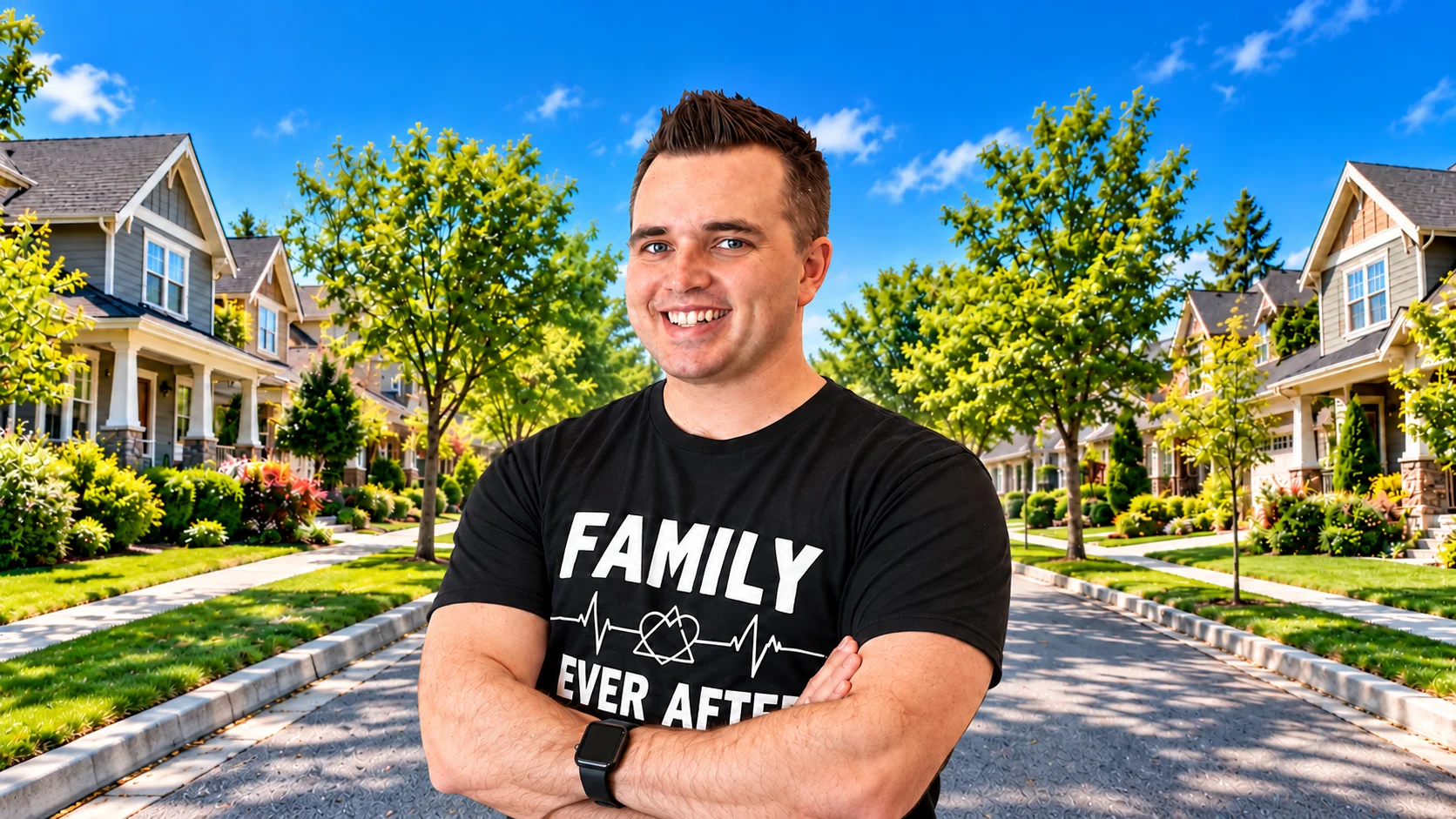
Welcome back to the Real Estate Rookie podcast! At 18, Josh Yeatts turned down his family’s nearly paid-off mobile home park. Years later, after accidentally becoming a landlord, he sold that rental out of frustration. Looking back, Josh realized he was missing out on family time and wanted more freedom, and real estate investing seemed to unlock that! He and his wife agreed to run it like a business, and built a six-property portfolio, all while working a W-2 job, serving as a pastor, and raising six kids!
Josh shares how he scraped together the down payment on his first rental property with a tax refund and home equity, the importance of building relationships with your agent, lenders, and vendors, and covers the reason he skipped his inspection (and why you shouldn’t!). He walks us through his first BRRRR, how he finds contractors he can trust, and the multigenerational housing plan that converted three family homes into rentals that more than cover his new mortgage!
If you’ve ever wondered whether it’s too late to start (or start over), this episode is your sign!
Ashley Kehr:
At 18, Josh Yates’ parents offered him their nearly paid off mobile home park. He said no and now calls it the worst financial decision he ever made. And years later, he accidentally became a landlord, sold that rental out of frustration and had to decide whether real estate still belonged in his family’s future.
Tony Robinson:
Josh eventually restarted more intentionally with a $65,000 two bedroom house and built a six property portfolio while raising six children, serving as a pastor and working a W-2 job. And today we’re breaking down the tax refund and the home equity that funded his first purchase, the DIY rehab that consumed every evening, the buy box he discovered along the way, and the multi-generational housing plan that turned three family homes into rentals covering his new mortgage.
Ashley Kehr:
This is the Real Estate Rookie Podcast. I’m Ashley Kerr.
Tony Robinson:
And I’m Tony J. Robinson. And with that, let’s give a big warm welcome to Josh. Josh, thanks for joining us today, brother.
Josh Yeatts:
Hey, glad to be here.
Ashley Kehr:
Well, Josh, your family owned a mobile home park and at the age of 18, they actually offered it to you and it was almost nearly paid off. Why did you decide to reject it and what do you understand about that opportunity now that you could not see them?
Josh Yeatts:
Yeah. So when they offered it to me, they were looking to retire, to not have the park anymore, and they offered it to me. And at the time I had so many other things that I kind of wanted to do with my life. And I had been around it my whole life. I had helped out with mowing the grass and helping with different projects and things. And I was just so tired of it and didn’t want it anymore. And I said, “No, I don’t want that stupid mobile home park,” is probably the words I use. And I could kick myself now, of course, because I realize the value in it now that it could have been basically the only job that I had would’ve been to manage this mobile home park more or less for them. I could have just paid them a little bit of money each month or whatever, and I could have enjoyed time with my family.
But at 18, you know what you know and you don’t know what you don’t know.
Ashley Kehr:
Josh, do you know offhand how much you would’ve made a month off of that property? What was the cash flow off the mobile home park that you would’ve been able to live off of?
Josh Yeatts:
Well, I do know that each mobile home rented for… They actually did it by the week. They rented it by the week and most of them were like 200 to 250 a week. So approximately about 800 a month per unit and it was 16 mobile homes. I have done the math before, but I don’t know the exact number, but it would’ve been enough to live off of.
Tony Robinson:
Now you eventually did end up buying your first rental, it was just a few years later at the age of 21, where you bought it as your first home and then you turned it into a rental for some friends from church. Can you walk us through, Josh, what happened in those three years to take you from, I don’t want this free investment to actually turning a property that you bought into an actual investment?
Josh Yeatts:
I bought my first house. I never wanted to rent from anybody. I wanted to own and that was kind of instilled in me. So at 21, instead of going to find a rental house or something to rent, an apartment, I said, “Let me just go and see if I can buy my own home.” I did. I paid $35,000 for this little two bedroom, one bath home, and I put a little bit of work into it, just paint and countertops and cabinets and stuff. And my dad had some health issues that we ended up having to move in with my dad to help him. And some friends from church were like, “Hey, what are you going to do with that house? We need a place to rent.” And I was like, “I don’t know. I guess I could rent it to you guys being that we know you.” And I believe they paid me like 400 or 450 a month and I just started renting it to them.
And from there, after they moved out, I was like, “Well, I guess I’ll rent it to somebody else.”
Ashley Kehr:
And how did that go? Because you eventually sold that property because you were frustrated with it. What happened and do you regret it now?
Josh Yeatts:
I absolutely regret it. I wish I could go back and not sell that house. The reason I got frustrated, my wife, she never really wanted to be in the real estate investing world. And because I would let people kind of walk all over me, I wouldn’t maybe speak up when I needed to. Lots of times that caused friction and she would always say, “Well, what if you just sold it? What if you just sold it?” And we ended up selling it and walking away from it for a few years and I missed it. After I sold it, I missed it. And I always wished that I’d have just kept it.
Tony Robinson:
Now, several years later, Josh, you ended up telling your wife that maybe you want to get back into real estate investing, right? Hey, can we leverage this as a tool to maybe someday replace the income from your day job and allow you to spend more time with your growing family? What did your finances and schedule look like when you started having that conversation? And ultimately, what convinces you of you guys to give this whole real estate investing thing another shot?
Josh Yeatts:
We started talking about it back around 2021 when I talked to her and I said, look, I would like to buy some rentals and I think it’ll be a lot easier buying a house that is strictly a rental, that’s not a house that we… Because the first house, I bought it and we renovated it together. It was where we lived. It was our house as opposed to a house that I was buying as a rental house that didn’t maybe have that sentimental connection that the first house had. And I told her, I said, “I really believe that if we give this a go, if we buy some more rental houses and we actually run it as a business, not just having people that we know maybe rent from us and feeling bad and saying, well, okay, you can pay the rent a few weeks later or whatever, but actually run it as a business, I really believe that this would be something that I can eventually walk away from my W2 job, spend more time with the family.” And I feel like once she kind of saw that picture of what it could look like, she was on board.
Tony Robinson:
Josh, just out of curiosity, I know you talked her through it, but what was it, if you remember, that really finally made it click for her? Was it just laying out the numbers in that way and the vision or was there maybe a specific thing you can share with the Ricky audience who also wants to get their spouse on board that they can replicate to get that alignment?
Josh Yeatts:
In talking with her, like I said, I told her that I want to be there with my family. I don’t want to miss the kids’ games and different things that I would miss with my W2 job. I want to be able to take vacations and not have to worry about calling into work or I want to be able to have this freedom. And as we began to talk about it, and it took some time, it wasn’t just talking about it for a night and she was on board. It took time. But I think the main piece was once I told her, “Look, we’re going to run this as a business. It’s not going to be like it was with the previous home. It’s going to be a business and we’re going to run it as such.” That was kind of the turning piece for her.
Ashley Kehr:
Now, Josh, what market did you end up deciding on to make this purchase in?
Josh Yeatts:
I wanted it to be, especially for my first few rentals, and so far it’s been all my whole portfolio that I have now. I wanted it to be in my own backyard. I wanted it to be where I could lay hands on it. If something broke, I have a little bit of experience with growing up with my family. I can do a few things on my own and I wanted to be able to fix some things that I could fix personally. So I went ahead and really looked in my own backyard. And at the time we lived in an area called Chatham and the house that we first purchased as a rental was just a few minutes away from us. Now it’s about 30 minutes away from us since we moved, but it was very close to where we lived.
Ashley Kehr:
Now, after you decided on your market, how did you actually find your first deal?
Josh Yeatts:
I actually, I went on Zillow and they asked you, “Do you want to find an agent?” And I was like, “Yeah, I want to find a real estate agent.” And I clicked on the link or whatever. And the person that ended up talking to is a very good friend of mine now. And we actually are doing a deal together now that we’ve had this time to… As my real estate agent, he’s brought me a lot of deals and we’ve did a lot of work together. But when I called this gentleman up and we talked, he said, “I’m going to help you find something that will not only be in the price range that you want, but he had an eye for being able to look at a house and say, looking under the house and seeing his floor joists didn’t look right or he would actually steer me toward or away from certain deals that he felt like would be the best fit for a rental.
Speaker 4:
If you’re building a real estate portfolio, your banking setup matters more than you think because the more properties you add to your portfolio, the more complicated managing the money can get. I own and manage dozens of properties and there’s money constantly moving, rents and payouts coming in, mortgages, repairs and expenses going out. With traditional banking, you’re left figuring out what belongs to which property and spending hours updating spreadsheets just to understand your cash flow. That’s why I use Baseline. It’s BiggerPocket’s official banking platform specifically built for real estate investors and operators. I can organize my banking by property or entity with bookkeeping built right into it. So the bookkeeping happens as I bank and transactions are automatically categorized so I’m not spending hours at the end of the month trying to piece everything together. I can see what’s coming in, what’s going out and how each property is actually performing.
So as your portfolio grows, your banking and bookkeeping can actually keep up with you. Open your account with Baseline at baseline.com/bp.
Tony Robinson:
I think that’s a benefit too, Josh, of having a good partner in that way because there are a lot of agents who aren’t investors in any way, shape or form. And they’re really good at the transactional side of being an agent, but less so about the business side behind the real estate. When you can find what we call the investor friendly agent and it can make that first deal a lot easier. And by the way, for all the rookies, if you guys don’t know, BP offers an agent finder tools. If you go to biggerpockets.com/agentfinder, you guys will find that for yourself. But you work with this agent, you end up finding a good deal. Walk us through the numbers in that first one, Josh. What was the price, how much you put down, and really where’d the funds come from for that down payment as well?
Josh Yeatts:
Very interesting story because when you’re first starting out, for me, I was just trying to find the money to put down and the closing cost. I knew how much I had or that I could draw from and ended up doing a HELOC home equity line of credit to help pull the money for the down payment. And I also, it was around tax time and I said, “I’m going to take the tax money, my tax refund.” And a lot of people, I think they just don’t think about. You can take your tax refund and rather than blowing it on stupid things, you can invest it. And so I took my HELOC along with my tax refund and scraped up enough to put the money down. I paid 69,000 was the purchase price for this home. And right there at that 70,000 mark and ended up putting down with the closing costs, it was a little over $20,000.
Ashley Kehr:
Now walk us through that acquisition. Was there anything that came up maybe during the inspection of the property? Did you do an inspection? How did that loan process work for you? Kind of get us to the actual closing day of the property.
Josh Yeatts:
I did not do an inspection. There again, I kind of put my life in the hands of this agent who I probably should have maybe not been as trusting, but it did work out for the good. But I took his word. He said, “This looks like a good one, man.” He said, “I would buy this one if I was able to.” And he kind of had looked over it and at the end of the day, it had a lot of the pieces that were there already were good. The roof looked great. The plumbing looked great. The HVAC was, it was a little bit older, but it still looked good. And so I waived the inspection. Not a great idea, but I waived the inspection. And going up to the close date, like I said, I had that HELOC and the tax refund and he kind of helped walk me through a lot of it.
I also found a great lender who I have now developed a great relationship with, can call personally and talk to him about different deals that I’m looking at. And so relationships are so important. That’s, in my opinion, the most important thing, the most important tool that you can have is those relationships.
Tony Robinson:
Now, Josh, you got into this because you wanted the additional cash flow to be able to spend more time with your family. This first true, true investment, ballpark, what’s it doing right now for you in terms of cash flow?
Josh Yeatts:
Well, for this one now, I started off, the payment was around, I think it was around 500 a month and I started off charging 850 a month. I now charge 1150 a month. So the rent has gone up and I’ve had, this is the third tenant that is in this house. So 1150 a month now.
Ashley Kehr:
And what is the timeframe? How long from that 850 to 1150 since you purchased it?
Josh Yeatts:
Each tenant has been there about a year, maybe a little more than a year and purchased it around four years ago. Yeah.
Ashley Kehr:
So not bad to see that increase over those four years from 850 to 1150. Is there a reason that the rents increased by that much in your market?
Josh Yeatts:
Well, so we do have a casino that has opened up in Danville, but the big piece has been that casino coming and just making all the rents go up.
Tony Robinson:
I think that’s the beauty of buying real estate is sometimes even when we underwrite, good things still happen that we couldn’t have anticipated, right? And that rent increase is pretty solid. So it sounds like, Josh, the first deal served you guys pretty well, right? And that kind of sets you guys up for your second intentional real estate purchase. And I know you deliberately looked for another two bedroom, one bath, one that needed some light work that could support maybe like a burr, we’re doing like a cash out refinance. As you started thinking about property number two, did your process change in how you were screening properties given you wanted to execute a burr?
Josh Yeatts:
A little bit. I still kind of was looking for that around $70,000 home because I knew that I could put the 20% down. And the only difference is I knew that I was going to have to do some renovations. And the way that I kind of anticipated the renovations was I said, “I’m going to use a credit card for the renovations.” And I knew it was work that I could do, very simple things, paint, flooring. I refinished all the hardwood floors in the home. And again, it was one that my realtor was very confident with the comps around the area, with the renovations. He knew that I could anticipate being able to pull enough out at least to do another home. And so I looked for that 70-ish thousand. I think I paid 75,000 for the second property. And just as soon as I got it, I started working on it and had some long nights renovating it, but got it done within about a month and got it on the market.
Ashley Kehr:
Now with that second property, give us the full numbers on that one. You said the purchase price was around 70,000. What did you do for a down payment, closing costs, and then did you have a renovation budget at the time?
Josh Yeatts:
Yeah. As far as the down payment and closing costs, by this time, I was starting to save up some money. I actually cashed out my 401 at work. I’ve done some pretty crazy things to be able to get the down payment.
Ashley Kehr:
Did you take the tax hit and the penalty hit on it?
Josh Yeatts:
Yeah. Yeah. But to me, it’s worth it.
Ashley Kehr:
Oh yeah. If you can make more money than your return you were getting in the 401 and to cover the taxes and penalties, it’s way worth it.
Josh Yeatts:
Yeah. So I cashed that out. I had saved up a little bit and I believe it was right around tax time again that I just said, “Hey, let’s put the tax money with what I’ve got and with the 401 and let’s go ahead and buy this one.” And then like I said, I used the credit card and it took about $13,000. I kind of had anticipated about 10,000, went a little bit over that. Like I said, it was mainly just paint, flooring, some of those things, but I kind of anticipated 10,000 and did all the work myself. And when I did the refinance, I believe it appraised for, it was a little bit less than what I thought it was going to appraise for. I believe it appraised for like 120. And so I was able to pull out, I believe it was about 20,000, give or take, out of it for the next deal.
Tony Robinson:
Josh, you’ve used, as you said, a combination of different sources to fund your deals, tax refunds, HELOC, cashing out your 401k, obviously leveraging the cash out refinance. As you think about maybe rules around leveraging that money and really just making sure you’re accounting for the repayment, because a lot of those have your HELOC has a payment, your cash out refinance, the mortgage goes up. How do you account for those repayments so that recycling your equity doesn’t put your home or your portfolio at risk?
Josh Yeatts:
Yeah. So I actually, one of my saving graces, because I’m not saying this is the best idea for everybody to do, but with the sale of my home that I had the HELOC on, I knew I was going to cash flow with paying the mortgage and the HELOC each month. But once I sold that home, of course, from the sale of that home, I had to pay that HELOC off. And so I kind of anticipated with selling the home that it was going to come a time where I was going to have to pay that HELOC back, which in turn, because I didn’t have the HELOC anymore, I was able to cash flow more. But yeah, it was, like I said, maybe not the best idea, but it was when you’re hustling and you’re trying to make it work, which you feel like you got to do at the time.
But I would highly encourage people when they get their tax return, even if you don’t use it right then, save it and put that toward an investment property because I mean, rather than spend it on something dumb, spend it on investment.
Ashley Kehr:
Or even a bonus at your work. If you’re getting a bonus above and beyond what your standard pay is, start saving those too. But Josh, another thing I want to touch on is you actually did a lot of the rehab yourself on a couple of these first properties, but now you rely on contractors for almost everything beyond a couple small repairs. How did you build these vendors in your network and how do you vet them, compare bids, define your scope, confirm that they actually do quality work? I guess, what’s your best rookie advice for finding and vetting contractors?
Josh Yeatts:
Just so happened, two of the contractors that I use for, I’d say 99% of my work, just so happened to… One of them, my daughter dances with his daughter and my daughter and his daughter started hanging out. Actually, both of the contractors, their daughters dance with my daughter. And as we just –
Ashley Kehr:
Tony, you’re missing out. He’s got daughters in dance and he’s not finding any contractors.
Tony Robinson:
I found zero contractors. Yeah. I got to change their vet studios.
Josh Yeatts:
But yeah, my kids started hanging out with their kids and we would, of course, I’m not going to let my kids hang out with anybody. I don’t know the parents. And so I get to talking to the parents and they say, “Well, I’m a contractor. I own a contracting business.” And I’m like, “Really? I might use your help.” And as far as kind of vetting their work, it really come down to giving maybe a smaller job or whatever saying, “Hey, can you come and do this job?” And seeing what that looked like. If they did a good job with that job, then I would hire them again for the next job, maybe a bigger job.
Ashley Kehr:
Now, Josh, continuing on in your journey, a larger house actually across the street came up for sale and you initially believed it was unaffordable, but how did your wife connect the house’s basement in an additional wing with your parents and grandparents’ housing needs to actually make this a workable plan for you guys?
Josh Yeatts:
Yeah. So a lot of people probably think we’re crazy.
Ashley Kehr:
Yeah. I think you’re coming up with your own family compound here we’re about to hear about.
Josh Yeatts:
Yeah. So my grandparents, of course, this is the same parents and grandparents that had sold the mobile home park years ago and purchased two homes in cash, no mortgage on these two homes. And my grandparents are in their late 80s. My grandpa will be 89 this year. And they had told me, they said, “Josh, we just need something that is no maintenance. As we get older, we don’t want to have to worry about mowing grass or if something breaks, having to try and fix it.” And so they were talking to me and they were like, “Maybe we could give you our house, put it in your name, and then we could rent something and you just pay us the money for the rent.” And when this house came available across the street from where we lived, I told my wife, I said, “Let’s go look at it.
It can’t hurt to look.” And the purchase price on this house, they wanted 430,000 for this home, but it was humongous. It was way too big for us, but it was such a beautiful home. And my wife said, “What if we turned the basement into an apartment for your grandparents? Then they wouldn’t have to worry about maintenance. They wouldn’t have to rent somewhere. They would have a nice place to live that we are right there just on the second level and we can move them in.” So we started thinking through that. One of the contractors, one of my friends, he did all the work and it turned out just amazing. And we took their house and rented it out. But before that, my parents said, “You’re not going to move them in and not move us in.” And so like you said, the house has a second wing off the back that had a bedroom.
It’s a shared laundry, but a bedroom, laundry, and a full bathroom and a sunroom. And so we decided you guys can move in here, move into this room. And what we’ll do is we’ll take both of your homes and the home that we lived in across the street, rent these out. And it ended up more than paying for the mortgage each month.
Ashley Kehr:
Well, Josh, that’s incredible. Tony lives a couple houses down from his sister-in-law. I live a couple houses down from my sister, but I think we need to take it to this next step where we’re actually building a compound within one home. But Josh, that’s incredible that you’ve been able to help your family out with this situation and be able to live close together and make it work for everybody. We really enjoyed having you on the podcast today and sharing your journey and your story with us, but where can people reach out to you and find out what else you are doing in real estate?
Josh Yeatts:
Well, so I have on my Facebook, it’s just Josh Yates, but I also have a little YouTube channel that I kind of do some tips and things that I’ve acquired along the way. And so that’s Next Gen Wealth with Josh. People can get on there and follow me on there. I share some of my journey with these different projects and houses that I’ve acquired.
Ashley Kehr:
Oh, great. We’ll have to check that out. So if you’re listening to this episode of Real Estate Rookie, make sure you check out Josh’s channel and also check out Real Estate Rookie on YouTube. I’m Ashley, he’s Tony, and we’ll see you guys on the next episode.
Help us reach new listeners on iTunes by leaving us a rating and review! It takes just 30 seconds and instructions can be found here. Thanks! We really appreciate it!
Interested in learning more about today’s sponsors or becoming a BiggerPockets partner yourself? Email [email protected].
