

Employers added 29,000 jobs in September and the unemployment rate rose to 4.2%, according to the Bureau of Labor Statistics September jobs report released October 2. The same release also cut 60,000 jobs from the prior two months. July went from a gain of 21,000 to a loss of 10,000, and August fell from 162,000 to 133,000.
The pain is uneven, as The College Investor’s breakdown of unemployment rates by education level shows.
The jobless rate has held between 4.1% and 4.3% since March, while the rate for Black workers rose to 7.0%. Average hourly earnings are up 3.0% over the past year, per BLS. Anyone facing job loss should check how unemployment benefits work in their state right away.
Why It Matters
Downward revisions have become the norm, and its troubling for those watching the labor market. Of the 22 months from October 2024 through July 2026 with final monthly estimates, 15 were revised lower, and every month of 2025 finished below its first print, according to BLS revision data.
Net, those revisions erased 661,000 jobs that were reported at the time. The first print drives the headlines, but then every month those numbers disappear.
Employers have averaged just 45,000 new jobs a month over the past year, a thin market for recent grads. The College Investor has tracked the tough job market facing new college graduates and a nearly 20% drop in entry-level software jobs.
Monthly Job Gains: First Report vs. Final Estimate, Oct. 2024–Sept. 2026
Change in total nonfarm payrolls (thousands), as first reported and after the two scheduled monthly revisions
15 of 22months revised lower (Oct. 2024–July 2026)
12 of 12months in 2025 revised lower
−661,000net jobs removed by monthly revisions
First report
Final monthly estimate
Revised down
Revised up
Revisions still pending
Grouped bar chart comparing first-reported and final monthly payroll gains, with a lower panel showing each month’s revision. Every month of 2025 was revised lower, and revisions removed a net 661,000 jobs from October 2024 through July 2026.
Source: U.S. Bureau of Labor Statistics, CES over-the-month revisions table and Employment Situation release for September 2026 (Oct. 2, 2026). “Final” is the third sample-based estimate, before annual benchmark revisions. September 2025 was first published Nov. 20, 2025, after the federal shutdown, and had no second estimate. October 2025 had no standalone first release; its first published figure came with November data. August 2026 shows the second estimate and September 2026 the first report. Chart: The College Investor.
View data table
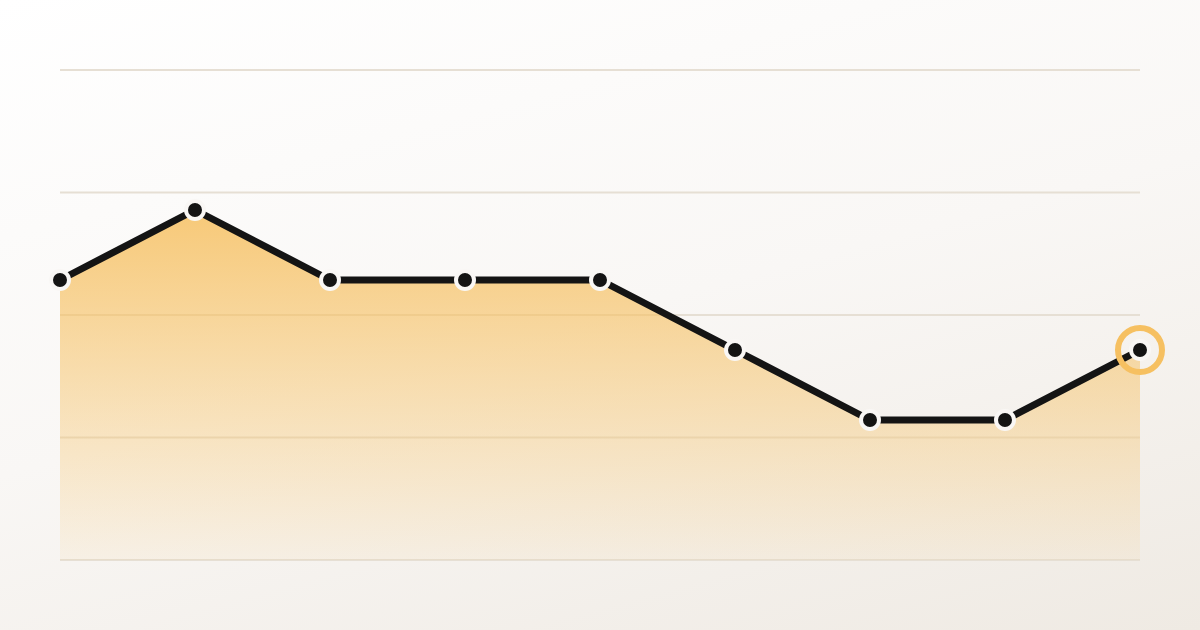
U.S. Unemployment Rate, Sept. 2024–Sept. 2026
Seasonally adjusted, percent. The unemployment rate comes from the household survey and is not revised month to month.
Line chart of the U.S. unemployment rate rising from 4.0% in January 2025 to a peak of 4.5% in November 2025, then easing to 4.2% in September 2026
Source: U.S. Bureau of Labor Statistics, Current Population Survey. October 2025 data was not collected because of the federal government shutdown. Chart: The College Investor.
Why Revisions Keep Going Down
It’s hard to miss the trend of revisions downward. Here’s why this keeps happening.
- Late responses: In 2024, BLS had data from about 60% of surveyed employers when it published first estimates, rising to about 91% by the third estimate, per the Congressional Research Service.
- Falling participation: CES response rates dropped from about 58% before 2020 to 43% in 2024, the same CRS report found. In August 2025, nearly half of the monthly revision came from late government payroll data, mostly in state and local education.
- Turning points: Cleveland Fed researchers found revisions near turning points “tend to be procyclical,” moving in the direction the economy is already heading.
- Annual benchmarks: The March 2025 benchmark removed 898,000 jobs. BLS adjusted its birth-death model in February 2026, and the preliminary March 2026 benchmark was just -79,000.
The idea that BLS inflates first prints and quietly walks them back gained traction after President Trump fired BLS Commissioner Erika McEntarfer on August 1, 2025, alleging manipulation without evidence. However, that has not been proven with any compelling data.
Revisions happen, and they can move massively in both directions. This same process produced upward revisions of 437,000 and 389,000 for November and December 2021 and a 506,000-job benchmark increase in 2022. The Yale Budget Lab found nonresponse, not the birth-death model, drove most of the 2024-2025 issues.
However, questions about federal data reliability extend beyond BLS, as we’ve already covered with missing Education Department student loan reports.
How This Connects
A soft job market lands on student loan borrowers at a bad time, with 9.3 million federal borrowers now in default and wage garnishment restarting.
Student loan borrowers who lose work should take action before they fall into delinquency and default. The best action to take is to use this unemployment to enroll in an income-driven repayment plan, which could potentially allow you to have a very low or even $0 monthly payment.
The second best option is to request an unemployment deferment instead of falling behind.
What’s Next
The October report will revise August a final time and September for the first time. BLS will publish the final March 2026 benchmark with January data in early 2027.
Robert Farrington is the founder of The College Investor and is widely recognized as one of the nation’s leading voices on student loan debt and saving for college. He holds an MBA from UC San Diego Rady School of Management and has spent over 15 years researching, writing, and advising on student loans, 529 plans, financial aid programs, and saving and investing for young professionals.
Robert has been featured in the The New York Times, The Wall Street Journal, The Washington Post, NBC News, and Forbes, where he has been a regular personal finance contributor for over a decade. His work combines both professional expertise and personal experience – he successfully navigated his own student loan repayment journey and has helped thousands of readers do the same.
He is committed to making the intersection of personal finance and education transparent and accessible. You can learn more about Robert on the About Page or on his personal site RobertFarrington.com.
