

Today we’re continuing our series from two Millionaire Money Mentors who are living out their retirement dream by sailing around the world.
The series began with When Is Enough Enough? We Sold Everything to Find Out, followed by It’s Not a Number.
If you haven’t read those posts yet, I suggest starting with them, as today’s article builds on what’s already been shared.
Today’s post is part two of It’s Not a Number and once again is written by Sailor.
And remember, in the very last post they will answer questions from ESI Money readers about this lifestyle. So please leave your questions in the comments below!
I’ll now turn it over to him…
—————————–
By Sailor
Thus began a 15-year entrepreneurial journey building a technology services company with an abundance of learning opportunities: how to run a business, employ people, communicate internally with a team, and create a positive company culture. All while meeting client needs, making payroll, and generating a profit. There was also much personal freedom in running my own show – I could choose which 100 hours I wanted to work each week.
Financially, I was determined to bootstrap everything; I didn’t want the complexity of business partners or debt. The balancing act was precariously delicate most of the way. Some months the business seemed to throw off plenty of excess cash, only to run short of billable time the next. Feast or famine cycles alternated. Unpredictable. Nerve-racking.
I volunteered in the technology community, spoke at conferences, contributed code to many open-source software projects. With the financial surplus I created, I first reinvested into the business. I lived simply – call it stealth wealth, though not because I wanted a certain perception from the outside. Being a simpleton is who I am at the core. The further along the FI trajectory I got, the less I cared what everyone else thought.
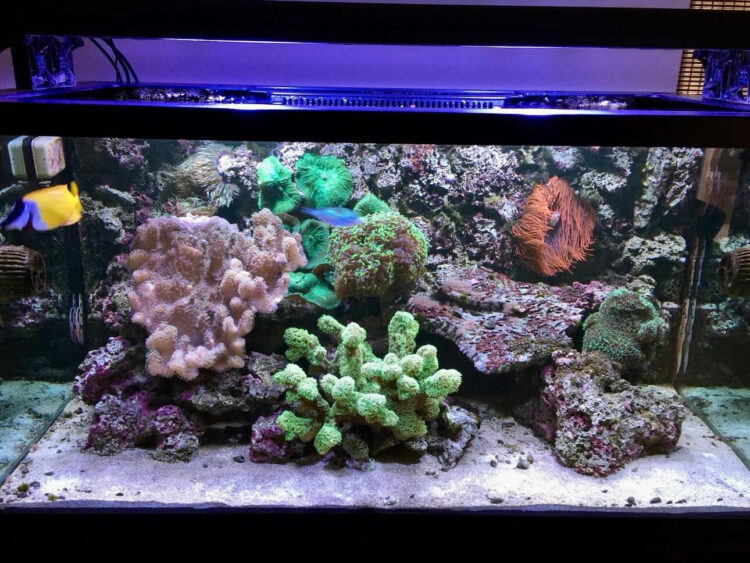
Ironically, the more I looked inward, and the more assets and money I accumulated in my bank account, the fewer things I wanted to have, maintain, care for, or keep track of. There were some high-end purchases, like a quality mountain bike, or a salt-water aquarium, but those were targeted spends on what I determined was important and valuable for me. Things that brought me joy.
___________________
The Skype video on my laptop screen showed my parents in distress. Where I come from, showing emotions is not the cultural norm. Yet, mom’s breast cancer diagnosis had a leveling effect. In her early 60’s she was not a stranger to medical issues. Getting a non-reconstructive mastectomy, then chemotherapy, and all the side-effects that come with the treatments, shook up the certainty of her “Go-Go years”. None of my university degrees had prepared me for what came next.
I had structured my technology company to be virtual/remote from its very first day – I simply could not afford to pay for an office. I turned the financial limitation into a feature that people had questioned and mocked for years. All company systems were set up to operate from anywhere, which allowed me to physically relocate back to Eastern Europe for months at a time. I was years ahead of the work-from-anywhere curve that everyone else would discover only when COVID forced it on them.
Taking advantage of the time zone difference, I was able to tend to mom’s medical needs for eight or nine hours during the day. Then came the second shift – eight or nine hours of running the business on US time. Working late into the night, my clock simply shifted. I didn’t hide my physical location from clients or employees, but I would not let the distance be a hindrance to the company. My nights and weekends dedicated to the business meant it didn’t miss a beat. My financial situation stabilized and improved.
With the time left in the day, I slept in my childhood bedroom, walls replete with 20-year-old posters. The next day I did it again, and again, for weeks and months. Every day was a work day as I lost the distinction of a weekend.
I had been accused of chasing geographic freedom for selfish reasons. The virtual company was seen as a foolish way to do business. What looked from the outside like it was only ever about saving money led to making months of caregiving and support possible. I made a promise to my parents at seventeen when they took a chance on me. Years later when they needed me, I was able to help.
I had always longed for letting my hair grow out, but that was culturally or professionally unacceptable for most of my life. Now, as an entrepreneur who never wore a suit, my head was full of long curly hair. When my mother lost hers to the chemo, I shaved my head bald in solidarity.
Walking up eight flights of stairs after a medical treatment because the 50+ year old elevator was once again out of service was not how I wanted to see my parents struggle as they aged. My savings helped my parents buy a better condo, and their quality of life visibly improved. It was the return on their bet I had promised on my way out the door, though not in the currency any of us had imagined back then. They did not at first embrace the path I had crafted for myself, but they lived inside its returns now.
I was no longer seeking their approval. The investment I had made leaving for America had finally paid the dividend that mattered: the freedom to be present when it counted.
___________________
As I built my company’s reputation, it captured the attention of a fast-rising key player in the industry. They liked what I had built, the expertise I developed, and my cross-cultural and language skills. The company was opening a division in my home country. Would I take on the role, recognition, formal title, and an expat package to relocate? Given the hustle my company required, this would have been twice the income for half the effort. It was an unexpected offer to be one of the first few dozen employees – the kind that comes with valuable stock options.
On paper, it was an obvious “Yes!” I could be there to support my parents, permanently. Everything the spreadsheets and the career advice said I should want was right in front of me. The offer was holding out everything a person in my position could have wanted, and asking me to simply take it.
Would I finally settle for the predictable path, just ahead of the inflection point of my company’s hockey-stick trajectory? I had proven enough, delivered on my promises. Was it time to take the foot off the gas pedal?
I clicked send on my email reply. I declined the job offer.
I wanted to have my turn in the land of opportunity. The only path was to walk away from someone else’s lucrative opportunity and lean into scaling what I had built myself. I had a solid business and a handful of employees, a stable client portfolio, and a fulfilling purpose of helping others help others. The visceral calling to make it big, my own way. Turning down the offer was doubling down on myself.
While I was caring for my mother, the business was already successful. It already paid me a competitive salary. It had already let me go when I needed to go. I wanted to build something that would run with less dependence on me – a company that didn’t need me inside it every single day.
___________________
Starting a business is hard. The failure rate is astronomical. Scaling a business to make myself obsolete? It felt impossible. The harder I worked to free myself from the daily grip, the tighter the noose of dependence cinched. More employees, more clients, more operations, more decisions – and every one of them, in the end, still ran through me.
Ironically, the more I expanded the team, the more processes and documentation I had to create. I spent weeks agonizing and deferring the creation of the Employee Handbook. I never needed one. Why can’t employees just show up, do the work, get paid, and be self-reliant? If they were, they’d be running their own companies.
Nothing was wrong on paper. I was in charge. I was making money. The wealth was spilling into the rental portfolio, which kept expanding. I hired a property manager, who in turn needed managing. The decision-making grip I had in all aspects of my life was producing excellent financial results all around, and it was also the grip that wouldn’t let me take a day off. What’s the point of a vacation when the pile of emails and decisions only grows during my absence and awaits my return?
To complicate my time commitments, I also met The Admiral. I just wanted to put my head down and solve problems, but I couldn’t get her out of my mind. Her intrigue forced me to realign my priorities and further cut back the amount of sleep. Neither of us wanted to be in a relationship when we first met. Yet we were on a date 40 hours after we first met, and neither of us has been on a date with anyone else since.
The business pulled me in so many directions. No matter what I tried to implement, it required more of my time and expertise. Once again, I couldn’t name what I actually wanted. I only knew this wasn’t it. After months of false starts, frustrations, and dead ends I came to the agonizing conclusion.
On December 2, 2016 I would shut the business down.
I had picked the specific date to minimize disruption to everyone impacted. I had threaded the needle aiming for the first Friday of December – the week after Thanksgiving, several weeks before Christmas. I mapped out everything weeks in advance. I knew what I would say to the employees, and to the clients. I had worked out how I would make the final payroll, and have everything wrapped up in the calendar year for tax purposes.
The drafted messages of everything I planned to say were never said out loud. I could not pull the trigger.
The clients needed the solutions we provided. The employees had families to support. Somewhere underneath the exhaustion was the same thing that had always propelled me: when I take on a responsibility, I stand by it. I had made a deal with every one of those people, and I would keep it, even if it meant not sleeping and barely eating. The date came, the date went. The company kept going, nobody any wiser as to my failure within failure. I was exactly where I had been – inside the machine that ran me, alone.
___________________
For many months all of this made for a bland date-night conversation topic with The Admiral. She could relate to the struggles of scaling a business. She saw my stress and anguish. She also saw the writing on the wall, watching me, fully burnt out, still unable to pull the plug.
The Admiral had recently completed a sale of her own technology company, freeing her to pursue new interests of diplomatic exchanges and global programs. I had joined her in support on many international trips. I saw the destinations from a hotel room as I typed on the laptop keyboard in the middle of the night. My business commitments wouldn’t let me take my eyes off the ball.
If we were to jointly enjoy the fruits of our success, we would both need to be in the same space with our individual entrepreneurial efforts. I was stuck between the inability to sell the business or shut it down. She was not looking for another job – and certainly not one working in the technology industry again.
To me, the obvious answer was clear. The Admiral had the time, the skills, and every incentive to make this work. Her expertise was the exact complement of mine: building teams, developing leaders, managing the people I kept wishing would simply manage themselves. On paper, it was the perfect fit. The answer to everything.
Perfect. Except.
Every example either of us had ever seen of a married couple working together ended the same way – a wrecked business, a divorce, or both. The role models were terrifying. The quieter fear underneath the practical one: if we did this and it went the way it usually goes, our relationship would devolve into a series of logistical decisions.
I had one piece of evidence the terrifying examples did not account for. We had already been sailing as a crew together, which requires close collaboration. On a small boat, in wind and current, a couple has no choice but to operate as one – one person reads the wind, the other trims the sail, and neither can afford to be right alone. We had learned to move together where the margin for ego was zero, where a bad call meant a capsize, not a memo. If we worked in sync on the water, with the boat heeling and the gusts coming, maybe we could sync up in the business too.
It took a year of The Admiral’s “no way” before her stance softened into a “what if.” I simply saw a path, and I was patient with my partner until we eventually agreed to the boundaries and the roles that would let us try. Once again, we had to make our way and figure it out on our own, with no road map worth following. If I was willing to shut the company down, then how badly could this experiment implode?
For years, I had bet on myself – just myself. I had climbed the mountain of success that turned out empty because I was standing at the peak all alone. We had an opportunity, just as in our personal lives, to each lean into our strengths and support each other in the pursuit of a common goal. One plus one would make three.
I was at the base of another mountain to climb with the most important relationship of my life at stake. It was a risk worth taking in order to reach financial and emotional freedom and share it with someone I saw myself growing old with.
___________________
While The Admiral and I were working alongside each other to scale the technology company toward an eventual exit, I made a different sale first.
The portfolio of rental properties had grown over the years to 21 homes, all paid for in cash with profits from the technology company. In the early years I hustled all of the management myself, and frequently the major repairs, upgrades, and maintenance too. The skills my father taught me in a cramped apartment decades earlier were paying dividends I never saw coming – the same plumbing and wiring and patient troubleshooting, now under my own roofs. There are many thousands of square feet of painted walls and ceilings, and flooring laid, that carry my fingerprints. In my experience, there is no such thing as passive real estate income.
In February of 2021, I sold all of it in one transaction.
I knew I was not squeezing the maximum appreciation out of the portfolio. In retrospect, the real estate market was about to take off. I left money on the table, and I did it on purpose.
What surprised me most is that it never felt like a loss. The instinct that scarcity had drilled into me my entire life – the one that says you never, ever leave value on the table – had finally been overruled by a choice. That decision to sell provided much needed mental space. Fewer doors to lock, fewer roofs to worry about, fewer rent deposits to chase each month. The portfolio had been a feedback loop I loved for nearly twenty years, and letting it go made my life simpler and my focus more singular.
I knew what I was making room for. By then we had bought a modest sailboat, and when the world shut down in 2020, we spent months aboard instead of in the city. Those months had shown me something the spreadsheets never had – a life measured in anchorages and weather windows instead of doors and deposits. Selling the houses was not letting go of something. It was clearing the deck for something I had already felt emerging.
It was the first time in my life that choosing less had given me more. I no longer overloaded my plate at the all-you-can-eat buffet of opportunities. I noticed it. I had room to focus on what mattered to me. I did not yet understand how far that idea would go.
___________________
Since mom’s first cancer and mastectomy, I was back & forth to Eastern Europe regularly. Over the years, mom had gone through countless rounds of chemo for two additional cancer diagnoses. Eleven years of medical appointments and everything in her life revolved around treatments.
Once again, I found myself there to supplement the feeble medical care. There was no concept of hospice, and no precedent of caring for loved ones in the comfort of a home. The path was clear to me but I needed to convince the doctors I was up for administering IVs, titrating pain medications, and carefully monitoring her comfort. I took on the responsibilities when she could no longer talk, and only screamed in pain. I became the round-the-clock nurse for mom, and much needed emotional support for dad.
And this time, I was not running the business on a second shift. The independence I had spent years failing to build – a company that did not need me inside it every day – had finally arrived. The Admiral was beside me – not running the business, but simply present with me. We had feared working together would break us, and it did the opposite. The team we built over several years now executed their responsibilities without our intervention. There were no servers for me to fix and no payroll to run in the middle of the night. I was fully present where it mattered.
Initially, I saw my role as being there mostly for mom once again. Her physical body was giving out and dad could not comprehend how more than five decades of marriage were about to end. The promise I made at seventeen now paid dividends to him, as he refused to accept the loss. Unlike a loan, my promise had no calculated payoff. I will continue paying it back until there is no one left to pay it back to.
___________________
Less than a year after mom passed, in 2023, The Admiral and I sold the technology company I founded. An overnight success that took 15 years to build. Thirty years after setting foot on American soil, at last, freedom.
As a married couple we accomplished what many foretold would end in disaster. Five years of learning, communication, tensions, and continuously recalibrating to our common goal. The one thing we held onto was that we were always on the same team, even when we disagreed about everything else.
Financially, the sale added ample cash to the bank account – and yet the needle did not move. There was no longer a needle to be moved. No more chasing after “enough”, as the wanting had dissolved a year prior at the side of the hospice bed.
Mom didn’t get to see the successful company sale. She never saw the new boat, or us moving aboard full time, or most of our belongings sold off and given away. In her final years, she had been puzzled by the long seasons we spent adventuring on our previous sailboat. She did not grasp many of our life’s choices, and she did not understand our desired outcome.
If her acceptance had truly been about the financial dividends and the fortune, she would have passed without me receiving that benefit. Our relationship came full circle when I was present at her bedside, before the money ever came.
My journey looks like a straight line from scarcity to success. Sometimes the effort and the dividends were separated by many years, many failures, many events that make up the zig-zag path. The dots can only be connected in retrospect – only recognizable in the rearview mirror
Hollywood has a tidy 90-minute version of this ending. The immigrant works hard, gets “lucky”, sells his businesses, gets rich, and sails off into the Mediterranean sunset. The cash did arrive, and the boat is real, and the sunsets are genuinely spectacular. But the man it arrived for had already gone somewhere the money could not follow.
———————————
And that’s it for today. What a fascinating story, huh?
Stay tuned as the next post in this series is coming up soon.
