

Key Takeaways
- After hinting at “aggressive” reforms in the housing market, President Donald Trump wrote on social media Wednesday that he is seeking to ban large investor home purchases.
- Investors accounted for more than 10% of home sales in the 2025 second quarter, but the majority were made by smaller investors.
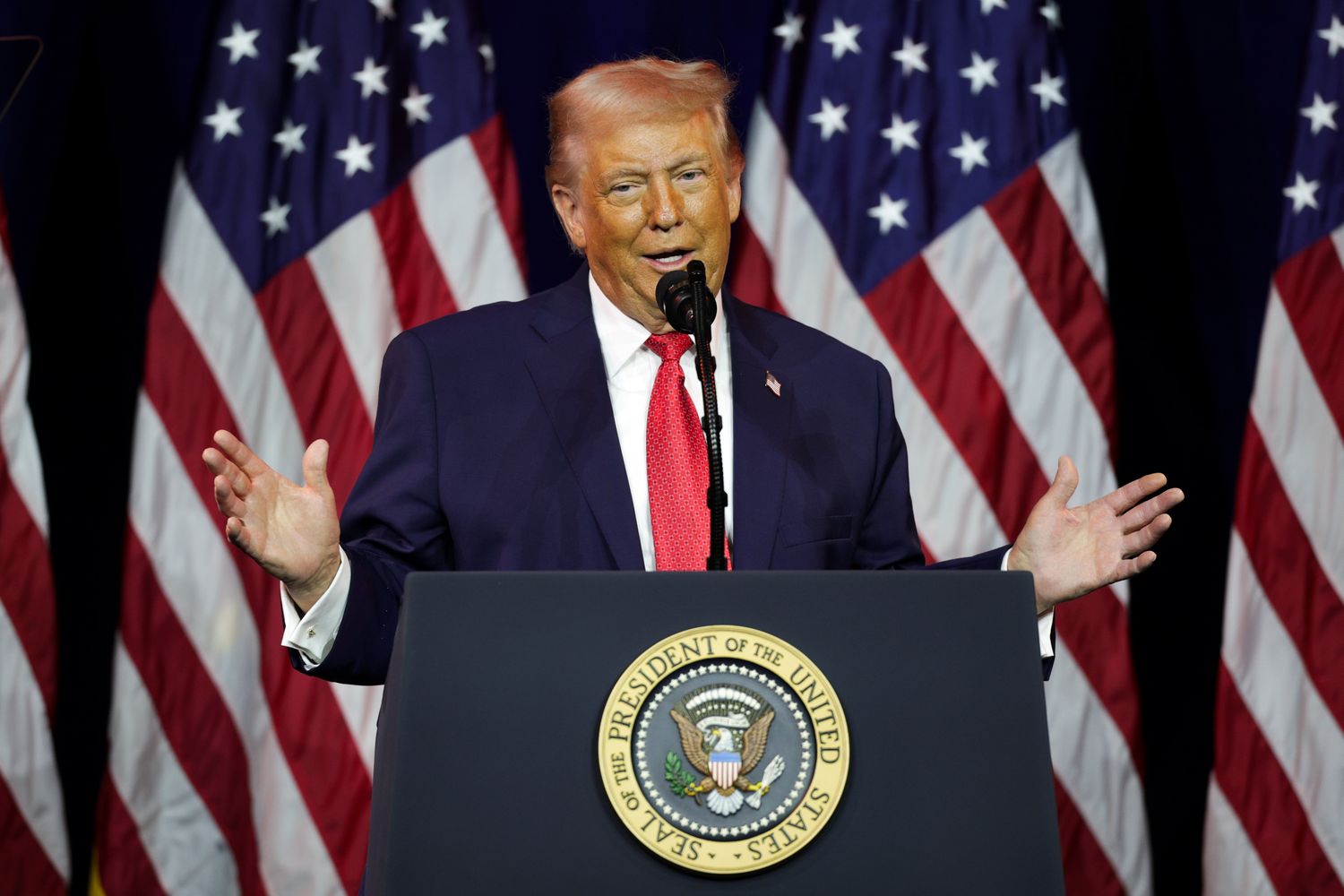
President Donald Trump provided the first details of his plan for “aggressive” reforms to the housing market on Wednesday.
Trump wrote in a social media post that he is taking steps to ban large institutional investors from purchasing single-family homes. He also said he is asking Congress to write it into law.
“People live in homes, not corporations,” he wrote.
Why This Matters for the Housing Market
Investor demand can drive up home prices, making it more challenging for owner-occupiers to purchase homes. Changes to who can buy homes can also influence homebuilder activity, mortgage demand, and returns for real estate investors and funds tied to housing markets.
This is likely the first of several housing industry reforms Trump promised during his Dec. 17 address to the nation. More details on the ban are expected during Trump’s upcoming speech at the annual World Economic Forum conference in Davos, Switzerland, scheduled for Jan. 19-23.
The housing market has sidelined many would-be buyers as affordability has declined: Mortgage rates remained well above 6% throughout 2025 and housing prices remained elevated.
Investor activity in the housing market can make it even more difficult for ordinary homebuyers to compete for homes.
“With affordability still stretched and inventory tight, many would-be buyers remain sidelined, giving investors a larger share of the market and, in some areas, more influence over prices,” said Danielle Hale, chief economist at Realtor.com, in a prepared statement. “As a result, investor activity can amplify price pressures, especially in markets where their purchases concentrate in already competitive price ranges.”
Investors Activity Can Crowd Out Ordinary Homebuyers
The share of homes purchased by investors was 10.8% in the second quarter of 2025, the most recent data period tracked by Realtor.com.
While Trump’s post said the ban would target larger operations, the Realtor.com data showed that the majority (82.5%) of investor purchases were made by smaller firms. Realtor.com defined large investors as those who made more than 50 purchases over a period of roughly 25 years.
Because of this, a policy that only targets large institutional investors may not have a significant impact on affordability, some economists and experts said.
“Research has consistently shown that large institutional investors play a relatively small role in the market for owning single-family homes,” wrote Norbert Michel, vice president and director of the Center for Monetary and Financial Alternatives at the Cato Institute.
Investors Seek Gains in High-Growth Markets
The report also showed that investors in some areas are often willing to pay for premium properties.
For example, the median investor purchase price in Montana comes in 35% higher than the overall median purchase price for houses in that state. Investors also bought more expensive homes in Utah, California, New York and Vermont, generally hoping to cash in on rising home prices.
In other areas, investor activity is focused on lower-priced housing, which is often then used as rental units. In Michigan, the median investor purchase price was 53% lower than the overall median purchase price in that state. Investors also purchased more low-priced housing in Maryland, Virginia, Delaware and Wisconsin.
Update, Jan. 7, 2026: This article has been updated to include a response to Trump’s proposal from the Cato Institute.
