

Stay informed with free updates
Simply sign up to the War in Ukraine myFT Digest — delivered directly to your inbox.
Ukraine has won investor backing to restructure $2.6bn in debts that paid out based on economic growth, bolstering Kyiv’s war finances and slashing the cost of reconstruction after Russia’s invasion.
Ukraine’s finance ministry said on Thursday that holders of 99 per cent of its so-called GDP warrants agreed to swap them for bonds, extinguishing payouts that it estimated may have cost up to $20bn in a postwar boom.
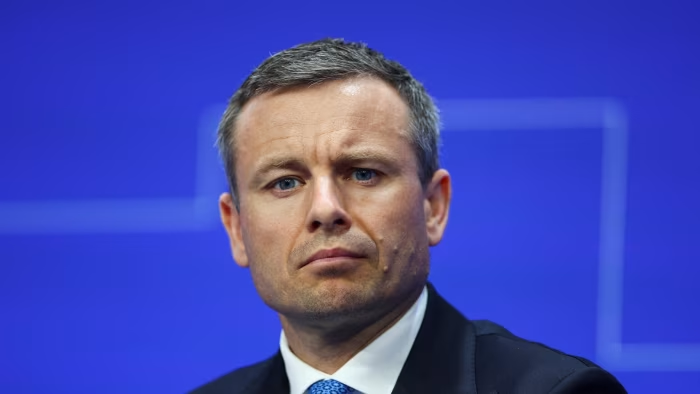
“We are retiring a toxic instrument that has become a serious fiscal risk for Ukraine and could have undermined our recovery and reconstruction,” said Sergii Marchenko, Ukraine’s finance minister.
The deal underlines how Ukraine and its private creditors are preparing for the possibilities of both a longer war or an earlier peace deal with Russia, as European leaders debate whether to give the green light to a €90bn loan using profits on Russia’s frozen assets.
Kyiv launched an offer to retire the warrants this month to clear up one of the last outstanding issues in its prewar private debt, after a restructuring of more than $20bn in bonds last year.
The warrants offered enhanced payouts if Ukraine posted economic growth of at least 3 per cent in a year, paying out 15 per cent of the increase above this threshold, rising to 40 per cent if growth was more than 4 per cent.
Ukraine defaulted this year on a $665mn payout for 2023’s growth of 5.3 per cent that reflected recovery from the collapse of its economy during Russia’s 2022 invasion.
Economic growth of 8 per cent or more, seen as plausible in an early postwar recovery, could have meant much higher payouts.
The restructuring is “a crucial step on Ukraine’s path to ensuring long-term debt sustainability and our swifter re-entry to international markets once the security situation improves”, Marchenko added.
A committee of large holders of the warrants agreed to restructure after Ukraine offered its new bonds insurance on losses if the war goes on and Kyiv again asks private creditors to restructure their debts.
A so-called “loss reinstatement” will trigger an automatic doubling or more in the face value of the bonds if Ukraine requires a further debt workout.
Some holders of the conventional bonds restructured last year are concerned these terms could weaken their position in any further restructuring, though overall they have welcomed a deal on the warrants.
Ukraine issued the warrants in 2015, in order to secure agreement on a restructuring of its debt after Russia’s annexation of Crimea and invasion of eastern Ukraine cut off a fifth of its economy.
Payments were initially limited to 1 per cent of GDP but the cap expired this year with the warrants not expiring until 2041, increasing the urgency for Kyiv to replace them.
