

Key Takeaways
- Mortgage rates are expected to dip slightly in 2026, which may improve affordability, but borrowing costs will remain relatively high.
- Housing costs will vary widely by location, with better deals more likely in parts of the Midwest and South than in high-cost coastal and Northeast markets.
- Buyers may find value by considering adjustable-rate mortgages or new construction, since ARMs offer lower initial rates and homebuilders are offering buyers incentives.
Home sales remained near historic lows in 2025, as high housing costs and elevated mortgage rates continued to keep buyers on the sidelines. But housing affordability is expected to improve in 2026—if only slightly.
That could create an opportunity for house hunters who have been looking for the right moment to enter the market. Here are some housing trends to watch if you’re in the market to buy a home in 2026.
Mortgage Rates Will Drop, But Not as Much as You Think
Mortgage rates peaked at more than 7% in early 2025 and then eased in the second half of the year to around 6.2%. That offered some relief from the high borrowing costs that have helped freeze the housing market.
Why This Matters to You
Buying a home is often the biggest financial decision people make, and conditions like mortgage rates, prices, and local affordability can shape monthly budgets and household wealth. Understanding how the market may evolve in 2026 helps prospective buyers decide whether waiting, relocating, or choosing different financing could meaningfully improve affordability.
But most experts don’t expect mortgage rates to fall much further. The Mortgage Bankers Association projects rates will remain between 6% and 6.5% in the coming year. Real estate firm Redfin projects an average mortgage rate of 6.3% in 2026, while the National Association of Realtors also saw mortgage rates hanging at “around 6%.”
“As we go into next year, the mortgage rate will be a little bit better,” said National Association of Realtors Chief Economist Lawrence Yun. “It will be a modest decline that will improve affordability.”
Mortgage rates aren’t expected to move significantly, even though the Federal Reserve is likely to continue lowering short-term interest rates in the coming year.
The Fed has reduced interest rates by a total of 1.75 percentage points since it first started cutting in September 2024. But mortgage rates haven’t come down in kind. In fact, rates went up after the Fed first began cutting, and are only now just starting to return to September 2024 levels. Economists believe that additional Fed rate cuts are unlikely to loosen mortgage rates further, which closely track the long-term borrowing costs reflected in the 10-year Treasury yield.
“The risk of growing budget deficits and elevated inflation expectations will keep longer-term rates from falling further, even as the Fed cuts short-term rates,” the MBA wrote in its 2026 outlook. “MBA expects there will be periods where rates drop, which will provide moments of refinance activity, similar to what has occurred several times in 2025.”
There Are Deals, But They May Not Be Local
Housing prices are high, but the high-cost housing trends aren’t spread evenly across the U.S. Some areas are experiencing intense strains on affordability, while prices in other areas haven’t risen as fast.
Cities on the California coast and in the heavily populated Northeast remain among the highest-cost areas of the country to live, according to Oxford Economics. But in some areas in the South and Midwest, housing prices are more reasonable, even if they are growing at a faster rate.
Oxford Economics pointed to cities like Cleveland, Cincinnati, Detroit, St. Louis, New Orleans, Louisville, Ky., Memphis, Tenn, Tucson, Ariz. and Oklahoma City, Okla. as cities that still offer more-affordable housing options.
“Although most of these metros have lower house prices than the U.S. average, more than half have seen stronger house price appreciation than the [rest of the] US over the last five years. Still, what differentiates these more affordable metros is the differences in property taxes and insurance,” wrote Oxford Economics.
An Adjustable-Rate Mortgage Might Be Right for You
With mortgage rates hovering around 6%, an increasing number of borrowers have turned to adjustable-rate mortgages, commonly known as ARM loans. These loans can offer a lower interest rate for a set period, often five years, before periodically resetting based on a benchmark. In September, approximately 10% of home borrowers opted for an ARM loan, compared to the historical average of around 6% of mortgage loans.
ARMs can provide a path to a more affordable mortgage, but they carry some risk if the borrower can’t make the payments when the rate increases. However, borrowers who choose ARMs generally have better credit scores, as these loans are evaluated against the current mortgage rate, not the introductory rate period.
“In this environment where borrowers are struggling with lack of affordability, moving to an ARM can result in real savings,” wrote MBA Deputy Chief Economist Joel Kan.
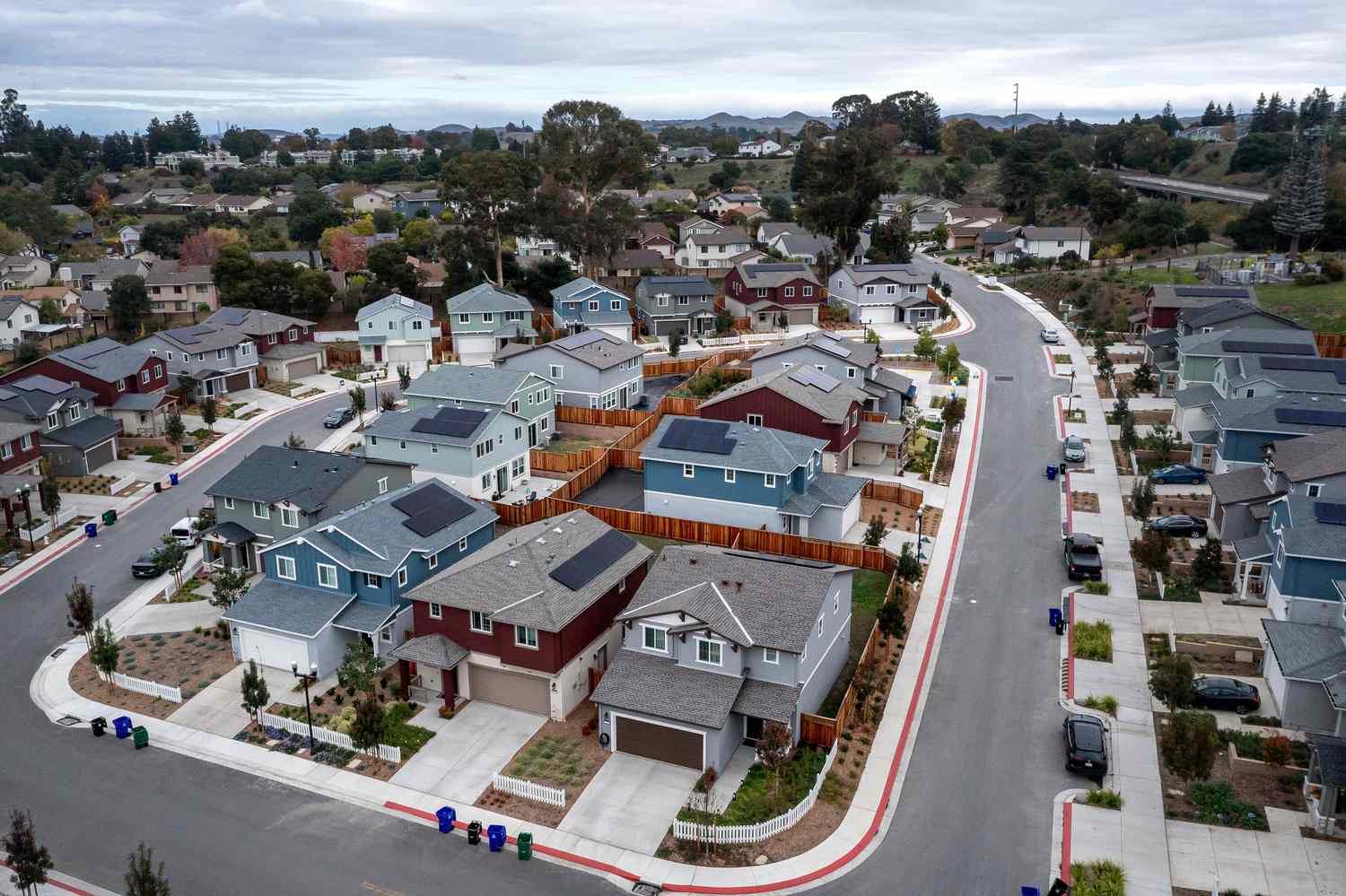
It May Be Better to Buy A New Home
While high prices have depressed home sales across the board, sales of newly constructed homes are outpacing those of existing homes, which remain at historically low levels.
Generally, new homes have been more expensive than existing homes. However, more homebuilders are offering incentives, making new home prices more competitive with those of existing homes. In August, the most recent month for which data is available, new homes sold for an average of $413,500, lower than the average price of $422,600 for existing homes.
Builder incentives, which can include mortgage rate buy-downs, reduced closing costs, and credits for housing design changes, have helped push new home sales higher. The limited inventory of existing homes is also making new home prices competitive.
“Buyers are seeing a lot of value in new homes and taking advantage of the unusually high glut of new homes for sale on the market,” said Heather Long, chief economist at Navy Federal Credit Union.
