

Key Takeaways
- Federal Reserve Chair Jerome Powell only has three policy meetings left before his term ends in May.
- Powell’s impending replacement makes it more challenging to predict future interest rates, as new leadership may alter the Fed’s strategy.
- Financial markets are pricing in lower future interest rates than Fed officials have forecast, likely because President Donald Trump’s nominee would push for lower rates.
Everything the Federal Open Market Committee said and did at its meeting Wednesday came with a huge asterisk: New leadership could push the central bank to move its key interest rate in a different direction in a few months.
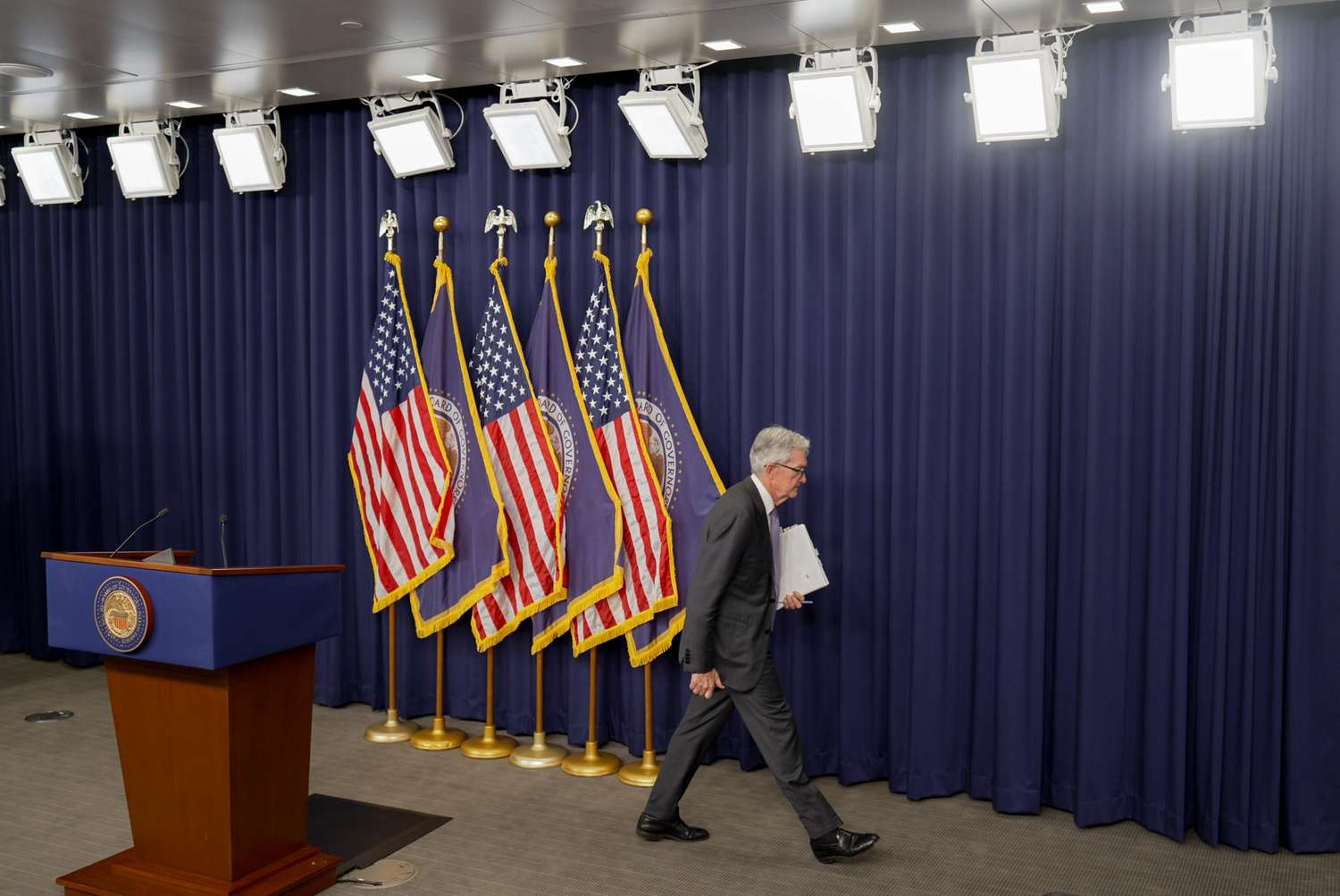
The Fed’s policy committee voted to lower the fed funds rate by a quarter point this week for the third consecutive meeting, aiming to stabilize the faltering job market by reducing borrowing costs. It was one of the last scheduled meetings of the Federal Open Market Committee before Chair Jerome Powell’s term ends in May, and investors and economists have been speculating about what direction the central bank will take under new, Trump-appointed leadership.
That fact came up several times at Wednesday’s post-meeting press conference. A question about whether the impending end of his term hindered Powell’s ability to do his job or change his thinking prompted his shortest answer of the conference: “No.”
Nonetheless, the leadership change complicates Powell’s job of informing the public about the future course of the federal funds rate, which affects borrowing costs on all kinds of loans.
What This Means For The Economy
As Powell’s term nears its end, investors will likely increasingly weigh the opinion of the incoming Fed chair—whoever that may be—more heavily than that of Powell when it comes to future interest rate policy.
Market Watchers Move On
The impending leadership change has altered how financial market participants view the future of the Fed and its interest rate policies. On Wednesday, Fed officials projected they would cut rates by just a quarter-point in 2026, down to a range of 3.25% to 3.5%.
However, traders are pricing two quarter-point cuts as the most likely scenario, according to the CME Group’s FedWatch tool, which forecasts rate movements based on fed funds futures trading data. That would be more in line with President Donald Trump’s often-stated demands for sharply lower interest rates.
Kevin Hassett, a top economic advisor to Trump and reported front-runner for the job, has recently been pushing for more rate cuts and could continue that line of thinking if and when he becomes chair.
“The elephant in the room is, we will have a new Fed Chair in May and given Trump’s very vocal desire for lower rates, the market is pricing in an additional rate cut compared to the Fed’s projections. This is not surprising,” John Luke Tyner, portfolio manager and head of fixed Income at Aptus Capital Advisors, wrote in a commentary.
Other Factors Could Also Distort the Outlook
The Fed’s projections are also less reliable because the government shutdown has delayed crucial economic data on inflation and employment. The Fed relies on reports from the government’s statistical agencies as it pursues its dual mandate of keeping inflation low and employment high.
“The Fed’s guidance probably tells us less than usual about the interest rate outlook, for two big reasons,” Bill Adams, chief economist at Comerica, wrote in a commentary. “First, they know less than usual about the current state of the economy because the shutdown delayed the release of economic statistics. Second, the Fed’s guidance doesn’t account for how its approach will change after Chair Powell’s term ends in May.”
In addition to the change of Fed chair, there will be a further shakeup of the 12-member voting committee that sets interest rates. Four seats rotate annually among presidents of 11 regional Fed banks. New York’s Fed president has a permanent seat on the board. Some economists said the new voters will be more “hawkish,” or less inclined to vote for lower interest rates, than those they are replacing.
Another potential wild card is a Supreme Court case that will decide whether Trump can fire Fed Governor Lisa Cook, which could potentially open another spot on the committee for Trump to fill with someone friendly to his policies. The outcome of that case will determine whether the Fed retains its traditional independence from direct White House control.
Given all that, in his last few meetings, some speculated that Powell may prioritize sending messages besides what interest rates are likely to be in a few months.
“Fed Chair Powell’s job in his final few months at the helm is to ensure central bank independence and credibility,” wrote Heather Long, chief economist at Navy Federal Credit Union. “He needs to keep his options open for January and March and push back on assumptions that a cut is necessary.”
