

The FBI on Thursday morning arrested a suspect accused of planting pipe bombs outside the Republican and Democratic party headquarters in Washington, D.C., prior to the Jan. 6, 2021, Capitol riot, the Trump administration said.
The suspect, Brian Cole Jr., is charged with “use of an explosive device,” U.S. Attorney General Pam Bondi said at a press briefing Thursday afternoon.
The investigation is ongoing and more charges could be filed, Bondi noted.
Cole is also accused of transporting an explosive device in interstate commerce, as well as “the attempted malicious destruction” of explosive materials, said Jeanine Pirro, U.S. Attorney for the District of Columbia.
The arrest is a massive breakthrough in the nearly five-year federal investigation into who placed the bombs, which did not detonate.
“An individual who is now alleged to have placed multiple explosive devices to blow up multiple people and multiple officials [and] innocent civilians is now arrested,” FBI Director Kash Patel said at the press briefing.
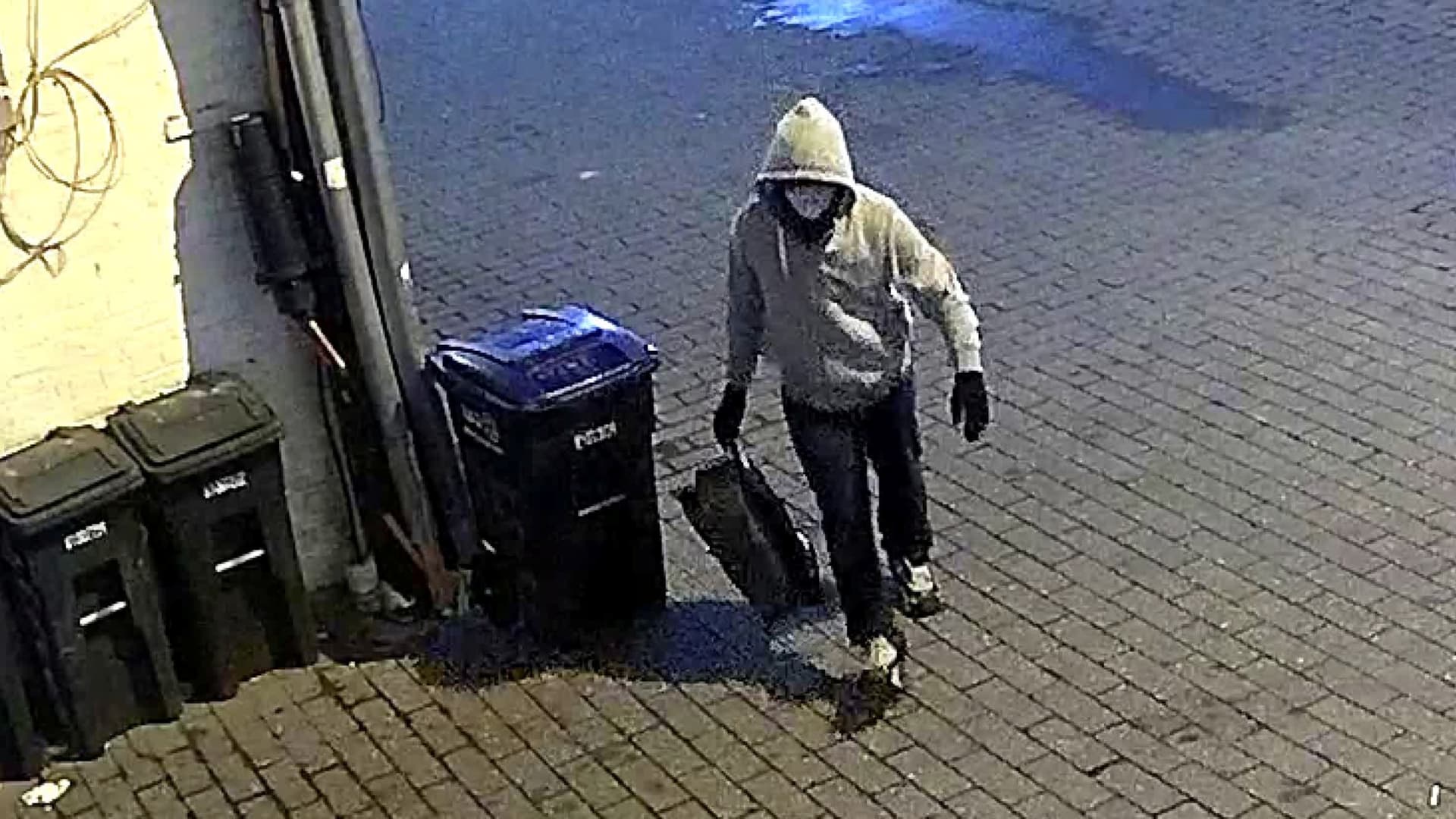
A surveillance photo released by the FBI shows a person in Washington, U.S., January 6, 2021. The FBI issued a notice, which features this surveillance photo, requesting information on person(s) responsible for pipe bombs left at the Republican National Committee (RNC) and Democratic National Committee (DNC) headquarters.
FBI | Reuters
MS NOW, which reported the arrest earlier Thursday morning, said police have not yet determined a motive, citing a law enforcement official.
But the suspect has been linked to statements that show support for an anarchist ideology, two people briefed on the arrest told the news outlet.
The discoveries that led to the arrest did not come from new evidence, but rather from the same trove of material that had mostly been gathered in 2021 and 2022, two sources told MS NOW.
That means the suspect could feasibly have been arrested years earlier — a fact that could cause embarrassment for the FBI, those sources said.
But Patel, at Thursday’s presser, touted that “we did not discover any new information.”
The agency instead “reexamined every piece of evidence, sifted through all the data,” Patel said, claiming that was “something that the prior administration refused and failed to do.”
As recently as late October, the bureau was offering a $500,000 reward for information that would help authorities identify the Capitol Hill bombing suspect.
A suspect in the planting of explosive devices near the Democratic and Republican committee headquarters in Washington is seen walking past the Capitol Hill Club, also known as the National Republican Club of Capitol Hill, in Washington in this still frame taken from video released on March 9, 2021.
Handout | Reuters
Surveillance video released by the FBI shows that around 7:54 p.m. ET on Jan. 5, 2021, a roughly 5-foot-7-inch-tall person wearing a face mask, black gloves and a gray hoodie placed a bomb outside the Democratic National Committee building.
About 22 minutes later, the same person appeared to place a second bomb by the Republican National Committee’s offices, according to the footage.
The incident occurred hours before a mob of President Donald Trump’s supporters stormed the U.S. Capitol as lawmakers prepared to confirm former President Joe Biden’s 2020 election win.
The timing of the attempted crime, and the elusiveness of the perpetrator, have made the case a hotbed of conspiracy theories.
Last month, a conservative news site named a former U.S. Capitol Police officer as a possible match for the pipe bomber, based largely on a “gait analysis.” The FBI poured cold water on the story, and the accused officer cleared her name by providing a video of her playing with her puppies at the time the bombs were placed, CBS News reported.
The yearslong investigation was a priority for the FBI, the Bureau of Alcohol, Tobacco, Firearms and Explosives, the D.C. Metropolitan Police Department and the U.S. Capitol Police.
Security fencing remains installed around the Democratic National Committee (DNC) headquarters on November 16, 2023 in Washington, DC.
Kevin Dietsch | Getty Images
By January, the FBI said investigators and related partners had visited more than 1,200 residences and businesses, interviewed over 1,000 people, reviewed nearly 40,000 video files and assessed more than 600 tips.
As part of their search for the bomber, the FBI subpoenaed credit card data from box-store retailers to identify people who bought the same type of battery components believed to be used in the devices, MS NOW reported.
Read more CNBC politics coverage
Agents then compared those buyers with the owners of phones tracked near the RNC and DNC buildings around the time the bombs were placed — but found no matches, according to MS NOW.
They also analyzed the attempted bomber’s clothing, filing subpoenas for receipts from shoe sellers — and receiving a list of almost 1,200 sales — after identifying what they believed were the suspect’s sneakers, MS NOW reported.
The suspect wore light gray Nike Air Max Speed Turf shoes with a yellow logo, the FBI has said.
This is breaking news. Please refresh for updates.
