

Key Takeaways
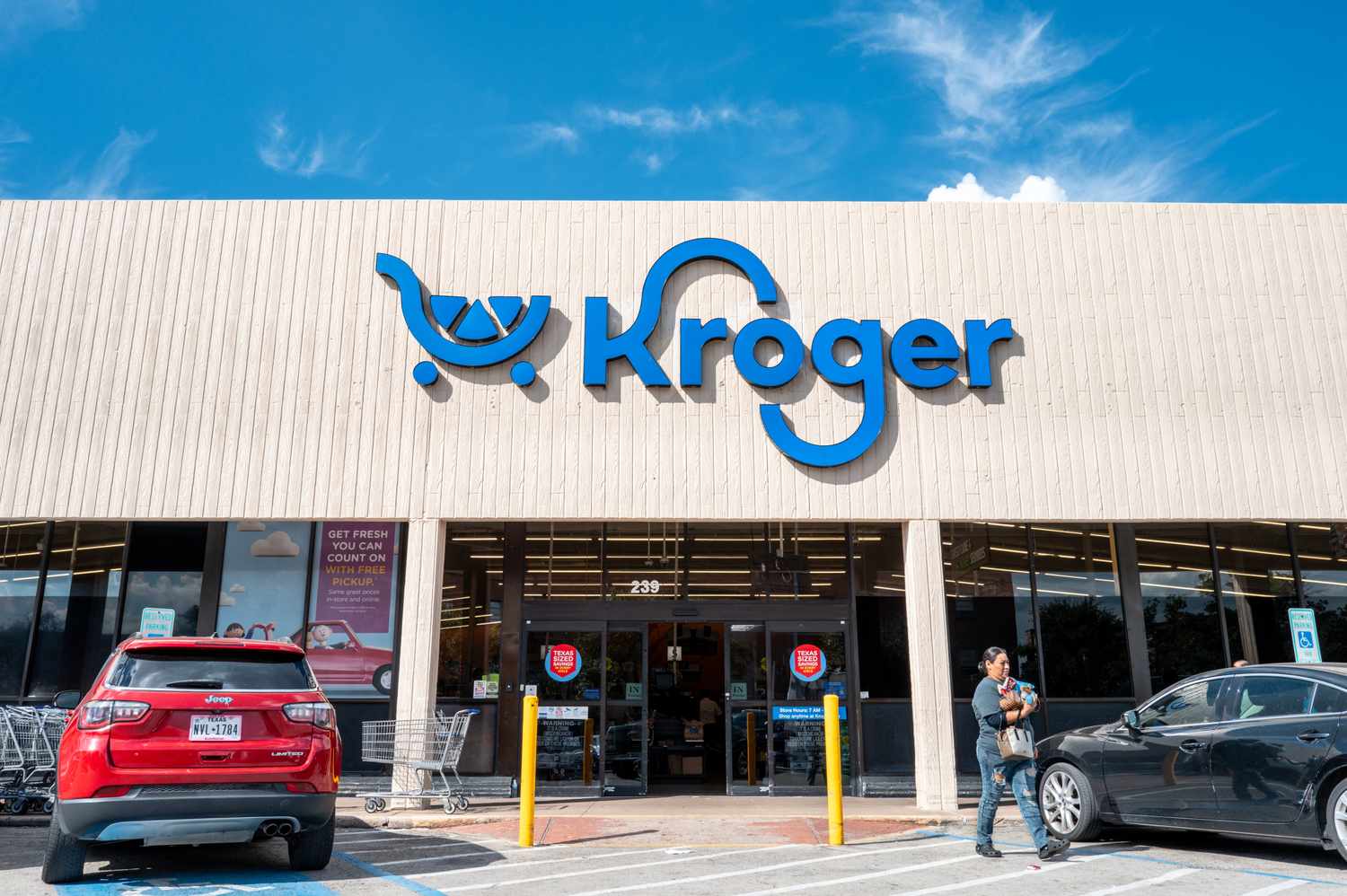
- Middle-income shoppers are exhibiting some of the signs of stress that low-income households have for some time, according to the supermarket giant Kroger.
- Consumers are stretching their budgets by making smaller, more frequent purchases and buying fewer discretionary items, the company said.
A trip to the store isn’t as fruitful as it used to be.
Many consumers aren’t able to buy as many items on grocery runs, and are making multiple, smaller shopping trips, according to supermarket operator Kroger (KR). Middle-income households are stretching their budget across multiple visits, while pressure mounts on the low-income households who have been behaving this way for months, interim CEO Ronald Sargent said Thursday during a conference call with investors following the release of quarterly results.
“Middle-income customers are feeling increased pressure,” Sargent said, according to a transcript made available by AlphaSense. “They’re making smaller, more frequent trips to manage budgets, and they are cutting back on discretionary purchases.”
Fewer people bought meat, where inflation has been particularly intense, as well as discretionary items like snacks and alcohol, Sargent said.
Consumers are reacting to a number of concerns, he said, including a sluggish job market, the government shutdown, the interruption of Supplemental Nutrition Assistance Program benefits, and inflation. Pressure is most acute for low-income households, retailers said.
Low-priced products are critical for low-income shoppers, who are focused on keeping their total spend down, rather than on value or price-per-unit, Dollar General (DG) CEO Todd Vasos said on a conference call Thursday. Sales in Dollar General’s $1 sections grew 7.6% year-over-year last quarter, while same-store sales rose 2.5%, Vasos said.
“The consumer still needed to feed her family” during the SNAP stoppage and used cash, Vasos said, according to a transcript. “As those benefits flowed in, we also then got the SNAP benefit on the second part of the month. So, quite frankly, [that] was a net positive for us.”
Why This News Matters
Retailers are working through tariffs and rising costs, and in many cases raising at least some of their prices. But increasing prices too much could be problematic during a time when even the well-to-do are shopping at discount stores.
Dollar Tree (DLTR) saw traffic drop amid “sticker shock” this back-to-school shopping season, when the chain raised prices in response to inflation, CEO Michael Creedon Jr. said on a conference call this week. Customers have since returned, he said. But all of the chain’s 4.2% year-over-year growth in comparable store sales last quarter came from pricier purchases, given that traffic was down.
“Consumers are feeling much more uncertain than they have in a very long time,” said Elizabeth Lafontaine, director of research at Placer.ai, which tracks retail foot traffic.
Kroger, Walmart (WMT) and Target (TGT) are trying to put shoppers at ease by announcing price rollbacks. Still, staples feel expensive for many after several years of above-target inflation.
Price cuts are also part of the competition for affluent Americans, who are increasingly price sensitive, but still spending enough to be the force behind most of our economic growth. The well-to-do are more frequently buying from dollar stores and value-oriented companies.
The K-shaped economy—where the wealthy are comfortable spending, but others are not—is deepening the difference between trends at Walmarts in wealthy areas and those in low-income communities, CFO John David Rainey said at a conference this week.
“The disparity in wage growth between those income cohorts was as large as it’s been in almost a decade,” Rainey said, according to the transcript. “We see that in our customer base.”
