

Authored by Naveen Athrappully via The Epoch Times (emphasis ours),
In 2025, electric cars accounted for 95.9 percent of all new cars sold in Norway, the Norwegian Road Traffic Information Council (OFV) said in a statement on Jan. 2.
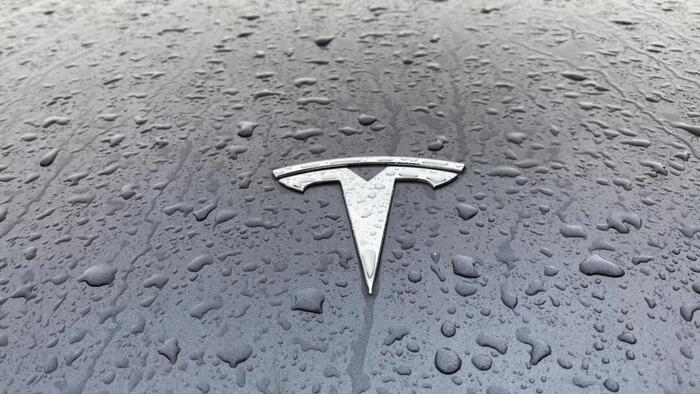
The Tesla logo on the hood of a car in Oslo, Norway, on Nov. 10, 2022. Victoria Klesty/Reuters
“This means that the goal set by politicians 10 years ago has been achieved: New car sales in Norway are now emission-free,” it said. A total of 179,550 new passenger cars were registered last year, breaking the previous annual record set in 2021.
“2025 was also the year when the number of electric cars surpassed the number of diesel cars and became the largest powertrain in the total passenger car population,” the statement said.
For December 2025 specifically, 35,188 new passenger cars were registered in the country, with electric cars accounting for 97.6 percent of these vehicles, a sign of how EVs “now dominate new car sales” in the country, OFV said.
Norway, with a population of around 5.53 million, is a high-income country, according to Harvard data. With a GDP per capita of $87,702, the nation is the third-richest per capita among 145 countries. Norway’s oil wealth helps sustain its welfare system.
Tesla consolidated its position as “Norway’s largest car brand” last year, with a record 34,285 new passenger cars registered—a 19.1 percent market share, roughly one in five new cars.
Tesla’s Model Y set an annual record last year, hitting 27,621 first-time registrations, which is the “highest number ever registered for a single car model in Norway in one year,” according to OFV.
Chinese companies also saw their share in Norway’s EV market rise last year. A total of 24,524 new passenger cars registered last year were of Chinese origin. This accounted for 13.7 percent of new car sales, up from 10.4 percent the previous year, according to the council. The biggest Chinese car brand was BYD.
“2025 has been a very special car year. We see the effect of long-term and targeted electric car policy, and how specific tax decisions have immediate effects on the market,” OFV Director Geir Inge Stokke said.
“The final sprint towards the end of the year has been historically strong, and there is no doubt that the VAT change from January 1, 2026, has contributed to a great many choosing to secure a new electric car before the year was over.”
As for the European Union overall, electric cars accounted for 16.9 percent of the EU new car registrations for the January–November 2025 period, according to a Dec. 23, 2025, statement from the European Automobile Manufacturers’ Association.
The biggest markets for new EV registrations in the EU were Germany, Belgium, the Netherlands, and France, with registrations in Germany jumping over 41 percent year-over-year.
However, hybrid-electric cars remained the “preferred choice among EU consumers,” accounting for 34.6 percent of new registrations, more than double the share of electric cars, the association said.
While EV sales in the EU remain robust, the picture is different in the United States.
New U.S. EV sales in November 2025 are estimated to total 70,255 units, down 41.2 percent from a year ago, industry expert Cox Automotive said in a Dec. 15 statement. Compared to October 2025, November sales were down 5.2 percent.
Cox attributed the slump to the expiration of a federal tax credit.
The New Clean Vehicle Tax Credit granted buyers of new EVs up to $7,500 in incentives. The measure was included in the Inflation Reduction Act, signed into law by President Joe Biden in 2022.
President Donald Trump signed the One Big Beautiful Bill Act into law in July 2025, ending the credits on Sept. 30 of that year.
“Market share reached multi-year lows as sales declined. Weak demand fueled a surge in inventory, with days’ supply reaching elevated levels. Pricing eased across the market, underscoring an industry struggling to find balance in the post-incentive era,” Cox said.
“As we head into 2026, the EV market will continue navigating post-incentive challenges, with inventory and pricing dynamics shaping near-term performance.”
As for the overall new-vehicle sales situation in the United States, Cox estimates the number will reach 16.3 million units in 2025, up by almost 2 percent from 2024 and the “best result since 2019,” the company said in a Dec. 17 statement.
For 2026, Cox predicts new-vehicle sales pace to decline by 2.4 percent to 15.8 million units, highlighting factors such as the lack of EV tax incentives.
While Tesla saw sales jump in Norway, its global performance has taken a hit. In 2025, the company delivered 1.64 million units, according to a Jan. 2 statement. This is down 8.3 percent from 1.79 million deliveries in 2024.
Tesla shares fell by 2.59 percent on Jan. 2.
Loading recommendations…
