

A federal judge in Minnesota ruled last Saturday that Immigration and Customs Enforcement (ICE) agents violated the Fourth Amendment after they forcibly entered a Minnesota man’s home without a judicial warrant. The conduct of the agents closely mirrors a previously undisclosed ICE directive that claims agents are permitted to enter people’s homes using an administrative warrant, rather than a warrant signed by a judge.
The ruling, issued by US District Court judge Jeffrey Bryan in response to a petition for a writ of habeas corpus on January 17, did not assess the legality of ICE’s internal guidance itself. But it squarely holds that federal agents violated the United States Constitution when they entered a residence without consent and without a judge-signed warrant—the same conditions ICE leadership has privately told officers is sufficient for home arrests, according to a complaint filed by Whistleblower Aid, a nonprofit legal group representing whistleblowers from the public and private sector.
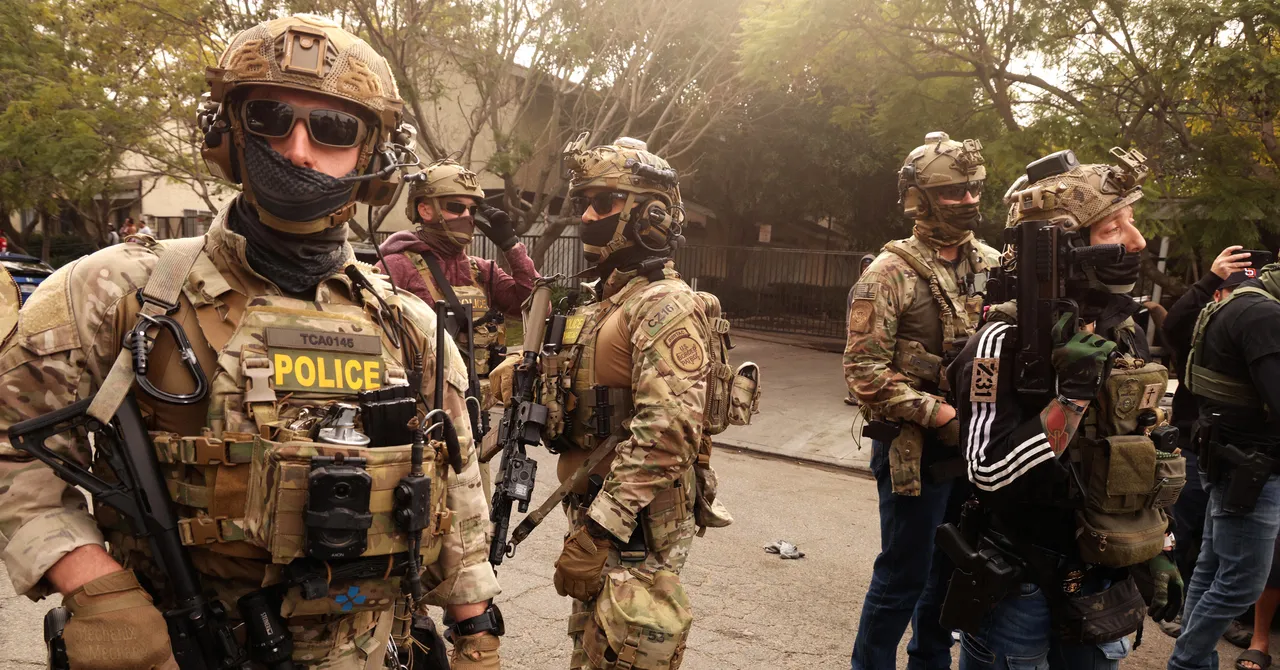
In a sworn declaration, Garrison Gibson, a Liberian national who has lived in Minnesota for years under an ICE order of supervision, says agents arrived at his home in the early morning on January 11 while his family slept inside. He says he refused to open the door and repeatedly demanded to see a judicial warrant. According to the declaration, the agents initially left, then returned with a larger group, deployed pepper spray toward neighbors who had gathered outside, and used a battering ram to force the door open.
The declaration was filed as part of a January 12 Minnesota lawsuit against Homeland Security secretary Kristi Noem challenging federal immigration enforcement operations in the Twin Cities, which state officials characterize as an unconstitutional “invasion” by ICE and other agents that has roiled Minneapolis and Saint Paul.
Federal officials did not contest Gibson’s habeas petition.
Gibson, who reportedly fled the Liberian civil war as a child, says agents entered his home without showing a warrant. His wife, who was filming at the time, warned that children were inside, he says, and that agents holding rifles stood in their doorway. “One agent repeatedly claimed ‘We’re getting the papers’ in response to her demand to see the warrant,” he says. “But without showing a warrant, and apparently without having one, five to six agents moved in as if they were entering a war zone.”
Only after he was handcuffed, Gibson says, did the agents show his wife an administrative warrant.
One day after the judge ordered Gibson’s immediate release, ICE agents took him back into custody when he appeared for a routine immigration check-in at a Minnesota immigration office, according to his attorney, Marc Prokosch, who said Gibson arrived believing the court order had resolved the matter.
“We were there for a check-in, and the original officer said, ‘This looks good, I’ll be right back,’” Prokosch told the Associated Press. “And then there was a lot of chaos, and about five officers came out and then they said, ‘We’re going to be taking him back into custody.’ I was like, ‘Really, you want to do this again?’”
The re-arrest did not reverse the court’s finding that ICE violated the Fourth Amendment during the warrantless home entry, but underscores how the agency retains civil detention authority even if a judge rules that a specific arrest was unconstitutional.
Court records reviewed by the Associated Press show Gibson’s criminal history consists of a single felony conviction from 2008, along with minor traffic violations and low-level arrests. The 2008 conviction, which was cited by ICE in his removal order, was reportedly later dismissed by the courts.
