

We may earn a commission from links on this page.
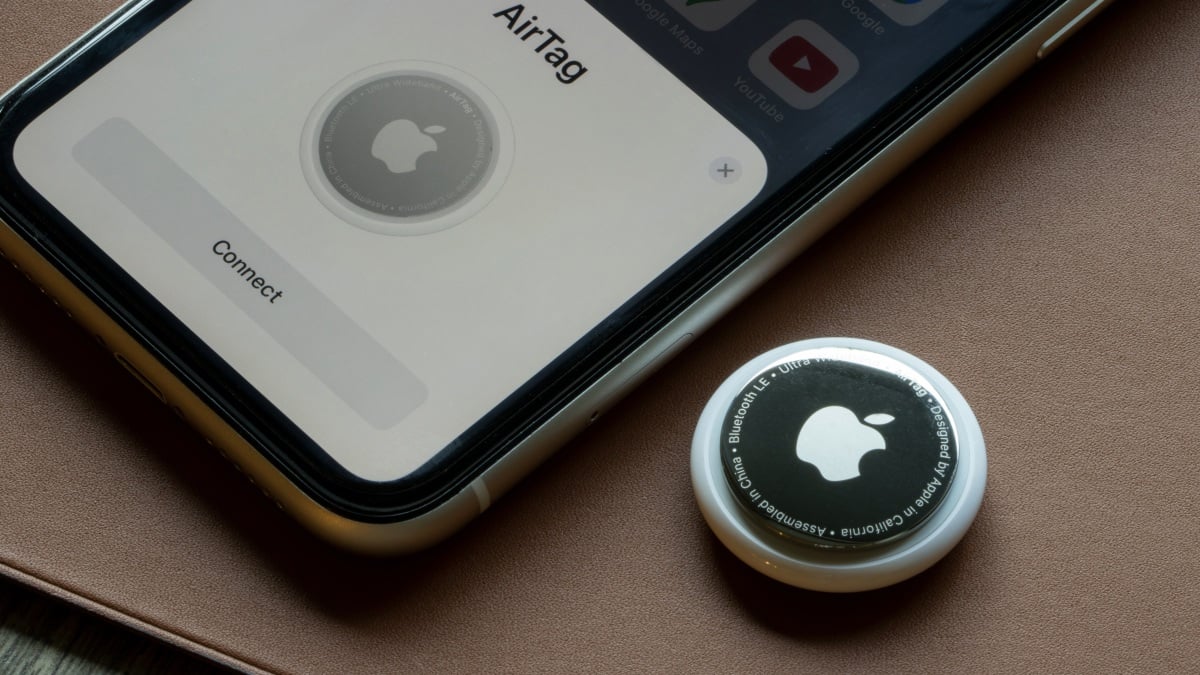
On Monday, Apple released a new AirTag—but you wouldn’t know that from looking at it. The new AirTag is visibly identical to the old one, despite dropping nearly five years later. But the point of this refresh wasn’t to introduce a new design, or even a remarkably improved tracker. Instead, Apple added a couple subtle upgrades that benefit new buyers, without displacing existing AirTag users.
There are two key improvements here: The first impacts Precision Finding, Apple’s system to guide you to lost items. Your device uses its ultra wideband (UWB) chip to give you detailed directions to the location of your AirTag, including haptics, visual, and auditory cues. The second-gen AirTags have a newer UWB chip, which boosts Precision Finding by 50%. That means your new AirTag can be as much as 1.5 times farther away than your old AirTag while still showing up in Precision Finding. Those improvements carry over to the speaker, as well. The new AirTag’s speaker is 50% louder than the original model, which could help you hear your missing tracker better, especially if it’s buried somewhere like a couch cushion.
The main thing that didn’t change was the most important part: the price. One AirTag is still $29, while a four-pack is still $99. But before you go out an buy one (or four), you should know that your iPhone might not be able to take advantage of these new perks. If so, you’d be better off spending your money on the first-gen AirTag.
What you need to take full advantage of the new AirTag
As noted by Techradar, the new AirTag actually requires iPhones and iPads to be running iOS 26 and iPadOS 26 before they can connect. That immediately eliminates any iPhones and iPads that do not support these latest updates, of course (generally any iPhones older than the iPhone 11) but it also presents a challenge to anyone who has simply been holding off from installing iOS 26 and iPadOS 26. If you want to use these newest AirTags, you’ll need to update. If you don’t want to update, stick with the OG AirTags.
Even if your iPhone is running iOS 26, it might not work with one of the new AirTag’s big features. In order to take advantage of that 50% improved Precision Finding, you need an iPhone 15 or newer. That’s because these iPhones also come with Apple’s newest UWB chip, which is necessary for that upgraded location feature. (The iPhone 16e unfortunately does not have this new UWB chip.)
If you have an iPhone 14 or older running iOS 26, you’ll still be able to use Precision Finding with the new AirTag, but it’ll be the standard Precision Finding experience you had with the original. (Apple Watches can also take advantage of this standard Precision Finding, so long as you have an Apple Watch Series 9 or later, or Apple Watch Ultra 2 or later, running watchOS 26.2.1.)
What do you think so far?
Buy an older AirTag if you don’t meet these specifications
Apple doesn’t sell the first-generation AirTag anymore, but that’s not an issue. If you don’t meet all of the specifications above, you should look into buying the older AirTags.
That’s not because the new AirTags won’t work just as well; I only say this because you can save some serious money. Instead of dropping $99 on a four-pack of second-gen AirTags, you can currently spend $69.99 on a four-pack of first-gen AirTags. These trackers will work exactly the same, minus the louder speaker on the second-gen AirTags, all the while saving you $30. You can also save a bit off a single AirTag, as the first-gen AirTags are going for $25.99 on Amazon.
If you’d rather future-proof your AirTags, you could spend full-price on the second-gens without worry. However, if you don’t plan to upgrade your iPhone anytime soon, this is a pretty solid deal.
