

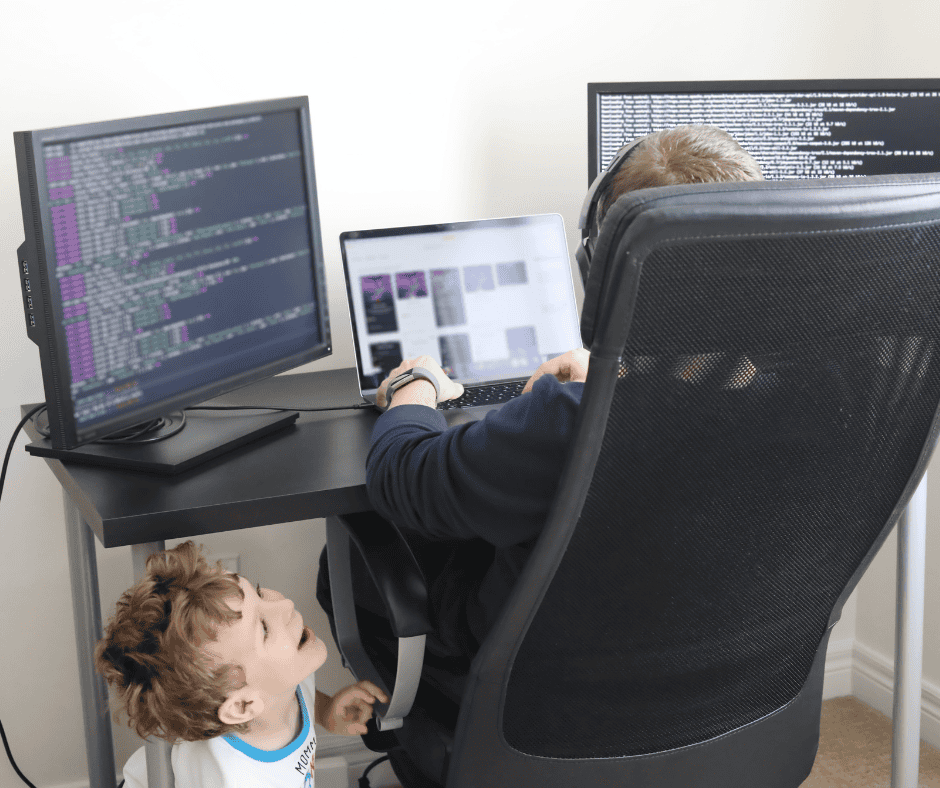
Working from home didn’t just change where we work—it quietly reshaped how families function. For many dads, especially those who found themselves at home during the pandemic, the lines between work, parenting, and personal time blurred almost overnight.
That blur is where frustration tends to live.
What struck me in my conversation with Thom Gibson is how little of his system is about optimization—and how much of it is about agreement. Default schedules. Clear hand-offs. Defined work hours that actually end. These aren’t rigid rules; they’re shared expectations. And that distinction matters.
Default Schedules Create Space for Presence
One of the most practical ideas Thom shared was the concept of a “default week.” Instead of renegotiating responsibilities every single day, you establish a baseline that both partners understand. From there, you deviate intentionally rather than reactively. That alone eliminates a surprising amount of friction.
The same thinking shows up in how Thom approaches meals. No elaborate prep. No constant decisions. Just a small rotation of familiar dinners, planned once, adjusted as needed. It’s not about eating the same thing forever—it’s about removing unnecessary mental load so energy can go where it actually matters.
Journaling plays a similar role. Thom moved away from daily logging toward weekly reflection, focusing less on what happened and more on what mattered. His Plus / Minus / Next framework creates just enough distance to see patterns without losing the emotional truth of the moment.
And then there’s the six-hour workday—not as a hard limit, but as a design constraint. When time is treated as finite and valuable, priorities sharpen. Meetings shrink. Work becomes more deliberate. Family time stops feeling like an interruption and starts feeling like the point.
If you’re working from home and constantly feel behind—at work or at home—this isn’t a motivation problem. It’s a design problem. And better defaults might be the most underrated solution we have.
