

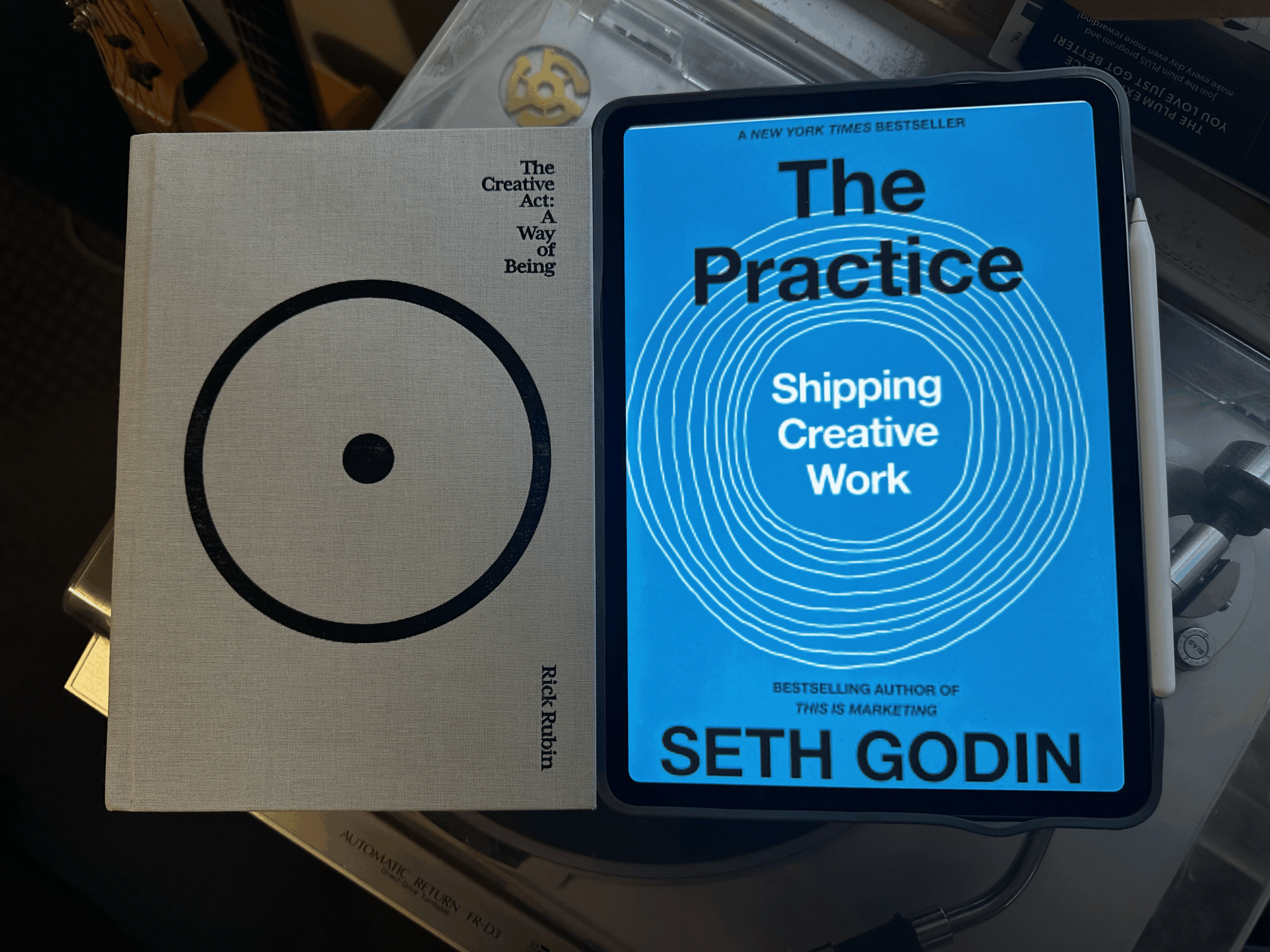
A few years ago, I found myself deep into Shangri-La, the Showtime series that follows Rick Rubin around his almost-mythic creative compound. The whole show feels like a slow exhale—Rubin barefoot, staring into the distance, coaxing clarity out of artists who arrive carrying their own storms.
And then, in the middle of all that quiet weirdness, Seth Godin appeared.
I actually laughed out loud. Seth—buttoned-up in his own way, endlessly articulate, relentlessly curious—felt like an unlikely visitor to Rick Rubin’s barefoot kingdom. For a split second, it was like seeing two characters from different novels suddenly share a chapter.
But the surprise didn’t last long.
Because the more I watched them side by side, the more obvious it became: these two are basically working on the same problem from different angles.
Rubin says the audience comes last. Godin says to know what your audience wants ten minutes before they do. Rubin doesn’t read the news. Godin practically writes the news for people who care about meaningful work. Rubin tunes the room. Godin tunes the signal.
Different sentences. Same sentence underneath.
Both are obsessed with resonance. Both treat attention as sacred. Both believe that work worth doing requires stripping away the things we think we’re supposed to care about so we can focus on the things that actually matter. One does it through sound waves and silence; the other through story, permission, and posture.
Somewhere in the middle of that recognition, I found myself remembering a conversation I had with Seth years ago when he released The Practice. I hadn’t been recording video versions of my podcast at the time, but our discussion changed that. It was the rare case where something in me said: “No, this one needs to be seen.”
That moment was a pivot point—one of those small decisions that quietly reshapes the work that comes after it. Rick Rubin calls them invitations. Seth calls them doors. I tend to think of them as the moments where the path gets a little wider.
And that brings me back to these two seemingly opposite figures who turn out to be closer than they appear.
Rubin talks about clearing the room so the real work can emerge. Godin talks about showing up every day whether inspiration arrives or not. Both approaches point toward the same reality: creativity isn’t a miracle. It’s a discipline wrapped in mystery. A commitment wrapped in possibility.
In other words… a practice.
And maybe that’s the bigger truth here: whether we’re engineering sound, crafting a story, running a business, or simply trying to make better choices with our time, we aren’t building monuments. We’re practicing—again and again—until the next version of our work reveals itself.
Rubin has his way. Godin has his. I have mine. You have yours.
But underneath it all, we’re all doing the same thing: Returning to the work. Listening closely. Letting the next note appear.
