

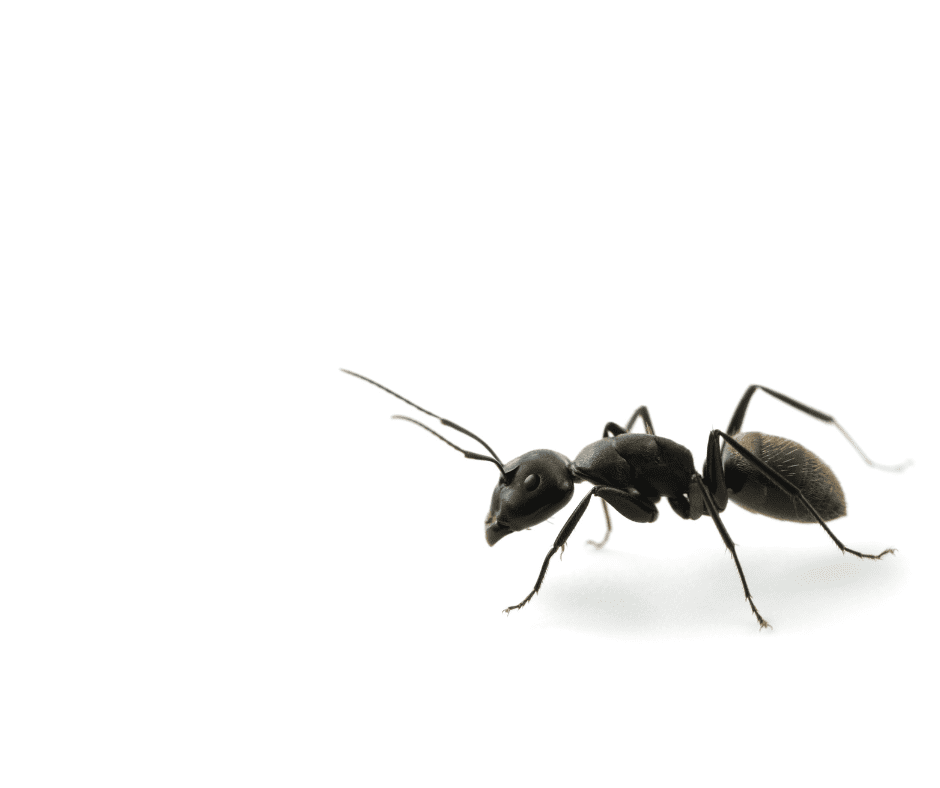
Thoreau’s most-quoted line about productivity still cuts cleanly through the noise:
“It is not enough to be busy. So are the ants. The question is: What are we busy about?”
It’s a line usually read as a warning about our modern obsession with activity. Ants are the archetype of industriousness, after all — a kind of natural productivity parable. They build, march, forage, coordinate, and sustain entire civilizations grain by grain.
But the more I’ve learned about actual ant colonies, the more fascinating — and nuanced — that comparison becomes.
Because not all ants are busy.
Scientists studying Temnothorax colonies have identified a significant portion of workers who spend much of their time inactive. They’ve been nicknamed “lounger ants” or “lazy workers,” though the research now makes it clear they are neither.
In a 2014–2015 study, Daniel Charbonneau and Anna Dornhaus tracked these inactive workers in both lab and wild colonies. Their inactivity wasn’t a quirk of captivity. It was stable, consistent, and natural. Many ants simply… didn’t do very much.
Why Scientists Rethought the ‘Lazy Ant’
At first, researchers assumed they were freeloaders — beneficiaries of the colony’s labor who weren’t contributing.
But the story didn’t end there.
In a follow-up experiment published in PLOS ONE (2017), Charbonneau and Dornhaus removed the colony’s most active workers to see what would happen. Suddenly, the supposedly “lazy” ants increased their activity dramatically, taking over tasks essential to the colony’s survival.
When the inactive ants were removed, by contrast, the most active workers did not replace them — suggesting that the inactive group played a distinct, irreplaceable role.
In other words: Their inactivity wasn’t a flaw. It was design.
These ants were reserve capacity — the colony’s built-in margin. They conserved energy, absorbed unpredictability, and flexed when conditions changed. They made the system resilient.
Even ants — icons of efficiency — rely on slack.
Which brings me back to Thoreau.
Maybe the lesson isn’t simply that ants are busy. Maybe it’s that ants understand something we forget: uninterrupted activity isn’t sustainable. Systems need margin.
What Humans Get Wrong About Busyness
Humans have our own versions of lounger ants — the colleagues who seem to drift on the periphery, the team members who work in bursts instead of sprints, the parts of ourselves that feel dormant or under-utilized. We tend to judge these patterns because we view busyness as a moral metric.
But the ants suggest something else: A healthy system includes phases of action, phases of rest, and phases of latent potential.
Trying to eliminate “lounging” — in ourselves or in others — is like trying to eliminate rest notes from music. You end up with noise, not rhythm.
So Thoreau’s question remains the better one:
What are we busy about? What is the intention behind our activity? What is the devotion behind our effort?
Busyness isn’t the problem.
Busyness without direction is.
And if ants can embrace margin without shame, maybe we can too.
If this idea resonates, I explore it — and others like it — more deeply in The Lantern, my weekly letter on time, attention, and the quiet shift from productivity to productiveness. You can sign up below to receive it, along with occasional notes designed to help you live and work with more intention, not just more activity.
