

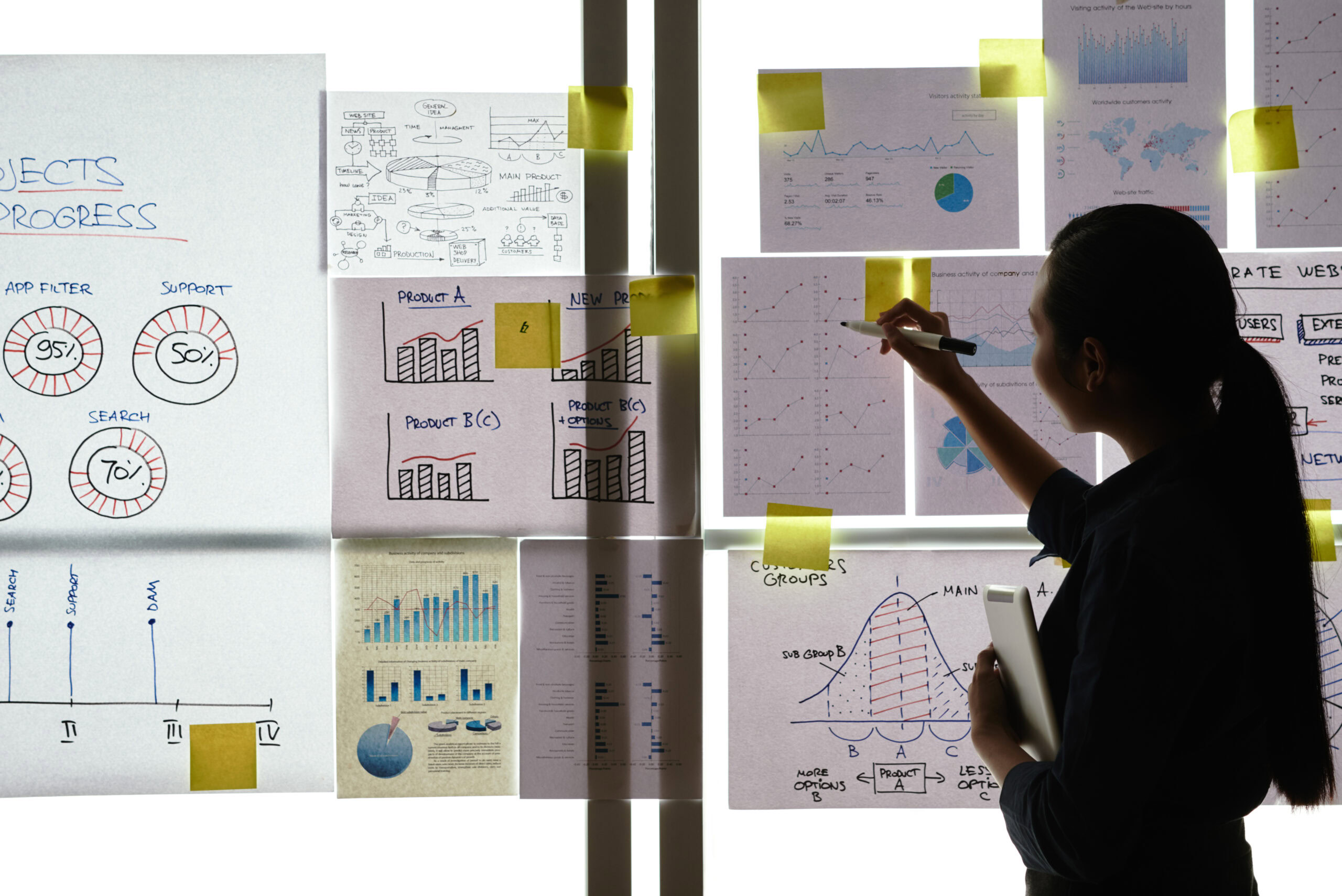
Ever felt like you’re stuck in a loop with your goals? January rolls around, you’re full of enthusiasm, you set ambitious targets, and then… crickets. By March, those grand plans are a distant memory, and you’re left wondering what went wrong. You’re not alone. Many of us have been there, myself included. For years, I’d set the same New Year’s resolutions, only to see them fizzle out. It felt like I was constantly chasing my tail, reading every book on goal-setting, but never quite finding a consistent way to make my own personal aspirations stick.
It’s a common story: we’re great at setting the destination, but the journey often gets lost in the shuffle. We might know what we want—a fitter body, a new house, a debt-free life—but the how remains elusive. This is where personal strategic planning comes in. It’s a method I’ve refined over years, taking cues from how successful businesses operate and applying them to our individual lives. It’s about moving beyond wishful thinking and creating a clear, actionable roadmap to achieve your most important goals.
Why Your Goals Keep Fading: The Missing Piece
For a long time, I struggled with my personal goals, even though I was great at executing business strategies. My mentor, Nick, would lay out quarterly plans for his company, and my job was simply to execute. He’d tell me exactly what to focus on, what habits to build, and what metrics to track. It was easy because the heavy lifting of strategizing was already done. But when it came to my own life, I lacked that clear, consistent framework.
I’d read all the classic goal-setting books—Zig Ziglar, Jim Rohn, Tony Robbins, Brian Tracy—and while some ideas resonated, none provided a truly coherent plan that I could consistently follow. I’d often find myself setting the same goals year after year, a clear sign that something wasn’t clicking. The breakthrough came when I started looking at how successful companies operate. They don’t just set annual goals; they break them down into quarterly strategic sessions. This sparked a thought: why don’t we do this for our personal lives?
This realization led me to develop a three-pillar method for personal strategic planning: Clarity, Gap Analysis, and Strategy. Most people are pretty good at the first part, but they often skip the crucial second step, which is why their plans fall apart. Let’s dive into each of these.
Pillar 1: Clarity – Knowing Your Destination
Clarity is about defining exactly what you want to achieve. This is often the easiest part for most of us. We can vividly imagine being debt-free, having a fit body, buying a dream house, or traveling the world. These are the outcomes, the destinations we’re aiming for.
However, sometimes even clarity can be a challenge if we’re trying to pursue too many things at once. If you lack clarity, that’s your first hurdle. Once you have it, though, everything else becomes simpler. When you’re clear on your goal, it’s much easier to make decisions about what to prioritize and, more importantly, what to say no to.
Think about it: when you commit to a life partner, you’re saying “yes” to that one person, but implicitly, you’re also saying “no” to countless others. The same applies to your goals. If you commit to one significant goal, you’re also choosing to temporarily set aside other opportunities. Without this clarity, it’s easy to overcommit, get distracted, and ultimately, achieve nothing meaningful. It’s like driving west without a specific destination—you might end up somewhere, but it’s unlikely to be where you truly want to be.
Pillar 2: Gap Analysis – Understanding Your Starting Point
This is the unsung hero of personal strategic planning, and it’s the step most people miss. Gap analysis is about understanding where you are right now and identifying the distance between your current situation and your desired goal. Without clarity, you can’t do gap analysis. For example, if your goal is simply to “move somewhere on the west coast,” that’s too vague. You might pack your bags, drive west, and end up in the middle of nowhere, technically on the west coast, but far from your ideal.
But if you’re clear that you want to live in Los Angeles, perhaps even a specific neighborhood, now you have a defined destination. With that clarity, you can then assess your current resources: your finances, your current job situation, your living arrangements, and even your mode of transportation. For instance, if you’re in Austin, don’t own a car, have limited savings, and your lease isn’t up for four months, you can’t just move tomorrow. This detailed inventory of your current situation allows you to create a realistic plan.
Gap analysis reveals the true challenges and constraints. It’s the difference between being two points behind in a basketball game with a minute left versus being two points behind in the first quarter. The “gap” is the same, but your strategy to close it will be vastly different depending on your current context. Similarly, if two people want to get fit, but one is 50 pounds overweight and the other is five pounds overweight, their strategies will be entirely different. Ignoring your starting point is a recipe for frustration and failure.
Pillar 3: Strategy – Closing the Gap with a Plan
Once you have clarity on your goal and a thorough understanding of your current situation through gap analysis, creating a strategy becomes the easiest part. The strategy is simply your plan to close the gap between where you are and where you want to be.
Let me share an example. I worked with a client who wanted to earn more money to prepare for a child. He knew he needed a specific certification to get a higher-paying job in the IT field. After gaining clarity on the exact certification (CISSP) and researching job opportunities, we moved to gap analysis. We discovered that the certification required about 150 hours of studying, and he wanted to complete it in four months. This meant he needed to study roughly 10 hours a week.
When we looked at his calendar, he realized he only had two hours a week available. This was a huge gap! Without this gap analysis, he would have started studying with a “hope strategy,” likely burning out quickly. But because we identified the eight-hour deficit, we could then strategize. We looked at his commitments and found areas where he could make temporary trade-offs. He loved playing squash four times a week, but by reducing it to once a week, he freed up significant time. He also temporarily cut back on TV and social activities.
This highlights a crucial point: achieving significant goals often requires temporary sacrifices and trade-offs. He didn’t eliminate squash entirely; he just adjusted his schedule to prioritize his goal. By making these conscious decisions, he created the time needed to study. The strategy then became clear: allocate specific study blocks on his calendar, plan two weeks ahead, and follow the predictable path. He successfully earned his certification in four months, opening doors to life-changing income.
Your Next Step: Apply Personal Strategic Planning
Personal strategic planning isn’t about hoping for the best; it’s about creating a predictable path to your goals. Most people are good at clarity, but they often skip gap analysis, leading to ineffective strategies. By understanding your starting point and the resources you have (or lack), you can create a realistic and actionable plan.
So, as you think about your own goals, whether for the rest of this year or looking ahead to next, ask yourself:
- Do I have absolute clarity on what I want to achieve?
- Have I done a thorough gap analysis to understand my current situation and the distance to my goal?
- Do I have a clear strategy in place to close that gap, including any necessary trade-offs?
If you’ve struggled with goal-setting in the past, I encourage you to apply these three pillars. It’s a powerful framework that can transform your aspirations into achievements. Remember, if a goal is truly life-changing, you’ll be willing to put in the work and make the temporary sacrifices to get there. This method simply helps you fill in the missing pieces to ensure you have a solid plan.
