

We may earn a commission from links on this page.
I have a bad habit, and you probably do too: When someone opens their phone near me, I instinctively look. I’m not looking for anything intentionally—my eyes glance involuntarily, hovering for a moment before I return someone’s privacy—but I’ve seen everything from harmless wallpapers to lock codes, bank statements, and text messages during relationship fights.
I’m not a nosy person, nor am I overly concerned about my own privacy when it becomes too inconvenient. But the most common form of privacy invasion is likely the simplest: glancing at someone’s phone screen, or someone glancing at yours.
Years ago, I protected my privacy with privacy screens on both my laptop and phone, but I let that practice lapse so much that I almost forgot privacy screens existed. Today, at Samsung Galaxy Unpacked, the company introduced the privacy screen I wanted all along.
This is the transition angle where viewability begins to fade.
Credit: Samsung Galaxy Unpacked / Lifehacker
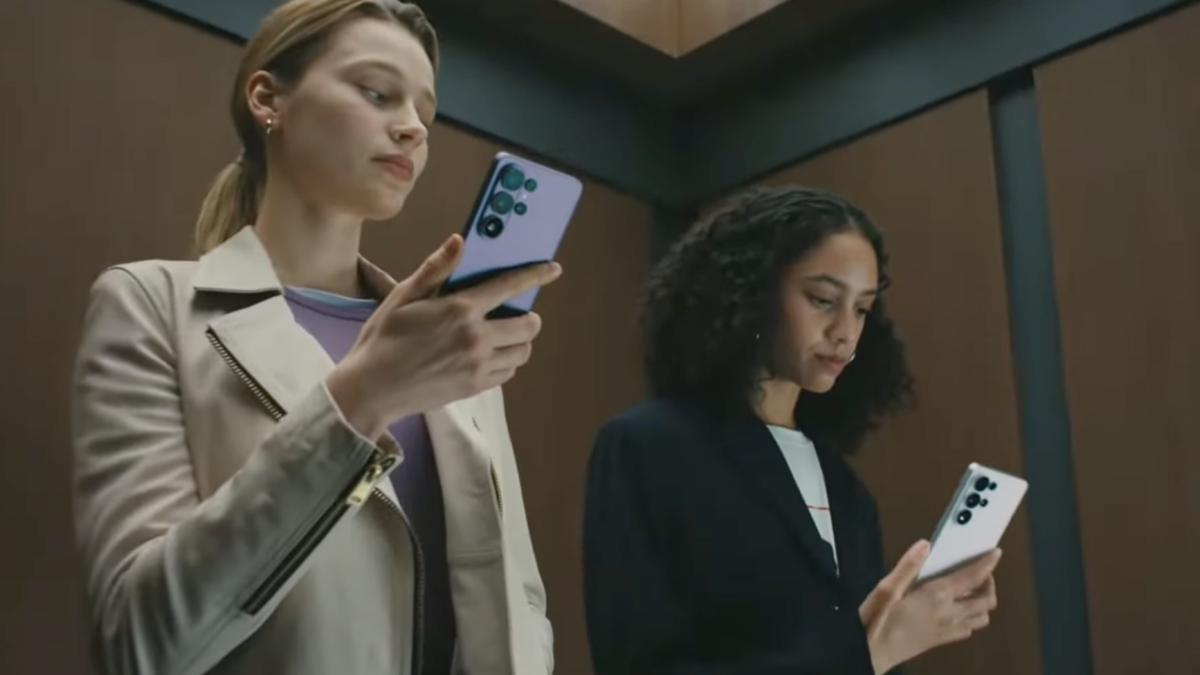
Samsung’s new Privacy Display can narrow the pixel light on your phone screen so it’s only visible to you. The feature can be toggled on and off, and it’s also customizable by app, allowing some apps to be viewable to others while keeping sensitive apps, like your banking app or an HBO show, unviewable to passersby. When the Privacy Display feature is off, pixels are viewable from every angle, but when it’s on, the pixel lights narrow to you. Essentially, you can control when you want people to see your phone from over your shoulder, which is probably rare compared to when you’d rather have your phone protected from side angles. The Privacy Display will be available on the new Galaxy S26 Ultra, but the feature is so useful that it was the most interesting announcement from Galaxy Unpacked, and once competitors catch on, I expect a built-in privacy screen to become the standard in smartphones. It doesn’t take much to imagine third-party privacy screens soon becoming obsolete.
What do you think so far?
This is the angle from the side, where others can no longer view the screen.
Credit: Samsung Galaxy Unpacked / Lifehacker
After expensive device upgrades and buying a long list of accessories, adding a privacy screen protector can feel like a waste of money. To save a few bucks, I simply tell myself that I’ll be more aware of my surroundings. Still, just yesterday on the subway, I noticed someone’s harmless Shadow the Hedgehog screensaver, followed by their private, potentially embarrassing app notifications. Realistically, others have likely glanced at the same kind of information on my phone, too, no matter how “aware of my surroundings” I hope to be.
So far, the new Privacy Display appears to be available only on the new Galaxy S26 Ultra, which will have a starting price of $1,299. Hopefully, the feature will be adopted more broadly, including on the cheaper S26, which will start at $899, and the S26+, which will start at $1,099. I don’t know what took phone manufacturers so long to build such a useful tool, but I would guess it comes down to focusing on clumsily forcing AI into features I’ll rarely use. Samsung Unpacked had plenty of hamfisted AI announcements—you should check out the longer list of those—but the simple utility of the privacy display stole the show. And it’s better late than never.
