

We may earn a commission from links on this page.
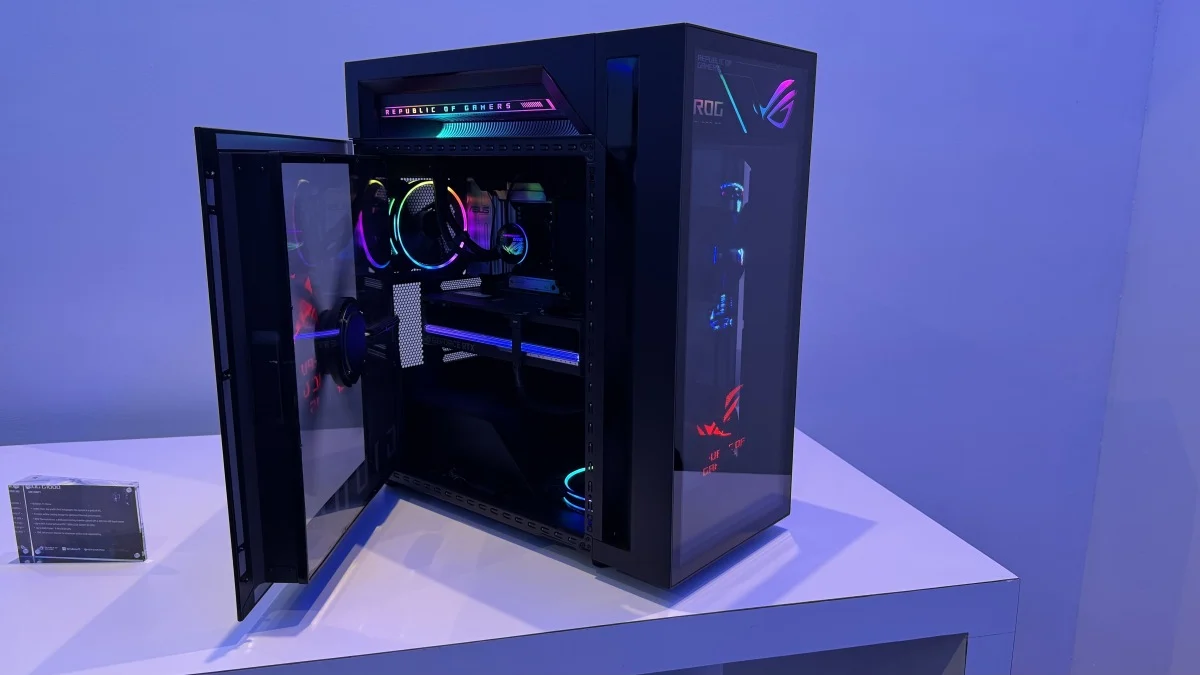
With the rise of streaming culture, a lot of gamers have started investing in computers that don’t just play games well, but that look good while doing it. Asus’s newest pre-built gaming desktop, the ROG G1000, is pretty by-the-book when it comes to high-end performance, but it’s got one major selling point when it comes to those all-important gamer aesthetics: holograms.
Built into this computer’s front panel and one of its side panels, safely tucked into inaccessible glass windows, are rapidly rotating LED strips that, when in motion, create convincing full-color images that appear to have depth. The “frame rate” can be a little low, but it’s a known technology that’s all over the show floor at every CES now, and you can actually buy generic standalone hologram fans on Amazon for around $60-$100. It’s just rare to see it integrated into something like a PC.
This hologram tech, called AniMe Holo, should make for a great way to show off on camera (or to your buddies in a college dorm) and Asus is promising some pretty expansive customizability. You can put still images and gifs on it, sure, but Asus also told journalists it can support full videos or mp4 files, without any limit on length. I think I’d try to use it to watch Shrek.
The effect comes across a bit better in-person, but it’s still unusual enough to look enticing over video, even if you lose some of the depth. Unfortunately, still photos aren’t really a great way to show this thing off, since they can’t depict the rotating motion.
What do you think so far?
Aesthetics aside, the G1000 is also at the top of the power game, coming with the AMD Ryzen 9 9950X 3D CPU, an RTX 5090 GPU, up to 128GB of RAM, and a 2TB storage. It’s got bite to back up its bark, and will be able to play the latest games at max settings with no issue.
Of course, specs like that are likely to cost you a pretty penny, especially with the hologram gimmick tossed on top of them. Asus hasn’t tipped its hand on pricing yet, but the ROG G1000 is expected to launch sometime in Q2 of this year.
