

Helene Meisler has seen a thing or two over the past four decades of helping pros and Main Street investors navigate the stock market. Meisler, a technical analyst whose career includes training under legendary technical analyst Justin Mamis at Cowen & Company in the early 1980s, has tracked the markets through Black Monday in 1987, the savings & loan crisis, the Internet boom and bust, the Great Financial Crisis, Covid, and 2022’s bear market.
In short, while I’ve been tracking the stock market professionally for thirty years, she’s got even more been-there, done-that chops, making it important to consider what she thinks happens next in 2026. In other words, when she speaks, I pay attention.
Unfortunately for bull-market fans, I’ve noticed Meisler has struck a more downbeat tone lately. In fact, on January 15, Meisler highlighted a signal suggesting that stocks could face stiffer headwinds, at least in the short term, only days after hinting at caution in a X chat with legendary technician Walter Deemer (who has been doing this since the 1960s).
Stocks could see volatility increase in early 2026 as technical analysis flashes warning signs.
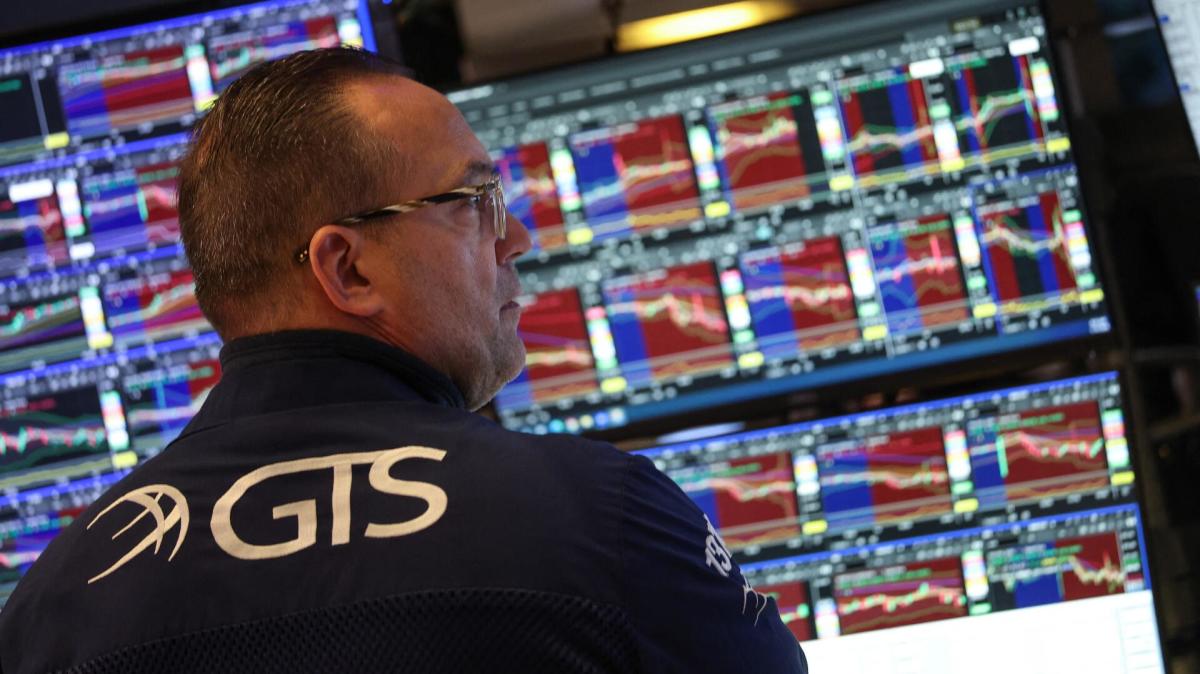
TIMOTHY A. CLARY / GETTY IMAGES
Technical analyst Meisler warns stocks are overheated
It’s been an impressive rally since the 2022 bear market, with stocks notching three consecutive double-digit annual returns, including a 16.4% gain in 2025. The strength has led many on Wall Street to strike an optimistic tone for stocks in 2026 (a worrisome signal in itself).
However, if I’ve learned anything over the years, it is that when everyone agrees on what happens next, you’d better be prepared for the complete opposite to happen. After all, stocks tend to find ways to disappoint the masses.
Most of the excitement over 2026 assumes a continuation of 2025’s bullish tailwinds:
- A friendly Federal Reserve that’s boosting economic activity with lower rates.
- Robust AI R&D spending.
- Cost-cutting and revenue-drivenS&P 500 earnings growth.
Those are powerful tailwinds, indeed. The Fed cut its Fed Funds Rate by 0.75% by the end of 2025, lowering borrowing rates on everything from mortgages to manufacturing plants. Meanwhile, the biggest cloud data center players, including hyperscalers Amazon and Alphabet, are expected to spend $527 billion on AI in 2026, according to Goldman Sachs, up from $394 billion in 2025. Meanwhile, corporate profits have surged, rising an estimated 12.4% in 2025, with another 14.9% of growth expected by Wall Street in 2026, according to Factset.
More Wall Street
- Goldman Sachs issues urgent take on stock market for 2026
- Analyst who nailed 2023 bull run sets S&P 500 target for 2026
- Longtime fund manager sends blunt message on P/E ratios
- Nasdaq’s near 24-hour trading plan sparks Wall Street backlash
- Every major analyst’s S&P 500 price target for 2026
Still, extrapolation bias is real, and there’s plenty that could go wrong. Nobody rings a bell to buy or sell, but it’s not hard to imagine any number of things on the geopolitical or macroeconomic stage tossing markets a curveball.
To help figure out when fear and greed may be too high, Meisler uses a data-driven approach to technical analysis. She tracks various indicators and sentiment surveys for clues, and crunches stock market breadth (the number of advancing to declining stocks) over different rolling time periods (10 days and 30 days).
In her latest post on TheStreet Pro, Meisler spelled out clearly what those indicators are telling her now:
Meisler based her conclusion on her 10-day moving-average analysis of stock market breadth, a recent increase in optimism that has led to solid returns for the 493 S&P 500 stocks not included in the so-called Magnificent Seven, and increased penny-stock trading volume.
“I think we had some wild speculation with the penny stocks on the move as well,” wrote Meisler. “Then there are the AAII bulls, which pushed up to 49.5% this week. That is the highest reading in more than a year. [emphasis mine] Giddy? Maybe not, but certainly overtly bullish.”
It’s not all bad news for investors
Markets never go up or down in a straight line, and that’s a good thing because those blips create opportunities for savvy-minded investors to buy stocks on sale or book some profits.
While mid-term election years are notorious for seismic mid-year drops, Meisler doesn’t necessarily think getting overbought on her shorter-term indicator is a harbinger of the end of the road for the stock market rally – at least, not yet.
Midterm Years in the Presidential cycle see the largest intra-year pullback.
Carson Investment Research, FactSet, TheStreet
“Breadth continues fine as well, so I would say right now I’m just expecting an overbought pullback, probably with another spurt upward in volatility,” wrote Meisler. “Hopefully we’ll get some good setups from a pullback.”
More volatility and a pullback that creates some buy-the-dip opportunities could be a rewarding setup for investors, suggesting that any changes right now based on being overbought ought to be more on the edges than anything drastic.
After all, pullbacks are incredibly common.
“On average, the index experiences three drawdowns of between 5% and 10% each year. In fact, the S&P 500 has had at least one 5% pullback in 94% of years going back to 1928 (including its predecessor S&P 90 Index),” according to LPL Financial.
My takeaways:
- Expect more short-term volatility.
- Don’t be surprised if the market pulls back.
- Create a watch list of high-interest stocks or ETFs to buy on weakness.
Related: Analyst says ‘buy the dip’ in top bank stock after credit card cap drop
