

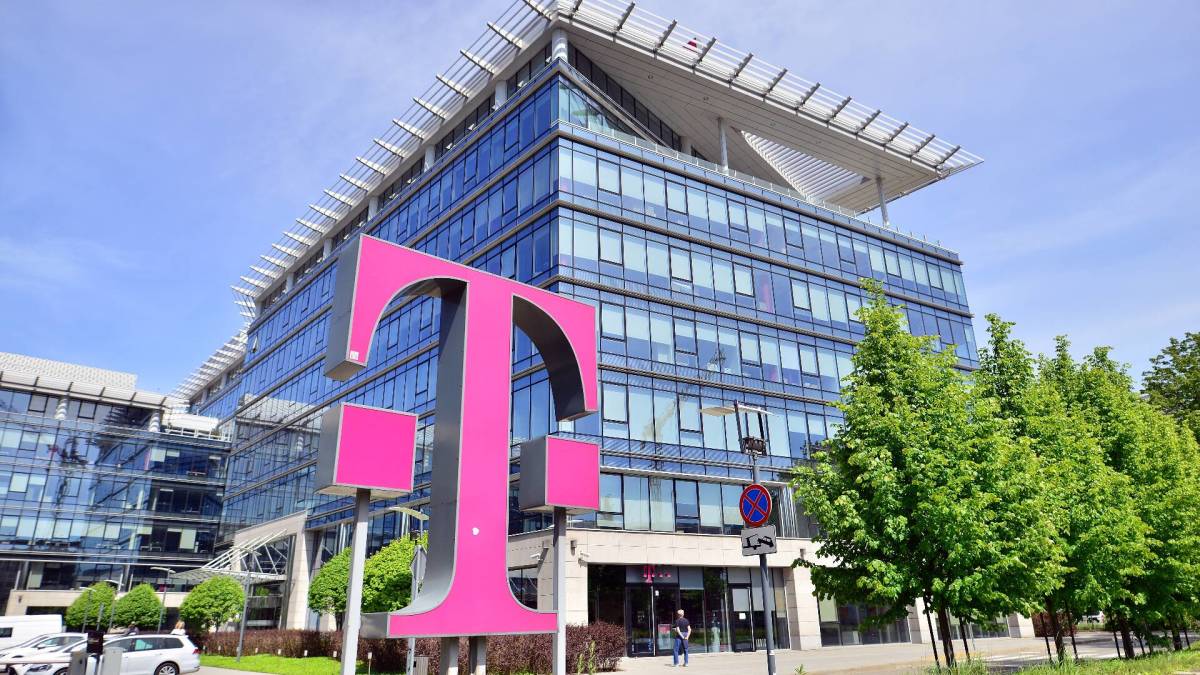
T-Mobile is facing mounting pressures as competition from other wireless carriers intensifies. In recent months, the company has seen a growing number of phone customers leave, prompting its CEO to plan major changes to help reverse the trend.
In its latest earnings report, T-Mobile revealed that it added 962,000 new postpaid phone customers in the fourth quarter of 2025, a time period that involved the carrier launching iPhone deals and free phone lines to ring in the holiday season. However, this number fell below the 981,330 additions expected by analysts polled by FactSet.
While AT&T launched competitive trade-in offers to lure in new customers during the fourth quarter, Verizon was more aggressive. For example, Verizon dropped deals such as four phone lines for $100 per month and began offering a free iPhone 17 or a Samsung Galaxy S25 with new line additions.
“There was heightened device-centric competitiveness from one of our principal competitors, who was trying to get some headline post-paid phone growth,” said T-Mobile Chief Financial Officer Peter Osvaldik in a statement to Reuters.
In the fourth quarter, T-Mobile also saw its postpaid phone churn, the rate at which postpaid phone customers ended their service, hit 1.02%, which is 13 basis points higher than the churn it reported for this segment in the third quarter.
The elevated churn follows T-Mobile’s decision last year to raise prices and implement significant changes to its phone plans, which frustrated customers.
Amid economic pressures, consumers nationwide are becoming more sensitive to how much money they spend each month on phone plans. A survey from WhistleOut last year found that T-Mobile could lose a whopping 75.9 million customers due to high phone plan prices.
During an earnings call on Feb. 11, T-Mobile CEO Srini Gopalan said the entire wireless industry saw increased churn last year, mainly due to postpaid phone customers reaching the end of their device contracts.
“So clearly, NPS (net promoter score, a measure of customer loyalty) and churn are highly correlated,” said Gopalan. “What I think we saw in ’25 was also a normalization of churn as an industry as a whole. Because you went through these years with 36-month contracts and suppression of churn.”
T-Mobile saw its postpaid phone churn rise during the fourth quarter of 2025.
Helen89/Shutterstock
T-Mobile considers major pricing changes
As the company faces a spike in customer losses, Gopalan hinted that T-Mobile will be making several bold pricing changes.
First, he suggested that T-Mobile is re-evaluating how it offers device subsidies (or phone discounts) to customers going forward, taking into account competitive intensity and the fact that phones are becoming more expensive and lasting longer.
Currently, T-Mobile’s device subsidies are distributed as bill credits over 24 months. For example, the carrier’s current iPhone 17 deal offers customers who add a new line on an Essentials plan a roughly $830 credit, distributed over two years (about $34 a month), essentially giving them the phone for free.
“On subsidies, we will always be competitive with phones,” said Gopalan. “It’s really changing the center of gravity of the conversation to stuff that creates sustained value.”
Mike Katz, T-Mobile’s president of marketing, strategy and products, said during the earnings call that customers expect more than free phone deals when it comes to subsidies.
Related: T-Mobile adds free new service as it loses phone customers
“(We) can’t make iPhones any freer than they are today,” said Katz. “And the truth is, customers’ phone purchase is a point in time, you know, happens once every couple three years. And between those times, they’re living with their wireless service every single day. And we think customers expect and demand more from us than just a free phone deal every three years.”
In addition to T-Mobile re-examining how it approaches subsidies, Gopalan also warned that in the future, customers may see more pricing changes, specifically for legacy phone plans, as the company delivers more value.
“From time to time, we will look at specific cases, and we did one in January, where we think there is a case with the legacy book to look for price changes, and these are really rate plan optimizations,” he said.
T-Mobile is also going to continue pushing its digital transformation initiative, which reportedly involves making customers more dependent on its T-Life app to make crucial account changes, such as phone upgrades, adding new lines, etc. Gopalan claims that this change has so far successfully boosted customer satisfaction.
“We started off this journey with 22% of our upgrades being done through T-Life, and they were all assisted, which is an agent would show the customer what to do,” said Gopalan. “That was in Q4 2024, just a little more than a year ago.”
“Today, we’re sitting at 73% of our upgrades being done on T-Life and 39% of them unassisted consumers doing it themselves,” he continued. “And this unlocks a huge amount of efficiency as well as satisfaction.”
T-Mobile expects to generate $3 billion in savings by 2027 from its artificial intelligence and digital initiatives. Gopalan said that these initiatives weren’t driven by the intent to lay off employees, despite recent concerns and job cuts.
“We haven’t driven digital and AI from a we’re going to lay off this many thousand people because we need the cost from it,” said Gopalan. “This is why this has been a three-year journey: Step one was building the capabilities, having our IT in place, having the digital in place. Step two, was customer adoption, which is actually working with customers in the moving them to assisted digital. And step three is now scaling.”
T-Mobile innovates to stay ahead in the wireless market
The changes from T-Mobile follow its recent launch of several new low-priced phone plans to attract and retain price-conscious customers.
T-Mobile also recently introduced a free live translation service that uses AI to translate conversations in over 50 languages in real time from any phone call made on T-Mobile’s network.
It is clear that T-Mobile understands it must double down on consumer satisfaction to succeed in a challenging wireless market.
Industry analyst Jeff Kagan said that while T-Mobile has “delivered solid growth” over the years, “headwinds of change are in the air,” according to a recent press release.
More Telecom News:
- T-Mobile drops 2 new phone plans to stop customers from fleeing
- Verizon CEO shifts gears after 2.25 million customers depart
- AT&T closes billion-dollar acquisition to win back customers
“Winds of change are always present in the wireless and telecom industry,” said Kagan. “Yesterday’s leaders can lose their edge to competitors with newer, stronger, or more innovative ideas.”
Kagan emphasized that companies will need to shift their strategies to win in the rapidly changing telecom industry, with AI being one of the main focus areas.
“Moving forward, success requires a renewed, focused, accurate, and creative growth strategy, with AI and other new ideas at the center of the storm,” he said.
While T-Mobile is facing increased competition from its top rivals, Verizon and AT&T, it is also facing the threat of smaller wireless carriers, such as mobile virtual network operators (MVNOs), which are growing in popularity among consumers for their lower plan prices, according to recent data from Market Force Information.
How U.S. consumers rate T-Mobile:
- Roughly 65% of U.S. consumers are enrolled in phone plans from either Verizon, T-Mobile, or AT&T, and pay on average more than $100 per month for service.
- Across key customer experience benchmarks, T-Mobile earned a 42.8% overall brand performance score.
- Smaller wireless carriers significantly outperformed larger ones, with Consumer Cellular at 73% rating and Visible scoring 63.9%.
- In consumer loyalty rankings, T-Mobile placed just above the 25th percentile, ranking near the lower tier of providers. By contrast, smaller carriers including Consumer Cellular, Cricket and Visible, ranked above the 75th percentile.
Source: Market Force Information
David Murray, senior director of client strategy at Market Force Information, emphasized in a press release that smaller carriers are outperforming their larger rivals when it comes to loyalty and customer experience.
“There’s a clear shift in the market towards smaller, more agile wireless carriers who are delivering superior customer experiences,” said Murray. “While cost and coverage are always key factors, today’s consumers are placing more importance on ease of service and overall satisfaction with their provider. The top performers are setting the bar in both customer experience and loyalty.”
Related: T-Mobile drops 2 new phone plans to stop customers from fleeing
