

If you grew up in the 1970s, like me, then you likely remember Yukon Cornelius, the pickaxe-wielding gold miner in Rudolph the Red-Nosed Reindeer, whose presence was accompanied by Burl Ives’ song, “Silver and Gold.”
The stop-action classic was a prime-time holiday staple in the 1970s, and even though Cornelius was actually looking for the peppermint mine, Ives’ silver and gold melody was particularly on point, given gold was a hot commodity in the 1970s, rising from about $35 an ounce in 1971 to over $850 an ounce by 1980.
Fast forward to today, and the yellow metal has once again captured the imagination of speculators as they head into the holidays. Inflation is back, and gold prices have surged, more than doubling since 2022 to over $4,000 per ounce. In 2025 alone, gold is up about 60%.
The big move is impressive; however, many gold investors have recently gotten antsy. Prices don’t move up in a straight line, and a recent 10% dip in October shook the faith of some investors.
Annual gold returns since 2020:
- 2025: 60.1%
- 2024: 27.2%
- 2023: 13.1%
- 2022: -0.23%
- 2021: -3.5%
- 2020: 24.4%
Source: MacroTrends.
While anything can happen (and often does in the markets!), perhaps those worried over what’s next for gold prices may find comfort in the latest forecast from major money manager VanEck.
VanEck, which has $90 billion in assets under management, is the 70-year-old money manager behind the $24 billion VanEck Gold Miners ETF (GDX), which invests in publicly traded gold and silver companies.
In November, VanEck’s researchers laid out a bullish argument for gold, including a surprising price target for 2030.
Gold climbs as Treasury yields, US Dollar drop
U.S. GDP has been rising since the first quarter, but the economy does have emerging cracks in the labor market, and inflation has rebounded since President Trump’s tariff announcements this spring, putting the Federal Reserve in a tough spot.
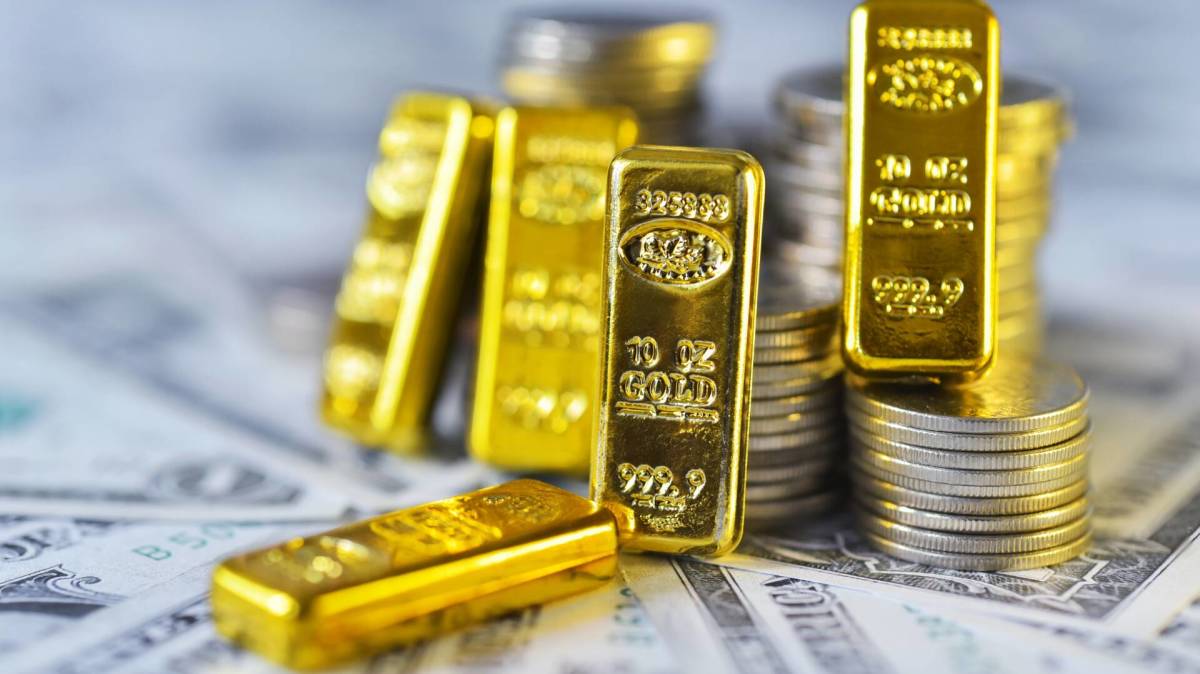
Gold priceshave surged 60% in 2025 amid uncertainty, central bank buying, and investor speculation.
Shutterstock
The jobs market has lost 17,000 jobs over the past four months, according to payroll processor ADP, a major contrast to earlier this year when it created over 100,000 jobs per month.
Layoffs total over 1.1 million year-to-date through November, up 54% year over year, according to Challenger, Gray, & Christmas data. In November, 71,321 workers lost their jobs.
“Job cuts in November have risen above 70,000 only twice since 2008: in 2022 and in 2008,” said Andy Challenger, workplace expert and chief revenue officer for Challenger, Gray & Christmas.
That’s not overly encouraging, given that 2008 and 2022 were brutal bear markets.
More Wall Street:
- Stanley Druckenmiller’s latest buys suggest shifting tech trend
- Goldman Sachs unveils stock market forecast through 2035
- Dalio’s Bridgewater quietly reshapes its portfolio amid bubble warnings
- Peter Thiel dumps top AI stock, stirring bubble fears
The Bureau of Labor Statistics reports that the unemployment rate was 4.4% in September, up from 4% in January and a low of 3.4% in 2023.
A Resume.org study conducted earlier this year found that 40% of companies laid off workers in 2025, and 60% plan to do so in 2026.
Meanwhile, President Donald Trump’s tariff policies have increased import costs, causing higher inflation. The Consumer Price Index, CPI, showed inflation of 3% in September, up from 2.3% in April, before most tariffs went into effect.
The jobs and inflation data are boxing the Fed in because its dual mandate is low unemployment and inflation, two contradictory goals.
The Fed resisted lowering interest rates this year, fearing that further fueling inflationary pressures alongside tariffs. However, it shifted this fall, cutting rates by a quarter percentage point at its FOMC meetings in September and October. The CME FedWatch tool currently assigns a 87% probability to another cut on December 10.
The labor market and prices aren’t the only economic headwinds. The U.S. is also dealing with America’s soaring debt. As of Dec. 3, U.S. national debt totaled $38.4 trillion, up from $36.2 trillion 12 months ago, increasing the risks that foreign central banks may slow their buying of Treasuries.
Overall, this uncertainty has led to declines in Treasury yields and the U.S. dollar. The 10-year Treasury yield is 4.14%, down from 4.77% in early January. The U.S. Dollar Index has dropped to 99 from 109.
That’s a bullish backdrop for gold prices, given that lower yields and a weaker Dollar are historically good for precious metals. Lower Treasury yields make bonds less attractive as a safe-haven alternative to gold, and because gold is priced in U.S. Dollars, weakness makes gold more affordable to foreign buyers, including central banks.
VanEck lays out gold forecast, including 2030 target
Gold prices fell in October over concerns that the Fed wouldn’t cut interest rates in December after Fed Chair Jerome Powell said in October that another cut in 2025 wasn’t guaranteed. Powell’s message sparked a short-term increase in Treasury yields and the U.S. Dollar, denting gold demand.
Since forecasts have shifted to expecting another rate cut, Treasury yields have fallen again, and the Dollar has stabilized, helping gold prices rebound.
Related: Longtime fund manager offers 2-word stock market prediction for 2026
VanEck’s research team thinks that gold prices could have more room to run higher. In a research report, its analysts laid out the catalysts for higher prices.
“Over the past decade, gold has transitioned from a cyclical safe haven to what many analysts now describe as a structural necessity in diversified portfolios,” wrote the analysts.
The desire to own gold has been outstripped by the demand for gold stocks. VanEck points out that while gold has performed strongly, a basket of gold mining stocks has performed markedly better, gaining 125%, thoroughly trouncing the S&P 500’s 16% year-to-date return.
“This rally, while remarkable, is not without historical precedent—similar surges occurred in the 1970s and 1980s during periods of currency debasement and heightened geopolitical stress,” wrote VanEck.
VanEck says the rally stems from two major catalysts:
- Central bank accumulation: “particularly from emerging markets, marking one of the strongest official buying streaks in modern history.”
- Western investor buying: gold is showing up in portfolios “after years of under-allocation to precious metals.”
VanEck argues that those catalysts provide a “structurally stronger market base than in previous bull cycles.”
Central bank buying, measured as net buying activity, flipped positive in 2010 and accelerated in 2022. Net purchases have swelled over the past three years and continued throughout the first six months, according to World Gold Council data cited by VanEck.
“Since 2022, central banks have purchased over 1,000 tonnes of gold annually — roughly twice the decade-long average. Emerging economies — notably China, Turkey, Poland, and India — are leading this trend, signaling a long-term diversification away from the U.S. dollar. This behavior underscores a global realignment in currency reserves: as the dollar’s share of official reserves declines, gold’s share continues to rise as a neutral, non-sovereign store of value,” wrote VanEck.
Related: Bank of America revises 2026 inflation forecast ahead of CPI
Interest in owning gold as part of a diversified portfolio has increased dramatically in 2025 amid tariff uncertainty, lower bond yields, and the Dollar slide. Through September, VanEck reported only one month of net selling of gold ETFs.
“Western investment demand for gold has decisively returned in 2025, with inflows into gold ETFs strengthening month over month. Gold ETF holdings remain well below previous peaks, suggesting that investor engagement with the asset class has room to normalize relative to historical levels,” wrote VanEck.
Toss in a healthy dose of geopolitical instability, including the ongoing War in Ukraine, policy uncertainty, and the U.S. debt load, and VanEck thinks there’s a recipe for higher gold prices, particularly for shares of gold stocks.
“Gold miners have staged a spectacular rebound in 2025, rising over 120% year-to-date, and yet remain fundamentally undervalued relative to the metal itself,” said VanEck. “With all-in sustaining costs averaging around $1,600/oz, nearly every producer remains profitable at current prices near $4,000/oz, resulting in record margins across the industry. Miners are displaying improved capital discipline and stronger balance sheets—a key differentiator from previous cycles when high prices often led to overspending.”
The potential for gold mining stocks to rally, of course, hinges on gold prices remaining high or going higher.
Over the next five years, central bank buying, investors adding gold to portfolios, and ongoing uncertainty could position gold prices to gain substantial ground by 2030.
“Gold has the potential to ascend toward $5,000 per ounce,” concludes VanEck.
They’re not alone in thinking gold could be destined for loftier levels. Goldman Sachs Daan Struyven said in a recent Bloomberg interview that he expects bullish gold trends to continue into 2026, with gold potentially reaching $4,900 by the end of next year.
Related: Goldman Sachs’ exec shares gold price forecast for 2026
