

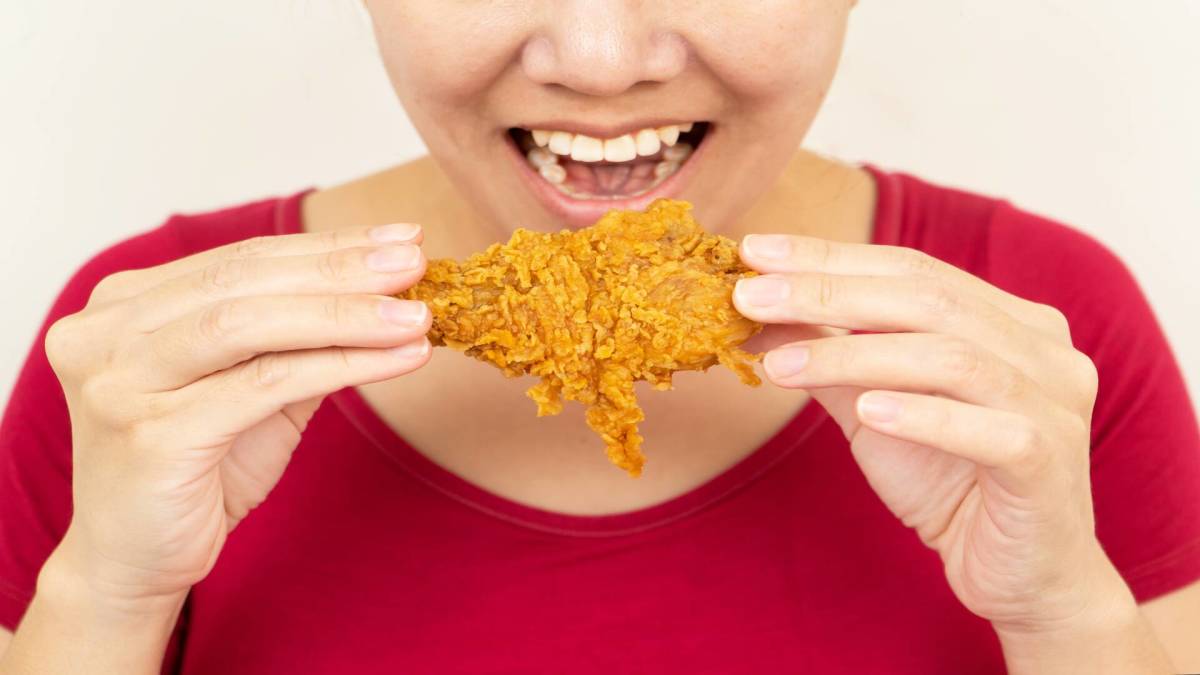
Fried chicken dining chains were the leading subsector of the fast-food industry in 2025 as traffic to chicken concepts rose 3% in the year ending September 2025, while all concepts dropped 1% compared to the previous year, according to market research firm Circana, as reported by Fast Company.
Chicken concepts did even better in 2024, rising 4.3% from the previous year, while other types of quick-service and fast-casual restaurant chains saw 1.3% and 2.4% growth, respectively, according to The Food Institute.
Chicken chains continue hold on fast-food sector
Chicken fast-food chains, such as Chick-fil-A, Raising Cane’s, KFC, and Popeyes, might dominate the sector for a while, industry expert Reilly Newman of Motif Brands told The Food Institute.
“This is due to the experiences the brands are creating as well as the variety of chicken and how you can enjoy it,” Newman said. “This comes to no surprise, as the experience economy has been taking root across the globe.
“Chicken allows for (ample) customization, sauces, and forms, depending on the buyer’s preferences,” Newman said.
Despite increased traffic in both 2024 and 2025, fast-food chicken chains suffered financial difficulties that led to bankruptcy filings.
Chicken fast-food chains file for bankruptcy
Among the chicken chains that filed for bankruptcy protection last year was a Woodstock, Ga., franchisee of fast-food chain Southern Classic Chicken, which filed for Chapter 11 bankruptcy to reorganize its business on Nov. 3, 2025.
Southern Classic Chicken, based in Shreveport, La., is a family-operated chain that was established in 1989 and currently operates 20 corporate-owned locations in Arkansas, Louisiana, and Texas. The franchisor has not filed for bankruptcy and operates its business as usual.
Another fried chicken chain that filed for Chapter 11 protection was De’nsite Inc., the Homewood, Ill.-based operator of the Harold’s Chicken locations in Homewood, South Holland, and Olympia Fields, Ill.
The debtor filed its Subchapter V petition on July 27, 2025, listing up to $50,000 in assets and $500,000 to $1 million in liabilities.
The three De’nsite Harold’s Chicken locations are not affiliated with Harold’s Chicken Corp., whose website lists 47 Harold’s Chicken locations in 10 states nationwide.
Popeyes Louisiana Kitchen franchisee files for Chapter 11 bankruptcy.
Shutterstock
Popeyes franchisee files for Chapter 11 protection
And now, Popeyes Louisiana Kitchen restaurant franchisee Sailormen Inc. filed for Chapter 11 protection after a failed sale of certain locations, a default on credit facilities, and a series of lawsuits and store closings caused the company financial distress, according to RK Consultants.
The Miami, Fla.-based wholly owned subsidiary of Interfoods of America Inc. filed its petition in the U.S. Bankruptcy Court for the Southern District of Florida on Jan. 15, listing $100 million to $500 million in assets and liabilities.
Sailormen, which was founded in 1987 with 10 locations, is one of the largest domestic Popeyes franchisees in the company’s system, with over 136 locations in Florida and Georgia. It currently employs about 2,900 workers.
The debtor, at one time, owned many more locations, but streamlined its portfolio in 2018 by divesting assets in Alabama, Louisiana, and Mississippi to focus on its core Southeast markets.
Events leading to bankruptcy filing:
- Failed sale of certain locations.
- Default on credit facilities.
- Series of lawsuits.
- Lease guarantees on closed stores.
Sailormen needed to file for bankruptcy after suffering severe liquidity constraints, which worsened after a proposed $1 million divestiture of 16 Georgia locations collapsed, leading to lawsuits and restaurant closures.
The debtor also defaulted on credit facilities totaling about $130 million, held by BMO Bank N.A. The lender filed a complaint against the debtor in December 2025 and sought to appoint a receiver in early January 2026, which prompted the bankruptcy filing, Bondoro reported.
Bankruptcy halts receivership process
Sailormen filed for bankruptcy to halt the receivership process, stabilize its business, and conduct a marketing and sale process.
The bank alleged the company was in immediate danger of running out of cash, as rising labor and food costs reduced margins, according to RK Consultants.
More bankruptcies:
- 64-year-old furniture store franchisee files Chapter 11 bankruptcy
- Golf legend’s iconic brand files for Chapter 11 bankruptcy
- Major health services provider files for Chapter 11 bankruptcy
The debtor reported $233.5 million in sales and an $18.8 million net operating loss, driven by inflation, labor shortages, and lease guarantees from 16 closed locations.
The debtor’s 10 largest unsecured creditors include: Cheney Brothers Inc., owed over $623,000; Kelly’s Foods Winter Garden, owed over $352,000; Kelly’s Foods Jacksonville, owed over $271,000; The Sygma Network, owed over $253,000; Service Properties Trust, owed over $251,000; N. Wasserstrom & Sons, owed over $234,000; A-1 Air Solutions, owed over $232,000; Xenial Inc., owed over $196,000; Store Capital Corporation, owed over $185,000; and Lewis Brisbois Bisgaard & Smith LLP, owed over $185,000.
Sailormen’s largest unsecured creditors
- Cheney Brothers Inc., owed over $623,000
- Kelly’s Foods Winter Garden, owed over $352,000
- Kelly’s Foods Jacksonville, owed over $271,000
- The Sygma Network, owed over $253,000
- Service Properties Trust, owed over $251,000
- N. Wasserstrom & Sons, owed over $234,000
- A-1 Air Solutions, owed over $232,000
- Xenial Inc., owed over $196,000
- Store Capital Corporation, owed over $185,000
- Lewis Brisbois Bisgaard & Smith LLP, owed over $185,000. Source.
Related: Missed payments send major retailer into Chapter 11 bankruptcy
