

Unlock the Editor’s Digest for free
Roula Khalaf, Editor of the FT, selects her favourite stories in this weekly newsletter.
Iran has appointed a new central bank governor and declared a public holiday as authorities sought to contain days of protests by businesses and university students over the cost of living and plummeting currency.
Abdolnaser Hemmati, a former minister of the economy, was confirmed as the new governor on Wednesday, with government spokesperson Fatemeh Mohajerani saying his appointment had been endorsed by banking experts and had “the government’s vote of confidence”.
His appointment came after Iran’s currency, the rial, plunged to historic lows against the US dollar and inflation rose above 40 per cent, provoking widespread anger over the collapse in living standards and putting pressure on the government to take action.
Hemmati would prioritise “curbing inflation, controlling the exchange rate and managing banks’ imbalances”, Mohajerani wrote on X on Wednesday.
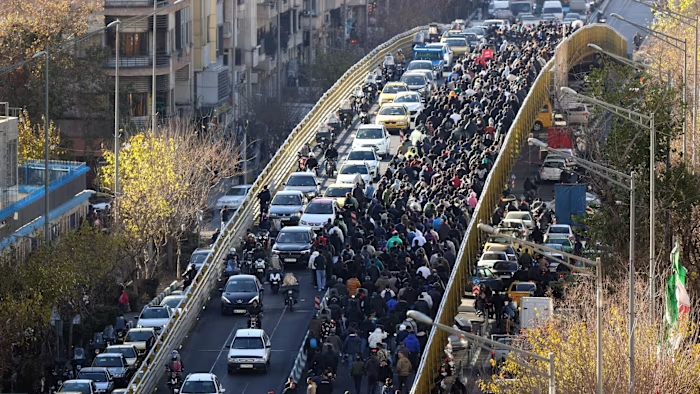
The demonstrations — the country’s biggest in several years — began on Sunday when shop owners in downtown Tehran’s business district closed shops in protest against economic woes, with stores in the historic Grand Bazaar following suit.
Protests continued into a third day on Tuesday as students in several universities in Tehran and other cities staged gatherings.
Social media footage showed students chanting slogans such as “death to the dictator”, with unconfirmed media reports suggesting some were briefly detained. Regime supporters also held rival rallies in several cities.
The appointment of Abdolnaser Hemmati came after the rial plunged to historic lows against the US dollar © Atta Kenare/AFP via Getty Images
The government announced it would close state-run offices and educational centres in almost all provinces on Wednesday, declaring an additional day off ahead of a long weekend and in effect shutting the country for four days.
It cited the need to optimise energy consumption as the reason for the closures as temperatures fell across Iran, though many Iranians believed the move was designed at least in part to curb the demonstrations.
Some shopping centres such as Alaeddin in Tehran — one of the places where the protests initially erupted — will also be closed.
The ministry of higher education said that university classes would be held online during the last week of the current semester “due to cold weather and energy shortages and to ensure the welfare of students ahead of final exams”.
In an apparent effort to assuage public outrage, authorities have sought to acknowledge the economic hardships facing Iranians.
President Masoud Pezeshkian on Tuesday met representatives of guilds, trade unions and the Grand Bazaar’s board of trustees, during which he promised to address their concerns based “on their own recommendations”, and asked them to “collaborate to reduce public anxieties”.
Mohammad Jafar Ghaempanah, vice-president, issued a rare “apology to the people for the 40 per cent inflation”. He said the government was making every effort to resolve it but added that the problems could not be solved overnight.
Recommended
The US’s 2018 withdrawal from Iran’s nuclear deal with world powers and its expansive sanctions regime have throttled the Islamic republic’s economy, reducing oil trade, cutting it off from global banks and shrinking foreign-exchange revenues.
A 12-day war with Israel and the US in June placed further economic strain on Iran. President Donald Trump raised the possibility of fresh strikes against Iran’s nuclear programme after meeting Israeli Prime Minister Benjamin Netanyahu in Florida this week.
The rial, which has lost 40 per cent of its value since the June war, rose slightly over news of the replacement at the central bank.
Hemmati was himself impeached and dismissed as economy minister in March over concerns about the depreciating national currency.
Mohajerani said the government would “patiently listen to voices of protest” from Iranian people, who according to her, were “very patient” and would “not raise their voices unless they are under heavy pressure”.
