

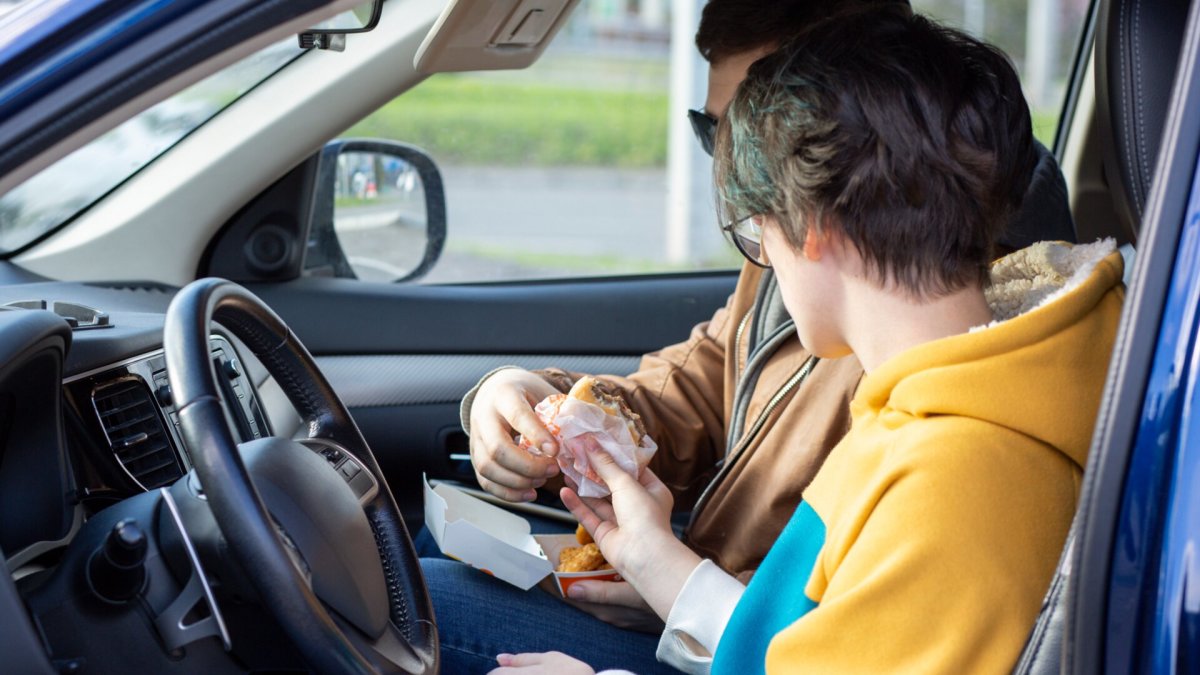
While the drive-in holds a classic place in American history, it’s a concept that has long been in decline.
That’s largely because anyone who has had the drive-in experience (something I have attempted on many occasions) knows that it offers some challenges. The idea of someone bringing food right to your car might seem fun, but it means eating in your car, which presents its own set of difficulties.
Cars have drink holders, but they don’t have trays, tables, or any logical place to eat. That leads to messes and explains why people who have the option generally don’t eat in their car unless they are on the move.
That’s not a complete killer for the category, but it has contributed to why national chains like Sonic Drive-In, and now, a regional favorite, Hi-Pointe Drive-In, have closed a significant number of locations.
Drive-ins are an American tradition
Drive-ins had their heyday in the 1950s.
“Eventually, however, drive-in restaurants went into decline, replaced by the introduction of the drive-through, which negated the need for hiring carhops and saved on money and time,” according to Smithsonian Magazine.
Having eaten about 15 years ago at a famous Connecticut drive-in, I’m not eager to repeat the experience as, while the food was good, eating in my car was a mess.
That does not mean they have all disappeared, but one remaining drive-in chain, the legendary Hi-Pointe Drive-In, has decided to close a third of its restaurants.
Drive-ins have become less popular.
Shutterstock
Hi-Pointe Drive-In chain getting smaller
Hi-Pointe Drive-In has a deep history.
“The Hi-Pointe has been an iconic St. Louis destination ever since this spot was a little drive-in in the 1980’s. Our mission is to bring it back to life with mouthwatering burgers and original sandwiches. Our chef-inspired menu uses locally sourced ingredients,” the company shared on its website.
The chain has decided to scale back its operations.
“One of the most recognizable burger spots in the St. Louis area, Hi-Pointe Drive-In, is officially scaling back. The restaurant announced it will be closing three of its locations as part of a business decision meant to strengthen the brand’s overall quality and consistency,” The New Real STL News reported.
The chain will still operate six locations.
It explained the shutdowns on its Facebook page.
“Sometimes growing means taking a step back,” the company posted.
It was not a choice made lightly.
“This was the hardest decision we’ve made to date, but a necessary one so we can show up better for our people and our guests. That means getting back to the basics, being consistent, and putting more care into every burger that hits the grill,” it added.
More Restaurants
- Taco Bell and KFC work on simplifying their restaurants
- Chick-fil-A making major change to 425 restaurants nationwide
- Bankrupt beer and pizza restaurant chain closes locations
- Restaurant chain famed for rude waiters closes multiple locations
Despite the closures, the brand reassured customers that gift cards, loyalty rewards, and promos will still be accepted at all remaining locations, which include three in St. Louis and one each in Kirkwood, Cottleville, and Chesterfield.
The closed restaurants no longer appear on Hi-Pointe’s locations page.
Hi-Pointe Drive-In is not alone
The decline of Hi-Pointe Drive-In reflects a wider trend. Across the U.S., many regional and national drive-in and drive-thru restaurants are scaling back or closing locations, as changing consumer habits and operational pressures reshape the landscape of car-oriented dining.
“During the pandemic, drive-thru was the go-to option by necessity,” Richard Delvallée, senior vice president of consulting services at RMS, shared in Revenue Management’s report. “But in 2025, customers have more choices and they’re using them, from dine-in and takeout to off-premises dining via delivery.”
- In 2025, multiple Sonic Drive‑In locations have permanently shut down across the country, including closures of sites in Lockport, Illinois, that closed before the start of the year and other drive‑ins in Colorado Springs, underscoring that even large national drive‑in restaurants are retracting physical locations rather than expanding, Shaw Local reported.
- Sonic Drive‑Ins: Sonic experienced net closures of around 60 stores in 2024 as part of strategic pruning of underperforming units, a trend where the brand is not aggressively expanding but optimizing its footprint, according to Sonic’s press release archive.
- Amy’s Drive Thru: The vegetarian drive‑thru/drive‑in concept is exiting its last Bay Area location after closing several of its original restaurants, marking the end of the chain’s initial expansion experiment, reported TheStreet.
- Salad and Go (drive‑thru concept): The chain is closing 41 locations in Texas and Oklahoma as part of a strategic pullback, according to TheStreet’s Kirk O’Neil.
- Hot ’n Now: Once more than 150 locations, this drive‑oriented fast food chain now operates only two U.S. locations, according to the company’s Facebook page.
Together, these closures and scale-backs highlight a nationwide shift in restaurant dynamics, where consumer preference for convenience, off-premises dining, and delivery is reshaping the landscape that once made drive-ins and drive-thrus a cornerstone of American dining.
Related: 52-year-old restaurant closes as owners make heartfelt plea
Americans have more dining choices
Whether it’s a drive-in or a drive-thru, traffic has actually been falling, according to Revenue Management’s 2025 QSR Drive-Thru Trends: Why Traffic Is Falling & How Restaurants Can Win It Back report.
“Drive-thrus have long been a cornerstone of quick-service restaurants (QSRs). While the drive-thru still commands the majority of QSR sales, changing consumer expectations and behaviors are driving new drive-thru trends. Once the star of pandemic dining, the drive-thru is facing a steady traffic decline,” according to the report.
- Despite new lanes, upgraded tech, and faster service times, Revenue Management Solutions (RMS) drive-thru data shows drive-thru visits are down 5%-8% year over year in 2025.
- The percentage of total QSR orders coming through the drive-thru has decreased from 83% in 2020 to 65% this year.
- Takeout is growing fast. Traffic is up +15.5% YOY (versus +9.5% in 2024), signaling a consumer preference for flexibility and app-enabled convenience.
- Delivery increased in popularity during the pandemic. While growth slowed slightly, delivery remains strong, up +13.5% YoY compared to 18.0% in 2024.
- Dine-in is regaining popularity. The rapid growth in 2024 (+6.3% YoY) slowed in 2025 (+1.2% YoY), yet more consumers are choosing to eat inside, according to Restaurant Business, citing better order accuracy, faster service, and higher perceived value than drive-thru.
- Drive-thru is losing out. Declines have eased, from -11.9% YoY in 2024 to -5.8% YoY in 2025, but RMS’ recent consumer research found that one in three consumers plan to reduce their drive-thru visits.
There is, however, still opportunity for drive-in and drive-thru operations, given how dining trends have changed.
“Nearly 75% of all restaurant traffic now happens off-premises — meaning that almost 3 out of 4 restaurant orders are taken to go, according to data from the National Restaurant Association’s 2025 Off-Premises Restaurant Trends report.
Related: Iconic Italian restaurant chain shut down over 200 locations
