

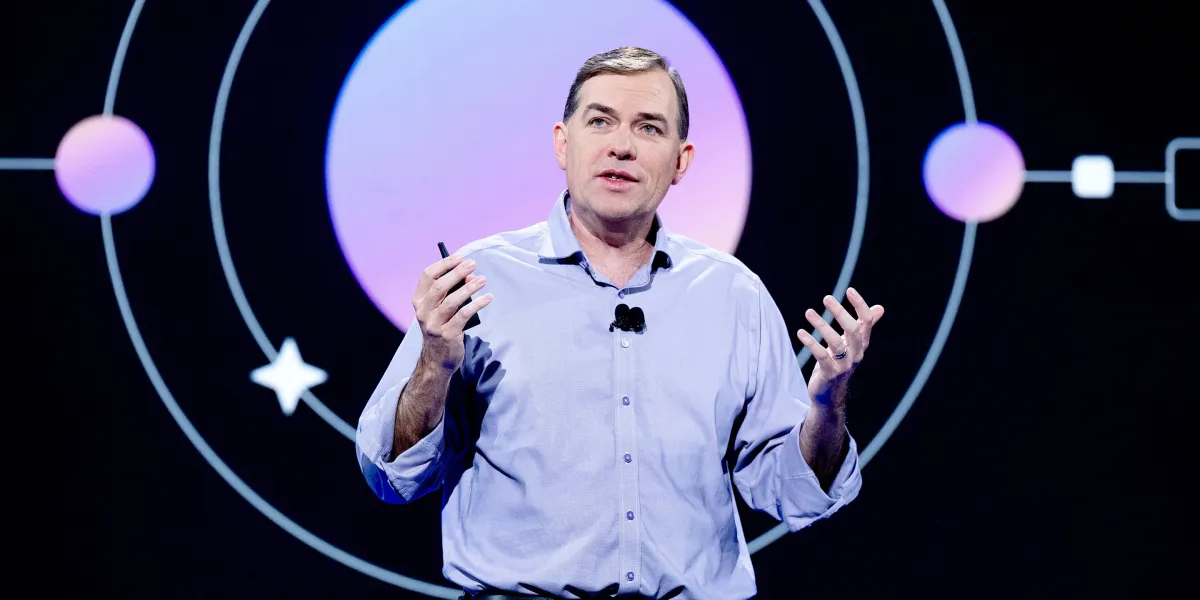
Earlier this year, Garman said replacing junior software developers with AI was “one of the dumbest things I’ve ever heard,” and it’s a point he stands by. In an interview with WIRED published on Tuesday, Garman said displacing junior engineers and employees with new tech is a bad business move.
Entry-level workers are usually paid the least, meaning getting rid of their positions first in favor of higher-paid senior talent is not a cost-effective strategy, he noted. Moreso, these fresh-faced young workers are likely recent college graduates with energy, excitement, and deep familiarity with AI tools. Eliminating them, in Garman’s eyes, would be myopic.
“At some point that whole thing explodes on itself,” Garman said. “If you have no talent pipeline that you’re building and no junior people that you’re mentoring and bringing up through the company, we often find that that’s where we get some of the best ideas.”
“You’ve gotta think longer term about the health of a company,” he added. “And just saying ‘OK great, we’re never going to hire junior people anymore,’ that’s just a nonstarter for anyone who’s trying to build a long-term company.”
A Stanford University study published in August suggested AI is already starting to have its way with entry-level workers. The research revealed that “the AI revolution” is having a “significant and disproportionate impact on entry-level workers in the U.S. labor market,” particularly 22- to 25-year-old software engineers and customer service agents.
AI’s workforce shakeups
Despite Garman’s adamance on AI not replacing young workers, Amazon’s own automation advancements have coincided with the company laying off thousands of employees this fall. The tech giant announced in October it would slash 14,000 jobs, mostly middle management positions. Earlier this year, Amazon laid off a smaller portion of workers from divisions including AWS, its Wondery podcast division, and the consumer devices unit.
Rather than attribute the axings to AI, Amazon instead said the layoffs were part of an effort to make the business more efficient after a period of growth, as well as resolve cultural mismatches that emerged in the workforce.
“The announcement that we made a few days ago was not really financially driven, and it’s not even really AI-driven, not right now at least,” CEO Andy Jassy said at the time. “It’s culture.”
Still, AI advancements are poised to impact Amazon’s workforce. The memo outlining the fall layoffs cites the transforming technology of AI as the impetus for improving workflows with leaner teams. A June memo from the company said AI efficiency gains will “reduce our total corporate workforce,” and a New York Times investigation published in October reported Amazon had a lofty goal to automate 75% of its work, translating to about 600,000 jobs the tech giant would not ultimately need to hire for.
AWS did not immediately respond to Fortune’s request for comment.
Garman isn’t naive to the workplace upheaval AI could bring. He predicted the technology will initially create a burst of new jobs, as well as reduce several roles, but he was certain that AI would ultimately transform the nature of work.
“One of the things that I tell our own employees is ‘Your job is going to change.’ There’s no two ways about it,” he told WIRED.
The 49-year-old AWS CEO said employees have the potential to have more impact and responsibilities as a result of AI, but it will require learning news skills, as well as organizing teams differently. While entry-level workers should not be the primary victims of AI’s workplace shake-ups, other jobs and industries will be impacted, Garman noticed.
“If they don’t, they’ll most likely get left behind by people who move faster and do change,” he said. “There is going to be some disruption in there for sure. Like there is no question in my mind.”
