

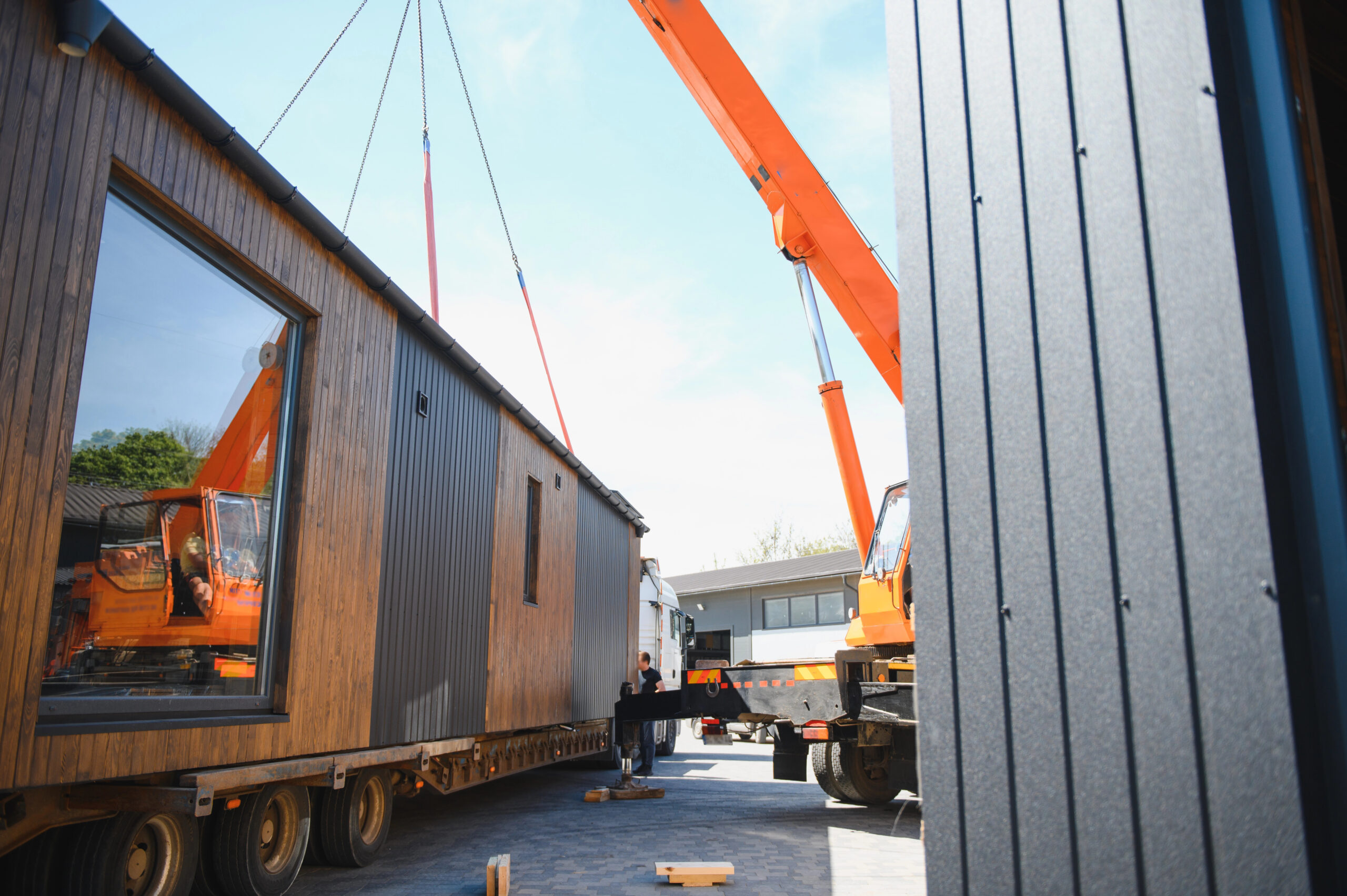
Modular housing is gaining prominence as a proposed way to increase the housing supply. This is an approach where the majority of home building is done off-site. Factories will construct entire rooms of a house, including all the wiring and plumbing connections built in. At the final construction site, the actual building process consists of the final step of connecting the rooms, plumbing, and so forth, to complete the build. Building in this way is faster and less expensive than traditional home building. And in recent years, the technology has improved as well—companies around the world build modular homes that are distinctive, highly customizable, and of very high quality.
People might think that these companies increase the housing supply by, well, building more housing. But building more housing isn’t an increase in supply, it’s an increase in quantity supplied. An increase in supply means an increase in the capacity to produce something. A recent interview with engineer Ivan Rupnik describes two different ways modular housing can help increase supply.
One way is simply the technology itself. Changes in technology are important ways to increase the supply of anything. Once upon a time, all houses had to be built entirely using hand tools and by human muscle. As technology has improved, the potential number of homes that can be built by a given number of workers increases. Or, in economic parlance, the supply curve shifts to the right.
The other way to increase the housing supply is through changes in housing regulation. Rupnik talked about how Congress attempted to encourage modular housing as far back as the 1960s, and
“funded [Nixon-era HUD program] Operation Breakthrough to encourage experimentation, and to figure out the effect of local housing codes and zoning regulations on large-scale use of new housing technologies. For reasons that still aren’t clear to me, those regulatory changes — which had bipartisan support — were never implemented at scale in the U.S.”
As a result, the potential increase in supply that the new technology represented was not able to be realized in the United States because regulatory barriers that would have allowed it were not removed.
But other countries were watching, and took advantage of the lessons, even if the United States did not. Rupnik points to Sweden, where he says “85 to 90 percent of single-family is made in a factory.” Japan, too, “streamlined regulation for manufacturing and innovation,” allowing the new technology to be put to use to increase the housing supply.
My favorite point that Rupnik makes is the distinction between prescriptive regulations and performance regulations. As he describes it, prescriptive regulations are those that tell a company to do very specific things – make the walls at least this thick, use these specific materials in these quantities, etc. Performance regulations, on the other hand, just stipulate thresholds that need to be met but leave it entirely up to the companies to find the best ways to go about meeting those goals. As he put it,
“Performance codes say that a wall needs to prevent fire from penetrating for X hours or minutes, and you can achieve that goal with any material that works. For example, in Sweden, instead of mixing sheathing for structural rigidity and drywall for fireproofing, they used two layers of a more expensive gypsum product because for their factory processes, it was more efficient.”
A change from prescriptive to performance regulations allows companies a great deal of flexibility to find the most effective and efficient ways to achieve goals that work best with their own unique circumstances and processes. Because performance goals don’t impose a one-size-must-fit-all approach, a multitude of competing and customizable approaches can be taken, learned from, and continuously improved. This flexibility in the regulatory structure also helps increase the housing supply.
The goal of increasing the supply of housing is an important one. Any serious discussion of achieving it will require either some mention of technological improvements or regulatory reforms. If those aren’t part of the discussion, then we’re not talking about increasing the supply of housing—we’re merely discussing increasing the quantity of housing supplied. An increase in quantity supplied without an increase in supply means rising prices.
