

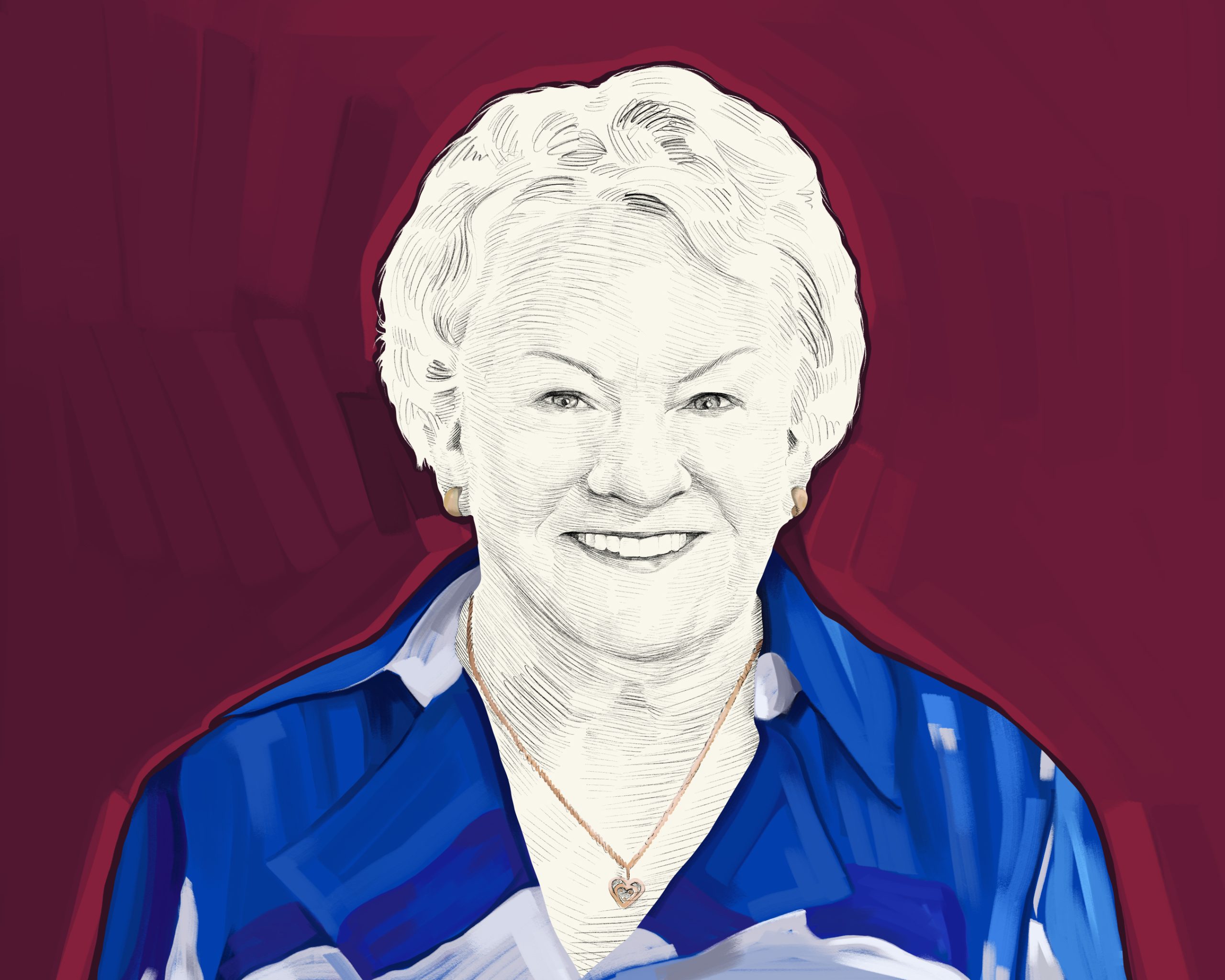
Please enjoy this transcript of my interview with Tish Rabe (@tishrabebooks) the New York Times bestselling author of more than 200 children’s books, with more than 11 million copies sold. She has written for Sesame Street, Disney, PBS Kids, Curious George, Clifford, and many more. In 1991, following the death of Dr. Seuss, she was asked by Random House to write The Cat in the Hat’s Learning Library, a series of science books for early readers that were the brainchild of Dr. Seuss, who died before he could finish the first one. Tish has written more than 50 Cat in the Hat books as well as books for the Grinch and the Lorax. She now heads her own children’s book publishing company, Tish Rabe Books.
Full bio
Books, music, and people mentioned in the interview
Legal conditions/copyright information
Tish Rabe — 200+ Children’s Books, Getting Picked for Dr. Seuss, Lessons from Early Sesame Street, How to Write 300+ Songs, and More
Additional podcast platforms
Listen to this episode on Apple Podcasts, Spotify, Overcast, Podcast Addict, Pocket Casts, Castbox, YouTube Music, Amazon Music, Audible, or on your favorite podcast platform.
Transcripts may contain a few typos. With many episodes lasting 2+ hours, it can be difficult to catch minor errors. Enjoy!
Tim Ferriss: Tish, it is lovely to finally connect. I’ve really been looking forward to this, and thanks to my old friend and your new friend, Elan Lee, here we are. We made it happen.
Tish Rabe: We made it happen.
Tim Ferriss: So thank you for making the time.
Tish Rabe: I’m really excited to be meeting you.
Tim Ferriss: And I don’t even know where to start. We could start with the 200 children’s books, more than 11 million copies sold. We could start with the 300 children’s songs. But maybe we can, I suppose, start the journey with what you studied in college. Were you always intending to end up where you are now or where did the story start in a sense?
Tish Rabe: Where did the story start? As a matter of fact, I did not start out to be a children’s book author. I started out to be an opera singer. I went to college to be an opera singer. So that was my plan. I had a great plan. In high school, I tell the kids I talk to a lot that I had two things I loved. I love to sing and I love to write. So all through high school, I was, are you going to be a singer or a writer? A writer or singer? And finally, I had to apply to college and I really knew in my heart I wanted to be a singer. So I have a four-year degree in opera with a minor in jazz. And the funny thing, everyone always asks me, “So how did you end up being a singer and ending up being an author?”
And the very short story is I came to New York and I was auditioning everywhere. And my high school music teacher got a job as assistant music director on Sesame Street, season two. And I went to meet him and told him I was auditioning and he asked me if I could type. And I said, “Yes, I can sing and I can type.” So I got a job as music production assistant at Sesame Street and all I wanted to do was sing with Jim Henson’s Muppets. And my first job was hiring the jingle singers in Manhattan to sing with Jim Henson’s Muppets. So I sang all day. I sang when I typed and I sang when I filed and I sang when I answered the phone. “Sesame Street, may I help you?”
Well, after a year, everybody was so tired of listening to me sing all the time that they said, “Would you like to sing on Sesame Street with the Muppets?” And I was, “Yes.” So I sang with the Muppets, I sang on the show, I sang on the albums, and I sang on the specials. So I sang on everything, and it was just so much fun.
And my first big break was I sang with Oscar. “I love trash, everything dirty and dingy and dusty, anything ragged and rotten and rusty. Oh, I love, I love, I love trash.” And I don’t know that my parents ever got over it, to tell you the truth.
Tim Ferriss: The big break.
Tish Rabe: Oh, boy.
Tim Ferriss: Well, let me ask you, when you got the job on Sesame Street, when you first got that job, what did it feel like at that time for season two? And I’ll tell you something that I haven’t told many people, which is I have a season one staff jacket from Sesame Street because a friend of my family who lived nearby when I was growing up worked on Sesame Street in the early days. So I grew up going next door as a little kid, hearing her stories, looking at her Emmys. And my love affair with Sesame Street in a way began before I ever started watching it. So I have a long history.
Tish Rabe: Wow.
Tim Ferriss: What did it feel like to be there in the earliest stages of Sesame Street? What was the vibe like, the environment?
Tish Rabe: First of all, the most creative environment anyone could ever be in. Basically, Jon Stone, who was executive producer and Jim Henson and all the puppeteers and all the muppeteers and everybody were so creative, they just made stuff up all day long. Another interesting thing to share is that they were very worried that this show was going to bomb. A six-foot yellow bird, a monster that only eats cookies, a grouch and a trash can, a multiracial cast. How do we think this is going to go in 1969 or whatever? And Joan Ganz Cooney, who created the whole thing, just let them be creative. Whatever you guys want to do, go ahead. And it was so much fun to be a part of it. And I believe in my heart that my background on Sesame Street is how I can do what I do today because I was enveloped with this every single day.
And one of the interesting things that happened was Sesame Street, they needed books, they needed toys, they needed merchandise. Who knew this was going to be a massive hit? And they literally asked the staff if they had ideas for books. And I, courage, oh, what the heck? I’ve got nothing to lose. I’ll go down and try. And I went down to the book department and I told them about when I was a little girl and I broke my great-grandmother’s teapot and it shattered into a million pieces. And my mother came in and saw the broken glass and she said, “I’m not mad or anything. I love you more than any teapot.” And I went down and I pitched my idea to Sesame Street books and it’s your classic, right? You pour your heart out on this story and there’s dead silence. Nobody moved. So I’m standing there going, okay, that went well. And from the back of the room, the editor for Sesame Street Books said, “Could you make it a story for Bert?” And my very first book, here it is.
Tim Ferriss: Look at that.
Tish Rabe: And The Broken Teapot, it’s out of print, but I have a few. And in this book, Bert breaks David’s favorite teapot, spends the whole book trying to get it fixed. And in the end, David says he’s afraid David’s not going to be his friend anymore because he broke his favorite teapot. And David says, “You’ll always be my friend and can you help me in my restaurant next week?” And at the time it got just great awards and letters because it’s easy to have things be about stuff. And that message obviously was that their friendship meant more than this teapot. But that was book one.
Tim Ferriss: So let me peel back the layers a little bit on what you mentioned, this wellspring of creativity, just being steeped, I suppose, to borrow the tea, steeped in this creativity. What did that look like? Were people just ad libbing all the time like Robin Williams times the number of staff? Were their meetings different? What did that actually look like in practice when you went to work?
Tish Rabe: It was one of the first TV shows that had educational research behind it. So we had topics. We were going to try to teach every single season. There was a notebook like this thick with what are we trying to teach kids? Obviously numbers and letters, but compassion and sorting things by shapes and whatever it was. And then you would watch the writers just come up with stuff and it was absolutely fascinating and they just kind of made stuff up as they went along. But the big thing I learned from the Sesame Street writers, and it has saved me many, many, many times, is that they wrote the endings first. So they used to look at Abbott and Costello movies and Marx Brothers movies and they looked at everything and they used to tell me, “Okay, Abbott and Costello are pushing a piano across a bridge in the jungle with a gorilla coming across the bridge at them. How did they get there?”
So as a children’s book author, I always write my last page first. So in my I Believe Bunny books, my inspirational books, one of them ends with just like the “I believe bunny, you may get a surprise, you can make a difference, even a bunny your size.” Then I wrote the whole book about how he helps his friend who can’t swim and blah, blah, blah, blah, and then end at that page. It’s a very important page in children’s books because it is the last page they hear before the book is shut, go to sleep, take a nap, go out to play, whatever. And I always write the last page first, always.
Tim Ferriss: Did you have much interaction with Jim Henson?
Tish Rabe: Yes. I worked for Jim for years and somebody said once he was a gentle giant with a mind of steel. He’s a great businessman, but so creative and so nice to all of us because we were low in the totem pole. I mean, we were production assistants and he just worked and worked and worked and worked. And he would do a Sesame Street day and then fly to London and do The Muppet Show and then fly back. He just worked all the time, but he was just very, very nice to me, always.
Tim Ferriss: Did you learn anything about him or how he managed, anything that stands out that distinguishes him aside from just being a man possessed with his work, which certainly doesn’t surprise me?
Tish Rabe: I think the thing was you could just watch his creative mind. The creative minds on Sesame Street, when I was there, something would happen and they would just make something else up and the sense of humor and the lightness of what they were doing, it was almost like, oh, and by the way, we’re teaching kids. You know what I mean? Oh, yeah, okay.
The other thing they did, which was really something is they were one of the first to double level humor. So they wrote stuff that was funny for kids, but had all kinds of stuff in it for adults because all these studies had done if parents watched the show with their children, the kids learned more because the parents were there to help them and that kind of thing. And some of the early children’s shows, no parent would be caught dead sitting in front of, but Sesame Street was so nuts that everybody loved it and that really, really made a difference, big difference.
Tim Ferriss: Yeah. The double-level humor.
Tish Rabe: Double level humor. Yeah.
Tim Ferriss: I remember first being struck by that, not to make my side of the story all about Robin Williams, but was Robin Williams and the songs in the first Disney animated feature of Aladdin and just how many levels there were to that and how effective it was because parents would go back, take their kids to the theater multiple times in this case, obviously watch the television show. How did your music training, if it did, help what you ended up doing not only at Sesame Street, but afterwards? And I suppose I’m just asking if some of the tools or sensitivities that you developed actually ended up being assets as you moved forward with these other supposedly separate art forms.
Tish Rabe: Well, one thing that I used to do, the songs were all prerecorded and so the muppeteers, puppeteers would go and record their songs in advance. So now you’re Big Bird and you’re going to sing a song on Sesame Street, but they are doing their dialogue. So how are they going to know when the song starts? So I would stand next to one of the cameras and count them off. So measure one, two, three, four, and then they would sing.
So Caroll Spinney could see me enough to know that when I pointed to him, he had to sing the song, the prerecorded song, move the costume, move the puppet so he was singing the song. And the first few times I did it, I was scared to death. I was only 21. I think this is going to be the one. I’m going to go one, two, three and start him and it’s going to be the wrong place. Oh, no. But that’s really where my musical training came in. And also, the jingle singers in New York in the ’70s, literally you’d come into a session, to this day I’ll never forget it, and literally they would sing it through once. We are the sound of the sound of the count, count, count, counts down. Four part harmony, and they’d look at each other, say, “You take the root, I’ll take the third, you take the fifth, and then somebody do the octave. One, two, three, go.”
And I remember holding on with a thread to this thing, but it was just — and the other thing that I love about those early days, back then we had orchestras. I’ll never forget this, the Christmas special, full orchestra and Caroll Spinney was trying to sing “I Hate Christmas.” So he’s behind this microphone and he’s going, “I hate, I hate” — finally, they said “Let’s take a break. The whole orchestra, let’s take 10 minutes.” Everybody just give him a minute. And I was standing next to him when he moved over and opened the case and took Oscar out of the case. I was standing right next to him. I had the music and everything. So everybody comes back, all these violins and cellos and clarinets, and they started it again and Caroll moved over and Oscar sang “I Hate Christmas.” Perfect. I never got over it. I was like, whoa. But this kind of stuff went on every single day, all day.
Tim Ferriss: And when you were working on Sesame Street, what was the reaction from people at the time when they would ask you, “What do you do?” I don’t know the magnitude of the success when you joined versus later on in your time there, but just to paint a picture for people, because there are, I’m sure, some older folks who listen to this podcast who maybe even had really, really early exposure or maybe are much older and had really young kids who were exposed to Sesame Street. Then there are some in the middle who certainly remember watching it, and then there are some who have probably never seen it.
Tish Rabe: Right, right.
Tim Ferriss: But what was the reaction that you would get from people when you told them what you did for a living?
Tish Rabe: Well, it’s funny. When I tell the story that I got to New York and I was auditioning and it was going okay, I would get a jingle here, a jingle there, but I couldn’t support myself. And I am convinced, I went home one Thanksgiving to my hometown. I’m from Needham, Massachusetts outside of Boston, and I literally got out of the car and my mother told me that she had read that my high school music teacher had gotten this job. And she said, “You’ve got to get all dressed up and you’ve got to go see him and he hasn’t seen you since you left high school four years ago, you’ve been in college.” And I have to say, it took a lot of guts for me to go and come see him again. And he’d buy me lunch once a week because I wasn’t eating, the whole thing.
And I think when I look back, it was timing and luck to a lot of extent because would I ever have walked into Sesame Workshop and said, “Do you have a job for me?” No. I was convinced I was going to be a star, it was just a matter of time singing. And back then, I’m sure they still do this, you would audition and they would literally let you sing nine notes. So you go, “Oklahoma, where the wind goes…” Thank you.
Tim Ferriss: Really?
Tish Rabe: I am dead serious. Anyone who auditioned, that was it. And you were there and you had your music and everything. So the fact that I actually was able to get a job in music on a television series was just magic stuff.
Tim Ferriss: And was the public’s reception at the time, so you have this sort of confluence of factors and synchronicities that get you in the door. You still have to prove your mettle so you get the job. And was it just the belle of the ball at that point, Sesame Street, or was it still in kind of growth mode? So some people knew it, but not all people. Where was the public awareness of Sesame Street when you joined?
Tish Rabe: Well, I think when I started, it was just really taking off, literally. And I don’t think anyone recognized that it was — as I said, they weren’t sure how it was going to go. And something a lot of people don’t know about Sesame Street is it was originally created to help every child learn their alphabet and their numbers because there was a disparity between kids who had came into kindergarten knowing their letters and their alphabet and the kids who came in not knowing and started behind before they even got started. And I don’t think anyone really realized that this was going to have such a huge impact because kids now then were going into school and singing the numbers song, “One, two, three, four, five, six, seven, eight, nine, alligators went to the alligator picnic.” This went on all day long. So the kids now, there was more of an even playing field when the kids all hit kindergarten and people just didn’t see it coming and it was true.
Tim Ferriss: What happened that led you from Sesame Street to —
Tish Rabe: All that followed?
Tim Ferriss: All that followed. Yes, exactly.
Tish Rabe: Well, among my other things that happened is I was at Sesame Street and as soon as I started writing my Bert and the Broken Teapot book, I just kept writing and writing and writing and writing.
Tim Ferriss: And this is just on your own time or was it —
Tish Rabe: Well, people started hiring me. I wrote for Scholastic and I wrote for Houghton Mifflin and Random House and everybody.
Tim Ferriss: How did you make those contacts?
Tish Rabe: I was working on Sesame Street and then I produced Big Bird in China. I was part of the crew that went to China with Big Bird in China and then —
Tim Ferriss: 1982, something like that?
Tish Rabe: 1982, correct. And then I was senior producer for 3-2-1 Contact, which was another whole story. And then I just kept writing and writing and writing and writing. And I ended up at Random House as their director of video. This was back in the VHS days. And once I was in there directing all the videos, back in the day, they used to just take the artwork for the book and move the camera around. It’s called animatics. And I produced all the music and all the voiceovers and everything for that, but now I’m in Random House. So I’m an author, proven author, and I happen to work there. So in the hallway, they’d say, “Could you write a book about butterflies?” And, “Sure, when do you need it?”
So it was kind of a two-way thing. I was working as a producer, a television producer, also, with 3-2-1 Contact, that’s when I started writing songs because 3-2-1 Contact was a science series and it took more time for us to explain to other composers what we needed than just to write it in house. So I wrote songs about electricity and mammals and anything you needed. My favorite was the producers would come into my office and they’d say, “We need a song.” I said, “Okay, okay, what’s it about?” Never forget this. And the producer looks at me and says, “The gestation period of different animals.” I said, “It’s singing for me already, the gestation…” So I wrote a song called “I’m Waiting For My Baby” > And we just took stock footage of chimpanzee and an elephant and chyroned, that was back in the day we called it chyroning, the amount of time, elephant two years, whatever it was to have a baby. And then at the end it was > So we made stuff up, and of course, happily for me, I sang a lot of it. So that was fun too.
Tim Ferriss: If we open the hood and look at the workings of making a song, what does that look like for you? When they are successful, do they have common patterns where you start with something?
Tish Rabe: Yes.
Tim Ferriss: And then there’s second, there’s something else, and third, there’s something else. What did that process end up looking like for you?
Tish Rabe: Mm-hmm. Well, the first thing I did back and have done a lot of is, perfect example, what’s the science, what are we trying to teach a child in this song, right? And then I always make sure that I have a verse and then what we call a B section. So the song goes somewhere and then comes back. That’s always very, very key, and it’s interesting —
Tim Ferriss: So you decide on those two pieces first, the first thing?
Tish Rabe: Yes, what are we trying — “Cord of Wood.” That’s a perfect example. I wrote a whole song about it, a “Cord of Wood.”
Tim Ferriss: I would love an example, that would be good.
Tish Rabe: I can only remember how it goes, but a “Cord of Wood.” Well, you could find out how many toothpicks are there in a cord of wood, how many picnic tables can you make out of one cord of wood. So you’ve got to figure out what you’re putting in for the science and how you’re going to make it rhyme and that kind of stuff. It certainly helped me that I had been a singer so long that I was so used to singing rhyming lyrics.
One quick thing to share, because very few people know this. While I was at Sesame Street, the executive producer asked Joe Raposo, Joe Raposo wrote the theme and he wrote all the big songs, and he said, “I wonder how Kermit feels. Have you ever thought of how Kermit feels living on this crazy street with all these nutty people?” And Joe Raposo went home and wrote “Bein’ Green.” But the big thing about “Bein’ Green” is all of us who write songs for kids have end rhyme.
MUSIC: Sunny day.
Sweepin’ the clouds away.
On my way to where the air is sweet.
Can you tell me how to get to Sesame Street?
Tish Rabe: Everything rhymes at the end, right?
Tim Ferriss: Mm-hmm.
Tish Rabe: “Bein’ Green,” there’s not one rhyme.
MUSIC: It’s not easy bein’ green.
Having to spend each day.
The color of the leaves.
When it would be nicer to be red or yellow or gold or something much more colorful like that.
Tish Rabe: It’s totally talking. There’s not a rhyme in it. And he came into the office and sang it for the first time, and people were thunderstruck, and of course it became a mega hit. So yeah, I just started writing songs about everything.
Tim Ferriss: What possessed him to break the mold? Had that been done before or was that something that struck him? I’m wondering if you know the backstory of why.
Tish Rabe: It’s funny. I always felt that, this is a longtime memories of these things, but I sort of felt like maybe one of the writers kind of challenged him. There’s only one other song any of us could find, and it’s “Moonlight in Vermont,” also doesn’t rhyme at all. But I don’t know if someone said, “Yeah, why don’t you write about how Kermit feels about living on this street and not have end rhymes?” I don’t know. I don’t know if anyone challenged him or he just went home and said — I mean, the man was a genius. Whether he went home and just said, “I have an idea. I’ve got nothing else to do this afternoon. I’ll try to write a song that doesn’t rhyme.” I don’t know. But I’ll say one thing that was really amazing is basically Joan Ganz Cooney told them all, she had faith in them, “Just do it, just go.” So it was so free-flowing that people just made stuff up. I have a favorite song, people always ask me my favorite song that I did not write. It’s called “I Just Adore Four.”
MUSIC: I just adore four.
The number for me.
I just adore four.
It’s, let’s see, less than five, more than three.
Tish Rabe: And the other thing is the lyrics were so grown up, right? I mean, that’s hilarious, but the kids just ate it up. They just understood it. They understood what that meant. So it was wonderful because every day you went into work, you had no idea who’s going to come up with what today, but it’s funny.
Tim Ferriss: How many drafts or versions made the cut? I’m wondering in such a free-flowing creative environment where you’re allowed to throw anything against the wall and you’re given permission, people say they believe in you, my assumption would be that you come up with a lot of ideas and not all of them work.
Tish Rabe: That’s right.
Tim Ferriss: So I’m wondering how many versions you might come up with before you end up with one that makes it to air.
Tish Rabe: Well, the real challenge on that show was the curriculum was king. So yeah, you could go off and write a story about your lamp, but if it didn’t — whatever the curriculum of the day was, today it’s seasons or cooperation, or I don’t know, whatever they were, that was true. They had to get that by that team and it was a whole team. The other thing they did a lot of is focus groups. They played stuff for kids, and this was groundbreaking at the time. I mean, and they tell stories about how Oscar was originally orange and the kids didn’t really like it. Whatever it is, they changed stuff, and that was really — so although it looked easy, there was a lot of background on what they could do and not do and that kind of stuff.
Tim Ferriss: So the focus groups, I mean, that does sound really innovative for the day, especially with kids. But I imagine if you’re trying to sell shampoo and you’ve got Bob the adult in your focus group, you’d be like, “Bob, how much would you spend to buy Hartz shampoo?” or whatever it would be, and Bob can give you an answer. What types of reactions or feedback were they looking for when they —
Tish Rabe: Well, it was great. They wanted to know things like, did the kids walk away understanding that ABC-DEF-GHI is ABCDHEHI — because they always wanted to pay attention to the fact that if they made it too sophisticated, the kids would be lost. So that’s a very fine line because by doing the double-level humor, like “I Just Adore Four,” genius, Joe Bailey wrote that one, that they didn’t leave the kids lost because that was not the point. The point was to teach them and get them ready for school.
Tim Ferriss: Curriculum.
Tish Rabe: Curriculum. Oh, boy.
Tim Ferriss: Curriculum. Number one. There’s a question that I could ask about songwriting, but I could also ask it about book writing. So could you explain how Dr. Seuss enters the picture?
Tish Rabe: Yes. So as the years went by, I kept, as I said, writing for everybody, never turned down a book offer. We’d be scholastic, we need a book on butterflies in a week, and I’ll go, “Okay, a week. How long is that going to take me? How much am I going to earn an hour?” Whatever it was. But I wrote and wrote and wrote and wrote, and in 1991, I always go by how old my kids were, I guess they were like three and four, I submitted a rhyming book to Random House. I was there. I was the senior producer for home video. I was singing on all their TV stuff and I was singing on VHSes for them. Anyway, I was right there and I sent in a manuscript for a book.
“Maurus O’Raurus was a Brachiosaurus who had the best voice in the dinosaur chorus. He liked to play tennis and swim in the sea, but mostly he liked to eat fresh broccoli.” Okey dokey. And the end of that one was, so his friends tried to get him to eat something else and he said — his friends go, “Broccoli’s fine. It’s got color and crunch, but you eat it for breakfast and dinner and lunch.” They talk them into eating something else and the last line is, “So one thing is true and you cannot deny it, like it or not, you won’t know until you try it.” Fine. Type it up, walk down to the book department at Random House, hand it to the book department, and hear nothing. And I tell the kids, this is before texting, voicemail, we’re used to using payphones at this point, and I didn’t hear a thing. So I go, “Well, that didn’t really work, but okay.”
So I finally get my courage up and I call and I finally get somebody on the phone in that division and I say, “Tell them who I am.” “Oh, oh,” she said, “we were supposed to call you.” I said, “Well, nobody called me.” I said, “I was sitting right here, but nobody called me.” And she said, “Okay.” I’ll never forget it. She said, “I have bad news and I have good news. What would you like to hear first?” And I said, “Well, I’ll take the bad news.” And she said, “We cannot publish Maurus O’Raurus Brachiosaurus because we are the rhyming home of Dr. Seuss.” Okay, all right. “However,” she said, “how would you like to write a new series for Dr. Seuss?” And it took me — sure, you never say no, never turned down a freelance job, and they literally handed me Dr. Seuss, not me. Dr. Seuss wanted to write a series of books for kids about science in rhyme for early readers, four- to seven-year-olds, and died before he could finish the first one.
So they handed me a stack of research on mammals, a huge stack of research on birds. They said, “We are so far behind with this because we’ve been trying to find someone who can write in his rhythm and his rhyme scheme.” And Maurus O’Raurus Brachiosaurus was both, thank goodness. And they said, “Can you have two books ready in four months?” And I carried all this stuff, I carried all this stuff home and I went, “Well, okay.” And I just started writing Is a Camel a Mammal and Fine Feathered Friends and I never stopped after that.
Tim Ferriss: What an incredible opportunity. I mean, talk about just the right ingredients at the right time. My brain will not let it go unless I ask. So the Maurus O’Raurus, still think — I mean, this sounds like a great book, but that couldn’t fly because Dr. Seuss basically had exclusivity on that nature of rhyming book. Is that —
Tish Rabe: For Random House, yes.
Tim Ferriss: For Random House, for Random House.
Tish Rabe: Yes, and not only did he write exclusively for Random House, but he created the Beginner Book series which other authors also wrote. So he was head of the whole thing. And one thing to share about him which is, and there are many authors that do this, but he was an author illustrator, and I’m clear to tell everybody I write the words, but I do not draw the pictures. I had heard, I missed meeting him by one year, but they used to tell me that he would come in with a brand new book, let’s say Horton Hears a Who, whatever, and literally art directors and the editors at Random House did not have to do anything. They didn’t have to fix it. They didn’t have to tell him to fix the elephant. They didn’t have to do anything. They were so perfect when he showed up with them, and so that is always amazing that he could do both.
I actually never spoke to him, but I spoke to his widow, Audrey Geisel, and she called me because — to this day, I could never forget it. She called me, I felt like on the phone, I couldn’t believe I was actually talking to her. And she said, “Do you remember when years ago in the ’50s, they did this study where they had pregnant moms talk to their babies and sing to their babies?” When the babies were born, they recognized, and the dads too, they recognized their voices and they waved their little hands and their eyes linked and stuff, and what they used on the study was they all read The Cat in the Hat, the original Cat in the Hat book. So here we are. It’s 2008, I think. Audrey Geisel called me and said, could I read all 41 of Ted, Ted Geisel’s Dr. Seuss books and write a book with references to all of them?
Tim Ferriss: That’s hard.
Tish Rabe: And she wanted it called Oh, Baby, the Places You’ll Go! to be read in utero. I’m sitting there going, “Okay, sure.” So I went and read all of them. Horton Hears A Who, If I Ran The Zoo, If I Ran The Circus, Yertle the Turtle, Thidwick the Moose, I read them all and I wrote Oh, Baby, the Places You’ll Go! and turned it in. And I love this story because by then my kids were in middle school, I think, and I was going to pick them up from school and I had my car keys in my hand. My phone rang, it’s Random House. They said, “We are sending the files to the printer for Oh, Baby, the Places You’ll Go! We need a bio from you, really short, and it has to be funny and we need it right now.”
Well, I’m going at the — so I just said, “You’ve got to give me two minutes.” And I hung up the phone, never forget it, and all of a sudden I thought, “Oh, wow.” And I called them right back and I said, “Tish Rabe’s a mom who thinks that it’s cool to be home rhyming rhymes while her kids are at school.” And they went bananas. They’re like, “Done.” I said, “Okay” I just make this stuff up. It’s what I do all day. And Oh, Baby, the Places You’ll Go! is a bestseller, flies off the shelf. So Oh, Baby, the Places You’ll Go! Very sweet.
Tim Ferriss: Oh, Baby, the Places You’ll Go!
Tish Rabe: And the other thing, just real quick about that, I am very careful to say to everyone, you do not have to have kids to write for kids. Many, many, many fabulous authors did not. However, the last page of Oh, Baby, the Places You’ll Go! I don’t even know who drew it because I don’t think Ted drew it, but there’s a little pregnant mom, Seussian little pregnant mom sitting there, and I had two kids. I have a son and a daughter, and at the end I wrote, “It’s a scrumptious world and it’s ready to greet you. And as for myself, well, I can’t wait to meet you.” And I really have to say, I think if I’d never had kids, I don’t know that I would have come up with that. That’s the last page in this bestselling book, but it just flew off the shelves. It still does.
Tim Ferriss: So when you got that first assignment, here you go, pile of research on birds, pile of research on fill in the blank. Couple of questions related to that. So you can tackle whichever one you’d like to tackle.
Tish Rabe: Okay.
Tim Ferriss: So one question is, how on Earth do you pick what to include out of these many, many stacks? Because you have to be really selective. The other question is, what guardrails/rules do they give you to keep you within the universe and tone and feel of Dr. Seuss?
Tish Rabe: Well, a couple of things. The first thing about what to put in the book, they did the research for me for the first two books, but for all the many, many books I wrote after that I did my own research. What I did that really saved me and surprises a lot of people is I went to the children’s department in the local library and pulled everything they had on the topic because already it’s not in rhyme, fine, but it’s already been simplified, right? So I would get a spiral notebook for every book and write and write and write and write the facts about space, the facts about insects which I knew nothing, and get them all written down and then figure out if anything popped as a rhyming potential word. One of my very proudest was, “When birds want to go on a winter vacation, they all take a trip and they call it migration.” Because at one point I was writing down the birds migrate and migration, I thought, “Oh, vacation in a way.” So that was one thing.
As far as guardrails, there are two kinds of rhyming in children’s books and migration and vacation is perfect Seussian rhyme. Farm and barn is what they call a slant rhyme. It’s close, but it’s not a pure rhyme. Dr. Seuss insisted on two things. The rhythm had to be perfect. “On the 15th of May in the jungle of Nool, Horton the elephant sat in the pool.” Doesn’t vary, it never varies, and the end rhymes are pure, right? Nool — something Ted did, and I did as well, is if he was in trouble for a rhyme, he made up a word. So in the sleep book, one of my favorites is, “Have you met the Van Vlecks?” Or something like that. “When they sleep, they yawn so wide, you can see down their necks.” So he made up the Vlecks to — so in my book, Oh, the Pets You Can Get, “Oh, the Pets You Can Get takes place in Gerplets where they know quite a bit about caring for pets.” So I made up Gerplets to homage to Ted because when you’re in trouble, make something, that’s what he did.
Tim Ferriss: It’s a clever fix and that became his trademark, or was his trademark.
Tish Rabe: It was. I mean, it was genius. I mean, he just made this stuff up all the time. So those were the two things. I had to get what the facts were for the books, keep it simple, make stuff that rhymes to the kids, and what really works well about rhyme is there are kids that would not have ever known what the word migration meant, but they loved the rhyme and they remembered the rhyme. So it’s a very, very successful — I mean, after that, every single one of my books rhymes because of that. It works.
Tim Ferriss: It is their first exposure to a mnemonic device, right?
Tish Rabe: Mm-hmm. Always, yeah.
Tim Ferriss: And I’ve done — I mean, I think you would blow me out of the water. I have so many questions about how your mind works, but I did a bunch of cognitive testing recently with a pretty well-vetted, studied battery of different tests, and I’m 48, but I aged 20. Now the only reason I aged 20 is because I have these mnemonic devices. I’ve trained myself to be able to do it, and rhyme is a fantastic, in some ways, instinctive example of that. Have you always had a mind for rhyming, or is that a trained muscle? And also your recall. I mean, good Lord, you have just incredible recall. Have you always been that way? Are there people in your family like that? Could you speak to that?
Tish Rabe: I had a phenomenal English teacher in high school. So in high school, for me, Needham High School, Needham, Massachusetts, not only did my music director end up getting me my first job in New York, but Mr. Allen, my English teacher, was phenomenal. And what he used to have us do is write poems, sonnets, we wrote plays, and it helped me understand the format and also how to figure out end rhyme and limericks. I have a book that is still not published. I think I’m going to end up publishing it myself, but I sort of built on the Maurus O’Raurus book and I wrote a whole book for him, three, actually for Nickelodeon, that are in limerick rhyme.
“Have you met Maurus?” And I changed him to an oopsisaurus because he’s kind of clumsy with a 12-foot tail. But anyway, “Have you met Maurus? He’s an oopsisaurus, a dinosaur if you can’t guess, but sometimes he bumps things and sometimes he thumps things and sometimes he makes a big mess.” So the entire book’s in limerick rhyme. But yes, that background, and I mean, I am sincere saying that I was really torn between majoring in English in college and being a writer or a singer. I’m very happy I decided to be a singer because now I can do both. But yeah, amazing.
Tim Ferriss: Do you think the ability to construct rhyme came from that education and the practice in the English class, or do you just have the equivalent of some type of perfect pitch for —
Tish Rabe: For rhyming?
Tim Ferriss: — rhyming out of the box? What do you think?
Tish Rabe: Well, I will tell you, this is funny, because when I first started, my husband bought me a computer program that was called A Million Gazillion Rhymes, seriously. And I would sit there all day long and type the word in, “What rhymes with antenna? Anything? Hello?” Then over the years, I have gotten to the point where now I just know what they rhyme.
But speaking of mnemonics, I think you’ll get a kick out of this, this is a page in my bestselling solar system book, Dr. Seuss, right?
Tim Ferriss: All About Our Solar System.
Tish Rabe: All About Our Solar System. So things are going fine and I write this mnemonic, “You’ve seen all the planets, now here is a trick to remember their names and remember them quick.” And I write the whole thing, “Mallory, Valerie, Emily, Mizas just served up 999 pizzas.” So far so good. Except pizza stood for Pluto. So I get a call from Random House. Pluto has been demoted. And I’m like, “What?” I’m on the phone. And they said, “Can you fix this? But we can’t get the illustrator to change the art.” So Emily here, Valerie — what are their names? Mallory, Valerie, Emily, Mizas was holding pizzas. So I’m like, “Okay.” So I changed it to “Mallory, Valerie, Emily, Mickels just showed us 999 nickels.” And all the art guy had to do was change the pizza boxes to nickels, saved. But I’m like, “What? What do you mean Pluto? Give me a break. Seriously?”
Tim Ferriss: Pluto’s been demoted. Come on, guys.
Tish Rabe: We went from nine planets to eight? I’m not prepared for this. So this kind of stuff goes on all day. This is what I do for a living, but it is fun. You have to keep your sense of humor.
Tim Ferriss: I’m going to move on to asking you more about the craft, but if you don’t mind me asking, what is your age at present?
Tish Rabe: At the moment, I am 74. I’ll be 75 in July. And I started my own company when I turned 71.
Tim Ferriss: 71. And we are definitely going to talk all about that. Do you have siblings?
Tish Rabe: I do.
Tim Ferriss: Is everyone in your family as razor sharp as you are? That’s a hard question. I don’t want to throw your siblings under the bus, but I’m so curious to what you attribute being — you’re sharper than 99 percent of my friends —
Tish Rabe: I appreciate that.
Tim Ferriss: — who are my age or younger.
Tish Rabe: Yeah.
Tim Ferriss: And I’m wondering to what you attribute that.
Tish Rabe: My parents got married as World War II was starting. And when my father came home, he was a prisoner of war, they wanted to start a family. And they had two little boys and a little girl, and the little girl was me. And my father used to come home and play piano for about a half hour after work, but I do not come from a musical family at all. My mom was an English major, so she loved to write, so she was a writer, but music was not a thing in our family. My brothers didn’t play much and it was fine. They played sports.
Well, supposedly, when I was seven, I was in first grade, my father was playing the song he played every single night. It was my mother’s favorite. And I just stood up and started singing with him. And they still talk about it. It was a song called “Tammy,” from Tammy and the Bachelor movie. My mother loved it. “I hear the cottonwoods whispering above, ‘Tammy, Tammy, Tammy’s my love.’” My brothers were doing their homework, they stopped. My mother was doing something in the kitchen, she stopped. My father stopped. I was like, “I don’t even know what just happened.” And I was just encouraged from day one to pursue music and writing. So it was very receptive. And I’ll be honest, when I went to college, I told my mother, “I’m going to get a degree in singing.”
Well, now you’d say, “Well, what are you going to do to eat? That’s nice, but if you don’t make it on Broadway, what are you going to do?” I was the only one in my class, Ithaca College, class of ’72, that did not take an education backup. I didn’t want to teach music. I didn’t want to teach kids do, re, mi, fa, so, la, ti, do. I wanted to be a star on Broadway. It’s just like, “Are people missing this? What part of this are you guys missing?” So I literally was convinced I would leave college and come to New York and within a year, name and lights, piece of cake. Only anybody as nuts as I am would think that, but hey. And my parents never blinked. They said, “Sure, if you think this is going to work, good luck.” Anyway, so it just has always been a part of my life.
Tim Ferriss: I wanted to be a neuroscientist way back in the day and was a major in the department and the whole nine yards. Things ended up taking a turn and I ended up where I am now, but I’m still very involved with science. And the more I look at music, the more I talk to musicologists who are in dialogue with neuroscientists, the more important and/or therapeutic life-giving music seems to be.
Tish Rabe: It is.
Tim Ferriss: And it’s impossible to say you pull this one lever and you get X, Y, or Z result. But it seems to be a commonality that musicians or people who engage with music regularly just retain their faculties and hone their faculties a lot longer than people who don’t.
Tish Rabe: That’s true.
Tim Ferriss: That’s just my impression.
Tish Rabe: Well, the other thing that’s huge is that music is unbelievably helpful to teach kids and the sound of it and the rhythm of it and the rhymes. Every single one of the books I’ve created myself has a song in it. And what I do is I write them to public domain melodies because people know these songs, most of them. And the first book I created was a little book about going to sleep. So I wrote a lullaby, “Night is here, today is done, it’s time to sleep, my little one,” to the tune of “Twinkle Twinkle Little Star.”
Tim Ferriss: So smart.
Tish Rabe: And it really works. And I really encourage everybody. I get this all the time. Everybody’s always, “Yeah, but you’ve got this beautiful voice and you sing all the time and I can’t sing.” And I just try to say to everybody, and I mean this from the bottom of my heart, you can sing. It doesn’t matter if it’s croaky, it doesn’t matter what it sounds like, the only voice your child wants to hear is yours.
They want to hear you sing to them. And yes, I have me singing them on my website and I try to help everybody learn to sing them, but at the end of the day, it’s your voice resonating in their ear. I forget how I said it in here, but it’s like, “That is the voice that every little kid wants to hear. The sound of your voice when you read and sing is what your child loves more than anything.” It’s in Sweet Dreams here, but —
Tim Ferriss: What made Sweet Dreams work? What makes it work? And maybe even more broadly, what makes lullabies work? What are the other ingredients? You mentioned the mapping to a public domain melody is really smart. That makes so much sense at a lot of levels. What else makes that book work?
Tish Rabe: I started my own company right during COVID, 2020, right? COVID’s flying around and what am I going to do? And I turned 70, now what? And I was introduced to a program. A friend of mine said, “You have to meet the people at Pajama Program.” It’s now called Beyond Bedtime, but then it was called Pajama Program. So I went in and I found out that they give free pajamas and storybooks to kids facing adversity. Many kids are not having any pajamas, any storybooks. So I kind of went in to meet with them thinking, “Well, maybe I could do a fundraiser or get my girlfriends to send in some pajamas or something.” And they said, “What we really need is to help parents learn how to get their kids to go to sleep.”
And I said, “The best thing that works for this is to write a storybook they’ll read to their kids and then put the tips in the back and they’ll read them too.” And then I put them all in rhyme. So 30 to 60 minutes before you tuck them in is the perfect time for their bedtime routine to begin. And what’s happening is parents read the book and they read the tips out loud to the kids. So the kids are going, “Oh, 30 to 60 minutes. Mom, we’re supposed to be in bed now.” And then, of course, you sing a lullaby because singing is so restful. And now it’s been out for a couple of years, everybody knows the songs. The kids know it. The kids at school, they sing it in school, daycare. So yeah, it’s very, very powerful.
Tim Ferriss: I want to come to starting your company and the reasons behind that.
Tim Ferriss: Why did you start a company at 70?
Tish Rabe: At 70, yeah.
Tim Ferriss: And there’s nothing wrong with that —
Tish Rabe: I know. What are you? Nuts?
Tim Ferriss: — I’m just curious what the reasons were behind that.
Tish Rabe: Well, it’s funny. I ended up marrying a guy I met in high school. That high school, it shaped my whole life.
Tim Ferriss: It produced so many —
Tish Rabe: It produced everything.
Tim Ferriss: — crown jewels.
Tish Rabe: So many jewels. My husband and I live in Mystic, Connecticut, and he’s an avid fisherman. So during the fishing season, he fishes three to four days a week. So I’m sitting there going, “Well, what am I going to do? Let’s think.” And I really felt that I had some ideas for books that the other publishers weren’t doing. One book I’m very proud of is called Love You, Hug You, Read to You. It was my very first book, and it’s a board book. And I had begged all these publishers I work with to do a book with what they call dialogic reading. And dialogic reading has little questions. So you’ve got the adorable mommy cat reading to her little kittens, and the little thing below says, “What do you think the little kittens are thinking?”
And that helps the child go, “I think they just love that their mom’s reading to them.” And it sets up a dialogue. That’s why dialogic reading — I couldn’t get anyone to let me write a book for them, so I finally said, “Well, then I’ll just do it myself.” What I’m doing now with my books is I have the ability to do what I want to do and the messages I feel never got out there. It has been a huge learning curve or spike because I always just turned the words in and somebody magically, a year and a half later, sent me 10 copies of the book. Now I’ve got to find an illustrator and a printer and a shipment thing and be on Amazon and sell books on my website, but I absolutely love every minute of it. It is so much fun. Yeah.
Tim Ferriss: Well, this is going to be, I suppose, maybe off-topic, my listeners are going to be like, “Why are you asking about fishing?” What does your husband love so much about fishing?
Tish Rabe: Oh, well, first of all —
Tim Ferriss: I went on my first wilderness outdoor survival training trip in Montana specifically, and the guide brought along something called Tenkara rods, which are these very simple rods with a Japanese design. They are simplicity itself. And we would just stop at random holes and give it a shot. And I found it so therapeutic that it was my first real enjoyment of fishing. I’m just wondering what your husband gets out of it.
Tish Rabe: We have four children and two live in Boston and two were living in Manhattan. So we picked Mystic, Connecticut because it’s kind of in the middle and it is the best fishing in New England because we are right on the ocean and next to Rhode Island and Block Island and all of that stuff right around.
And he goes out and they have the best time and they catch sea bass and all these different kind of fish and it’s out in the water, beautiful ocean. He’s got a 24-foot boat, the whole thing. And he brings back fish and we give it away and he cooks it and it’s just really fun.
Tim Ferriss: I love it.
Tish Rabe: But he literally leaves at seven o’clock in the morning and gets home at 4:00.
Tim Ferriss: It’s a full day.
Tish Rabe: I was like, “Well, I better do something or I’m going to go nuts.” And I tell you, there is nothing like giving a book to a child who doesn’t have a book. I am on this lifetime mission of trying to get free books to kids who don’t have any. And I have to say, having started at Sesame Street, when that idea was to lift everybody up and help everybody and teach everybody how to read, it’s amazing to me we’re here at 2026, but I’m doing what I can to make sure kids get books, as many as possible. Read, read, read.
Tim Ferriss: Well, let’s talk about Alaska and Sometimes Apart, Always in My Heart. What is the context on what I just mentioned? Can you tell the story?
Tish Rabe: The aegis of this book is interesting. As I think I told you, I am the child of a World War II hero. My dad was in college when he enlisted and he was in engineering. He’s an engineer. They made him a navigator and a navigator in a B-17 sits in the front with the pilot and shows them the maps and stuff like that. And his plane was hit by enemy fire. He burst into flames and he jumped out and was arrested and spent a little under two years in a German prison camp. That’s when he came home and they had my brothers and they had me, two boys and a little girl, the little girl was me. And all through the years writing children’s books, I had wanted to write a book for military kids and military families in honor of my father, but also because I felt no one understands this life. No one understands the sacrifices they go through.
And I’m the grandmother of two little girls who are five and three. And I got thinking about what it means to my granddaughter when my son is away on business for two days, and the military kids see their parents, their moms and their dads, go for a year. And I tried everything. I tried Department of Defense, Department of Education, the Naval bases. I’m like, “Can somebody help me do this?” Fast-forward, I’m starting my own company and I got clearance to go on the base at the Groton Naval Base, which is right next to Mystic, Connecticut. I went into their library, I got permission to go into their library. I read every single book for military children in the library and didn’t see anything that was helpful for this topic.
And I was literally leaving and the librarian said, “What are you here for?” And I said, “I want to write a book for military kids.” And she said, “Oh.” And she smiled at me and she said, “You just need to reach out to United Through Reading.” And I looked at her and I said, “United Through Reading? Okay.” United Through Reading records deployed service members reading books to their kids, hold it up, read the book. Then they send the video recording home to the child with a free copy of the book so that they can all read together. And when I heard this story, I said, “It’s lovely that they’re reading Cat in the Hat and There’s No Place Like Space, that’s all nice, but I want them to have a book that reflects their story. ‘This is where I am, I miss you, but I’m fine. You’re fine. I’m fine. It’s fine.’”
And the first thing I did was I interviewed service members, spouses, partners, and kids. It took me months. I have notebooks full of this stuff about what it’s like to walk away from your three-year-old and hope you’ll be back to see her someday, to serve our country and keep us safe. And I got inspired to write the book. And the people I interviewed gave me tips to put in the book for young families facing this for the first time. And one of my favorites was an early interview, she said, it’s in here. “When my husband leaves, he traces his hand on paper and I put it up next to the door so the kids can give him a high five every time they leave.” Really.
So Sometimes Apart, Always in My Heart, helping military families send love from far away. I was honored to write it. I’ve received a lot of big awards for it and it’s really a passion project for me because I cannot imagine my son walking away from my granddaughters for a year, but it happens every day.
And then the funny thing about Alaska, this is really funny, here’s Alaska. I actually was going to —
Tim Ferriss: Alaska is a little stuffed dog.
Tish Rabe: He’s a little stuffed dog. I went to buy my granddaughter a little present and he literally fell in my bag and I’m looking at him and going, “Well, he’s awful cute.” And then I thought, “Wow.” I was right in the middle of writing Sometimes Apart, Always in My Heart. A lot of service members have to leave their pets. It’s horrible. Because they get relocated, and sometimes can’t take them with them.
I said to myself, “Okay, I’m going to have the Bear Family have a dog.” There he is, right there, and have him adopted from a shelter. Then I thought, “Well, there’s a lot of training in Alaska.” I Googled. One thing, all of you, if you ever want to create a character, first thing you do is Google the name. Because, for me, if I find out that I was going to name him Tony, I’ve put in Tony the dog, and there already is one, I would name him something else. It’s just not worth the hassle. I put in Alaska, and the only thing that came up was Alaskan Huskies, but not the name Alaska. I named him Alaska.
But the cool thing was, I sent one of these little dogs to my art director and my illustrator. From the first minute, she was able to put him in the book the way he really looks. That’s him getting adopted from the shelter. One of the things that happens to service members is they all said to me that the hardest thing is missing their families, and missing the day-to-day little stuff. In the Bear Family, Daddy Bear is on a location, and they adopt Alaska while he’s gone. In the last page of the book is Alaska jumping on him because they just met. This is like —
I also wanted to have this little dog, so the kids are reading the book, and they also have a little soft guy to go with it. He’s on my website. Right, Alaska? “Yes.” Anyway, yes, really inspired to write that one.
Tim Ferriss: Is the best place for people to find the book and Alaska at tishrabebooks.com? Where would you suggest they find the book?
Tish Rabe: Yes. The book and Alaska are on tishrabebooks.com. We have e-commerce all set up. You’re just ready to go home, right, with anybody?
Yes, that was another fun thing. Who’d ever made a plush dog before? The nice thing was the only thing they had to do was put his little bandana on because this is the real dog I found, but he says Alaska, and the name of the book. They didn’t have to build a whole new dog to adopt.
Tim Ferriss: The spelling, folks, I’ll just remind you. Rabe is R-A-B-E, so T-I-S-H-R-A-B-E, books.com. What else can people find on your website? What else will people find there?
Tish Rabe: There’s a lot going on in my website. I have a lot of books in development. I just started my company. This always makes me laugh. This one is called Days Can Be Sunny for Bunnies and Money. I got a call from a bank in Ohio. They wanted something for kids, because financial literacy is a huge thing. You’ve got to start young. I came up with these three bunnies. They’re triplets. Honey Fern likes to earn, Sunny Dave likes to save, and Funny Ben likes to spend.
Anyway, the thing goes on. At the end, they also give some of their eggs to the library. This is them giving them eggs to the library. I love doing content-based books, something that’s going to teach somebody about something. I’ve got a big new book coming out in a month. That’s actually all about Central Park, New York.
Tim Ferriss: Oh, no kidding?
Tish Rabe: Yep.
Tim Ferriss: Fun.
Tish Rabe: It’s a rhyming storybook. Central Park You Can See is the Best Place to Be, that’s coming out.
Tim Ferriss: How did that come about?
Tish Rabe: It was funny. We moved here to Mystic. I’ve never had this exactly happen before, but I joined the small business, The Greater Mystic Chamber of Commerce, right?
Tim Ferriss: Uh-hmm.
Tish Rabe: Because I thought, “Well, I’m running this tiny company by myself. Maybe there are other people who are running small companies who could help me with advice or something.” I go to this coffee shop to meet their head of membership, the Mystic Chamber of Commerce head of membership. Honestly, I think she’s going to want me to put something about me on her website or something.
She literally looks at me and says, “We have a huge anniversary coming up. Would you write a children’s book about our town?” I remember looking at her. It was February 8th. I’ll never forget it. I said, “Well, sure.” I said, “When do you need it by?” She looks at me, and she goes, “July?” I remember looking at her going, “Ah, sure, when you need it.”
Anyway, here it is. Mystic by the Sea is the Best Place to Be. But the thing that was amazing, and this has never happened to me before, we’re at Mystic Seaport, in a coffee shop. I’m looking right at her, beautiful, beautiful young woman. She says, “Can you get it done that fast?” I thought, “Aye.”
All of a sudden, I saw four seagulls fly over her head, right in the middle of a coffee shop. Obviously, they weren’t real seagulls. But in my head, I saw four seagulls. I got to my car. I said, “I’ve got it.” It’s a family of seagulls who fly all over Mystic looking at the seaport, the aquarium, the boats, blah, blah, blah, blah. I wrote the whole thing in two days. This is downtown Mystic.
Who knows where these ideas come from? I don’t know. But that was the first time I ever had a complete hallucination in a coffee shop.
Tim Ferriss: Then, was Central Park something that you wanted to do or did that come to you a different way?
Tish Rabe: I work with a friend of mine whose name is Jennifer Perry. She was this vice president and publisher of Sesame Street Books for a long time. As soon as I started Tish Rabe Books, she came on as my executive editor. But interesting thing about her, she is a trained greeter, G-R-E-E-T-E-R, greeter, at Central Park in New York.
She came to me, and she said, “Every single family comes in with the kids in the stroller,” and blah, blah, blah.” The first thing they ask is, “What should I show my kids? Where should I take my children?” She said, “They need a book. They need a rhyming children’s book.” I was kind of like, “Okay.”
Literally, Central Park is 843 acres of open land, lakes, and waterfalls. How to get that into 24 pages? I was like, “Sure, I got it.” It’s taken a bit for us to get that done, but it’s coming out in a month, and a half.
Tim Ferriss: Exciting. Very exciting.
Tish Rabe: I’m working on a big campaign, which is going very well, to get people to help me fund free copies of the Central Park book to kids in underserved neighborhoods in the five boroughs: Manhattan, the Bronx, Staten Island, Queens, and Brooklyn.
Again, when I met your friend, Elan, from this group in New York, this influencer’s group, I met a young woman who said, “I’ll help you do this.” It’s on the landing page of my website. We are absolutely crowdfunding enough money to give a book to every first-grader in the underserved communities —
Tim Ferriss: Wow, I’m kind of excited.
Tish Rabe: — of the five boroughs in New York. Very exciting.
Tim Ferriss: I love that. I may have a group that could be also maybe of interest or could be interested in the book itself.
Tish Rabe: Sure.
Tim Ferriss: DonorsChoose.org, which I was involved with. I suppose, I still am, but was involved with for ages, in any case.
Tish Rabe: Okay.
Tim Ferriss: Certainly, we’ll link to the website, and link the crowdfunding separately for people who would like to contribute to that.
You mentioned 24 pages. Is that the canonical length?
Tish Rabe: Uh-hmm.
Tim Ferriss: That’s probably not the right modifier, but is that the default length of most children’s books?
Tish Rabe: They’re all kind of all over the place. The Dr. Seuss books, these books are 42 pages. What’s happening is hopefully, we hope, hope, hope, is that parents read to their kids when they’re going to sleep or when they’re home from school. It’s kind of tricky because if they’re too long, it gets too much.
Starting my own company, I thought, “Well, let me start with 24 pages.” The interesting thing also to share, we do other languages, here’s Sweet Dreams in Spanish, and also pace of not a million words on a page, kids love to turn pages. There’s a whole kind of part of this that’s just how it works.
Tim Ferriss: Adults like to turn pages too.
Tish Rabe: Exactly. Exactly. They go, “Are we going to see more artwork here or what?”
The other thing I urge people who want to write a children’s book is to really think about the illustrator. I had worked with Gill Guile in London on a number of books. We did the Huff and Puff train books. I knew for this book, which is all about reading, snuggling, and going to sleep, that she was the perfect illustrator.
A book like Bunnies and Money, it’s supposed to be funny. It’s this wacky group of kids. This is another kind of artwork. It really depends on what your message is, and what your style is, of who you pick.
Tim Ferriss: If you’re stuck on a book, if that ever happens, but let’s just say something’s not working, what’s your go to move? Do you change the idea, the meter, the sentence? How do you start to get unstuck, if something doesn’t work?
Tish Rabe: I did a presentation to a group of writers called Girls Write, W-R-I-T-E, Now. I had young women in the room with me, and then we had Zoom calls across the country. It was the first time anyone has asked me if I get writer’s block. No one has ever asked me that. This was a couple months ago.
I remember thinking, “Yes, I do.” What I do is if I get hired to write a book, and I still write for other people, I just finished another book for Harper Collins. If they say, “We have to have your first draft by April 1st,” I write in, “It’s due February 15th.” Because I know there’s going to be a day when I cannot do this. I can’t figure it out. It’s not going anywhere. I’m stuck. When that happens, I stop.
If I just say, “I cannot think one more minute about what Funny Ben spends his money on,” just a for instance, I will let it go, work on something else, work on another book, do something. Because it is true. You get circled in, like a self dissolve in. You’re just so, so consumed by it.
This is a great example of that. This is interesting. This is the one that I wrote, Oh, the Things You Can Do That Are Good for You! This was the only time that I got this assignment. Honestly, Tim, I thought that is the most boring idea I have ever heard.
The American Academy of Pediatrics wanted a book about go to sleep, eat healthy, exercise. I thought, “Oh, I can’t.” Oh, my God. First of all, you cannot write this stuff without sounding preachy. “Do this, do that, do this, do that.”
I got my courage up, and I called Random House. I said, “How would you feel if I created my own Dr. Seuss’ characters like Zing singing Zans who loves washing her hands?” My editor at Random House said, “We cannot call Mrs. Geisel, and say that you, mother of two, living in Connecticut, are going to start writing Dr. Seuss characters. All you can do is write the whole book, 42 pages, all rhyming, and we’ll submit it to her. If she turns it down, you’ve got to start over.” I go, “Oh, great. Okay.”
I write the whole book. Here’s one. Here’s the Zing singing Zans who loves washing her hands. “Wishly, washy, washly, wish, squishily, squashily, squashily, squish. Wash your hands carefully. It’s up to you. You soap in warm water. It’s easy to do. Rinse them, and while we all sing this refrain, germs from your hands will slide right down the drain.”
For sure, fine. Okay. I turn this in. I go, “Oh, boy.” I told my husband, “Plan B does not exist.” I had the Sneeze Snicker Sneeze who loves brushing her teeth. Anyway, they loved it. Thank you, Mrs. Geisel. They put it out.
Michelle Obama funded 16 additional pages with exercises and all kinds of stuff she loves. But that was a perfect example of, “What am I going to do?” I said, “This is so boring.” It turned out to be a huge bestseller, but it is funny.
Tim Ferriss: We’re going to land the plane in just a few minutes. This has been so fun, but I wanted to also ask you, 1982, Big Bird in China, what was that like?
Tish Rabe: That was really an extraordinary situation. We were the first crew allowed into China, the first film crew. A couple news guys had been in, but it was the first time anybody walked into China with a six-foot yellow bird, among other things.
Somehow, we got permission to shoot this thing. I don’t know how. We walked in, and they shipped one Big Bird costume. I was, I wonder what I was, associate producer at that point, I guess. They literally said to us, “You cannot shoot this bird in the rain. They’re hand painted. They’re hand-dyed feathers. If it starts to rain, you’ve got to pull Caroll Spinney out of it. You’ve got to put it somewhere dry.”
I thought I really knew what I was doing. I scheduled 13 rain days. We were there a month in China. It poured the first 13 days. I mean, poured, not just a little rain. We would literally push him out, and have him do one line.
“I don’t know. Should we go this way or that way?” Move! Pull him back in, and change him. It was nuts.
Okay. But it did win the Emmy for best special for NBC. It was a 90-minute special. That was another thing that was crazy. We got all the way back —
Tim Ferriss: That’s long.
Tish Rabe: Oh, my God. We got back with all this footage. First thing NBC said, “You know, maybe it should just be an hour.” We’re all looking at each other because it had had a really complicated plot. He’s looking to find the Phoenix; at the end, he finds the Phoenix. How do you cut the middle out?
Anyway, we did air as 90 minutes. But for us, it was just crazy. I mean, absolutely everything that possibly could have gone wrong went wrong. But we came home with it somehow, but it was really something.
Tim Ferriss: How long were you there until?
Tish Rabe: We were there a month. There’s no coffee. You guys, you can’t have a film crew with no coffee. You just can’t. The first day, everyone’s looking at me and going, “Where’s the coffee?” I’m like, “Coffee? We’re in China. No, tea is tea. Have a cup of tea.” They didn’t want tea. They wanted coffee. I said, “Well, you guys are going to have to get it together because it’s not going to happen.” Oh, man.
Tim Ferriss: 1982.
Tish Rabe: It was crazy, 1982.
Tim Ferriss: Wow.
Tish Rabe: I sing a song on that one. I sang the Monkey King song on that show. But anyway, it was crazy, crazy.
Tim Ferriss: How fun. What an experience. What an experience.
Tish Rabe: The only thing I would say real quick is there was a five-year-old little girl from China, and she has the lead. She and Big Bird travel all around. She spoke no English, zero. She didn’t even know how to say “Hello.” They taught this to this little girl by rote. She finally understood what “I love you” meant, finally, by the last day of the shoot, whatever.
But we would send them scripts, and then we would change the scripts. But then we met her, and she’d memorize the original ones. You’d be out in this shooting outdoors, and all of a sudden she’d say, “I don’t know, Big Bird. Let’s find out.” We’d go, “We cut that. Didn’t we cut that a year ago? Wait a minute.” It was crazy. We shot at the Great Wall of China at 4:00 in the morning. Anyway, that’s another whole story.
Tim Ferriss: What a wild experience.
Tish Rabe: Wild.
Tim Ferriss: I was in China at two universities in 1996, I guess it was. It is just a different experience entirely now. I can only imagine 1982.
Tish Rabe: The interesting thing for us was, yes, there’s a billion people. But back then, they were all walking everywhere and bicycles. Now, of course, it’s cars. But just the sheer volume of people was just amazing.
Tim Ferriss: Mind-boggling. Yeah.
Tish Rabe: Mind-boggling.
Tim Ferriss: I got there at the tail end of the bicycles. I got to see people in big green jackets. It gets cold depending on where you are. It can get really chilly. But what a wild experience.
Tish Rabe: I know.
Tim Ferriss: Tish, let me ask you a question. This is a metaphorical question, but it’s a question I like to ask guests. That is, if you could put a message, could be lyrics, could be a line, a quote, a mantra, anything at all on a huge billboard for lots of people or lots of kids to see, does anything come to mind that you might put on that billboard?
Tish Rabe: Wow. I would say right now, I would say, remember the children are our most precious gift. I get concerned about the way the world is going. I just want everybody to remember that they are the most precious part of our world. Because they are the future, they are the dreams of the future, and we must take good care of them. And read, read, read.
Tim Ferriss: Read, read, read. Read, read, read. I hope you keep writing, writing, writing as well.
Tish Rabe: That is the plan, I have to say.
Tim Ferriss: That is the plan.
Tish, is there anything else you’d like to mention? Any closing comments, anything at all you’d like to cover or point people to before we —
Tish Rabe: One thing I would like to say, I have another big book coming out. It’s called Kindness is Caring, Friendship is Sharing. It is written with International Rotary Clubs. Rotary clubs are all across the country, all around the world. It comes out in three weeks. It’s a gentle story. It takes place in Africa, a little zebra. It’s about just that. Friendship, caring, sharing, and making the world a kinder place.
I think the world has never needed it more. I’m very proud of it. It’ll be out in three weeks. I just think we all have to be kind to each other, and I’m doing the best I can to make that happen.
Tim Ferriss: We do. Rotary Club, amazing, amazing organization also.
Tish Rabe: Yes.
Tim Ferriss: We have some very, very old friends who I met who came through Rotary Club.
Tish Rabe: The other thing, too, that’s fun about it is it’s a book for kids. But when young parents read it, we’re hoping that they see it, learn about Rotary and say, “Well, let me find a Rotary in my community.” We can get some new members, and keep going. We’ll see.
Tim Ferriss: I love it. I love it. Tish, you’re such a joy to spend time with.
Tish Rabe: Thank you.
Tim Ferriss: Thank you.
Tish Rabe: You too. It was fun.
Tim Ferriss: Thank you so much. Everybody listening, we will link to all things in the show notes, but do not miss going to Tish Rabe Books. It’s T-I-S-H-R-A-B-E, books.com. Contribute to the crowdfunding, and buy a few books while you’re at it. We’ll link to all of your social media, and so on. But people, definitely check out TishRabebooks.com. We’ll link to other things that have come up in this conversation at tim.blog/podcast. You’ll be easy to find. You’re the only Tish.
Tish Rabe: I know. I know. There’s only a few of us out there, which is a beautiful thing.
Tim Ferriss: Yes, beautiful. It makes it very easy to find you.
To everybody listening, as always, this is how I close my shows. Be just a bit kinder than is necessary when you stop listening and go on with your day, not just to others, but also to yourself.
Tish Rabe: That’s lovely.
Tim Ferriss: Tish, what a wonderful, wonderful time. I really appreciate you making the time to have this conversation.
Tish Rabe: You’re welcome then.
Tim Ferriss: Yeah, I hope we cross paths again.
Tish Rabe: Yeah. I’ll end with what I say to the kids. Reading and writing, books are so exciting. Read a book or write a story, start right now.
Tim Ferriss: That’s how we close. Perfect!
Tish Rabe: Thank you so much.Tim Ferriss: Thank you.
DUE TO SOME HEADACHES IN THE PAST, PLEASE NOTE LEGAL CONDITIONS:
Tim Ferriss owns the copyright in and to all content in and transcripts of The Tim Ferriss Show podcast, with all rights reserved, as well as his right of publicity.
WHAT YOU’RE WELCOME TO DO: You are welcome to share the below transcript (up to 500 words but not more) in media articles (e.g., The New York Times, LA Times, The Guardian), on your personal website, in a non-commercial article or blog post (e.g., Medium), and/or on a personal social media account for non-commercial purposes, provided that you include attribution to “The Tim Ferriss Show” and link back to the tim.blog/podcast URL. For the sake of clarity, media outlets with advertising models are permitted to use excerpts from the transcript per the above.
WHAT IS NOT ALLOWED: No one is authorized to copy any portion of the podcast content or use Tim Ferriss’ name, image or likeness for any commercial purpose or use, including without limitation inclusion in any books, e-books, book summaries or synopses, or on a commercial website or social media site (e.g., Facebook, Twitter, Instagram, etc.) that offers or promotes your or another’s products or services. For the sake of clarity, media outlets are permitted to use photos of Tim Ferriss from the media room on tim.blog or (obviously) license photos of Tim Ferriss from Getty Images, etc.
