

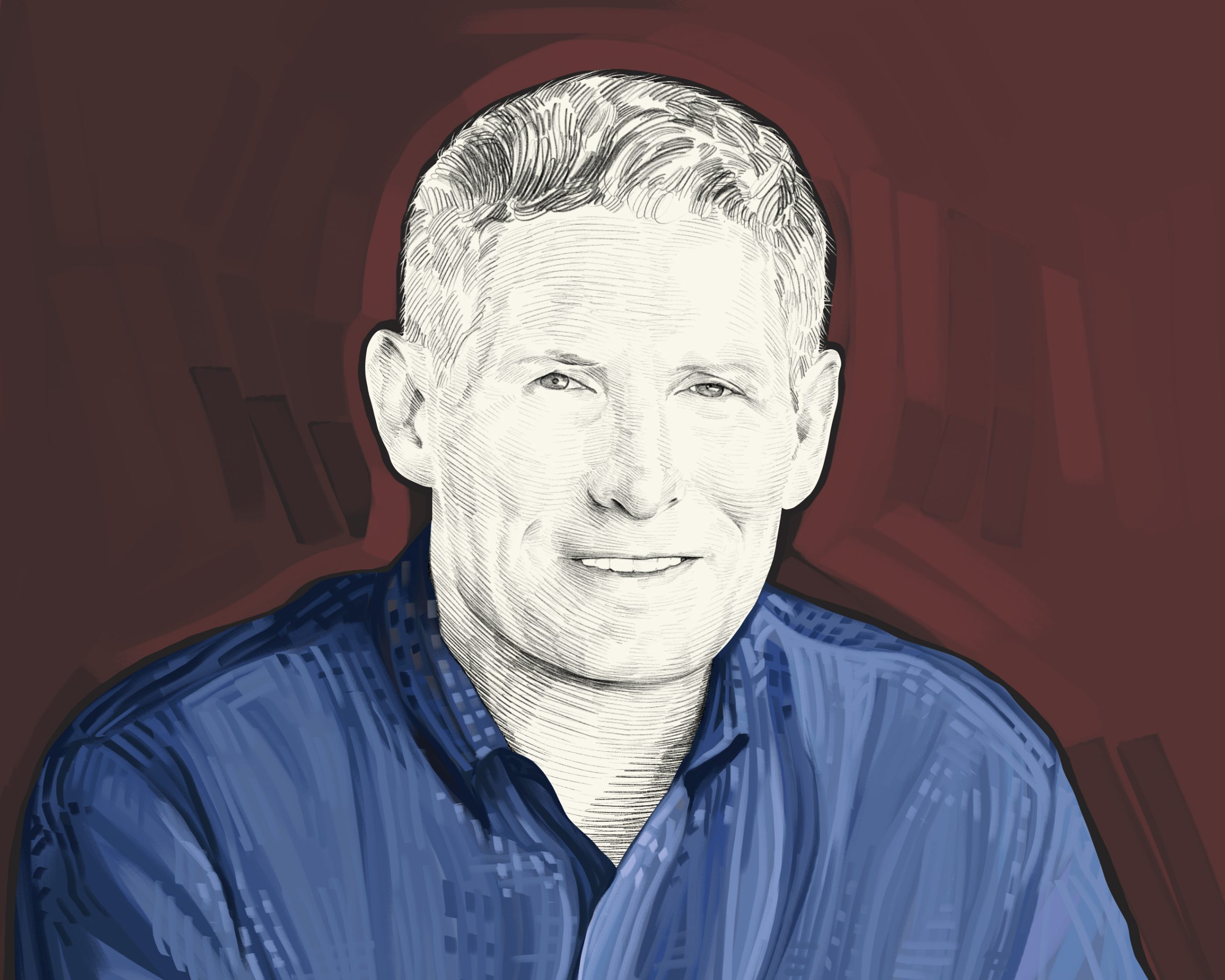
Please enjoy this transcript of my interview with Steve Young (@steveyoung), Hall of Fame NFL quarterback; founder and current chair of the Forever Young Foundation, an organization deeply involved in supporting children’s charities globally; and the author of QB: My Life Behind the Spiral and The Law of Love.
Full bio
Products, resources, and people mentioned in the interview
Legal conditions/copyright information
Steve Young, from Super Bowl MVP to Managing Billions – Hall of Fame 49ers Quarterback on High Performance, Reinvention, Faith, and How to Blend Dreams and Plans
Additional podcast platforms
Listen to this episode on Apple Podcasts, Spotify, Overcast, Podcast Addict, Pocket Casts, Castbox, YouTube Music, Amazon Music, Audible, or on your favorite podcast platform.
Transcripts may contain a few typos. With many episodes lasting 2+ hours, it can be difficult to catch minor errors. Enjoy!
Tim Ferriss: Steve, thank you so much for making the time.
Steve Young: You bet, Tim.
Tim Ferriss: It is so nice to see you.
Steve Young: It’s an honor, man. Hopefully I can add something to the amazing stuff that you’ve done for a long time. So we’ll see. We’ll see. It’s yet to be determined.
Tim Ferriss: I’m sure that’ll be the case and I have to give you — well, first point out the pink elephant in the room. Welcome to my Temple of Tim.
Steve Young: I love it. I love it. I bow to the greatness.
Tim Ferriss: And also, this has been, for me, two or three years in the making, sort of a slow build because a friend of mine sent me a Bloomberg article about you that talked about the many chapters of Steve Young, and at that time, as is true now, I’ve been incredibly interested in people who successfully navigate these phase shifts. And I do not follow football. I have a lot of respect for football. God knows, every time I see one of the car crashes, AKA collisions, I think that one hit and I would be done. I don’t know how you guys do it.
Steve Young: It’s insane. Even now as I watch now, I’m like, “Did I actually do that?”
Tim Ferriss: It’s just remarkable how durable players are. I have no idea how you guys do it. But what I’ve been hoping to dig into is the psycho, emotional, spiritual, mental side of things and —
Steve Young: Right. That’s football, weirdly.
Tim Ferriss: That’s football.
Steve Young: Yeah. It’s crazy. We’ll go on for that for a little bit too.
Tim Ferriss: Yeah, we’ll definitely get into that. And I thought we would start — actually, I’ll start with a wave hello. I don’t think you guys know each other, but you might have had a connection decades ago. A friend of mine who’s a bit of a recluse named Josh Waitzkin. He was the basis — he would hate me to introduce him this way, but he was the basis for Searching for Bobby Fischer, the book and then the movie, the chess prodigy, and most recently he got kind of doxxed, he didn’t really want to be public about it, for working with the Celtics in the last few years with their coach. And he is a huge fan. I mentioned, he’s like, “Hey, do you have five minutes on the phone?” He texted me this morning and I said, “I can’t do it. I’m preparing for a podcast with this legend,” and I sent him a link and he goes, “Oh, I studied his game. I used to study and study and study.” He’s not a football guy.
Steve Young: I thought you were bringing it up because that was my favorite movie. Searching for Bobby Fischer was like —
Tim Ferriss: Oh, I had no idea.
Steve Young: Oh, absolutely. I thought that’s why you were saying it. It’s like how do they know? Because I’ve said it many times, and I was like, “Oh, that’s why.”
Tim Ferriss: No, I had no idea.
Steve Young: I love that. That’s a movie everyone needs to watch. It’s a compelling story.
Tim Ferriss: Super compelling, and what doesn’t get put into the movie, because it couldn’t have been put into the movie, given the timeframe, is that Josh, at his peak, effectively retired from chess because of all the attention that ended up landing on him after the success of the book and the movie, and he has navigated three or four very, very, very successful phase shifts, and so game recognizes game. He’s like, “Oh, I know Steve Young. I’ve studied Steve Young.”
Steve Young: That is weird. That’s like a full circle for me. Growing up when I was a kid, that’s a movie in high school. And people probably don’t know it. I’m glad you’re — let’s shout it out. Go see that. It’s worth it. It’s really —
Tim Ferriss: It’s amazing and the book is very good. It’s a fun subject/sore subject to chat with Josh about. But I’m going to invoke a name that was very meaningful for me in terms of writing way back in the day, and that is Stephen Covey. So could you describe meeting Stephen Covey and who Stephen Covey is?
Steve Young: So yeah, in the ’80s, ’90s, even the aughts, I guess you’d call him, he was writing books, 7 Habits books. And really I’d known his kids, but I never met him, and I was — I’ll give a little background —
Tim Ferriss: And you had known his kids through the church?
Steve Young: No, at school at BYU. I’d met them and they played football, but I’d never really met him. I have a good little background here. So I’m playing for the 49ers. Joe Montana and I had been — it’s not worth going through all that, that’s a long story, but we were on the same team and we both wanted to play and he was the king and I was this kid that wanted to — I didn’t want to just sit there. And I finally got my chance to play in 1991 and it didn’t go great, and I always joke about walking around town and how I describe it is telling people, “No, I think he did throw an incomplete pass once. I mean, I think he did lose a game. In fact, I think he’s thrown an interception or two,” because the memory of someone who’s great is only great, and here’s this kid trying to live up to all of that, and I was pouring myself into it.
I mean, I was over-kind-of-indexed on trying to figure out how to — and all I could look around was everyone who wasn’t, and how everything was my fault and everything — no matter what happened, I went anywhere, I was like, “Well, yeah, Steve Young sucks. That’s Steve Young’s problems.” I found myself, middle of the season, middling around and I noticed that I was depressed, I was miserable, and I felt like I was at the bottom of a hole. And so we lost a game against the Raiders in front of 100,000 people at the L.A. Coliseum. Jerry Rice is open in the end zone to win the game and I never — he’s literally waving and I didn’t see him. And it was just like the epitome of everything that could go bad. And so I was miserable.
I need to give you that backstory because you have to know my state of mind. I was miserable. And I got on a plane because Tuesday is day off in the NFL. So Monday night I got on a plane, went to Salt Lake City to see my brother because he was in University of Utah Med School. I was like, “Man, maybe he can, I don’t know, help me get out of this funk. I mean, this is just terrible. I’m not sleeping well. It’s just miserable.” And I walk around the town with him, he’s like, “Steve, I got two kids and broke in medical school. Your life looks sweet to me.” So he didn’t help very much. I told him I didn’t know how I was going to get to Christmas.
So I get on the plane to come back, sit down, and Steve Covey’s sitting there and he says, “Hello,” and I’m like, “Oh, my gosh, I’ve always wanted to meet you.” And he asks a simple question, “How are you doing?” And I’m in a state of mind where I was pretty vulnerable. I just told him, kind of recited everything that I just said to you and how kind of miserable I was, and I got done with it 25, 30 minutes later and he goes, “Huh. Wow. Man, I can feel that. I can feel all of that, the expectations, how tough it is to not get the help that you think that you need and things that are working against you. And man, can I ask you a couple questions?” And I go, “Yeah.” He goes, “Your owner, Eddie DeBartolo, tell me about him.” “Oh, my gosh, he’s the only owner in football that ever saw players as partners. I mean, he’s amazing,” and I went on about that.
And then he said, “What about your coach, Bill Walsh?” And he’s like, “Yeah, he’s like a guy that talks about hydration and nutrition and sleep and mental health. And you talk about partnership, no one’s doing what he’s doing. His West Coast offense, that guy is amazing.” He goes, “Yeah, I’d heard that. I’d love to meet him both, because — let me ask one last question. Is Joe Montana on the team?” I’m like, “Yeah, he’s hurt and that’s kind of the problem,” and he’s like, “Well, if you had to ask him for mentorship, go ask him questions to help your game, could you do it?” I’m like, “Yeah, I could.”
And he goes, “All right. Well, I want you to know what I do. I travel the world looking for platforms, companies, organizations that create the ability for the humans on the platform to see how good they can get and iterate and find out because that’s what life should be about. And so as I travel the world, I’m always looking for it and I’d love to talk to those guys about their platform, but I’ve got to step back, Steve, and tell you that from my perspective, the platform that you’re on, the place that you are, I think might be the greatest one that I’ve ever seen,” and I was like, “Wait, didn’t you hear me? Bro, this is miserable. Things are terrible.” But it stung me. It went through my heart. It was like, oh my gosh. My first thought was, I think I might’ve screwed this whole thing up. Oh, because to have him say that truth to me.
He goes, “Let me ask you one last question, because it’s scary.” He goes, “I always wonder if people are willing to take the chance to find out how good they are,” and I’m reflexive about it. I’m like, “Yeah, of course. I’m absolutely up for that.” And then he took a minute and he looked kind of like — he was little and bald and like a little Yoda-ish, you know what I mean?
Tim Ferriss: Yeah, I remember the About the Author photo.
Steve Young: Yeah, and so he took his finger and he kind of looked at me and said, “Then be about it,” and I was like, “Oh, my gosh.” I realized right there that the hole I was in, that I thought so many people had dug, that I had dug it. I had no idea that I dug the hole, and I had thought that everyone pushed me in and I didn’t realize that I had jumped in. And so it was that…
We can talk about victimization for a long time because it’s such an important thing to ferret out in your own life over and over again, like never stop. It was the realization that I had played the victim and had jumped in a hole, dug it and jumped in, and I’m the author of it. That’s what the shock was, like I authored this. And I remember getting off the plane as if I was transformed, and I don’t want to say it lightly. It was as if I now knew if I was going to do anything, I was going to be about this.
And I remember not sleeping well that night, but for a different reason, I thought, “Oh, my gosh, I think I’ve screwed this up enough that on Wednesday mornings when you get fired in the NFL,” and I’d heard rumors about maybe getting benched, and I’m like, “Oh, crap. Don’t tell me that I have screwed this up so bad that I don’t get a chance to go fix it.” And I screamed down at practice the next day as energized as ever like, “Just please don’t — please give me another…” And I didn’t get benched and I did play and I was about it, and it was fun because it’s like something that’s true, like truly true, like universally true. When it’s that way, it doesn’t waver. You don’t have iterations of it. It’s just true.
Tim Ferriss: You’re not second guessing.
Steve Young: I don’t have to worry about it. And he said, “People are really afraid. It’s hard to find out how good you are because you might find out you’re not very nearly as good as you thought you were, but you’ve got to make that okay and that now I’m going to be iterate and find out how good I can get.” And so it’s really about fear, and if you can lose that fear, and that’s basically what you’re dealing with is a fear-based — you’ve been fear-based. And I was like, “Oh, my gosh.” And you just wanted to exorcize it. Now it doesn’t happen overnight, but I remember soon after that season ended and the whole off-season, and so the next year we’re playing the Cowboys, they’re the best team in the league, and I think to myself, “This is where you find out, right?”
And I remember running up to Troy Aikman and we were warming up and he’s a friend and he’s a quarterback for the Cowboys, and I’m like, “Troy, it’s so great that you’re here, man, because I’m on this quest to see how good I can get and I can only find out against the best, and so I’m so glad that you’re here.” And I remember Troy looked at me like, “Freaking weirdo. What’s wrong with you?” But that’s what I was about.
And to finish the story, I think I have to finish it kind of honestly and authentically, I was MVP of the NFL that year. And you think back to being in the bottom of a hole running to my brother to see if I could get out of this depression, and it’s just amazing to me that perspective, a truthful, universally authentic fact can make that kind of difference in somebody’s life. I owe him the greatest debt because you think about angels in your life or people that show up. It was almost like It’s a Wonderful Life moment, you know what I mean? You almost think, was he really there or was I imagining this guy that’s sitting next to me? So that’s the Stephen Covey story.
Tim Ferriss: What a wild Sliding Doors moment, right? Just the happenstance of that interaction and how it changed things. It’s so remarkable to reflect on.
Steve Young: And it really never ended. Because it’s true, I now seek out that victimization in my life, watch it for other people, try to help because it’s such a nefarious common state of being and totally rationalize to — I always talk about the entropic world that we live in. It’s like super transactional, eat what you kill, sweat of your brow. It’s all the conditions of the world. Victimization feels almost rational, but it’s kind of death, and so that’s the thing that I watch in my own — I swear, and that feeds to accountability. It feeds to who authors all this? You think that someone else is authoring it, but you continue to author it and don’t take it — that’s what I was missing, right? I’m actually — and so that’s why the perspective was so powerful.
To this day, it gives me little chills. I’m so grateful because I was about to walk down a path that was going to be miserable and I would have said, “It wasn’t fair. How could anyone — this is not right. I need another chance because I want a better shot and I want people who will support me more,” or you come up with all kinds of stuff and that’s what would have happened and who knows where it may be. But yeah, great Stephen Covey, man.
Tim Ferriss: So after that realization and makes me also think about — there’s a book called Extreme Ownership written by Jocko Willink, former Navy SEAL Commander, which really also underscores this ownership, being all about it, as you put it. And I’m curious to know, after that realization, after the questions about seeking out mentorship or otherwise on the plane, what were some of the next steps? What were some of the most important changes that you made that allowed you then, a year later, to be where you were?
Steve Young: It’s like the boat that leaves the harbor, it changed the direction that you left every morning. There was a aha. It was like, “Oh, my. I can’t believe that I almost walked down this treacherous path.” And that’s why I knew it was true is because every morning I wake up and say — you didn’t have to doubt it. It was like, “Don’t play the victim. Start owning and look forward to the possibility of what you can…” My theology is about we’re here as humans to learn and grow. It can be tough and miserable, it can be all kinds of things, but that’s the underpinning of what we’re trying to do is learn and grow. Be about it again. Don’t be afraid.
It changed how I went to practice. You might not have a great practice, but own it. You might not be as strong as you thought you were. Well, freaking own it. Stop dancing around the authenticity of what you’re trying to do. And once I open myself to all that. It brings you to the moment. It brings you to the present. What can I do right now? Not what if or what possibly. And then it became a quest that was intentional every day to go find out, like it’s okay if you’re not as good as you thought you were. In fact, let’s just know. I don’t need to read the paper to have somebody tell me how I’m doing. I don’t need to wait in line at the grocery store at the checkout with the clerk and the lady with the paying, as they talk about the 49ers, waiting for the inevitable, “Well, what do you think about Steve Young?” And then waiting for the answer as if it was going to define me.
But that’s where I was, right? Before it was like, “Oh, he sucks.” I’m like, “Oh, yeah. I suck.” It’s like you’ve allowed — thinking that you’re doing it to me, I’m allowing them to do it to me because I’m not defining it. And that has stuck with me even to today where it’s a vulnerability, it’s authenticity about accountability. Where is it? Where does it lie?
I’m using football to describe a lot of stuff that are very important concepts, but it’s like when you throw an interception.
Tim Ferriss: And for people who don’t know football, what does that mean?
Steve Young: So I have the ball, I’m the quarterback. I drop back to pass to win the game, the last minute, the last seconds, the crowd is screaming with anticipation, 80,000 people, you can feel the emotion of like, “It’s happening. We’re winning this game,” and then I throw it and the other team, the defense that’s on the field, they intercept it, they take it. And there’s this moment where 80,000 people with all this anticipation is like, “Oh.” Sports is that cool because it’s hard to get those moments where they’re like binary moments where it’s like — and then the emotional swing, like to get that kind of a swing with 80,000 people, it’s kind of crazy cool. I can’t believe I’m saying that because it wasn’t that cool at the moment, but it’s crazy to feel that.
And I spent a long time with my teammates at that moment when they would look at me and say, “Hey, we watched you do this and it felt like you threw it right to them.” There’s an underpinning of it like, “We know you didn’t do it on purpose, but kind of looks like you did it.” And so as a human behavior emotion, I’m like, “Oh, I’ve got to show them that this was a mess. You turned the wrong way or you didn’t block your guy or something else happened.” Mitigation. Mitigation. I take the banner of mitigation and say, “Look at all this truth. I’m not telling you lies. I’m telling you truth. This is how it happened. Facts. Own the facts.” But I didn’t realize that there’s a truth to the mitigation, but it’s not actually useful until I turn to them and say the ball was in my hands and now it’s in their hands. That is the truest truth.
Again, if you live in mitigation, which is kind of the Stephen Covey’s — where I was living in all this truth, people saying things, people doing that, how I fell, it’s all this, but it was mitigating and it wasn’t authoring. And so when I started to breathe that back into the system, “Look, I screwed it up no matter what happened. Don’t worry about mitigation right now. I screwed it up. Let’s go fix it,” and everyone was like, “Oh. Yeah, let’s go do that. And I’m sorry that I turned the wrong way. I’m sorry that I…” And so all of a sudden —
Tim Ferriss: It’s like calm is contagious and the military ownership was contagious.
Steve Young: And so when I talk about Stephen Covey, I have to talk about my authorship, vulnerability and accountability for me and being — the quest is really to be honest with yourself, and that’s what I wasn’t doing, and so that’s — when you say, “What did you do? What were the aspects of it?” If someone here heard this and go, “I want to be about that too, how do I do it?” To me, it’s a state of being, it’s not a list of things to do.
Tim Ferriss: Right. Well, it also sounds like you were, if I’m hearing you correctly, basically out of the gate each morning. It sounds like you were reminding yourself of that underpinning truth as you went out into practice.
Steve Young: It was almost like you have to exorcize the victimization. Look, I don’t know a ton about the brain, I’m not a scientist, but little I know is that the brain’s here to keep me safe and in so many times your brain’s working against you because it’s playing the victim for you and you have to retrain kind of how you think about it.
So that’s why I say every day, you have to keep training a new thought pattern, a new way to — and it was so clear to me, it was easy. When it’s not clear and muddy, it’s harder. You’re like, “What was the point? I can’t remember,” and here comes the life. But for me, it was so clear and obvious that I was playing the victim that I think for me, it was just a state of being every morning. I might suck, but it has to be okay. It has to be whatever it is so that I don’t look anywhere else. It’s just you can author it, you can get better at it, but quit living in the muck of mitigation, I guess, is how I would say it.
Tim Ferriss: We are going to come back to some —
Steve Young: I’m sorry to riff like that. I know I can go on and on and on.
Tim Ferriss: I love riffing. This is why it’s long-form. And as a muggle, for someone who’s looking at football and I don’t understand all of the technicality behind it and the strategy, but I respect the athleticism, I look at a quarterback and I wonder if you were to try to explain it to someone like me who’s a layperson per se, what separates good from great quarterbacks? Are there any particular elements that you see consistently in great quarterbacks that are absent, not paid as much attention to or otherwise? I mean, they could be physical, but I’m wondering if anything comes to mind.
Steve Young: There’s not a long enough form for this, because I mean, people have been searching — because think about it, how many very, very smart people have been looking into college to predict who can be great in the NFL and there’s no worse results than trying to predict that. And that’s why college is not a great predictor.
Tim Ferriss: What do you think? Is it something internal, like their ability to learn in a certain way? What is it?
Steve Young: I’ve been trying to melt it down to something that people can just grab, like this is the truth. One thing’s for sure, human behavior, human mind, I don’t know what the right way to think about it, but when there’s adrenaline and focus and pressure and opposition — I mean, how many games are someone’s paid to actually screw you up physically? I’m paid to grab you and throw you to the ground and hurt you. I’m paid millions of dollars. So it’s all in that moment, in that kind of dynamic, that you now have to ferret through. And Tim, I wish everybody who loves football could stand with a helmet on, and at 6’4″, 6’3″, or whatever, 6’2″, whatever anyone like L. Russell was, 5’10”, stand there and ferret through bodies in motion, the fastest, most athletic humans on Earth on both sides, and that’s why when you talk about the difference in the NFL is the speed, it’s the athleticism.
A lot of times people’s brain can’t process that fast. They were processing fine in college, they were processing great in high school, but it’s just an elevation. Gladly for me, there’s not a super pro. I would have topped out, but I think more than anything, the quality — because there’s fundamental things. You’ve got to be able to throw the ball, you’ve got to be able to — but it’s the process of figuring out the speed and then because no one’s — in my mind, college, every receiver’s open, in the pros, nobody’s open. That’s the change. You have to now figure out how to deliver it so that it’s not open at the time you throw it, but by the time it gets there, it’s open, and I think that’s the best way to explain how — and then do it over every 30 seconds. And how many times do you throw it right at the — and then just as it leaves your hand, you get just pounded into the ground. You don’t even see it.
I mean, how many times do you hit bottom of a pile and you’re like, “How did it go?” You don’t know, and you just listen for the crowd because you’re like — if it’s home and there’s cheering, you’re like, “It worked,” and otherwise, if they’re booing you, then it’s bad. So I think it’s the processing and it’s a guile. It’s a street smart. It’s not necessarily IQ for taking a calculus test. There’s memorization, but there’s a — I don’t know. You know what I mean? You just get it, you get it and —
Tim Ferriss: I think there is a speed also associated with that, even with street smarts that I see in some of my friends in business, a certain EQ savvy. They’re very fast, like their clock speed is high.
Steve Young: And I think they’d be great quarterbacks. That’s the thing, and I think you just described it very well in other fields. I see it too, but again, even when I see it in other people, I think, “I don’t know, at that speed…” Because you don’t know until you know.
Tim Ferriss: Well, there’s also the pressure of imminent bodily harm.
Steve Young: Well, that’s what I mean. I think most humans, when things get more intense, the adrenaline runs. And when adrenaline runs, the brain focuses. It gets smaller, and it gets more focused, but yet you’re not as aware.
And so that physiology doesn’t work, because in quarterbacking, you have to expand.
Tim Ferriss: You have to have the peripheral awareness.
Steve Young: And it has to be the more present you are. Like, if you’re in your backyard, not 80,000 people watching, if this was all happening in my backyard, how would I take this in?
So I’ve noticed that the best quarterbacks have a genetic, I think it’s genetic, predisposition to when adrenaline runs, it doesn’t do the normal things for most humans.
And that’s why the quality is like, how do I test — I wish I could test for that, because I could promise you I could tell you who’s going to be great.
Tim Ferriss: Yeah. I wonder if it’s something — just thinking out loud. I interviewed someone named Alex Honnold on the podcast before he did his big run, which turned into a documentary called Free Solo, but he climbed —
Steve Young: Oh, my.
Tim Ferriss: — I think it was El Cap, I can’t remember the exact face, with no ropes.
Steve Young: That was. It’s insane.
Tim Ferriss: And so I interviewed him.
Steve Young: I can’t watch it.
Tim Ferriss: It’s too —
Steve Young: I can’t.
Tim Ferriss: My hands are sweating just talking about it.
Steve Young: I literally can’t watch it. I want to watch it. I can’t watch life and death like that.
Tim Ferriss: And his brain responds differently to —
Steve Young: Exactly.
Tim Ferriss: — the circumstances.
Steve Young: 100 percent. And that’s the only way because all of us watch it go, “Oh, no.”
Tim Ferriss: Panic and fall.
Steve Young: No way.
Tim Ferriss: That’s what happens.
Steve Young: No way. Every grip has to be life or death. No way. People think about quarterback in the NFL is like, “Whoa. How do you do it?” I was like, “Look.” Talk about what you just said, this is pinochle to —
Tim Ferriss: Might be neurologically or genetically related. Is there anything that, when you look at your trajectory, that was learnable or coachable that you absorbed by watching other people, what did you improve most at? So there’s a lot out of the box. You were successful as a younger athlete and read some great quotes from your dad about this, but you were successful as a younger athlete. You seemed to have some hardwiring out of the box that was very helpful. But you didn’t just hit the ground running in the NFL and you were top of the game. There was something that improved, or many things.
Steve Young: One fundamental thing had to happen, which was how to throw the football. It’s not intuitive. Kind of like golf. You think great golf swings when you grab a club as an adult, you’re not going to do it right. And as a kid, I grabbed a football and because I didn’t want to be embarrassed, I wanted to spin perfectly. I would spin it out of my hand and that’s how I did it. But you can’t get behind to throw it hard. And this was not something that was a deep, dark secret, but in Greenwich, Connecticut —
And some people grab it and grab a golf club, grab a football and it’s just like, “Oh, yeah, that’s how you must do it.” That’s not how I did it.
And so I got to college. I’d faked my way into playing college quarterbacking without really understanding it. And Jim McMahon was the quarterback at the time at BYU. Incredible. Second to Heisman, he was amazing.
But he was righty and I was lefty and I was like, “How does — he’s throwing it different.”
And then I realized that you have to — instead of spinning it out to spin it, you actually go the other direction using the tension, inside your arm as you hold it, and then just go in.
Tim Ferriss: Oh, wow.
Steve Young: You actually spin it. It comes out and spins, but now you can throw it with all your power.
Tim Ferriss: Right, right.
Steve Young: You’re talking about what I — I had to have that.
Tim Ferriss: Those seem — and I’ve played a bunch of sports certainly out of JP level.
Steve Young: Seems like that’d be table stakes, right?
Tim Ferriss: Well, no, it seems like rebuilding your swing in golf or something.
Steve Young: A little bit, but it was such an unlock.
Tim Ferriss: Yeah.
Steve Young: Once you felt it, and it wasn’t — golf’s even more complicated because you’ve got a stick and you’ve got —
Tim Ferriss: You’re a little divorced from feedback.
Steve Young: Right, right. But the fact that it was in my hand, once you felt it, you’re like, “Oh, my gosh.” And then what I realized is, “I can now throw it as hard as I want right there. It was this gift I had that was going to go undiscovered and all of a sudden it came out.
Tim Ferriss: Did you realize that at BYU?
Steve Young: Yes, right there.
Tim Ferriss: Okay.
Steve Young: It was my freshman year, about — I wish I would’ve written down the date. It was like November 10th.
Tim Ferriss: Okay. It was like discovering fire.
Steve Young: I was like, “Oh, fire.” Exactly. “We live!” All I did from that point on was throw the ball. I just wanted to throw it, throw it everywhere, throw it —
And what’s ironic is that the coach who was the offensive coordinator at the time, soon after, because no one knew, this is all happening. I was eighth string. I was nobody. No one knew mine, but I had figured it out, and it had clocked in. It was clocking.
And so I think, for me, he pulled me aside later in the year, and he goes, “By the way, I don’t coach lefties.” He said it to me. “I don’t coach lefties.”
And so I was moved to defense at the end of that season because LaVell Edwards, the coach, said, “Look, you’re superfast, super athletic. We have 10 quarterbacks. We want you on the field.”
And so I started in the winter, practice is winter as a safety and a defense, cornerly positioned. I couldn’t stand. I hated every second of it. As soon as practice ended, the quarterbacks would throw after practice, I’d go throw.
And in the interim, that coach who told me he wouldn’t coach lefties, took a head coaching job at San Diego State. Another coach, Ted Tollner, came in, and I’m throwing with the quarterbacks after practice. And he goes, “Steve, I thought you played quarterback.”
I go, “I do, but they told me I’m lefty, so I have to play defense.” And he goes, “That’s ridiculous. That’s stupid.” I go, “I know. It’s insane.”
And then I screamed up, “And I learned how to throw too.” So I have this thing that — and he’s like, “Let me go see if I can fix it.” So he goes in and changes it.
Tim Ferriss: Wow.
Steve Young: And that spring, spring ball was a month, 30 days of practice, he got two weeks for me to practice before they made a decision. And by the end of the two weeks, because of this new gift, that was it.
Tim Ferriss: Wow.
Steve Young: That was it. With that change, everything, because I was fast, I could run, I could throw it hard, I could process. The game wasn’t too fast for me. It kind of all made sense to me. I just didn’t unlock that one fundamental piece of throwing the ball.
Tim Ferriss: Yeah. It’s so fun having this conversation. I’ve been looking forward to it for so long. And before I forget, I just wanted to say again, on a very reduced junior varsity level, but I wrestled my whole life basically.
Steve Young: Oh, I have total respect. I wrestled in ninth grade.
Tim Ferriss: Yeah. It’s a tough sport.
Steve Young: I will never wrestle again.
Tim Ferriss: It is a tough sport.
Steve Young: It is brutal. There is no good news.
Tim Ferriss: No, there’s no good news.
Steve Young: I remember the first wrestling — just to break in your story, it’s like three one minute or three minute — I can’t remember how long. And so by the first one was over, I was done.
Tim Ferriss: Yeah.
Steve Young: People are in the best shape, the greatest athletes. When I see wrestlers, I tip my cap. I walk away, man. I’m like —
Tim Ferriss: It is a sufferer fest —
Steve Young: It is brutal.
Tim Ferriss: — no matter what. Just a brief digression here, but I spent a year abroad in Japan in high school, which was my first time really outside of the United States, from Long Island to Tokyo, which changed my whole life.
But I competed in judo while I was there. Then I came back for my final year of wrestling in high school, and I was doing really, really well.
But I hit a wall, and the reason I’m bringing this up is not at all to compare apples to apples.
Steve Young: No, no, but I get it. Respect.
Tim Ferriss: I somehow found a book called Mental Toughness Training for Sports by a guy named James Loehr, spelled L-O-E-H-R, who Josh Waitzkin actually also knows.
And I read that book, and the key piece of that, it talked about different approaches to mental toughness, but it had an assessment, and it asked you to give this assessment to close friends, coaches, teammates, and it just made all of your strengths and weaknesses.
It had them rate you on all of these different aspects of toughness, performance, resilience, et cetera, psychology. And once I had those report cards from all of these people, and I was able to see and accept strengths and weaknesses, and I don’t think this is unique to me, there really was a before and after.
The next practice was different, and that’s when everything hockey sticked and ended up having just an incredible season.
But to people who are listening and haven’t experienced what, say, Steve experienced on that plane ride or what I’ve experienced with that book, there really can be that flashboil before and after.
Steve Young: That’s kind of what self-help stuff does and tries to get you — and the problem is, it doesn’t, all the time, land because — I get the idea. And so I read the book — “Oh, I’ll go read the book.”
Tim Ferriss: Yeah.
Steve Young: And you read the book and go, “Oh, okay.” But the flashpoint is really, to me, the vulnerability. That’s the hard part.
Tim Ferriss: Yeah.
Steve Young: The hard part is to open up and take the risk truly, internally. And I was living this life where it’s like, “I want to be great. I want to be great. I want to be great.”
And anyone who tells me I’m not, I don’t know what to do about it, and it feels like I can’t overcome it. It’s like you have to become vulnerable. That’s how you take it in.
And so people are like, “What do I do?” I was like, “Can you start in relationships with your mom, with your siblings, the most intimate ones? Can you start to recognize the complexity of that relationship, which it always is? However you’ve defined it, it’s probably been not a great, authentic, vulnerable place. Can you start by opening up to your accountability, to your…”
Tim Ferriss: Your part in it.
Steve Young: Yeah.
Tim Ferriss: Your contribution.
Steve Young: If you want to have an aha moment, or you want to read a book and change kind of inflection point, it comes from you were open for it, you were ready for it.
And I was so desperate with Stephen Covey, but it wasn’t necessarily I was looking for it. It was because it resonated so truthfully, like, “I’m screwing this up. I am royally screwing this up, and I cannot keep screwing it up.”
And I think a lot of people at that moment go, “Oh, I’m going to keep screwing it up because I don’t want to face the other side of that.”
And that’s what Stephen Covey — remember when he said, a lot of people don’t want to know how good they are.
Tim Ferriss: Yeah.
Steve Young: I hope I’m describing it. It makes sense to my brain that unless you get to that space, you really can’t change.
Tim Ferriss: Well, the vulnerability also seems to me fundamentally accepting the possibility, almost the certainty that you’re making mistakes and part of accepting how good you are is not necessarily accepting how excellent you inevitably are, but accepting the possibility that you might be falling short in certain places.
Steve Young: And then also the grace in it, where what’s the point? Is the point to be regarded by people, or is the point to see how good you —
That’s why it goes back. Why it resonated with me is because my own theology was like, “We’re here to learn and grow. Let’s do it.”
Tim Ferriss: Yeah.
Steve Young: And part of learning and growing is, “I suck right now, but I’m not going to suck tomorrow.”
Tim Ferriss: Yeah.
Steve Young: And once you can start to get into that mode of, “That’s what I’m about,” that’s what happens. There’s a clarity that comes because now everything gets fed through that truth, and now it comes in more authentically, and it doesn’t hit the same way.
And you can go in front of 80,000 people and find a piece about it that — 80,000 people could boo you mercilessly.
It is hard, what I’m talking about, but you can be authentically say, “Look, I’d boo me too.”
Tim Ferriss: Mm-hmm. Yeah.
Steve Young: “In fact, I might just boo with you.” And it’s okay and you get into that place. I’m going to try not to get booed tomorrow, but it might be. But as long in your brain is saying the whole point is to learn and grow, then, Stephen Covey, “Be about it.” And I think that really freed me up.
Tim Ferriss: Yeah. It seems like such an important tectonic plate underneath everything else.
I want to ask you about one of those quotes from your dad that I was alluding to earlier. So this is from the Bloomberg piece and the URL has in it, “Steve Young is an athlete who’s actually good at finance,” which I just — part of me loved.
Steve Young: Backhanded compliment.
Tim Ferriss: Yeah, yeah. I just loved that. So your dad was bewildered by how well —
Steve Young: By that fact.
Tim Ferriss: Well, he was bewildered by how well you did at football at different levels. And then this last line is the one I wanted to ask you about. It says, “Honestly, Steve’s personality is probably a better fit for law or business as compared to professional athlete.” Why would he say that, do you think?
Steve Young: I think he’s referring to — look, we should talk about it.
So when I was a kid, growing up first grade, second grade, third grade, I was a kid that, when the first day of school, I would turn to my mom or dad and say, “Look, I’m not going.” And they’re like, “Why? It’s super fun.” And my brain was processing it in fear, and a new place, new people, and that seemed super scary. And that’s, I think, clinically would be called separation anxiety, and I think people listening, I’m sure they know somebody probably that had that as a kid. And so that didn’t really show up in my life, because I realized very young that I was not going to be going on vacation with my friends. I was going to be home.
Tim Ferriss: Sleepovers, not so much?
Steve Young: Not so much. But during the daytime, I was killing it. Only for context, all-state in three sports, captain, straight A’s, not because I was tiger parents or tiger person. The day was awesome. I can’t wait. It’s going to be great.
And at night, it’s like, I’m home. And I didn’t realize that how much I had of this is when I went to college and had to go through a process of geography change that was existential. And it’s hard to explain to people, because they’re like, “Going to college is awesome, man. What’s your problem? You didn’t unpack your bags the whole semester, and you kept telling me you’re just miserable? How’s that possible?” Well, it’s how my brain worked, functioned. I can’t really say much about that. That’s about it.
And I remember when I came back for Christmas, I finally got to come home, and I remember walking through the door and going, “Oh, wow, I kind of want to go back to school.” And I realized in my life, that was a huge shift for me in my — you live in your own private Idaho, all the things that you’re feeling, all the things you don’t really share, you don’t really — it’s like some of it you’re afraid to even share. And it’s like all of a sudden I realized, “It’s going to be all right, because now I have two homes.” And that was a shift that I needed.
What my dad’s describing is generally when I had to go play, there was a pattern of focus that was like, he would call hyper focus and not fun. And so he’s like, “He’s built for something else.” I think that’s what he’s referring to. But I think it comes from the roots of that, what I would call clinical part of my life, and another little internal battle, because now I see the world and I’m like, “I can’t wait to discover it.”
At some point it just flipped. The thing that was so constrictive and difficult and threatening, I remember my parents left for a couple days when I was really little at my aunt’s house, and I can still smell it, I can still feel it, the terror of them walking out. I look back, and how do you explain — that’s an insane reaction.
I remember I can still hear my brothers and sisters outside laughing with all my cousins, but that was me. Part of the authenticity is come to a place where we can look that in the eye too. That’s that.
So I think that explains my dad’s comment, like that part of me, but what he doesn’t realize is that part of me drove the intensity and the focus and the — so it’s like it’s not all bad.
Tim Ferriss: Yeah, there’s a flip side.
Steve Young: There’s a flip side. And so I would say to my dad, “Well, the way you’re looking at it, I can see why you say that, but the way I’m looking at it is like, I had to have it.”
Tim Ferriss: Was there a point where — this is going to be a strong way of putting it, but I’ve experienced this in my own life and have talked about struggles. Some of it, I think, is hereditary with generalized anxiety. I’ve had depressive episodes, which I’ve seen throughout my family, and appreciate how open you’ve been about discussing some of this.
And I’m curious at what point you realized you didn’t need that kind of monkey on your back. And specifically, I’m thinking about in the course of doing research for this, reading a New York Times piece, and it mentions Dr. James Klint and Reggie, I guess, and you approaching Reggie at one point.
I think it was after, what, three sleepless nights, something like that. And I guess I’m wondering what was happening, for people who don’t know what the context is, and then what happened afterwards that helped?
Steve Young: So that’s interesting. It’s kind of a bookend, actually type bookends between the Stephen Covey story and the Jim Klint story, because just before that, and maybe that’s what leads to the vulnerability, in the depth of what I just described and where I was in a hole and victimized and depressed, there was a game starting Thursday night.
The good news about all of that anxiousness around playing, I always slept. So it was like you could deal with it. And all of a sudden I wasn’t.
And so it was a game where people that I was near were like, “Steve, you’re a mess. You’ve got to talk to them. You can’t play.”
Tim Ferriss: Yeah.
Steve Young: And I’m like, “Oh, no, that’s not an option. We’re playing.” And I remember telling them as I left for the game in such a state, I’d probably never been quite like that. So I promised him, I said, “Look, if we win, I’ll talk to the team doctor, just tell him something’s going on. But if we lose, there’s no place to be able to make an…” You can’t —
Tim Ferriss: Make an excuse.
Steve Young: Yeah. That’s just the way my brain was working. We won. I played pretty well. I don’t suggest, by the way, that that’s how you prepare.
But after the game, I’m sitting in the training room, towel, ice pack, and I see Reggie, and he’s been around. He’d been around all the Super Bowls. He was somebody that — I promised my friends that I would do this, but I didn’t want to, and we won. So we’re good for a little while.
But I did. I pulled him aside, and I remember back in the corner of the old Candlestick Park, stuff was dripping down. It’s dank, it’s old school. And we’re in the back corner, and I kind of move away from everybody, and I’m kind of almost nose to nose.
And I’m like, “Reggie, I’m going through this thing. I don’t know what’s wrong.” I kind of explained it all. And as I’m explaining it, I see a big ball of a tear, like a big ball come out of his eye and then drop. It was kind of like, “Did I see…” And then another one.
And he hasn’t changed his face, he hasn’t changed anything. And I’m like, “Reggie, are you crying?” And he’s trying not to break. He’s like, “I dealt with so much clinical anxiety, I could hardly get through medical school.”
Tim Ferriss: That’s what he said.
Steve Young: That’s what he said. As he answered with a straight — he hadn’t changed his face at all.
“I had dealt with, and I, watching you, instinctively felt that there was something going on and I feel like I’ve — like malpractice, that this is what’s had to come to it.”
He felt this incredible pain as the team physician and qualified to maybe watch for this kind of stuff. And I’m like — I was relieved. Because I didn’t know what was going to happen. I was explaining something that was total vulnerability, total weakness it felt like.
And he’s responding like, “Oh, I blew it.” And I’m like, “Reggie, don’t worry about it, bro.” But he said, “We’re going to get the bottom of it.”
And it wasn’t maybe two days later, he sent me up to a child psychologist, psychiatrist, I’m not sure, and they gave me a test of 10 questions that would describe things that happened in your life. And that would be, if you answer yes to eight of them, then you have undiagnosed childhood separation anxiety as an adult.
And so I was nine of them. And he said, “Most people, Steve, who have this going on in their life, they’re self-medicating. They’re in the basement. But you’re the MVP of the NFL, so I think we’re just going to let you keep rolling and find your way through it.”
And I did find solace in the knowledge, recognizing what had happened. Because until that point, I had subconsciously always known that I didn’t like being at other people’s houses when I was a kid or in other places where — but my life was so full and amazing that we just made our way.
And so this was the point where, now bookended with Stephen Covey maybe three weeks later, these are pretty vital big changes that happened that I think allowed me the place to kind of find peace about it all.
Tim Ferriss: And so was the diagnosis in itself the treatment and the respect that you finally had a label to apply, a way to think about it so that it wasn’t this nebulous set of worries, or what allowed you, I guess, to go back to sleeping?
Steve Young: It was actually super cool because I didn’t think about it as a stigma. I thought about it as, “Oh, that makes sense.”
Tim Ferriss: Yeah, yeah, yeah.
Steve Young: And then as I told my parents and told my — then we found out that in my mom’s side of the family, this is a thing and explained all kinds of craziness that was going on that now we go, “Oh.”
Tim Ferriss: Now the pieces fit.
Steve Young: It paid forward, you know what I mean? So in its own way, the knowledge was the key. And then because I was so — functioning through it, it was helpful. Didn’t make playing in front of 80,000 people and trying to be a great player, it didn’t make it simple, but I think it was a piece to the puzzle for me to recognize that what I experienced as a kid, then you could kind of put it into context.
Tim Ferriss: For sure.
Steve Young: Knowledge is power, right?
Tim Ferriss: Yeah. I remember maybe it was two years ago, I wanted to do this experimental treatment that’s actually not so far from where we’re sitting.
We’re sitting here in Palo Alto, and they’re in Sunnyvale, but I was doing something called accelerated TMS.
I won’t bore you with all the details, but it’s this medical treatment, and they had to put me through all these assessments beforehand.
Steve Young: Is it red light?
Tim Ferriss: It’s called Acacia Clinic, and they apply a magnetic coil basically to your brain or to your skull.
And the long and short of it is, it produces a type of stimulation that is remarkably effective for generalized anxiety, in some cases depression, OCD.
And part of them checking the boxes for me to be able to pursue this, not just for myself, but to interview scientists about this on the podcast and hopefully present more tools to people who might be suffering.
They took me through all these different tests, and at one point, after an hour or two, they took this big pause, and they said, “You know, Tim, based on all of this, you seem to qualify for moderate to severe OCD.”
And then he paused, and the doctor was kind of nervous, and he’s like, “I know this is a lot to take in. If we need to take a break and come back tomorrow…”
And I was like, “Are you kidding me?” I was like, “It makes perfect sense.” None of my friends would be surprised.
Steve Young: Down the middle here.
Tim Ferriss: It was just like, in retrospect, yeah, it makes a lot of things click together.
Steve Young: Yeah.
Tim Ferriss: And even one of my friends later, he’s like, “Oh, man, knowing that you’ve got diagnosed makes it so much easier to put up with your OCD.”
And I was like, “Okay.” I think there’s a risk that maybe you overdefine yourself by the label, but in my case, I was just like, “Oh, okay, that’s great.”
Now I have a shorthand way to piece these things —
Steve Young: That’s exactly how it felt. It was like, “I’ve got a job to do. I’m about it. I didn’t realize how victimized I had become and how inauthentic I’d become and how all that part of it. But at least it all kind of, like you said, my friend was like, “Oh, yeah, I can see that.” My parents, my dad’s like, “I keep telling you just go have fun and you’re not having any fun.” Oh, now I get it. So that way it was useful in that way.
But look, I feel like again, what are we here to do, learn and grow? That’s okay. Let’s grow through it. And I still and to this day find myself, the anxious parts have all kind of abated, but the pattern as a kid, I’m realizing now how you achieve, how you accomplish, what’s the root of how you try to do it. And I was doing it in a fear-based way.
Tim Ferriss: Right.
Steve Young: In other words, if I worry about something that’s important to me enough, I can make it happen. It’s magical thinking in a way. If I worry and work and fret that something good will happen in my life. And if you think about all the good in your life, did it come because you worried about it? Probably that’s the wrong dynamic. But it takes, again, this vulnerability and authenticity to kind of say, over my life, I’ve now realized watching good things happen and I didn’t even worry about it.
Tim Ferriss: Yeah.
Steve Young: Something good happened and I didn’t have to author it by some crazy amount of — and so it’s like life is so crazy amazing in that way where the onion unfolded, unraveling. Learning is so powerful to your life. And again, you can’t get there unless you’re willing to say, “It’s okay.”
Tim Ferriss: Yeah.
Steve Young: It could sting.
Tim Ferriss: Yeah.
Steve Young: It could hurt. It could hurt for a while, but at least it’s what is.
Tim Ferriss: It’s real. At least it’s real.
Steve Young: Yeah.
Tim Ferriss: So Steve, I have to ask you about the following. This is the law degree. “Over the course of seven off seasons, he pursued a law degree at BYU.” Side note, this is from the Bloomberg piece, “His great, great, great grandfather was Brigham Young himself.” That’s wild. I mean, I’ve spent a lot of time in Utah. That’s maybe a whole separate chapter for another time. But why the law degree? Why did you pursue that?
Steve Young: My dad, when I was growing up, because I had a picture of Roger Staubach, who was a famous quarterback for the Dallas Cowboys on my wall. And he’d tell me, “What do you want to be when you grow up?” And I’d be like, “I want to be a quarterback, like Roger Staubach.” And he’d go, “What? That’s a great dream, son. That’s a great dream. And dreams are less than one percent chance, but dreams are important. Have a dream. I love it, have it, but that’s very unlikely. I need you to make a plan that’s 80 percent chance.” And so I would tell him, “80 percent chance I’ll fake it and tell you that I’ll go to college and then I’ll go to law school like you dad, and I’ll be a lawyer.”
Tim Ferriss: Okay. So your dad was a lawyer.
Steve Young: My dad was a lawyer.
Tim Ferriss: All right.
Steve Young: And I kind of liked what — he described law and I was like, “I think I could do that.” So then I would tell him that and he goes, “You know, I think there’s an 80 percent chance that you can do that. So that’ll be the plan. That’s a plan and now we have a dream and a plan.” He was always about that. And even he turned 90 in February and I recently asked him like, “Well, what’s the dream, Dad?” Because he’s always like — and he’d go like, “110.” He has it in his mind, that’s the dream. So then I had a dream and a plan.
So then I go to college and I end up going pro and I’m like, the dream comes true, right? I’m like, “Dad, so much for one percent, bro. It’s 100 percent now.” And then he would always say, “Well, what? Average career is three years.” And then I played for six years. And he’s like, “Well, what are you going to do the rest of your — you’re going to retire at 35 and then what? You’ve got another half of your life. What are you going to do?” So he just kept kind of putting in my head.
Tim Ferriss: Dog with a bone. Yeah.
Steve Young: Yeah. Well, it didn’t bother me because I knew it was pretty true what he was saying like, “What are you going to do with the rest of your life?” And so I don’t know how it got in my head. I look back on that as like, Tim, that’s just stupid to try to go to law school while you play. This is dumb. But I figured it out with the ABA, with the law school, because the first semester in law school is in the fall nationwide. The first year curriculum is sequential. You can’t cheat it. And they worked it out where I could audit the second semester one winter. If I passed the classes cold, then that would qualify me to come back and take the second semester, blah, blah, blah, blah.
So over seven years, six for credit semesters, I went back and what was funny now, but wasn’t funny at the time, is we went to three Super Bowls in that time, and the Super Bowl is in February, end of January, February. School starts right after the new year. So I’m showing up a month late, and no one in law school cares. You still got to do the work.
So I remember going to the parade down Market Street in San Francisco and jumping on a plane, the Delta plane back to Salt Lake City [in the] evening, and then the next morning in class. And every class, the five first, whatever class, usually five or six classes, every class is Socratic method, they walk in and they say, “Ms. Jones, can you please brief us on blah, blah, blah.” The whole day was, “Mr. Young, could you please brief us on…” So I’m just scrambling, trying — but I think I loved that in a weird way, but I look back and it was like, “What are you doing, man? What are you doing?” But one of the great — my dad was right. I’m now 25 years in private equity, and the only way I was able to cut the line being late to the party was because I had an advanced degree. That’s how I did it. And so he was right.
Tim Ferriss: Yeah, it served its purpose.
Steve Young: Dream and plan.
Tim Ferriss: All right. So you’re doing these seven off seasons, you’re flying back, parade, get on a plane, fly back next morning, “Mr. Young,” right? So you’re doing that. How do you make the hop to finance? How does that even materialize?
Steve Young: You’ve got to remember the 49ers 1988 were given land in Santa Clara by the city of Santa Clara because there was nothing going on down there to try to build a training facility and try to attract more business. And that’s funny now because Silicon Valley, you know Santa Clara, it is the epicenter of Silicon Valley. And so that’s where I worked all the years.
And so as we worked and watched the explosion of Silicon Valley and technology, we’re sitting in the locker room and there’s five or six of us, the lunch group that we would figure out, okay, look, how do we get in on all this venture investing and all this stuff that’s going on with these businesses? Guys, we’re leaving Stanford Business School, literally in the middle of class would get a text or something, and they would take the CEO job of a new startup. They’d walk out, you know what I mean? And so how do we get in the middle of it? And so we started trading access to the locker room from those guys on Sand Hill Road for venture investing. So we started to get everything they did, we gave them $50,000 of what they were doing. We’d split it up.
Tim Ferriss: How did that relationship happen?
Steve Young: Well, it was —
Tim Ferriss: Because it doesn’t seem like the Venn diagrams would totally overlap.
Steve Young: Well, no, because Doug Leone, who’s a great guy, great friend.
Tim Ferriss: Doug Leone, he’s one of the greats.
Steve Young: He was one that said, look, we didn’t make a trade. It wasn’t a transaction. It was more like, “Hey, we’d love a relationship, come in the locker room, be a part of our life and let us be a part of your life,” essentially. And he was somebody that I think really appreciated the complexity of what we were doing and the high function that we were doing. And then we obviously appreciated the high function and complexity of what he was doing. And so we shared in that. And I think that started a process. I was asked by Brian Maxwell, who’s now passed away, but he started PowerBar. That was a meal replacement for marathoners.
Tim Ferriss: I remember back in the day.
Steve Young: But for a single guy, it was meal replacement, not for a marathon, for day to day. And so I kind of got famous around the Bay Area that I was — the PowerBar, he asked me to be on the board and I was like, “Well, I’ve never done that before. I’ll try that.” The first board meeting, Larry Sonsini, one of the icons of Silicon Valley lawyers.
Tim Ferriss: This is out of Wilson Sonsini. So when I first moved, just for people who don’t recognize. So back in the day, Wilson Sonsini were kind of the connective tissue behind the scenes for Silicon Valley. They were one of the big —
Steve Young: It was the backbone of —
Tim Ferriss: That was the backbone.
Steve Young: The legal background. And then Warren Hellman of Hellman & Friedman, Warren Hellman’s like the icon of investing in the late ’90s and really his whole life. He is the icon. So there’s two of them, and I’m sitting on the board.
Tim Ferriss: I mean, your list is pretty insane.
Steve Young: Pretty insane.
Tim Ferriss: Yeah.
Steve Young: How does this happen? And so I had a guy, I’m glad this is long form, I had a friend in college who was messing around with the URLs before the internet was shut down by the government. You could go in and do — he had an algorithm where he’d put a geographic boundary around an internet search. And if you’re old enough to know in the ’90s, the internet was a mess.
Tim Ferriss: It was a mess.
Steve Young: If you put in “Palo Alto hammer,” you’d get a USSR sickle. Nothing made sense, but with this enablement, you could put in “Palo Alto hammer” and get the local Ace Hardware store. So that made it useful. And so we had that enablement. My buddy was doing it. He was like, “Can you help me?” So I take it to the board meeting and I’m like, “Hey, what do you think about this?”
And they’re like, “That works. You need to start a business that — retailers are panicked right now because their brick and mortar stores are going to be usurped by Amazon.” And late ’90s, it’s 10 years before the time, but people are thinking about it. Take this enablement to them, they can query their inventory real time and they can drop-ship it that day and someone can pick it up. It’s like it becomes your distribution point. And I’m like, oh. So we went and did that. And my longtime partner who almost 30 years together left his banking job at Morgan Stanley to be the CEO of this business called Found.com.
Tim Ferriss: What’s your partner’s name?
Steve Young: Rich Lawson.
Tim Ferriss: How did you meet — I just love these stories. And I want to just take a quick sidebar for folks because this is a great example of going to where the action is. In this sense, I just had a conversation with Bill Gurley, legendary venture capitalist.
Steve Young: Yeah. Yes.
Tim Ferriss: And he’s got a book that might be out by the time this is published, but it’s coming out soon called Runnin’ Down a Dream. And in it, he has a chapter on going to where the action is, Bob Dylan going from Minnesota to New York City. And you can kind of go down the list. And in this case, it’s like you happen to be right in the epicenter.
Steve Young: And again, I wish I was Bob Dylan and had the smarts to go from Minneapolis to the action in Silicon Valley, but I actually, luckily was already here just sitting here. I actually watched the traffic get worse and worse. Like, where’s all this traffic coming from? I used to get to work in 10 minutes, now I get to work in 30. And so you made fun of the athletic brain. It took a little while to kind of get it going, but in the end, we were in the middle of it and I found myself — so to finish that story, we start a business. Rich is the CEO. I’m the chairman backed by Accel, KKR and Bain and it was all of that. And so that’s when Warren and Larry Sonsini, Larry became a very close friend of mine, a mentor, still is. And I mean, really, still is. I mean, he’s just an amazing guy. He’s like, “Steve, I’m a lawyer. You need to go do this.” And that’s how it switched.
Tim Ferriss: Oh, I see. He said, “I’m a lawyer.” And he’s saying that referring to —
Steve Young: He just said, “Look, your EQ and the way you look at the world…” And I had graduated in finance, so I was like, I knew enough to be, not even dangerous, but new enough to what it really was about. He said, “You need to go help people build businesses.” And that’s kind of how it switched.
Tim Ferriss: And I’m looking right over your shoulder at, looks like maybe a tweet from Rich Lawson, your partner, that says, “Very proud to break into the top 20 of 500 plus private equity firms globally in just over the decade…” Okay. So I mean, you’ve had these multiple chapters. How did you connect with Rich Lawson? That’s actually, you can see Rich Lawson right there. So perfect timing. How did you manage to —
Steve Young: Well, let’s back up because what you’re alluding to, I think, is that what we’ve been talking about really for the whole time is transition.
Tim Ferriss: Yeah, exactly.
Steve Young: And the difficulties because I love football and I was very successful at it, I run into a lot of people who played in high school and loved it. The dream, like they would give their arm to be able to, or leg to be able to play in college and keep the dream going. And I always think about how when I left the game, it wasn’t necessarily forced, but you do age out. It just sooner later, even Tom Brady aged out at 45. It’s a young man’s game. And I remember the day before, the day I retired, I was known for this thing that I had been able to do worldwide even. The next day I remember waking up and now that that’s gone.
Tim Ferriss: Now what?
Steve Young: Yeah. Yeah. And what I’ve learned about transition that leads to Rich Lawson, how I describe it, that everyone, and even the high schooler, the last day they play and it has to be put away, needs to recognize and treat it like a death, to mourn it and go through all the steps of mourning it and burying it and actually having it as a place that you can keep referring to as almost like a grave site. Because otherwise you carry it around and it never gets — you never transition. Transitioning is about actually moving from to, right? And so I’m really grateful, Roger Staubach, the poster on my wall, I got to know him. He became a friend. Like it’s insane.
Tim Ferriss: Yeah. How cool is that?
Steve Young: And he famously transitioned, probably the most successful transition in the history of the NFL.
Tim Ferriss: What did he transition to?
Steve Young: The Staubach Company was a real estate business that he was hugely, hugely successful. And I remember asking him towards the end of my career, “Roger, give me some tips.” And he goes, “Run.” I’m like, “Run? Run where?” He goes, “Just run away.” That was his tip. Because he said, “The game will never leave you, but you need to leave it. You need to move on.” And I thought that was just simple, but really important.
And I tell people today, and I really want to write a book about transition because everybody is constantly transitioning, whether they like it or not. Most of it forced, right? But if there’s an authentic, vulnerable way to transition and bury and mourn, you can wake up the next day, realize I was great at something and now I’m not even good at anything else, but you know what? I’m going to —
Tim Ferriss: Learn and grow.
Steve Young: We’re going to learn and grow.
Tim Ferriss: I’m slow, but I’m getting there. I’m only twice as dumb as I was.
Steve Young: It’s useful.
Tim Ferriss: What did mourning football look like to you? What did running from it look like and what did mourning look like?
Steve Young: It’s funny. So you lead to Rich. So as we built this business and I was still playing, I was getting ready to run, and I was already running away from it even before it was over. And I think there was a fear based, which is not necessarily the best way to do this, that if I didn’t run really fast, that it would somehow keep me from getting really clear of it all. And so I just started — we had that business and we were just running. And so he was a banker at Morgan Stanley. We took this idea that Warren and Larry had said, great, my buddy Jim Herrmann, and he said, as we went to go get financing for this business, we ran into Rich, who’s a very successful banker in Morgan Stanley, but young, recognizing everything that’s going on, and says, “You need a CEO.” And I’m like, “Yeah, you’re right. We do.”
And he says, “I’ll leave…” You’ve got to be in the late ’90s in technology. He’s like, “I’m walking out of Morgan Stanley. I’m going to be the CEO.” And so we’ve been together ever since then. And so the transition you’re talking about as far as how it — I think because of that energy around great mentors, I mean, I’m very, very lucky. I didn’t have to do it raw. I didn’t have to do it alone. I didn’t have to — that would be super difficult. I had all this mentorship, all this modeling, all this example from Roger, from everybody. So to me, it was just, can you just go enact what is obvious to go do and not —
And I really appreciate it because the game never does leave you. I traffic in memorabilia for our golf tournaments for Forever Young Foundation. And so we need constant signatures from jerseys, from players and hockey players or Hollywood. And so I, to this day, you can’t imagine how many signatures that I do as part of the memorability company and they pay me in stuff so we can use it for the tournaments. You know what I mean? And if you told me in 2025 I’d still be signing my name on Steve Young jerseys or helmets, it blows the mind, but we’re still trafficking in it because it funds the foundation and we have great golf tournaments and we make a lot of good things happen. So it’s like a virtuous cycle that we’ve got going, but —
Tim Ferriss: It seems also really fortunate. We were chatting just when we took a break briefly, and we won’t get into the details of that, but about some of the former military kind of tier one operators who are friends of mine who run into a very similar challenge. They’re the best of the best.
Steve Young: It is brutal.
Tim Ferriss: They’ve been hugely invested in, not that dissimilar in some ways from top level professional athletes.
Steve Young: 100 percent.
Tim Ferriss: And then they go from being the best at what they do to question mark or feeling they’re not good at anything. And that happens to gold medalists, or I should say just Olympians broadly.
Steve Young: It happens to the high schooler who never leaves football.
Tim Ferriss: Yeah, that’s a great point.
Steve Young: You’re talking about, there’s dramatic moments that are clear, like the SEAL team who’s the elite member, that resonates with everybody like, oh my gosh, that would be hardcore.
Tim Ferriss: You’re right though. It happens in so many other ways.
Steve Young: But the transition pattern is so common.
Tim Ferriss: Yeah. And I was thinking how incredibly fortunate it seems to me that you happen to be here because startups are a full contact sport.
Steve Young: It’s brutal.
Tim Ferriss: That is full commit, right?
Steve Young: It’s unbelievable.
Tim Ferriss: That is not a nine to five check-in, check-out, going six out of 10. This startup’s, is in a way, it just seems like a good fit in a sense, for someone who’s been in sixth gear for so long.
Steve Young: There’s a little bit of drug in it where the action — look, I talk about this with other quarterbacks that have played a long time, “What do you miss?” And you miss the opportunity to pour yourself into something. It demands. I always say there’s physical athleticism, that’s part of it. There’s emotional athletism, that’s part of it. There’s psychological. It’s every part of you is necessary to be poured in to be even good at this, if not great. And so that rigor, nothing else, even business can’t provide that. It’s nothing like it, in front of 80,000 people with a score and officials and a clock. And that’s just — it’s a really crazy, cool environment because there’s truth in it always.
Tim Ferriss: There’s a purity to it.
Steve Young: There’s a purity to it. But even in the purity of it, going back to the truest truth of accountability, you can still try to fake that it wasn’t you. Even in the most true, clear, witnessed, 80,000 witnesses just watched it. And you can listen to quarterbacks after the game, especially losing quarterbacks when they ask them what happened, try to spin what 80,000 people just witnessed, bro. Come on. And so in that way, it just tells me about human nature that if you try to spin what just happened on a football field, what are you going to try to spin in business or in your personal life?
Tim Ferriss: Or in your family.
Steve Young: Or your family. And that’s what I say when people say, “Look, I really want to change. I really want to transition to something better. I want to learn and grow authentically, truly.” You’ve got to be about it. It has to be —
Tim Ferriss: Core.
Steve Young: Core because otherwise humans in entropy with gravity and our bodies are rotting, things are going to — it’s just truth. We’ll go along with that rationale and that is a transactional path that — yeah, you’re right. It’s a rotten path and we live it all the time.
Tim Ferriss: So we’re definitely going to talk about transactional and we’re going to get into one of your books, but I’m so curious, right? So you’ve got this Morgan Stanley banker named Rich Lawson, and he’s like, “You’re going to need a CEO. Furthermore, I’m the guy.” Why say yes? What was the pitch? I mean, I love the chutzpah of it.
Steve Young: Well, I mean, think about it. I don’t know how I try to explain stuff. It’s always my dad goes, or my wife is like, “Steve, get to the point.” But Industrial Revolution, 100 years. Technology Revolution, 20 years.
Tim Ferriss: This is his dad answer.
Steve Young: It was happening right in front, right with us.
Tim Ferriss: You could see it.
Steve Young: So it was like, businesses were literally going from nothing to public in months that were now being valued at a billion — it was an insane time. So you have to put yourself in there. So why would Rich turn and see this —
Tim Ferriss: I understand why he would do it. It’s more the question of why you guys would agree to it.
Steve Young: Because we just had an idea.
Tim Ferriss: Yeah, I see. I see. You needed an — and he seemed like an operator.
Steve Young: And really, the guys that formed this and the guys that did the algorithm and the — I’m the facilitator, right? I want to be in business. I’m energized by the human kind of complex calculus in business, and so I was drawn to it, but I knew I was — I still have imposter syndrome a little bit, right? But back then, I definitely felt like I’m kind of faking my way through it. And here’s a guy that was classically trained at Harvard, went into business, went to consulting, and then now is a big banker. And to me, he’s like —
Tim Ferriss: He’s got all the pedigree.
Steve Young: — the expert. He’s expert, right? And it’s fun, the yin and yang of it all.
Tim Ferriss: What has made — I mean, I have quite a few friends. I mean, I have a lot of friends in the investing world writ large, but I have quite a few in the private equity world as well. And I mean, how long have you guys been partners now?
Steve Young: That was 1997.
Tim Ferriss: It’s been a minute.
Steve Young: Almost 30.
Tim Ferriss: Yeah, 30 years. Why has it worked? What are the —
Steve Young: Oh, it’s interesting.
Tim Ferriss: Right? Because a lot don’t.
Steve Young: None do.
Tim Ferriss: Yeah. Right. There we go.
Steve Young: First of all, I think that there was a clarity early on that the things that he’s really good at, I really am not good at. And the things that I was really good at wasn’t his strongest suit. So there’s a yin and yang kind of feel to it. And then there’s a trust that gets built that just works. It either does or doesn’t, and it gets tested. I mean, the times that in 30 years — you’ve got to be kidding me. I remember sitting in the corner, there were existential moments when it felt like, “Well, that was fun. See you later.”
Tim Ferriss: If you’re able to talk about it, what types of — how do those precipitate?
Steve Young: Well, private equity, if you think about it, it’s a really unique business because you go globally to find investors to believe that you can go now deploy capital in businesses to return significantly more over a period of time than the public equities or other bonds or anything else. And so private equity’s got this fuse of capital that has to be great, and you have to be great in kind of 10-year increments so that as you go out and you raise the money and you go do it, every few years, you’re going to have another referendum on whether you’re in business or not.
Tim Ferriss: Based on your report card.
Steve Young: Truly. And you could be out of business. And so it’s a crazy world to now try to build continuity from fund to fund and a business that reflects the values that you want. In the middle of the truth of it is like, there’s a referendum every few years and it might go away. And so when you’re getting started, like any startup, there are existential moments that feel — I look back and it probably wasn’t truly existential, but it felt it, and that builds trust or scar tissue that, to me, the most interesting people in the world have lots of scars and have found the bounty in it, the good in it. And so I think that’s how it’s worked. And we had our holiday party yesterday, last night, and here we are sitting together chopping it up, amazing what’s happened, but yet what we can do.
So it’s just Henry Kravis and George Roberts both, I’ve had the pleasure and the honor of knowing and knowing them, and that’s one of the great partnerships of all time. Two cousins that have just — and they’re still humble gentlemen, sincere. I mean, I’m inspired by both of them. And so in that way, I’m now getting old enough when we can talk about these generational relationships that are super cool. And we all had the same office. We never had separate offices. He’s like, I’m Oscar, he’s Felix, like the old couple.
You look around the room and all the helmets hanging up, that’s COVID. All the stuff I, remember I told you about the memorabilia that I traffic in, they were in the corner in a big pile. It was just a pile of crap that just keeps getting cycled through. And during COVID, he couldn’t take it. He’s like, “I’ve got to clean this place up.”
Tim Ferriss: That’s me. That would be me.
Steve Young: So I walk in after a couple of weeks being like, “What have you done? You hung up helmets around that. They all look stupid.” Because to me, as a ex-pro athlete, that’s just dumb. But to him, it’s like that’s clean. And so we have helmets.
Tim Ferriss: It looks pretty cool as a background with the camera facing this way. So HGGC, Handsome Good Guy Company, what does that stand for?
Steve Young: Historically, it was Huntsman Gay Global Capital. At the time, back in 2008, ’07, Rich and I were the younger partners, the founders, and the two older partners, Jon Huntsman and Bob Gay with Greg Benson. And Jon wanted his name on it, and Bob didn’t want his name on it. And so, but then Jon won, and so it was Huntsman Gay Global Capital.
But then Jon was selling his Huntsman chemical business, but in the 2008 credit crisis, you can read the story, it’s amazing story where Leon Black at Apollo had bought it, signed it, but then didn’t fund it because everything had gone crazy. And then what ended up happening is the transaction did not get funded. They broke it. There was a huge lawsuit, and it was a billion-dollar settlement, but the net of it was Jon Huntsman never was able to come over. So here we are raising money as Huntsman Gay Global, and we don’t have Jon. And then Bob left for full-time church service three years later. And so then we go to fund two and it’s like, we’re Huntsman Gay Global Capital. No Jon Huntsman, no Bob Gay, but you have Rich Lawson and Steve Young, what do you think? Let’s go.
Tim Ferriss: I’m so glad I asked. That’s so much better than I would —
Steve Young: So then we have the decision to make in 2012, what do we name ourselves because we can’t stay with that name? And there’s a little panic like, can we even raise a — I mean, again, existential crisis.
Tim Ferriss: Can we even raise?
Steve Young: Can we raise a fund? Let’s melt it down so at least it’s a reflection of something that was existing. And I, honestly, and everyone around the firm knows this, I can’t stand our name because HGGC is hard to say. So you stand up in a very formal setting, and you’re trying to express the values and this incredible partnership and culture that you’ve built off of the back of my previous life in football and how you have to come together. And pari passu, we can lock arms, strategic vision, we can go. And everyone here at HGGC.
Tim Ferriss: That’s a lot of syllables.
Steve Young: Yeah. So my great idea is to call it, I used to play at Candlestick Park, so it was Candlestick Ventures or Candlestick Partners, but we’ve said, we branded it. It’s worldwide.
Tim Ferriss: It stuck. It stuck.
Steve Young: It’s everything, so now we’re HGGC just because. And, it’s fine. It’s fun. It’s fun.
Tim Ferriss: So you mentioned something that actually might be a nice segue to where I was planning on going next anyway. You said left for full-time church service. And I was going to ask about faith, the role that faith not only plays in your life now, but has played. Has it changed form over time? I don’t know if it has or not, but —
Steve Young: It always does —
Tim Ferriss: But —
Steve Young: And it should.
Tim Ferriss: Yeah.
Steve Young: It’s learn and grow, right?
Tim Ferriss: Mm-hmm.
Steve Young: As a young kid, it was formative. It gave you a sense that God’s with you, like cheering you on. As a kid, I always felt like even in the hardest times, no, God’s cheering you on. I never felt this wrathful. When I read the Old Testament, I’m like, “Meh.”
Tim Ferriss: It’s pretty rough.
Steve Young: Not really. That doesn’t make sense to me.
Tim Ferriss: Leviticus doesn’t have a big smile on it.
Steve Young: And I was able as a young kid to fare it through the things that resonated and the stuff that didn’t. And so my theology is really wrapped into what I would call — being LDS is complex because it was a — you know, we claim this kind of restoration. So it was essentially a restart. And in the restart, there’s — I mean, you look back at the history in the last 200 years, it’s pretty chaotic. And so for me, I don’t have to carry all that. But the things that resonate, the things that are beautiful are really rooted in that event. So it’s like to me, it’s always resonated. It’s always been something that — and I don’t have to carry what I see as the chaotic parts of a young organization.
So in that way, I tell my wife, she got me started on really questioning and challenging the culture As a cultural experience because true faith can’t be cultural, right? It has to be rooted in something actionable that is beyond you. And so I find myself more energized than ever around faith and around the potential of organized religion and its beauty, yet recognizing how devastatingly painful and difficult and all the other parts of it. So ferreting through all that, I find myself more energized than ever at how I feel around faith and connection and relationship. Because I learned somewhere in there that if you’re not careful, you go back to what we talked about around entropy and rotting and transaction. And if you’re not careful, religion becomes like what I call Boy Scout theology, kind of go get a merit badge, do the work. It’s good work. It’s not bad work. Go get a merit badge, put it on your sash, and then wear it around town so that everyone knows what an amazing Boy Scout you are. You know what I mean? Does that make sense?
Tim Ferriss: It does make sense.
Steve Young: So that theology is productive.
Tim Ferriss: It’s like performative.
Steve Young: There’s good things that come out of it, but the relationship can’t last because it’s transactional. It is self-interested at its core and it can’t make it. So I’m super energized by the roots that really kind of like — I don’t know. I find myself every day enjoying, as I chew on the ideals of my faith, like how it keeps resonating in a way that is — we’re talking about learning and growing, right? I find myself always refining and spiritually kind of that light that I feel that I want to be around, and it doesn’t necessarily — it comes from everywhere.
I find my organized religions kind of — it’s not hoveled. It’s not insular. It makes me more curious. I can’t wait to hear when you tell me about something that you’re doing, I’m like, “Tell me more about that, man, because that’s informative to where I’m sitting.” And that’s when I know it works is when you get away from transactional, insular, hoveling, self-righteous judgment, those are all transactional words that I’ve just — you asked me a question. I’m sorry to start riffing on it, but it’s a really, I think, energizing place to be for me right now.
Tim Ferriss: Well, this is no need to apologize. I mean, this is an exploration and I wanted to ask for a number of different reasons. One of them, I mean, and this is a reflection of the antithesis of insular also in my reading of The Law of Love, your book, which was sent to me by Greg McKeown, who wrote Essentialism, and ended up listening to it.
Steve Young: Oh, man.
Tim Ferriss: And I listened to it.
Steve Young: I apologize for that.
Tim Ferriss: Well, no need to apologize, but —
Steve Young: Well, no, it was written for my LDS brothers and sisters. We’re in a place where our roots are incredibly non-transactional and yet have allowed for the rational — I shouldn’t say infection, but allowing for the transactional to actually lead in places that it needs to be excised. And so that’s the book is about, is that there’s a law governing the universe, universal law for all humans that says to see the full measure of something, you have to lose the self-interest.
And I was brought here by Bill Walsh, my coach in the 49ers who used to talk about every year he’d stand in front of the team and say, “I don’t care what play we call, I don’t care what defense we run, we’re going to win because we have shared common experiences amongst each other and an element of love for each other.” And I was like, “That’s how we’re going to win football games?” And it was actually true, right? All the way to just all elements of my marriage, my family, my relationships. It was all, as I sought the higher ground, I guess you would call it, just started to resonate and I wanted to write about it. It was my journey. It was led by my wife who I just think I’m so much better rubbing up against her every day, shoulder to shoulder.
I always say she gets the barnacles off my boat, you know what I mean? I love her for that. And so that’s, I don’t even know what the question you are. I kind of lost myself in it, but —
Tim Ferriss: Well, I’ll pick up where you just left off with respect to keeping this — not necessarily. It’s not the loss of self-interest. It’s also this collective, this love of the collective that might not be the best way to phrase it, but self-transcendence maybe would be one way to put it. How do you, how do your wife, how do you guys, your family, keep it at the forefront? Maybe it’s a question for you. How has that become more important and how do you keep it like you did the accountability after that plane ride, something that you have as a lens on a daily or weekly basis?
Steve Young: I think that’s where the theology really is important, is how you see, how you define the crazy world that we have. I mean, I just noticed the fiery orb that came through the sky again today, amazing how it just comes in and makes Palo Alto 67 degrees and perfect, you know what I mean? The things that are going on, the miracles that happen, I mean, I had breakfast, but I don’t digest my food. I don’t know the vitamins and minerals that body needs. There’s just this intelligence that’s out there that is universal and — dang, I forgot your question because I lost —
Tim Ferriss: Oh, that’s okay. No, I was just asking the law of love, how you keep that —
Steve Young: Oh, in the forefront —
Tim Ferriss: In the forefront.
Steve Young: Yeah. So typical of me, I was going to go around about —
Tim Ferriss: You can take the roundabout, the signature.
Steve Young: But I think what I was trying to say is that again, it’s an intent and it’s really about recognizing and defining, that’s where I was going, is defining the conditions of our life that I think God authored. It’s a body, there’s agency, choices to make, there’s opposition everywhere. And so with that as an ingredient, that’s our laboratory for learning and growing. It goes back to learning and growing. That’s the laboratory. So in that laboratory, as we define each other, how are we related? And so my theology is that God, mother and father, we are durable spirits inside of us that are not from this place. We take a body for learning and growing, but then when we die, there’s this physical entity of spirit that’s durable and that it’s divine so that every human is divine. So in that way, as you start to define things that are every day, how you relate with them, it’s in the definition as how you actually act.
And so if I see everyone as divine and more eternal, it’s not just like you see someone on the street and you say, “Oh, they’re in a bad spot.” I mean, that’s terrible. They chose their way. What a bad life. And it’s like, no, let’s back out and recognize that there’s a broad, big spectrum of experience and let’s see and have the curiosity for how to help those around us learn and grow as well. And because we really are related, we were all together, we all chose to take a body. And so in that theology, there’s this universality. And so if you talk about the law of love, it’s really just a fulfillment of the relationship that’s already true. So it’s not like I have to go through all kinds of mental machinations to make myself seek others as literal family. It’s in the roots, it’s in the dirt.
You and I are related in that way. You’re divine. We’re both divine, so let’s be about it. And so in that way, the intent of the law of love says the full measure of what I can get out of this life cannot be a transaction. God cannot be Santa Claus.
As much as Santa Claus is a cool idea, and that if I’m super good, I get a gift, at its root, it’s self-interested, and it can’t last. If there are durable spirits inside of us that are more in perpetual, the law that leads us cannot be self-interested because it will rot. It will rot like everything else in the — everything around us is — I look in the mirror today, Tim, it’s not going good, bro. It’s going the wrong direction. So in that way, the law of love is really about saying there is a law that is decreed from the origins of the universe that says, if I can lose the transaction, if I can lose myself and be curious about you and be curious about where you’ve been, there’s an element that’s pure in that, that you take in a different way. If you and I have a transactional relationship, it’s going to feel that way.
And there’s a lot of bounty in it, a lot of profit, there’s a lot of money run around the world, there’s a lot of fame, there’s a lot of everything. There’s a lot of goodness in many ways, but in the end, if it’s purely transactional, if my marriage is purely transactional, at some point it’s going to break. It has to, in self-interest. And so if you ask me the intent or how do you live it, you have to define — to me, the definition’s important, right? Because otherwise you’d be like, screw that.
I’ve been curious about people and I’ve been hurt and I’m done with that and I’m tired of being left behind and then the victimization shows up. We have themes, right? And all of a sudden it’s like, the world’s against me and now I’m going to —
Tim Ferriss: Look out for number one.
Steve Young: So I’m going to take my part, right? And as soon as you do that, yeah, there’s a mitigating truth to it. It all makes sense in my brain, but that’s —
Tim Ferriss: Yeah, it makes sense. Just because you can identify truths in a scene or situation, it doesn’t mean that by focusing on those particular truths, those mitigating factors, that you produce any type of durable good for yourself or others.
Steve Young: And the idea is that the full bounty of a relationship, put a religion aside again, but just put it all aside. The full bounty of a relationship is actually ironic. In an unfeigned love, care, concern, even a fairly well hello, just something that says, “I am about your wellbeing, hope you have a great day.” In that simple statement that’s not, “I’m not looking for anything. Just I truly hope you have a great day.” In that element, I believe unlocks an irony of how you actually receive a great day, if that makes sense.
And so you can’t say, “I hope you have a great day because then you’re going to help me have a great…” You can’t make it about something, then it all of a sudden devolves. Even kids, kids feel pure love from a parent. Do you want to raise your kids in a transactional way? It works for a while, but to really love them in a way that they feel, they feel it. I’m loved and I’m a screw-up and I do make that bad decision, but I know I’m loved and that changes people because it hits in a different place. And so the book is really around what I believe is the universal truth that is true for my LDS community, particularly because that’s what I’m very focused on, but it’s true everywhere.
Tim Ferriss: Yeah. Can it be implied?
Steve Young: But it’s the irony of it because we all who are trying to accomplish, that’s what we see in front of us. The better the life is, the more accomplishments, right? That’s how you show a great life. And so it’s irrational. It’s irrational to the world that we live in today. It’s irrational, yet I think it’s the unlock.
Tim Ferriss: Yeah.
Steve Young: That’s what I would put it, because people could tell me, “Screw you, Steve. That’s just ethereal, weird, crazy stuff. I know what I need to do to be happy and I’m getting it right now. It’s fine.” What I’m describing is irrational to all of that. And I’m chewing on it. Tim, I’m not an expert. I’ve been brought to it because of a quest, another Steve Covey quest, and I’m just chewing on it and I’m learning about it and yeah, that’s it.
Tim Ferriss: I’m so deeply curious about this. I did not grow up religious. I went to an Episcopal boarding school for a period of time, but I mean, that was non-denominational. So yeah, we sat in a chapel and they gave announcements, but besides that, it wasn’t terribly religious. And I don’t identify as religious in the sense of having an organized religion I adhere to. But there are also so many things that our current, let’s say, breadth of science can explain. And there are also a lot of questions that are really important and there are things that we can feel like love that are very hard to put under a microscope and provide spreadsheets for it. You can try, and there are ways to sort of torture some of these things into conforming to numbers, but at the end of the day, there’s a lot we don’t know. There’s certain questions we can’t answer. And I, for a long time, was, I would say, a pessimist disguised as a realist, if that makes any sense.
Steve Young: Sure, of course it does. Totally rational.
Tim Ferriss: Yeah, being raised around a lot of the glass-is-half-empty type of thinking that was justified and reasoned, and it made sense to me. I look out at the world, look at the cover of the newspaper, like, yep, things are bad, people are bad, and therefore A, B, and C. However, as I’ve gotten older, I’ve realized that, for instance, if you have a base assumption, let’s just say a belief that humans are divine, there’s some aspect of every human that is divine. And divine is a word that’ll make some people squirm who are listening to this.
Steve Young: That’s fine too.
Tim Ferriss: Which is fine.
Steve Young: Totally. Again, I’m curious. I have no — my dogma is very about the human interaction, right?
Tim Ferriss: Right. So if you have that belief and it’s like, okay, people might say, “Well, I can’t be falsified, Karl Popper, blah, blah, blah, blah.” But the point of it is, does it make things better or does it make things worse? And that I’m not saying that everybody should adopt every fairytale that they want, but at the same time, there is some latitude in how you choose to view things. And if you start to entertain something that is ever present, intangible, you could call it divine, you could call it something else, sublime, you could call it wonder, you could call it awe. I mean, there are different ways to put it. I’m not saying those are all equivalent, but you begin to get more curious and you begin to see, like you said, the fact that plants eat sunlight to produce energy, it’s completely nuts.
Steve Young: It’s insane.
Tim Ferriss: Right. And when you start to really re-familiarize yourself with beginner’s eyes, looking at how incredibly improbable it is that you and I are sitting here experiencing more or less the same reality —
Steve Young: It is irrational.
Tim Ferriss: Yeah. It’s why.
Steve Young: Don’t you think it’s irrational? It’s incredibly crazy.
Tim Ferriss: It’s nuts.
Steve Young: And so look, to me, anyone that’s uncomfortable talking about religion or theology, put it aside for a second. Let’s just think about take the universal truth that I believe is universal because it’s universal. Forget about all of that. Just take it as a lived experience, the rational, transactional life that is in front of us and the results of it. Watch as you watch it politically, you watch what happens is over time, you have to separate because, and the transactional path is more fundamental. So what is happening politically today? More and more fundamental both ways because nobody is looking for — the law of love is not part of the calculus. No one’s curious. No one’s open. So it’s like, forget about religion for a second. Just politically, I’ve never seen a more divisive transactional time led by the most divisive transactional people. It’s just, it’s not that complex.
Tim Ferriss: Yeah. And you can also look at, I mean, even we’re sitting here in Silicon Valley, right? A lot of very wealthy people. And if the hope is that the list of successful transactions, and we’re going to land the plane in just a couple of minutes.
Steve Young: This is super long form.
Tim Ferriss: If people hope the list of transactions will ultimately redeem the time that they spend on this planet in life, I’ve never seen it work out, right? I’ve never seen that work. It’s just —
Steve Young: It’s testable, right? I’ve experienced it.
Tim Ferriss: The greyhound never catches the rabbit. And so this self-transcendence discussion, I just more and more feel like it’s so critical.
Steve, I know you’ve been very generous with your time. I have really enjoyed this. Is there anything else that you’d like to share or talk about before we wind to a close?
Steve Young: I will tell you, Tim, that you’re really good at this.
Tim Ferriss: Thank you.
Steve Young: Because I don’t know that I’ve ever had a conversation like this. I leave with that unsettling feeling like I’ve really shared, I’m like overshared, possibly. And I’m like, “Oh, man.” But I’m at a place in my life where I’m curious about that. It’s like I’m not worried about it. I was just like, “But thank you for a chance to put into words.” And I already feel like, oh, I wish I could have said that differently or I could have, because it was so raw in some ways. So I’ll get better at that, but I really appreciate that for me, the depth of how you took me to places that I really appreciate. I will not listen to it because it’s just too much, but I’ll get responses from people. But I just thank you for the gift of vulnerability and the gift of expressing my story. I appreciate it.
Tim Ferriss: Yeah. Thank you. I’ve really, really enjoyed it. Folks can find you on Instagram @SteveYoung, on X @SteveYoungQB. You’ve got the hggc.com website, of course. Also people should check out Forever Young Foundation and we’ll link to many other things in the show notes for everybody at tim.blog/podcast. And until next time, as I always say, folks, be just a bit kinder than is necessary to others, but also to yourself. And thanks for tuning in. Thank you, Steve.
DUE TO SOME HEADACHES IN THE PAST, PLEASE NOTE LEGAL CONDITIONS:
Tim Ferriss owns the copyright in and to all content in and transcripts of The Tim Ferriss Show podcast, with all rights reserved, as well as his right of publicity.
WHAT YOU’RE WELCOME TO DO: You are welcome to share the below transcript (up to 500 words but not more) in media articles (e.g., The New York Times, LA Times, The Guardian), on your personal website, in a non-commercial article or blog post (e.g., Medium), and/or on a personal social media account for non-commercial purposes, provided that you include attribution to “The Tim Ferriss Show” and link back to the tim.blog/podcast URL. For the sake of clarity, media outlets with advertising models are permitted to use excerpts from the transcript per the above.
WHAT IS NOT ALLOWED: No one is authorized to copy any portion of the podcast content or use Tim Ferriss’ name, image or likeness for any commercial purpose or use, including without limitation inclusion in any books, e-books, book summaries or synopses, or on a commercial website or social media site (e.g., Facebook, Twitter, Instagram, etc.) that offers or promotes your or another’s products or services. For the sake of clarity, media outlets are permitted to use photos of Tim Ferriss from the media room on tim.blog or (obviously) license photos of Tim Ferriss from Getty Images, etc.
