

Here’s our latest interview with a millionaire as we seek to learn from those who have grown their wealth to high heights.
If you’d like to be considered for an interview, drop me a note and we can chat about specifics.
This interview took place in October.
My questions are in bold italics and their responses follow in black.
Let’s get started…
OVERVIEW
How old are you (and spouse if applicable, plus how long you’ve been married)?
Both my spouse and I are 56.
We have been married 32 years.
Do you have kids/family (if so, how old are they)?
We have four children, ages 27, 26, 24, and 23.
What area of the country do you live in (and urban or rural)?
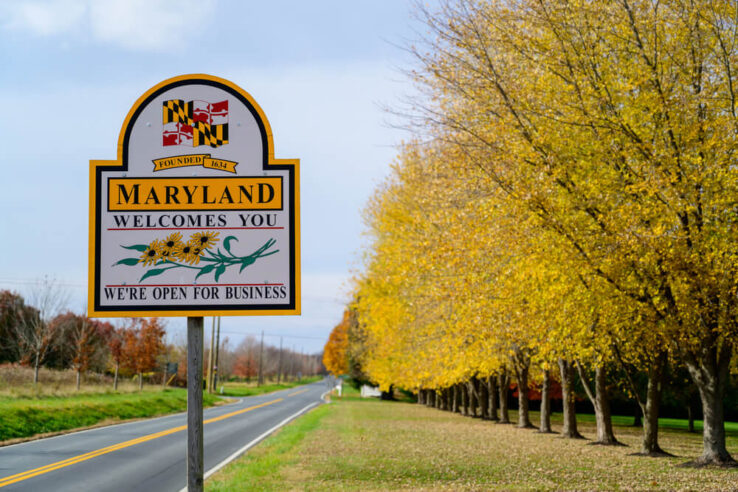
We live in suburban Maryland, outside of Washington, DC.
It’s pretty densely suburban, but not densely enough to be walkable. Sadly.
What is your current net worth?
Our current net worth is around $2.25 million.
What are the main assets that make up your net worth (stocks, real estate, business, home, retirement accounts, etc.) and any debt that offsets part of these?
The vast majority of our net worth (roughly $1.6M) is in the stock market in tax-advantaged retirement accounts. About $400,000 of our net worth is equity in our primary residence.
It’s likely more, but the market is wildly erratic in our area, and so I estimate conservatively. We also have a decent chunk of money in a Delaware Statutory Trust (DST) real estate investment that’s not going well.
Distributions have been suspended, and I understand the trust is being investigated by the SEC. We shall see how this unfolds.
EARN
What is your job?
I’m a freelance writer/editor, and I do some public speaking.
My husband is effectively retired but sits on a couple of boards and keeps busy with projects related to his career expertise.
What is your annual income?
Our annual income varies dramatically based on how much I work and how lucrative that work is.
Baseline, we have about $120,000/year in my husband’s pension, plus my income may vary from zero to $100,000/year. (The higher end is pretty rare.)
Tell us about your income performance over time. What was the starting salary of your first job, how did it grow from there (and what you did to make it grow), and where are you now?
My husband’s income while working was based on a federal chart, so it grew predictably and regularly. I think he started out at around $24,000/year, maybe a little less.
In his case, he just needed to keep doing his job well enough to get periodic promotions and not get fired. 😊
My income has been all over the place, dipping when I stepped out of the workforce to care for our children, and occasionally spiking if I get a particularly good client one year. However, since his income was almost always the majority of our total income, it moved upwards pretty consistently for the first 28 years of our marriage.
What tips do you have for others who want to grow their career-related income?
Think about career trajectory when you take a new job. That job that looks fantastic as a 22-year-old may be a poor choice if there’s no room for growth.
When we were in our mid-20s, my best friend’s company shuttered. She took forever to find a new job, but she was being strategic.
She wanted her next position to be a springboard for the rest of her career, not just a stopgap. To paraphrase, “If I take an admin assistant job now, I am going to be an admin assistant for the rest of my life.”
And that strategy has paid off handsomely…she has been with the same company for nearly 30 years, and now makes many times what she made when she started, with commensurate responsibility and job title.
I wish I had been more considerate about taking time out of the workforce. I’m thankful that I had the opportunity to stay home with my kids, but I could have done some things differently during that time, such as pursuing further education or working even part-time.
It’s sobering to realize how much my future opportunities are limited because of the choices I made in the past. I’d suggest that people consider the long-term consequences of their career choices.
Does the job or the company offer upward mobility? Is the job or company even going to exist in a couple of years? Is it recession-proof?
What’s your work-life balance look like?
That’s a complicated question. It feels like I’m working all the time, but in reality, I consistently prioritize family and community.
I work around the needs of our family, whether that’s an adult child who needs help with moving or an aging parent who needs a second set of ears at a doctor’s appointment.
The flip side is that sometimes I’m working at 5 am and there’s no such thing as a weekend, per se. I might take a weekend day off, but that’s just a coincidence.
Do you have any sources of income besides your career? If so, can you list them, give us a feel for how much you earn with each, and offer some insight into how you developed them?
My husband’s pension is the vast majority of our income, most years.
We also have that DST that isn’t currently performing.
SAVE
What is your annual spending?
Our annual spending is somewhere in the $140,000/year range, but it’s inconsistent, usually based on travel.
What are the main categories (expenses) this spending breaks into?
Our primary expenses are housing (around 30% all in) and transportation (around 10% all in). Car insurance is crazy expensive, consuming more than $600/month of our budget.
Thankfully, our fuel costs have gone way down as the children have moved out and my husband retired.
We are blessed with outstanding health care coverage with a catastrophic cap under $5000/year. We do meet our catastrophic cap most years, and that doesn’t include dental and vision.
All in, we spend around 10% of our income on healthcare.
Do you have a budget? If so, how do you implement it?
We have a loose budget, but we’ve been pretty awful about sticking to it lately. I create it, and my spouse typically just goes along with whatever I think is happening.
At different points in our lives, we’ve been much more diligent about goal setting and budgeting. I struggle with whether we should return to such focus, or just coast and enjoy the position we’re in.
What percentage of your gross income do you save and how has that changed over time?
We are not currently adding to our savings. We’re in a glide path to the decumulation phase.
We started our marriage putting just $100/month into investments, gradually increasing until it was around 25% of a pretty decent income, and we were maxing out all available tax-advantaged accounts.
When my husband retired, we stopped contributing to long-term savings. We still continue to fund various specific savings accounts, like car replacement.
What’s your best tip for saving (accumulating) money?
Probably the same as everyone else who answers these questions LOL: make it automatic. Start with something, and then increase your savings rate every time you see an opportunity.
In our case, we increased our savings every time my husband received a pay raise.
Since he was earning a pension, it was a priority that we fund an IRA for me, even when I was not working. Eventually, we were able to also fund an IRA for me, but it was important to both of us that I have money in my own name.
What’s your best tip for spending less money?
Figure out what you really care about. It makes it so much easier to pass on the things that aren’t important to you.
For example, cars aren’t a priority for us, so it’s easy to drive old ones. But I do like a really comfortable bed, so we’re willing to spend more on things like pillows and linens.
I think the two biggest things we did consistently were to drive older or less expensive cars, and my husband was a champion about taking his lunch to work nearly every day for 30 years. I also really enjoy getting a deal.
One of my favorite guilty-not-guilty pleasures is spending two hours putting together a grocery order that utilizes every single sale on items that we might use or would be good contributions to the local food bank.
What is your favorite thing to spend money on/your secret splurge?
I really enjoy self-care, such as massages and facials, but I rarely indulge. I also enjoy eating out, but we try to save that for special occasions, social events with friends, or travel.
It’s so easy to spend a LOT of money on everyday meals. My husband is a big college football fan, and we have season tickets plus a fancy parking place.
I’ve also sadly developed a coffee habit (in my 50s!) and I really, really like Starbucks. Specifically Starbucks. I’m a little embarrassed, but it is what it is.
INVEST
What is your investment philosophy/plan?
Set it and forget it. We picked what we wanted to be invested in, set up automatic contributions, and then just let it do its thing for a couple of decades.
Hands down the best decision we’ve made.
What has been your best investment?
My spouse.
He plays along with my frugal endeavors and happily drives old cars and eats leftovers for lunch.
What has been your worst investment?
My kids? LOL…I’m sure they will pay off one day.
It’s possible that it has been this DST. It is nearly 10% of our net worth, and it is in limbo right now.
I feel fairly confident that we’ll get at least some of the underlying investment back out since it is a physical asset, but I’m not sure how or when this is going to get sorted out. I’m thankful that we aren’t relying on that monthly distribution to pay the bills.
What’s been your overall return?
I literally have no idea. We’ve done a terrible job of tracking our cost basis over the years, and I hope no one ever NEEDS to know.
Unfortunately, I am missing a lot of old paperwork that we probably should have.
How often do you monitor/review your portfolio?
I check in on the numbers every few months.
We rebalance roughly annually.
NET WORTH
How did you accumulate your net worth?
We accumulated our net worth by small, consistent investing over several decades. We started young (in our early 20s), putting away just $50/month per person.
Then, we made sure we increased our investing with every pay raise and promotion. By doing so, we eventually reached the contribution limits for our employer and individual accounts.
What would you say is your greatest strength in the ESI wealth-building model (Earn, Save or Invest) and why would you say it’s tops?
Absolutely saving is our greatest strength, but our investing philosophy (if you can even call it that) has worked well, too. For many years, we invested in just three funds (S&P index fund, small-cap fund, and an international fund).
We recently diversified a little bit, but I’m not sure that has been an improvement.
What road bumps did you face along the way to becoming a millionaire and how did you handle them?
It is far too easy to go into debt. We’ve become debt-free 2 or 3 times over the years, not counting mortgages. Each time I wonder what happened!
Thankfully, we’ve been able to make it stick for quite some time and I don’t foresee falling back into that trap.
What are you currently doing to maintain/grow your net worth?
Currently, we are sticking with the set it and forget it plan. We are actually considering taking a tiny bit out of our investments, maybe 25% of the growth each year, to offset some spending that we’d like to do.
This is a hard thing to think about!
It’s only been a few years since we were saving tens of thousands of dollars a year, and I’m not sure that I’m mentally ready to start actually taking money OUT. That feels wrong to me.
I know this is a problem for a lot of people, which makes me feel a little bit better.
Do you have a target net worth you are trying to attain?
We don’t. I don’t even know how I would pick. I keep thinking that I’ll relax when we hit the next benchmark, and then I don’t relax.
And now we’re not actively trying to hit any particular number. That has also not made me relax.
How old were you when you made your first million and have you had any significant behavior shifts since then?
Our net worth tipped over $1M in 2017, and over $2M in 2024. So it took around 24 years of adulthood/marriage to get to $1M, and then only 7 years to get to $2M.
To be fair, the market was pretty strong from 2017 to 2024. But we were also saving at a pretty high rate during the first half of those years.
What personal habits and/or traits have you developed that have made you successful at growing your net worth?
We were pretty good at being frugal for many, many years. I’m pretty sure my kids thought we were poor until they were in high school, and I’m fine with that.
I like the challenge of saving money and accomplishing goals, so I would often turn a goal into a game.
What money mistakes have you made along the way that others can learn from?
Oh, so many money mistakes, or maybe missteps.
We spent a LOT on babysitting when our kids were little. I probably could have been a little more resilient and not “needed” so much help.
We would have benefited from even a little college savings for the kids, though that all worked out in the end.
We’ve spent a lot of money on alcohol over the years. There’s rarely payoff in that. We have cut back considerably in the last few years, and are tossing around the idea of quitting entirely.
What advice do you have for ESI Money readers on how to become wealthy?
Find a goal that you want to accomplish. It makes all the other decisions 100 times easier!
For example, when we got married, we decided that we wanted to wait five years before we considered children. We also wanted to pay off all our debt before we had children.
I paid off my last student loan while I was pregnant with our first, and she was born about three weeks before our fifth anniversary. We were so focused on paying off our debt, and it wouldn’t have happened without that goal.
FUTURE
What are your plans for the future regarding lifestyle?
Our net worth allows my husband to be retired, and for me to avoid a 9-to-5 job that would interfere with my ability to be there for my family. However, I have been considering a return to a W-2 job for a few years, to give us a little breathing room to spend more without having to dip into savings.
I know, I know…it’s the “just one more year” situation.
At some point, we may downsize out of our large family home. On one hand, we don’t need all this space, and it is expensive to heat and maintain.
On the other hand, we have a sub-3% interest rate, and we do have four children who like to come home and be together. I don’t want to go smaller and have that be an impediment to family time.
What are your retirement plans?
I don’t really know. We’re so busy taking care of parents and kids that it’s been a long time since we really envisioned what WE wanted.
I would like to do some slow travel. We’ve not seen much of Asia, and I’ve never been to South America or Africa or, oddly, the Caribbean.
I love the idea of spending months in a new climate, reading and writing, and enjoying simple meals at local restaurants.
If we ever have grandchildren, I would like to live near them and be as involved in their lives as their parents will allow.
Are there any issues in retirement that concern you? If so, how are you planning to address them?
It is important to me that my kids don’t sacrifice their lives to care for us as we age. Thankfully, we should have the income and assets to get help as we need it, but we all know that money isn’t the only obstacle to creating a workable solution to the needs of aging parents.
There can be a lot of emotions involved in caring for older family members. I hope that we can not be a burden as we age.
MISCELLANEOUS
How did you learn about finances and at what age did it “click”?
I’m not really sure how I learned about finances. It certainly wasn’t any sort of structured learning, and it took a long time to really sink in.
However, when we got married, I had this notion that it was time to start being responsible about money, and so I did. We were 23.
It still took many, many years until we were really proficient at budgeting, spending, and saving. A big shift happened around 2004, when I started saving ahead for expenses that could be anticipated, like new tires or holiday expenses.
This was a game-changer in managing our money in the bigger picture – we started thinking in years instead of in months.
Who inspired you to excel in life? Who are your heroes?
I’m not sure anyone has particularly inspired me. I’ve always been someone with a driven personality, selling Christmas Cards to neighbors as a child, and creating small businesses.
While I grew up in a relatively comfortable family, I always felt a sense of scarcity that’s frankly inexplicable. I knew I didn’t want that for my life.
Once we had kids, it was important to me that they weren’t concerned about having their basic needs met. As I mentioned, I’m pretty sure they didn’t realize that we had assets until they were older.
But I don’t think they ever worried about their next meal, or how we would fix broken eyeglasses, or whether we could afford books.
Do you have any favorite money books you like/recommend? If so, can you share with us your top three and why you like them?
So many money books have influenced our financial journey, it’s hard to narrow it down to just three. Many decades ago, I devoured Susie Orman, Mary Hunt, and the Tightwad Gazette.
Die Broke by Stephen Pollan was an eye-opener, but having a special needs kiddo makes some of that philosophy not work for us. Now I typically recommend The Simple Path to Wealth, The Automatic Millionaire, and Your Money or Your Life, depending on the age of the reader.
Do you give to charity? Why or why not? If you do, what percent of time/money do you give?
We do give to charity, with amounts of money and time varying from year to year. It’s important to us to support our community and give back.
It might be picking up an extra sandwich at the deli and giving it to someone panhandling, or it might be a big check to a charity that we support. One of my favorite contributions is to buy gift certificates to our town’s produce stand and donate them to the local food bank.
I happen to know that the produce stand’s owners tell people with those particular gift certificates to “get what you need” without regard for the actual dollar value. That feels like a win-win-win to me.
Do you plan to leave an inheritance for your heirs (how do you plan to distribute your wealth at your death)? What are your reasons behind this plan?
We have long been proponents of the “Die Broke” philosophy of Stephan Pollan. We told our kids from a relatively young age that we planned to spend all our money and that there would be no inheritance. But, of course, the reality is not that simple.
Our oldest child has special needs, and will likely never be financially independent. They are one of the driving factors behind our financial diligence.
Also, longevity runs in my family, so it is important to me that I plan for another 50 years or more. As a result of these two factors, our kids will likely inherit money, and possibly a substantial amount.
It was a fun conversation when my teens started reading financial books, and one of them said, “Hey, if you follow that 4% rule, we’re actually going to inherit something.”
