

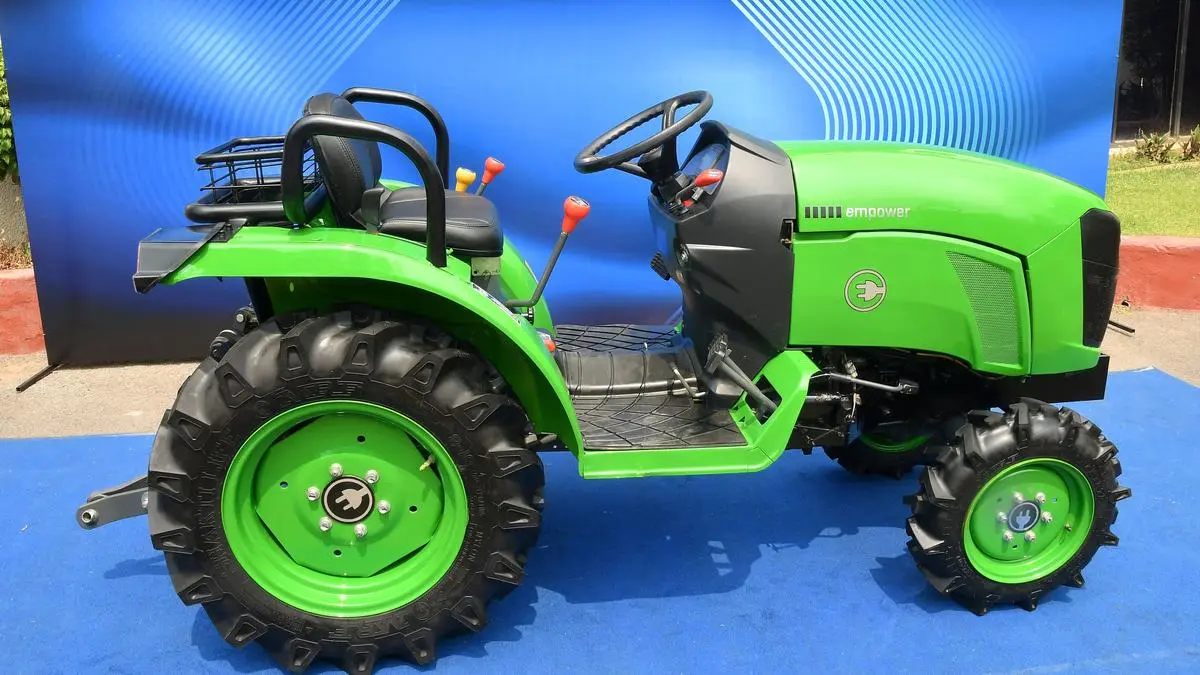
Indian agriculture in 2026 is undergoing a structural shift driven by economic, technological, and sustainability pressures. With over 86 per cent of Indian farmers owning less than 2 hectares of land, mechanisation choices are increasingly judged on cost, efficiency, and adaptability. Electric tractors, once considered experimental, are now emerging as a practical solution across multiple farming segments.
Rising diesel costs and clear operating savings
Diesel prices in India have increased by nearly 65 per cent over the last 10 years, directly impacting farm profitability. A conventional 35 HP diesel tractor consumes around 3.5 to 4 litres per hour, translating to annual fuel costs of ₹1.2–1.5 lakh for an average farmer. In contrast, electric tractors consume electricity worth roughly ₹80,000–₹90,000 per year, delivering savings of nearly 40–45 per cent on operating expenses. With fewer than 20 moving parts compared to over 200 in diesel engines, maintenance costs also drop by nearly 30 per cent.
Designed for India’s farm sizes and usage patterns
India has over 140 million hectares of arable land, much of it fragmented. Electric tractors with power ratings between 25 HP and 40 HP are optimised for daily usage of 4–6 hours, which aligns with typical Indian farming operations. Battery capacities ranging from 20 to 30 kWh allow farmers to complete ploughing, spraying, and haulage tasks in a single charge. Overnight charging of 6–8 hours fits naturally into rural work cycles.
Policy support and financial viability in 2026
Government support has accelerated adoption. By 2026, more than 12 States offer capital subsidies of up to 30 per cent on electric farm equipment. Reduced GST of 5 per cent, compared to 12 per cent on diesel tractors, further narrows the upfront cost gap. Priority sector lending and interest subvention of 2–3 per cent have made financing accessible for small farmers and cooperatives.
Environmental and social impact at scale
Agriculture accounts for nearly 14 per cent of India’s total greenhouse gas emissions. A single diesel tractor emits approximately 4.5 tonnes of CO₂ annually. Electric tractors eliminate tailpipe emissions entirely and reduce noise levels from 90 decibels to under 65 decibels. This is especially valuable in densely populated rural clusters, horticulture belts, and peri-urban farms operating near schools and homes.
Technology maturity and performance gains
Concerns around torque and reliability have largely been addressed. Modern electric tractors deliver 100 per cent torque at zero RPM, improving performance in muddy and uneven fields. Battery life has improved to 2,000–2,500 charge cycles, equivalent to 8–10 years of typical farm usage. Integrated telematics now track energy consumption, uptime, and maintenance needs, helping farmers improve productivity by nearly 15 per cent.
Labour shortages and ease of operation
Rural labour availability has declined by nearly 20 per cent over the past decade due to urban migration. Electric tractors require less skill to operate, reduce vibration-related fatigue by 50 per cent, and lower daily operating effort. These factors make them suitable for family-run farms and aging farmer populations.
A strategic investment for future farming
By 2026, electric tractors are no longer niche alternatives. With India targeting 500 GW of renewable energy capacity and expanding solar adoption in rural areas, electric tractors align with long-term agricultural resilience. They represent lower costs, cleaner operations, and smarter mechanisation. For Indian farmers, electric tractors are becoming not just practical, but essential tools for sustainable growth.
The author is Co-Founder & COO of AutoNXT
Published on January 18, 2026
