

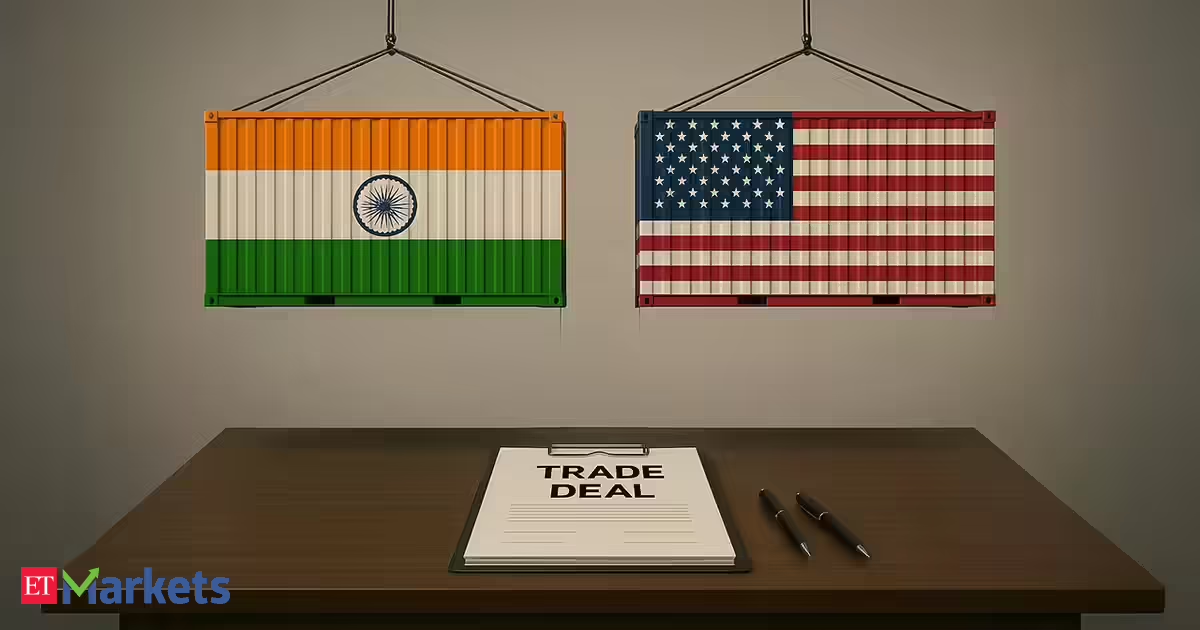
The US decision to sharply reduce tariffs on Indian goods should strengthen the rupee and boost Indian stocks, strategists and fund managers said.
US President Donald Trump announced that he would lower his 25% tariff on Indian goods to 18% after Prime Minister Narendra Modi agreed during a phone call to stop buying Russian oil. Trump is also removing the extra 25% duty on Indian goods he applied in response to India’s purchases of crude from Russia, according to officials familiar with the matter.
The rupee had been hitting record lows in recent days as persistent outflows from local stocks and lack of a trade deal with the US weighed on sentiment. Global funds continued to pull out money from Indian stocks in 2026 after two prior years of outflows.
The trade developments are “immensely positive for every Indian asset class, even though full tariffs are not yet removed,” said Garima Kapoor, deputy head of research and economist at Elara Capital. Gems and jewelry, textiles, machinery and automobiles are among equity sectors that should benefit, she said.
Bloomberg
Here’s what strategists and fund managers had to say:
Live Events
Kotak Mahindra Asset Management Co. (Deepak Agrawal, chief investment officer – debt)
- This development is likely to improve the country’s balance of payments gap, strengthen the rupee, and increase foreign exchange reserves and attract foreign institutional investors who had been waiting on the sidelines
- This positive macroeconomic outlook is also expected to keep interest rates stable
Wright Research PMS (Sonam Srivastava, founder)
- The deal is a meaningful positive for Indian equities, both from a sentiment and earnings visibility standpoint
- Export-oriented segments such as IT services, pharmaceuticals, specialty chemicals, auto ancillaries, and select engineering goods stand to benefit the most
- While the near-term market reaction is understandably sharp, sustainability will depend on execution, sector-specific uptake, and whether earnings upgrades follow. Still, as a signal, this is a clear risk-on trigger
Edelweiss Asset Management (Trideep Bhattacharya, chief investment officer – equities)
- The reduction in tariffs has come in materially better than consensus expectations
- When combined with the recently concluded India–EU trade agreement, this potentially represents one of the strongest external growth stimuli for the Indian economy in 2026
Pepperstone (Michael Brown, senior research strategist)
- It’s pretty huge news as the trade/tariff issue has been rumbling away for a while now, and has obviously been a significant tail risk
- The “deal” that US officials are outlining seems a relatively favorable one. There will be questions as to whether the $500 billion in purchase commitments ever come to fruition, though that’s not unique to the India deal
- Trade risks now markedly reduced, giving investors confidence to not only re-enter the market from the long side, but also to price a rosier economic outlook moving forward
