

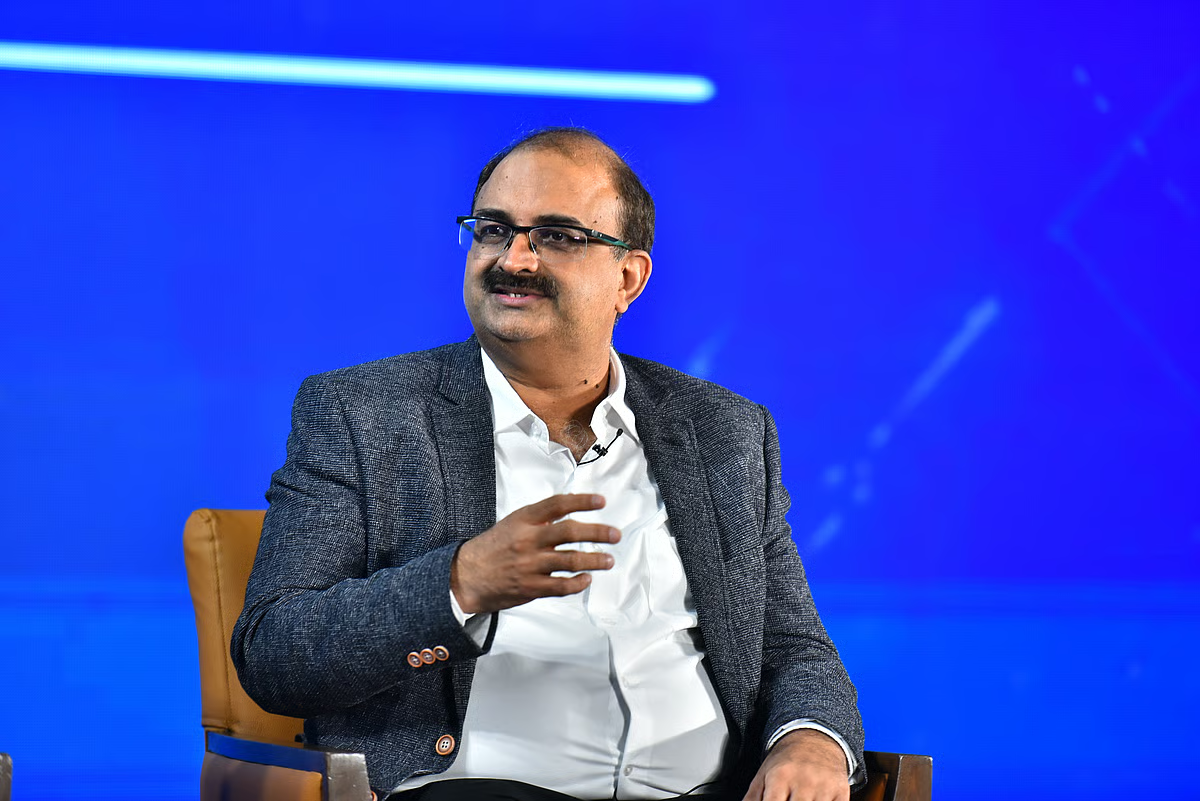
After a sluggish 2025, the Indian equity markets could be set for a big comeback in 2026, with the trend largely to be driven by improving corporate earnings rather than valuation expansion, according to Sailesh Raj Bhan, the chief investment officer of equity investments at Nippon India Mutual Fund.
In a conversation with NDTV Profit, Bhan offered his outlook on Indian markets, explaining that the market has already gone through an essential time correction in the last 18 months. As such, the investor expectations have been reset, thus creative a base for recovery that will be grounded in fundamental performance.
“The clear challenge has, over the last 18 months, been expensive valuations for the market. Expectations have actually become extremely low because the last four to eight quarters have been very weak in earnings,” he said.
While geopolitical concerns remain, including the tariff overhang and unpredictable policies from Donald Trump, Bhan believes domestic policy support and a favourable base effect should help drive corporate earnings into the double-digit mark.
“Earnings will and possibly will be the key source of driving returns for investors over the next one to three years,” he said.
Bhan also offered his sectoral outlook for 2026, adding that the fund is pivoting towards large-cap private banks that have consolidated significantly compared to the recently rallied public sector undertaking space.
“Our bias today is towards large private sector banks which I think have consolidated. Most of them are actually flattish on a 12-month basis,” Bhan said.
Bhan also highlighted some of the potential contrarian bets where earnings have temporarily bottomed out, citing the quick service restaurant industry, power utilities and IT services.
He added that growth expectations in sectors like IT are currently as low as 0-5%, leaving room for positive surprises.
Bhan also talked about the recent surge in initial public offerings, advising caution, especially when it comes to valuations.
“Our approach is very simple: benchmark them versus existing high-quality businesses which we own,” Bhan said. “If you are finding better options in the listed space already, we prefer those over the companies which are IPOing.”
