

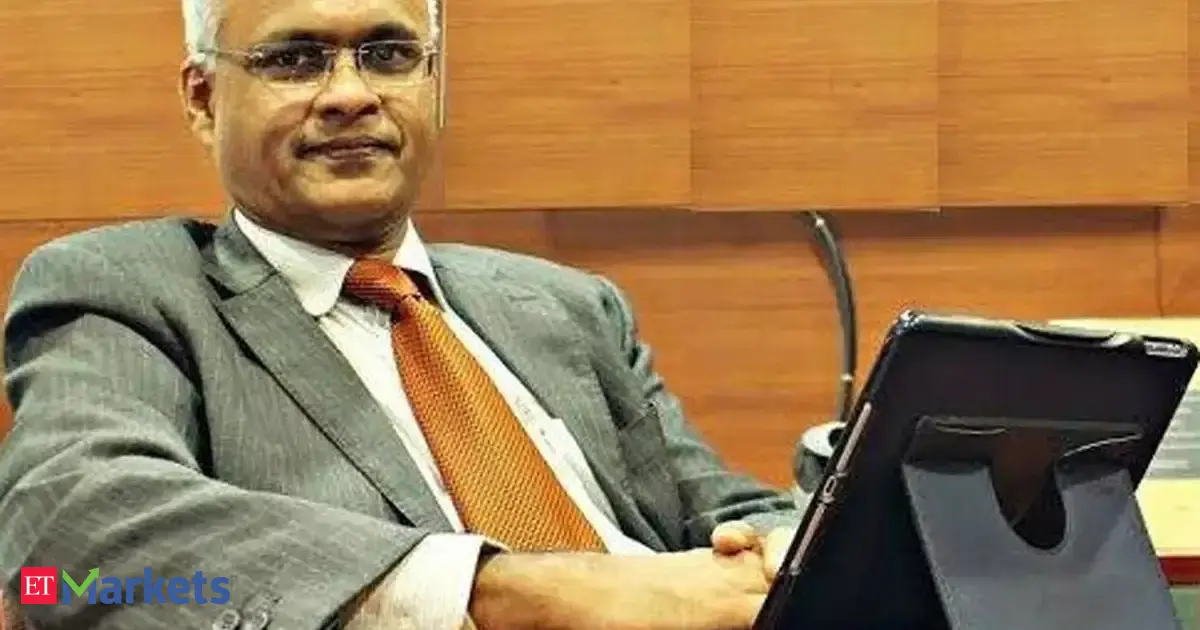
In a conversation with ET Now, Sunil Subramaniam, Founder & CEO, Sense and Simplicity offered an outlook on where equities may be headed over the next several weeks. While many investors are hoping that the recent corrective phase is behind us, Subramaniam suggests that any meaningful recovery may have to wait until the new year.
When asked whether the markets may have bottomed out and could show signs of recovery in the near to medium term, he said, “Yes, I do think so, though do not expect that to happen very much in December for the reason that December is a generally very thunda month for FIIs because they are booking profits for the current year… December they go off on vacation.”
He explained that foreign investors typically unwind positions in markets where they have generated higher returns — citing South Korea, Taiwan, and China — and may redirect some of that capital to India in early January. However, he cautioned that December is unlikely to bring strong positive flows.
The behaviour of domestic institutional investors is also adding to the quiet tone. “DIIs build up cash balances as you near a quarter end,” he said, noting that most of their buying happens earlier in the quarter when earnings visibility is clearer. As a result, both FIIs and DIIs may not provide strong directional support to the market this month.
Subramaniam expects a “consolidating market” with a positive bias and does not foresee sharp downside risk. He pointed out that DIIs usually step in on sharp corrections, providing a floor to valuations, though fresh highs may be difficult until the next earnings cycle. A surprise move from the RBI could change the sentiment briefly: “If RBI comes in with a positive surprise of a 50 bps rate cut, that could give a little bit of a trigger for rate sensitives to pick up,” he added.
Live Events
Beyond global policy cues, he believes India’s relative valuation premium means the impact of Fed decisions will remain limited. The real catalyst, he says, will be the January earnings season, which should reflect the full boost from the festive period.
Metals: A Tactical, Not Long-Term, Play
On the question of volatility in the metal pack and the ongoing developments around JSW Steel and Bhushan Steel & Power, Subramaniam chose not to comment on specific companies. But he did lay out a clear framework for how investors should approach the sector.
Calling metals “global cyclicals,” he noted their sensitivity to shifts in global demand, supply, and price movements on exchanges like the LME. “They always represent a short-term tactical call,” he said, explaining that DIIs often rotate into the sector during moments of clarity and exit quickly when other opportunities emerge.
Given this inherent volatility, he suggested keeping 5–10% of a portfolio in metals, but always through a staggered approach. Long-term conviction remains tricky due to the outsized influence of China: “China is the biggest user of metals and China-US deals… global growth… these are much larger issues on which the metals tend to think,” he remarked.
On the domestic front, he sees reasons for optimism: “The real estate housing sector I see as a medium-term good growth and naturally aluminium, copper, steel… will be in demand.” Still, global cues will continue to dictate price trends, making metals better suited for tactical entries and exits rather than buy-and-hold strategies.
