

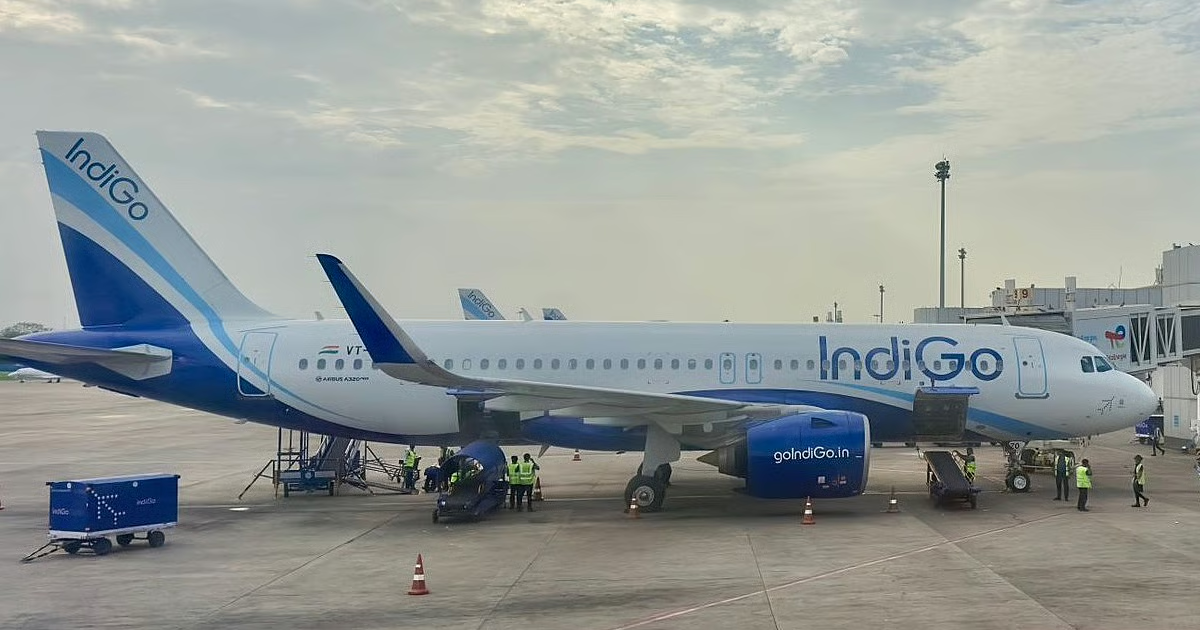
It was the straw that broke the highly optimized camel’s back.
Sometime in the evening of Dec. 2, three days before India’s largest airline would lose control of its operations in one of the country’s worst aviation disruptions, IndiGo executives noticed that a technology glitch in its check-in system was delaying late-night flights.
This in turn was affecting a pilot duty roster recently fine-tuned to incorporate new government rules mandating longer rest hours and fewer night landings.
Compounded by winter flight schedule changes, air congestion and adverse weather, the math was suddenly not adding up for the low-cost airline whose relentless optimization had allowed it to turn a profit within three years of inception and over time capture nearly 66% of India’s aviation market.
The resource-efficient instincts baked into IndiGo’s DNA had led to a severe under-estimation of redundancies needed to accommodate the new pilot rest rules, despite carriers having had nearly two years to prepare since the guidance was first announced in January 2024.
Scheduling changes began to snowball: IndiGo canceled at least 70 flights on Dec. 3, then 300 on Dec. 4 and finally, over 1,000 on Dec. 5 — about half of the flights it normally operates daily.
As thousands of furious passengers became stranded in major city airports over the weekend, Prime Minister Narendra Modi’s government was forced to suspend the new pilot rest rules, cap fares to avoid price gouging and order more trains into operation.
