

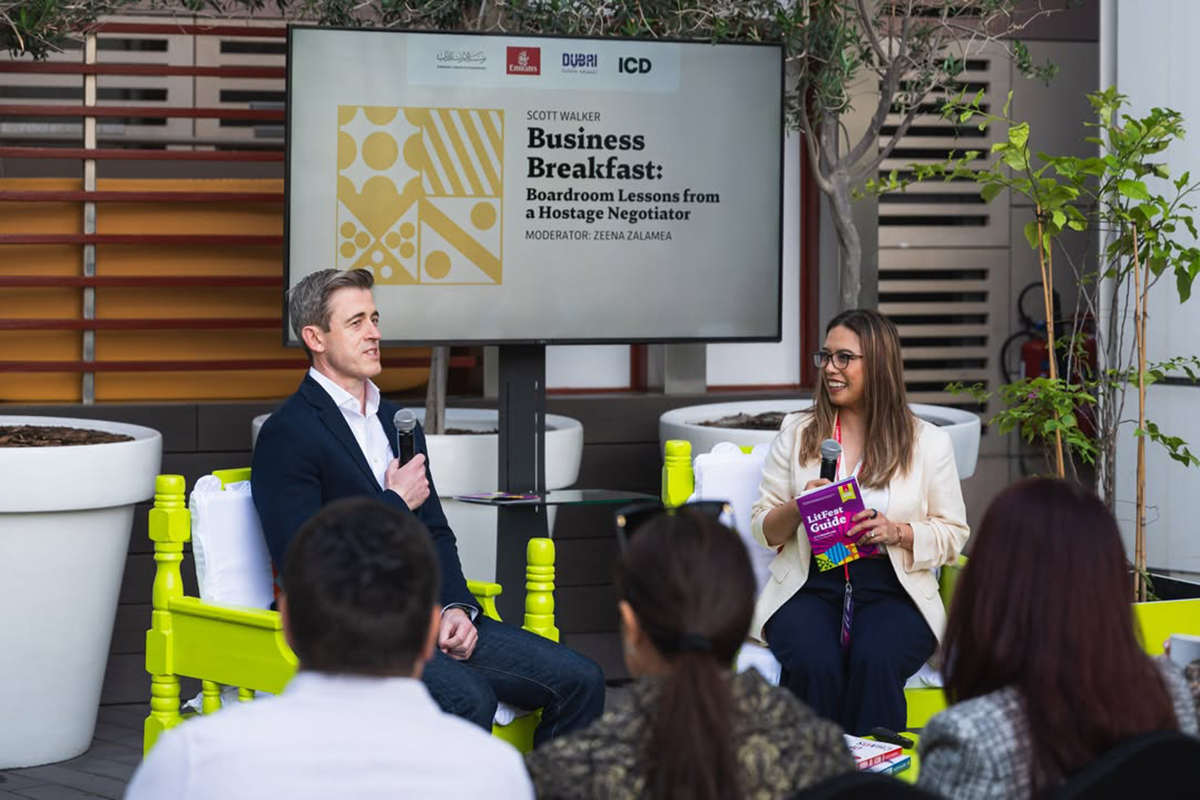
Former Scotland Yard detective and kidnap-for-ransom negotiator Scott Walker says the same principles used to resolve some of the world’s most extreme crises now apply directly to how business is done in the Middle East.
Walker spent 16 years with Scotland Yard, specialising in kidnapping and extortion cases, before moving into the private sector advising companies and families during crises. He now works with senior executives and leadership teams on negotiation, decision-making and trust.
Walker was speaking on the sidelines of the Emirates Literature Festival in Dubai yesterday. “My job was to get alongside the family of the hostage and really give them the guidance, the advice, the reassurance about what we need to say and how we say it, in order to help get their loved one back,” Walker said.
Ex-detective links trust to success
He added that negotiated outcomes are far more successful than many assume. “There’s a 93 per cent chance of success of hostages coming back through negotiation because we use tried and tested, proven tools, techniques and strategies that work regardless of where in the world.”
Walker believes those same tools are increasingly relevant for executives navigating today’s volatile business environment. “There were really obvious crossovers between dealing with a kidnapping or an extortion and the business world and people’s everyday lives,” he said.
A key issue, he argues, is emotional decision-making. “People get emotionally hijacked,” Walker said. “When you allow your emotions to cloud your decision-making, you’re pulled out of a calm, rational emotional state into making some kind of knee-jerk decision.”
In corporate settings, he says most challenges are internal rather than external. “On a kidnapping case, 80 per cent of my time would be spent dealing with what we call the crisis within the crisis — that’s actually dealing with my own side,” he said. “In the corporate world, there can be lots of egos, siloed thinking and competing priorities.”
Walker says this is particularly relevant in the Middle East, where relationship-building plays a central role in doing business. “It may take a little longer to get deals done here, but time is spent on the relationship side of it,” he said. “It’s building trust, building rapport, and often talking about anything other than the matter at hand.”
He added that while the pace may feel slower to some executives, the long-term benefits are significant. “I’m only ever going to do business with you long-term if I know that you’ve got my back,” Walker said. “That trust is what carries you through when challenges come later — because they always do.”
