

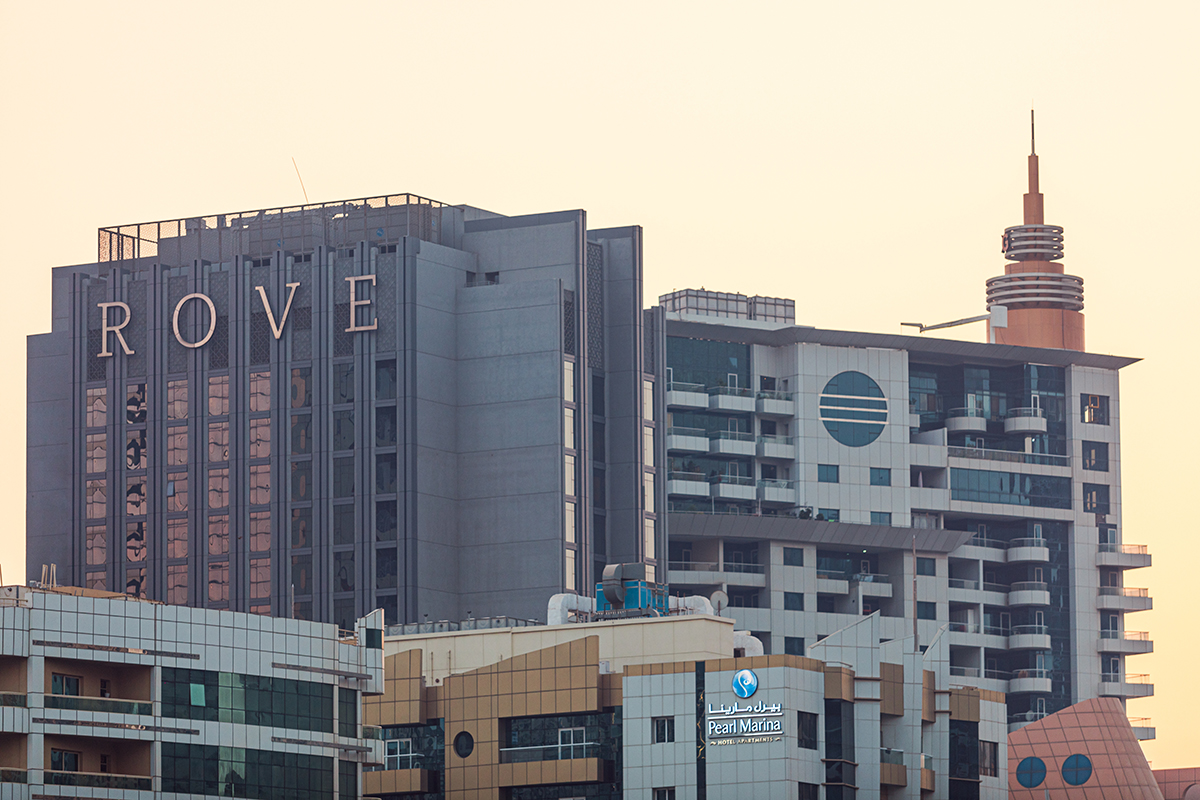
The nearly decade-old brand which has built a network of properties across Dubai’s key locations is targeting Oman and Egypt as priority markets alongside its planned Saudi Arabia expansion, the company’s Chief Operating Officer, Paul Bridger, said in an exclusive interview with Arabian Business.
The strategy aims to at least double the hotel group’s portfolio over the next five years.
“Our target markets in GCC would be Saudi, where we think we can do a lot of properties. Oman is another market where this kind of product would do really well,” Bridger said.
“Egypt has big tourism growth, places like Cairo where they’ve opened a big museum. These are the main targets for us: Oman, Egypt, Saudi.”
Mid-scale hotels gain regional momentum
The expansion reflects growing confidence in the mid-scale hospitality model across the region as travellers increasingly prioritise authentic local experiences and value-driven accommodations over standardised luxury properties.
Rove’s approach strips out traditional high-end services such as valet parking and bellboys while maintaining quality standards and incorporating neighbourhood character into each property’s design.
The company has reported double-digit growth this year, benefiting from Dubai’s expanding tourism market and its positioning between luxury hotels and budget options.
Bridger said the success in Dubai has provided confidence to move into new markets, with the city serving as both a testing ground for innovations and a model for replication in other cities.
“We’re constantly innovating. Our brand is such that we have to be at the front of changes, whether that’s AI, social media, etc. We will take all of the best practices as we go into the kingdom,” he said.
Why executives pick mid-scale hotels
The brand’s appeal extends beyond price-conscious leisure travellers to include corporate executives who prioritise functionality during business trips.
Bridger said Rove attracts CEOs who could afford ultra-luxury accommodations but opt for mid-scale properties that meet their practical needs without unnecessary amenities.
“We have a lot of CEOs stay with us. They’re like, what do I need? I’m out all day working, I’m in meetings. I need good service, clean room, nice product, decent breakfast,” he explained.
“It sounds much better to your CFO than staying in a luxury hotel,” Bridger joked.
The strategy aligns with broader shifts in hospitality preferences with travellers showing a preference for brands that reflect the character of their destinations.
“People want to be attached to brands and they want something that represents them a bit more. People now travel more. When they go to a place, they want to have a reflection of that place. They don’t want necessarily a beige wall,” he said.
This demand has driven rapid growth in lifestyle hospitality across the region, challenging traditional luxury properties in markets including Dubai and Riyadh.
While recent major hotel announcements in Saudi Arabia have focused on flagship luxury properties, Bridger argued that the bulk of travellers prefer mid-scale options.
“If you look at Saudi, all the announcements have been the big flagship hotels. You have to do these hotels to develop the destination and get on the map,” he said. “In reality, 80 to 90 per cent of people want to stay in a mid-scale hotel. Ninety per cent of the plane is economy.”
Hospitality meets the startup scene
The company’s expansion also targets growing startup ecosystems in both Dubai and Riyadh, where entrepreneurs and digital nomads require flexible workspaces and accommodations. Rove properties feature coworking spaces that cater to mobile professionals, reflecting changing work patterns in the region.
“When I go to Riyadh, the amount of coworking space and startups has exploded,” he said. “People move around a lot, so it’s just convenient to have these spaces to jump in and out of and get some work done.”
Location continues remains the critical factor in the hotel chain’s success, Rove has evaluated hundreds of potential sites to ensure new properties match the quality of its Dubai network.
“Location, location, location. You’ve got to have the best locations. “I’ve looked at tens, if not hundreds, of opportunities in Riyadh, but we want to make sure we get the right locations,” Bridger explained.
UAE brands eye regional growth
The expansion comes as UAE-based brands increasingly look beyond domestic markets for growth opportunities. Bridger believes that this trend demonstrates the maturation of Dubai and the broader UAE as business hubs capable of developing globally competitive brands.
“We’re really proud to be a homegrown brand going into new markets. You’re starting to see a lot of UAE brands go into these new markets, which I think is great for the country. It shows how Dubai and the UAE have matured and evolved. Now we’re exporting as well as importing,” he said.
The company plans to continue expanding within the UAE alongside its regional push with opportunities identified for additional properties across the emirates.
Rove’s regional ambitions also benefit from existing brand recognition among Gulf travellers, particularly Saudis who represent a significant portion of guests at some Dubai properties. This familiarity is expected to ease market entry in Saudi Arabia.
“A large portion of our guests, particularly in some hotels, are from Saudi, so we have a lot of familiarity with the brand,” Bridger said.
Looking ahead, Rove aims to “at least double” growth numbers with immediate sights set on Saudi Arabia.
“For Riyadh, my vision is we need the same coverage and the same level of quality that we have in Dubai,” he concluded.
