

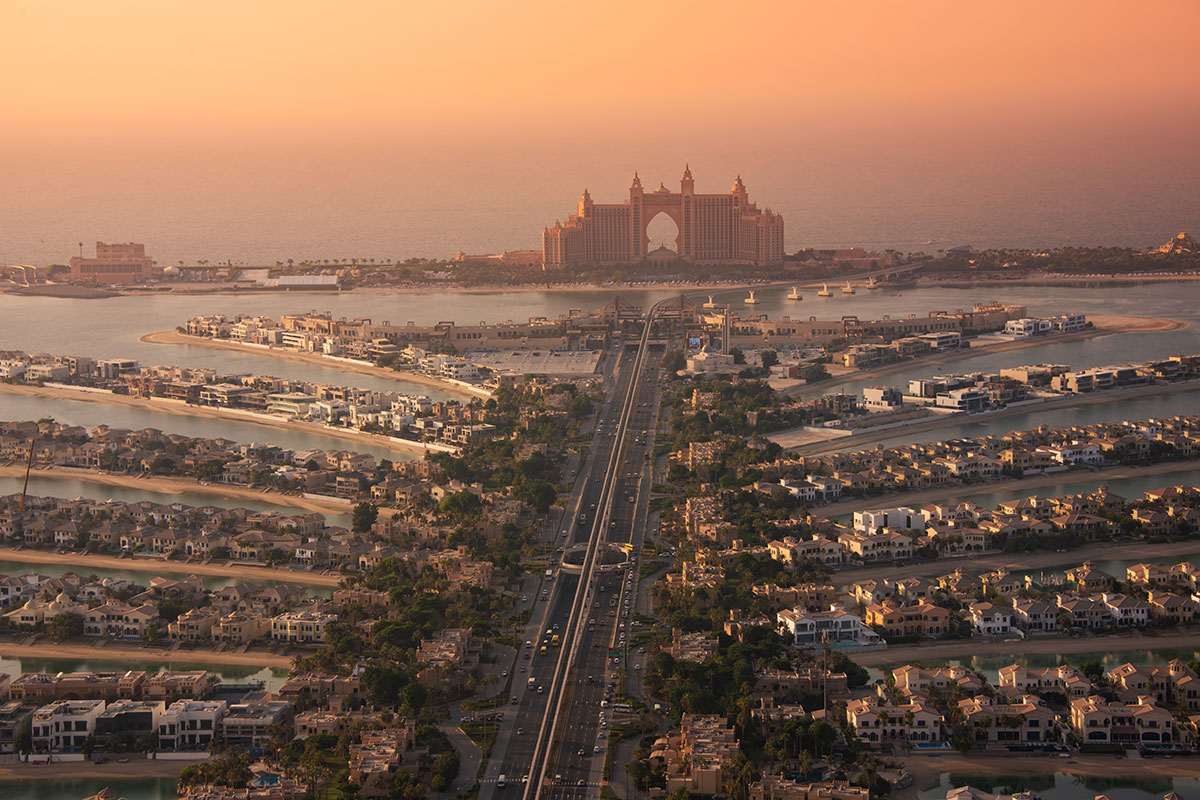
Villa owners in Dubai are set to benefit the most as villa prices rise faster than apartment prices, with demand from families continuing to outpace limited supply heading into 2026, real estate industry experts said.
“If you own a villa or townhouse today, you’re essentially sitting on a goldmine,” Lewis Allsopp, chairman of brokerage Allsopp & Allsopp, told Arabian Business. He cited limited new supply and strong demand from end-users and high-net-worth buyers.
Allsopp & Allsopp recorded a 22 per cent year-on-year increase in average sales prices and an 18 per cent rise in rental rates in 2025, with villas commanding some of the highest premiums. In November alone, a Palm Jumeirah villa rented for AED1.5 million annually, while a property in Tilal Al Ghaf achieved AED900,000, the firm said.
Supply constraints benefit villa owners
While villas and townhouses remain supply constrained, apartments are moving into a phase of stabilisation, Allsopp said, as more units are delivered and buyer choice expands. Studios and one-bedroom apartments face slower absorption, while larger units continue to attract families priced out of villa communities.
Dubai’s broader residential market is expected to continue growing into 2026, but at a more measured pace, according to Gil Van Gelder, director of residential brokerage at Espace Real Estate.
“Dubai is heading into 2026 in a phase of continued growth, albeit at a more measured and mature pace,” Van Gelder said. Transaction values reached around AED512 billion in 2025, based on year-to-date figures, with off-plan sales accounting for roughly two-thirds of residential transactions, he added.
The performance has been underpinned by population growth, sustained liquidity and end-user demand rather than speculative activity, Van Gelder said, with increasing differentiation by location and property type expected next year.
Data from betterhomes shows a similar trend. Total residential transaction value had surpassed AED500 billion by late 2025, overtaking the previous full-year record, according to the brokerage.
Steady growth ahead of 2026
“It’s a market heading into 2026 with steady growth, tempered by pockets of stabilisation,” said Louis Harding, chief executive of betterhomes. “That’s not a correction. It’s a cycle maturing naturally.”
Harding said Dubai’s fundamentals remain intact, supported by population growth, inflows of high-net-worth residents and foreign investment. Population growth alone requires tens of thousands of new homes annually to keep pace, he added.
Concerns around oversupply have resurfaced as developers plan significant project completions in 2026. Industry experts, however, said the risk is localised rather than systemic.
Van Gelder said established villa and townhouse communities are expected to outperform on a value basis due to supply constraints, while Harding noted that a significant portion of forecast supply is typically delayed or phased.
Experts said 2026 is expected to reward discipline over volume, with demand strongest in the affordable luxury segment priced between AED1 million and AED3 million, while activity at the top end becomes more selective rather than weaker.
Global buyers target Dubai property market
Long-term residency programmes, including the Golden Visa, continue to support end-user demand by encouraging residents to treat Dubai as a permanent base, underpinning demand for family homes and established communities.
UK-origin demand remains a significant contributor, driven by economic uncertainty and tax changes in Britain, alongside continued interest from buyers in India, Europe, the GCC and North America.
Despite record prices, experts said Dubai remains competitively priced compared with global peers, supported by economic stability, population growth and strong underlying demand.
