

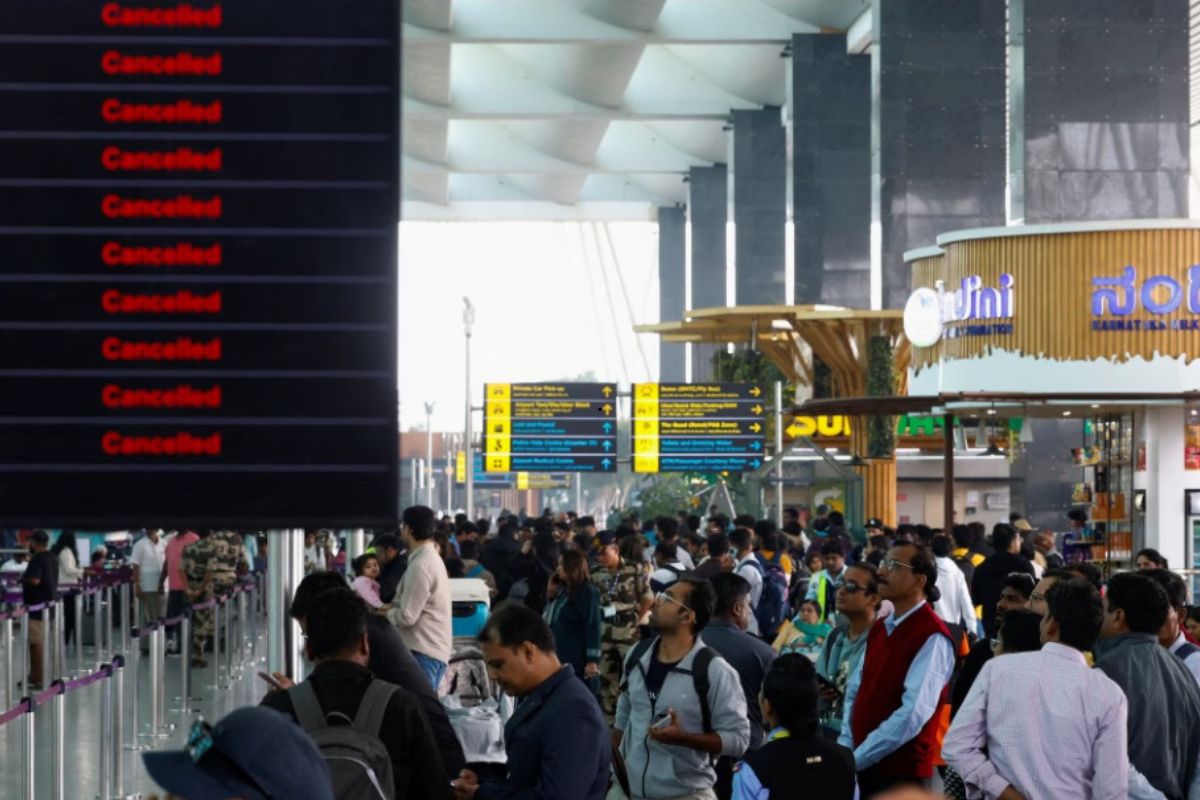
Scenes of absolute pandemonium played out in various Indian airports after Indigo Airlines, the largest operator in the country, cancelled thousands of flights.
Among the flights cancelled was Thursday’s 6E 1454 from Dubai to Mumbai, which was delayed twice by over four hours, before hapless travellers were told about the cancellation and asked to wait for six hours to get their checked-in bags back.
IndiGo operates around 2,300 flights daily and controls over 60 per cent of India’s domestic aviation market. According to Hindustan Times, more than 1,000 IndiGo flights have been cancelled since Tuesday and social media posts showed people in large numbers shouting and arguing with staff.
Thousands stranded amid IndiGo crisis
Passengers could be seen sleeping on the floor in airports and forming long queues for information, or just waiting for their bags. A passenger advisory from the Delhi airport on Friday had stated that all domestic IndiGo flights will remain cancelled until midnight.
The widespread disruptions and cancellations were triggered by newly enforced rules limiting working hours for crew and pilots. The second phase of the new Flight Duty Time Limitation (FDTL) norms came into effect last month, but IndiGo seemed ill-prepared for it because of the scale of its operations and a high-frequency network that included a significant number of late-night and early-morning flights.
Pieter Elbers, IndiGo CEO apologised, and cited technology glitches, schedule changes, adverse weather conditions, heightened congestion and the implementation of the new rules as the reasons for flight disruptions.
In a video statement released on Thursday, Elbers said it would take some time for the flight operations to get back to normal, expected to be somewhere between December 10-15.
“Given the size, scale and complexity of our operations, it will take some time to return to a full normal situation, which we anticipate between 10 and 15 December,” said Elbers.
“I, on behalf of all of us at IndiGo, would like to extend our sincerest apologies for the major inconvenience this has caused to many of our customers on account of delays or cancellations.”
The Civil Aviation Ministry said in a statement that the disruptions arose primarily through misjudgment and planning gaps as the airline implemented phase two of the new rules, and that the airline acknowledged that the effect on crew strength exceeded their expectations.
Under the new FDTL rules, aimed at better combating pilot fatigue, weekly rest period for pilots has been increased to 48 hours from 36 and night landings have been limited to two from the earlier six.
These rules were initially going to be implemented from June 2024, but it was delayed after IndiGo and other airlines pushed back on the issue. However, the rules were implemented starting this year by the Directorate General of Civil Aviation (DGCA) following a ruling by the Delhi High Court.
IndiGo successfully negotiated the rollout of the first phase (longer weekly rest periods for crew) in July, but the second phase – curtailing crew utilisation levels for night flights – hit them hard.
