

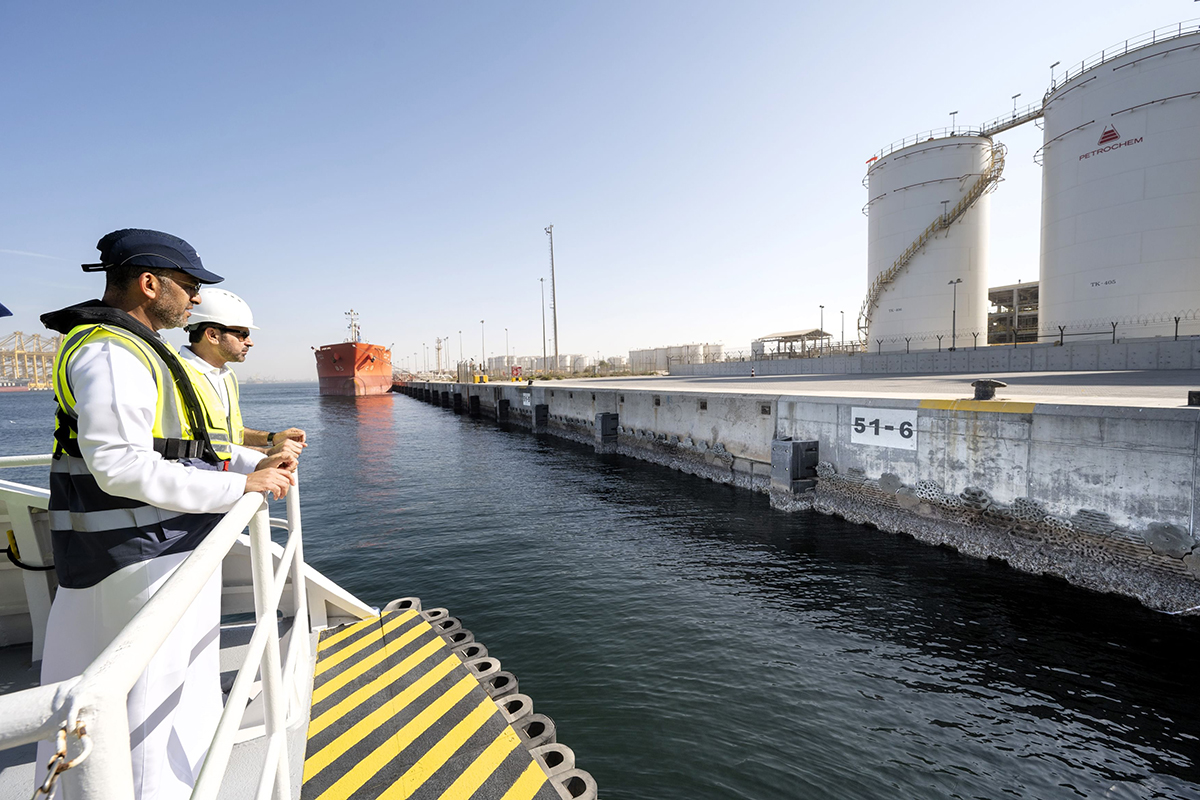
DP World has completed the first phase of its Living Seawalls project at Jebel Ali Port, installing 1,000 eco-engineered panels designed to transform traditional flat port structures into habitats that support marine biodiversity. The initiative marks a significant step in integrating nature-positive design into major port infrastructure across the region.
Developed in partnership with Living Seawalls, a science-driven programme created by the Sydney Institute of Marine Science, the installation is the beginning of a wider plan to deploy 6,000 modular panels by 2028. When finished, the project will create the region’s longest continuous waterfront structure dedicated to supporting functioning ecosystems.
Each panel incorporates a range of shapes and textures that mimic natural coastal rock formations. These features provide spaces where marine organisms can attach, shelter and grow, encouraging the development of more complex ecological communities compared with flat concrete surfaces.
Living Seawalls boost marine biodiversity
Abdulla Bin Damithan, CEO and Managing Director of DP World GCC, said ports have a role to play in supporting environmental resilience alongside global trade. “Ports play a critical role in coastal resilience and this programme shows how infrastructure can support trade while restoring natural habitats. By integrating science-based designs across our ports, we are helping marine life to establish and thrive in areas traditionally limited in habitat value,” he said.
Biodiversity monitoring at Jebel Ali is scheduled to begin in 2026 and will contribute to global research on how engineered coastal infrastructure can improve ecological outcomes. The initiative forms part of DP World’s broader Ocean Strategy and supports international biodiversity goals under the Kunming Montreal Global Biodiversity Framework.
The Jebel Ali installation follows a pilot at the Port of Callao in Peru, where the panels attracted 66 species across 12 marine groups within a year. Seven of those species were found exclusively on the Living Seawalls surfaces, and no invasive species were recorded. The pilot also showed increases in algal diversity and ecological functionality, reinforcing the value of nature-inspired design.
DP World is expanding work on similar nature-positive projects across its global operations, including contributions to the Dubai Reef initiative, new circular models in port waste management and further ocean-focused programmes.
As coastal areas face rising environmental pressures, the Jebel Ali Living Seawalls project offers a scalable model for integrating sustainability, scientific research and port development.
