

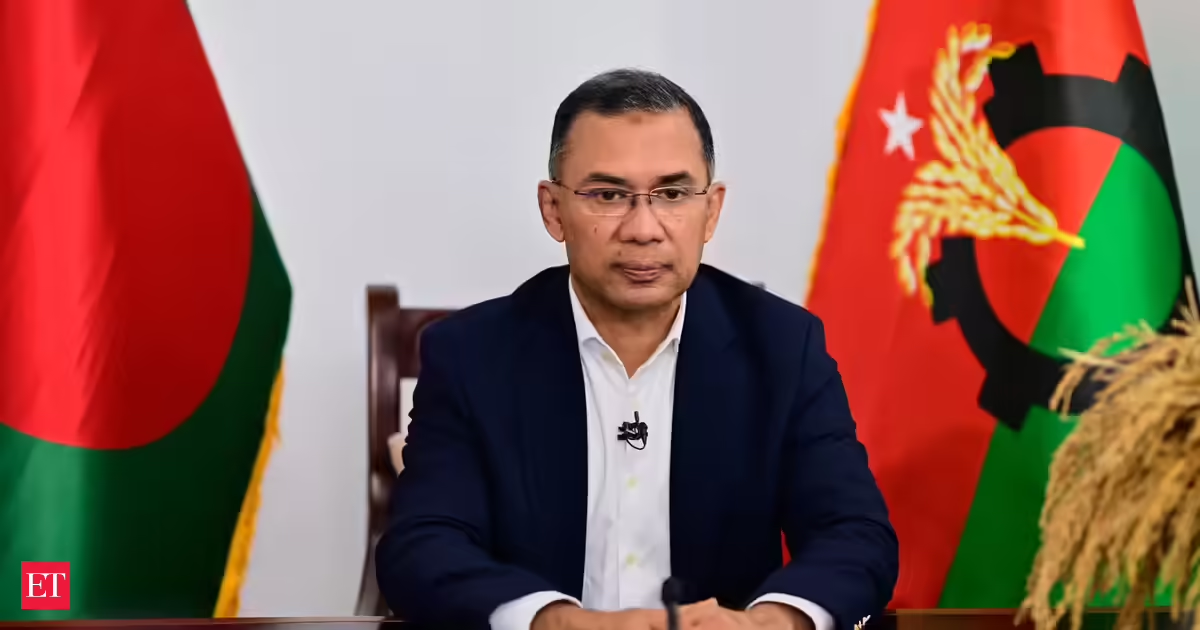
Bangladesh’s prime minister-designate and Bangladesh Nationalist Party (BNP) chairman Tarique Rahman on Saturday said his country’s national interest and the welfare of its people would remain the top priority.
Addressing a press conference, Rahman said, “We have made ourselves clear about foreign policy, the interest of Bangladesh and the interest of the people of Bangladesh come first.”
His remarks come amid strained ties with India after former prime minister Sheikh Hasina fled to India in August 2024 following massive student-led protests that forced her resignation. She has been living in New Delhi since then.
On Friday, the BNP reiterated its demand for Hasina’s extradition from India to face trial in Bangladesh. Senior BNP leader Salahuddin Ahmed said the party supports efforts to bring her back through diplomatic channels.
“The foreign ministry has already taken up the matter, and we support it. We have consistently called for her extradition in accordance with the law. This is an issue between the foreign ministries of the two countries. We urge the Indian government to send her back to face trial in Bangladesh,” Ahmed said.
Live Events
He added that Bangladesh seeks normal relations with all its neighbours, including India, but based on mutual respect and equality. “We want friendly relations with all countries, including India, founded on mutual respect and equality,” he said.
Rahman, who lived in self-imposed exile in London for 17 years, has emerged as Bangladesh’s new political leader, with the BNP — founded by his father Ziaur Rahman — set to return to power after two decades. The 60-year-old leader’s party secured 209 of 297 seats in the elections, while the right-wing Jamaat-e-Islami won 68 seats. The Awami League, led by Hasina, was barred from contesting the polls, which saw a voter turnout of 59.44%.
The result marks a dramatic turnaround for the BNP, which faced sustained political pressure during Hasina’s 15-year rule that ended after nationwide protests in August 2024.
Rahman is the son of former prime minister Khaleda Zia and former president Ziaur Rahman, who founded the BNP and was assassinated in 1981. Having returned to Bangladesh after years in exile, Rahman now faces the challenge of delivering meaningful political and economic change and meeting public expectations for a decisive break from dynastic politics.
