

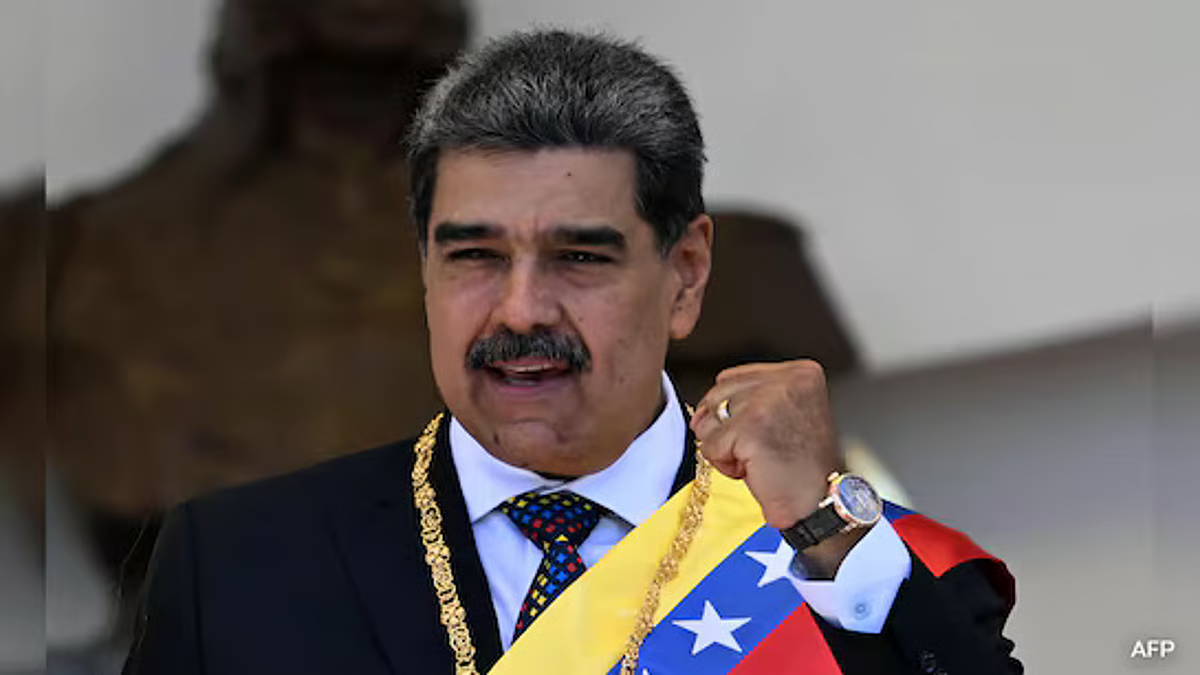
President Donald Trump said on Saturday that the US carried out a large-scale strike against Venezuela and President Nicolas Maduro, along with his wife, had been captured and flown out of the country.
The efforts to weaken, isolate, and ultimately remove Venezuelan President Nicolás Maduro unfolded through a rapid escalation of US pressure — diplomatic, economic, and military — marked by covert operations, naval deployments, and repeated strikes tied to alleged drug trafficking networks.
Here is the chronological sequence of the events that took place:
The campaign intensified as President Donald Trump authorised a series of measures targeting Maduro’s government, beginning with an executive order enabling criminal groups and drug cartels to be named foreign terrorist organisations on Jan. 20. This designation included Tren de Aragua, even as elements of the U.S. intelligence community disputed the allegation that Maduro’s administration was coordinating narcotics trafficking with the gang pasted.
By Feb. 20, the U.S. formally designated eight Latin American crime organizations as foreign terrorist organizations, extending the terrorism framework to profit-motivated criminal networks rather than traditional ideological groups pasted.
Through the year, the U.S. military presence surged. Guided-missile destroyers arrived in waters off Venezuela on Aug. 19, eventually expanding into a powerful Caribbean naval deployment that grew to roughly 6,000 sailors and Marines aboard multiple vessels, backed by F-35 deployments to Puerto Rico and a missile-armed submarine off South America pasted.
Beginning Sept. 2, the U.S. initiated a campaign of lethal maritime strikes against vessels it alleged were trafficking narcotics associated with Tren de Aragua, with the first attack killing 11 people. Subsequent strikes followed on Sept. 15 and Sept. 19, each drawing mounting criticism from lawmakers and human rights groups regarding legality and the scope of presidential war powers pasted.
On Oct. 2, Trump declared drug cartels to be unlawful combatants and said the U.S. was in an “armed conflict” with them, triggering further debate over executive authority. He later confirmed authorization for CIA covert operations inside Venezuela on Oct. 15, while weighing potential land operations pasted.
Strikes accelerated into November. By Oct. 31, the U.N. human rights chief Volker Türk publicly called for an investigation into the attacks amid growing concerns about extrajudicial killings. Multiple additional maritime strikes were reported through early and mid-November, including the 15th through 21st known strikes, each resulting in deaths aboard alleged drug-smuggling vessels pasted.
On Nov. 16, aircraft carrier USS Gerald R. Ford arrived in the Caribbean, lifting total regional troop presence to around 12,000 under “Operation Southern Spear.” The same day, Trump acknowledged the U.S. “may be having discussions” with Maduro, signalling potential back-channel contact despite escalating military actions pasted.
Congressional scrutiny deepened in December. On Dec. 4, lawmakers received classified briefings as investigations probed allegations of follow-on strikes killing survivors of earlier attacks. Some members described the available video as disturbing, recounting survivors clinging to wreckage before being hit again pasted.
Throughout December, operations broadened from vessels to infrastructure. The U.S. seized oil tankers carrying Venezuelan crude on Dec. 10, later pursuing others identified as part of a “dark fleet.” On Dec. 30, it emerged that the CIA conducted a drone strike at a docking area believed to be used by Venezuelan drug cartels — reportedly the first direct operation on Venezuelan soil since strikes began in September. Venezuelan officials did not acknowledge the attack pasted.
By year-end, U.S. actions included:
-
multiple boat strikes causing dozens of deaths
-
oil tanker seizures
-
expanded sanctions on shipping entities
-
blockade orders targeting sanctioned tankers
-
continued Southern Command naval deployments
Despite the intensifying pressure campaign — militarily, economically, and covertly — Maduro remained in power, consolidating internal control while denouncing what Caracas called piracy and aggression. The operations triggered sustained legal, human-rights, and congressional challenges in the US, even as strikes and seizures continued into late December.
CBS News reported that Trump had given the go-ahead for the strikes a few days ago, but they were delayed due to other military operations gaining importance and weather conditions being unfavourable.
According to Bloomberg, this move marks the most severe escalation of the geopolitical tensions between Venezuela and the US after the latter firmed up military forces around the former, sanctioned a number of attacks on alleged drug-running boats and had Trump accusing Maduro of running a terrorist organisation.
(With agency inputs).
