

Stay informed with free updates
Simply sign up to the Airlines myFT Digest — delivered directly to your inbox.
India has endured days of chaos at its airports after its biggest airline, IndiGo, cancelled hundreds of flights this week amid a critical shortage of cockpit crew, damaging the carrier’s reputation and the country’s image as a global aviation hub.
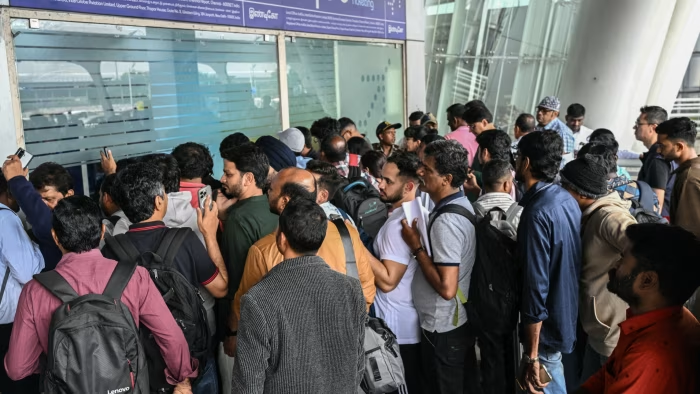
Frustrated passengers have been stranded across India as a scheduling and pilot crunch at IndiGo, which controls about two-thirds of domestic traffic, left airports across the country in turmoil.
The carrier had been cancelling up to 200 flights a day this week, India’s Directorate General of Civil Aviation said. IndiGo informed the regulator that it was “facing significant transitional challenges in roster planning and crew availability” under pilot hour rules initiated last month, the DGCA said.
The tumult at IndiGo originated largely from new rules increasing weekly rest periods for pilots by 12 hours to 48 hours, while reducing night landings. IndiGo, which operates a near domestic duopoly with Tata Group-owned Air India, said the cancellations arose primarily from “misjudgment and planning gaps”.
The DGCA said winter weather had also compounded the disruption. IndiGo told the regulator it expected full operations to be restored by February 10 and the DGCA has relaxed some of its rules until then. IndiGo said it would begin cutting back scheduled flights next week to minimise future disruption.
IndiGo has been widely lambasted for failing to prepare for the rules, which were first announced almost two years ago and have been rolled out gradually.
“They were working their pilots down to the bone,” said Mark Martin, chief executive of aviation advisory Martin Consulting. “They have shot themselves in the foot — it’s a complete breakdown of IndiGo’s system.” IndiGo did not immediately respond to a request for comment.
At an emergency meeting with IndiGo’s management on Thursday, India’s civil aviation minister Ram Mohan Naidu “expressed clear displeasure” and “stressed that ample preparatory time had been available to ensure a seamless transition to the new regulatory requirements”, according to a government statement.
The crisis engulfing IndiGo caps a turbulent year for the country’s two main airlines. In June, an Air India plane slammed into the western Gujarati city of Ahmedabad shortly after take-off, killing more than 200 people in the country’s worst aviation disaster in decades.
Until this week, IndiGo was largely seen as a rare success story in India’s airline market. Over the past two decades, it has steadily grown to a dominant position with its lean, low-cost model outlasting a multitude of now grounded local airlines. The carrier’s expansion is also central to India’s international aviation ambitions as it rolls out new long-haul routes. Shares of InterGlobe Aviation, the carrier’s parent, have dropped 8.8 per cent over the past week.
Recommended
On Friday, display screens at the domestic terminal of Kempegowda International airport in southern Bengaluru were lined red with IndiGo cancellations and delays, while more than 100 people queued at the airline’s customer service desk.
Nikhil, a 30-year-old credit analyst trying to return to Mumbai after a friend’s wedding, said both his original flight and a rebooked service had been cancelled. “I may have to take the road — that’s 20-plus hours, that’s something I don’t want to do.”
En route to Bengaluru airport with her husband, 24-year-old IT professional Nikhila Grandhi received an alert that their IndiGo flight to Shirdi in western India for a religious pilgrimage had been cancelled.
“This is not good . . . our grandparents are waiting for us,” she said. “I wish they solve the issue as soon as possible so that other people may not suffer like us.”
