

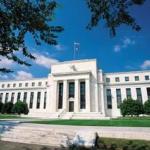
On Monday, December 1, the Federal Reserve terminated Quantitative Tightening (QT). The job wasn’t even halfway done.
From our experience, half measures avail nothing. In this instance, they guarantee consumer prices will never, ever, return to pre-covid levels.
Stocks, gold, and, until recently, bitcoin, are all at or near record highs. What does the end of QT mean for these assets? To answer this question, let’s first take a gander back to the great money flood of 2020-22.
If you recall, the central planners, under the pretense of the faux pandemic, locked down the economy. They said if we all hunkered down for two weeks, we could bend the curve and stop the spread.
This turned out to be a crock of hogwash. What’s more, the dreaded coronavirus was no worse than the common flu.
But the control freaks got such a thrill out of trampling people’s basic rights and freedoms, they extended the lockdown and forced people to wear masks and get repeated clot shots. Much of the populace was eager to oblige.
Shutting down the economy had countless consequences. Two of the more obvious ones were breaking supply chains and cutting off people’s income. To address people’s loss of income the Federal Reserve went into mass Quantitative Easing (QE) money printer mode.
Not only did the Fed cut the federal funds rate to zero, but it also created $5 trillion in credit out of thin air. It then used this fabricated credit to buy massive amounts of U.S. Treasury bonds and mortgage-backed securities (MBS).
The Treasury took the burst of credit and used it to mail out stimmy checks. At the same time, 30-year fixed rate mortgages fell to just 2.5 percent, launching a massive housing bubble.
Binge and Purge
The intent of the QE was to flood the financial system with liquidity, stabilize crashing markets, and push interest rates even lower across the board. The operation was beyond mega. The Fed’s balance sheet, which was already at an inflated $4 trillion before the pandemic, ballooned to a historic peak of nearly $9 trillion by the spring of 2022.
By limiting production while inflating the money supply the central planners propelled the rate of consumer price inflation to a 40-year high. This surge of cheap money was also the fuel for today’s everything bubble.
Stocks soared to all-time highs, inciting an AI mania. Real estate prices went vertical, locking two generations out of the dream of home ownership. Bitcoin and the broader crypto market were overwhelmed with extreme speculation.
When money is free and plentiful, it inevitably flows into the riskier corners of the market, chasing higher returns. All the while, Fed Chair Jerome Powell gaslit the public by telling them exploding consumer prices were ‘transient.’
By June 2022, rampant consumer price inflation became too much for even the Fed to ignore. First came the rate hikes. Second, came the reverse of QE, which is QT.
QT, however, happens much slower than QE. Its implementation takes a slow, measured process of shrinking that massive balance sheet. Instead of actively selling bonds (which would be too disruptive), the Fed simply stops reinvesting the proceeds from maturing bonds.
Every month, a set amount of Treasuries and MBS would “roll off” the balance sheet. This has the effect of slowly draining reserves from the banking system and mopping up excess liquidity from the broader economy.
The New Baseline
For three and a half years, the Fed’s liquidity drain was cracked open. Yet the Fed only withdrew about $2.4 trillion – not even half of the credit created from 2020-22. In the end, it shrunk the balance sheet from $9 trillion down to roughly $6.6 trillion, but not the $4 trillion it was at when the clock struck midnight on January 1, 2020.
This tightening cycle should have done more to stifle risk assets. Less money in the system means tighter financial conditions, higher borrowing costs, and less appetite for speculative bets. But aside from a few rough years for the bond market, most assets held or pushed higher.
Certainly, stocks had a rough year in 2022. But once the AI mania kicked in, the stock market ran higher. Residential real estate, stalled somewhat, and pulled back in some regions of the country. Nonetheless, house prices remain well above pre-2020 prices across the board.
And now, despite consumer prices and asset prices being extraordinarily elevated, December 1, 2025, marks the date the Fed officially ended QT.
Why the sudden stop before the job was even halfway done?
The official line is that bank reserves are now deemed “ample,” meaning they can stop the runoff without risking market stress (like the short-term funding issues seen in 2019). The central planners believe the balance sheet, which shrank from $9 trillion to $6.6 trillion, is now stabilized at this lower, but still historically massive, level. In other words, $6.6 trillion is the new baseline.
To be clear, ending QT is not the same as starting QE. The Fed, for now, isn’t actively creating new credit out of thin air. It is simply reinvesting all maturing principal payments back into the market, specifically into shorter-term Treasury bills.
This changes the composition of the balance sheet without changing its size immediately. It also serves to help finance Washington’s massive pile of debt.
Is the End of QT a Green Light for an Asset Rally?
So, while the end of QT is not the start of QE, it is a marked shift in the direction of accommodation. This is in addition to the Fed’s rate cutting cycle that commenced on September 18, 2025.
Will investors and speculators take the end of the tightening regime as a green light for risk assets, even if it’s a tactical shift and not a full-blown QE party?
Less liquidity pressure and the expectation of future rate cuts (with market odds of a December cut running high) provide a tailwind. Companies that rely on cheap financing for future expansion, like technology-driven growth stocks, will likely run higher. The NASDAQ and the S&P 500, with the help of a Santa Claus rally, could hit new all-time highs by the end of the year.
Gold, after briefly dipping below $4,000 last month, recovered and was at about $4,200 per ounce last we checked. As the Fed moves toward easier monetary policy, real rates (interest rates minus inflation) fall. Since gold yields nothing, its opportunity cost drops, making it more attractive.
With the Fed easing and global uncertainty persisting, we expect gold will continue its bull run, acting as a crucial hedge against both monetary debasement and geopolitical risk.
Bitcoin, after selling off over the last two months, is where the real excitement will likely be. According to Fundstrat’s Tom Lee, the last time the Fed ended QT, the crypto market rallied roughly $17 percent within three weeks.
In closing, the Fed has prematurely ended QT. While this isn’t a new round of QE, it’s an undeniable shift in the direction from tightening to accommodating.
Be smart, manage your exposure, but recognize that the path of least resistance for assets like stocks, gold, and bitcoin, just tilted upward.
[Editor’s note: Join the Economic Prism mailing list and get a free copy of an important special report called, “Utility Payment Wealth – Profit from Henry Ford’s Dream City Business Model.” If you want a special trial deal to check out MN Gordon’s Wealth Prism Letter, you can grab that here.]
Sincerely,
MN Gordon
for Economic Prism
Return from Is the End of QT a Green Light for an Asset Rally? to Economic Prism
