

 Recession Profit Secrets · Learn more →Advertisement · Affiliate link — we may earn a commission.
“Frustrated, angry, that is it.”
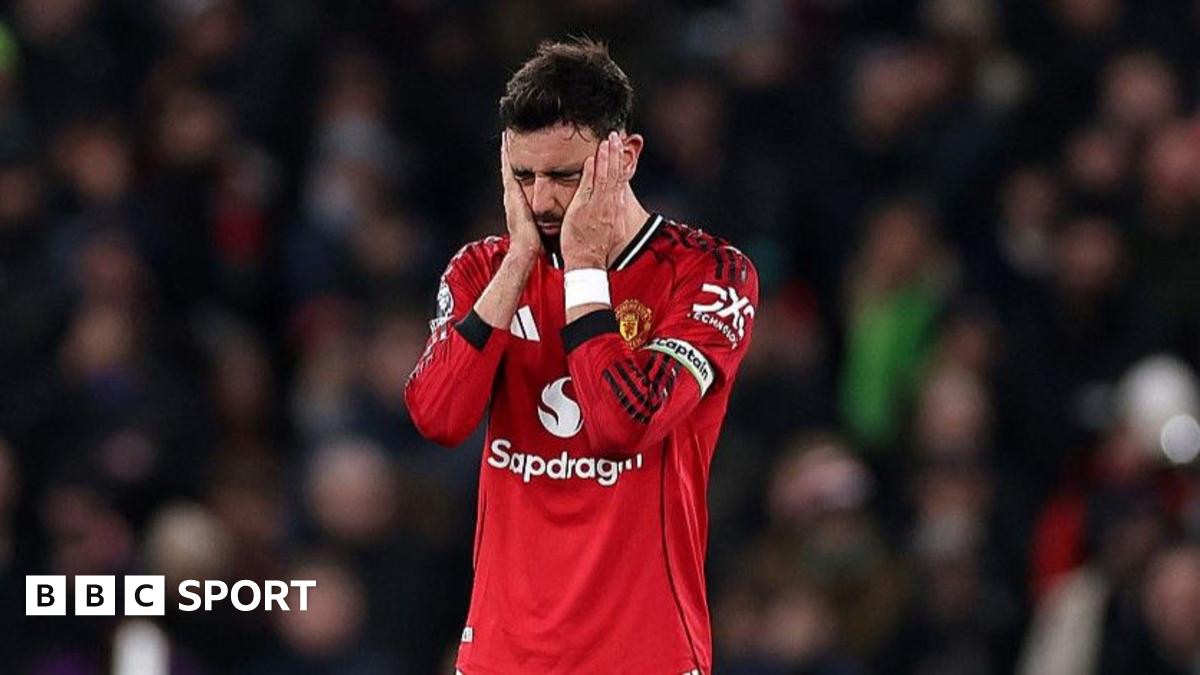
Ruben Amorim was summing up his own feelings in his first answer at the post-match news conference following Manchester United’s 1-1 draw with West Ham on Thursday.
But he could have been talking for the whole United fanbase, including those who booed his team off at Old Trafford.
He certainly was talking for former captain Roy Keane, who used similar terminology to sum up his feelings about the current United side.
“The word everyone will be using is frustration,” Keane told Sky Sports at the end of another game United led with a significant leap up the Premier League looming, only to concede late and end up with a point.
“I wouldn’t trust or believe in this team. There are more goals [in them] but defensively and in midfield there are still huge question marks.”
Amorim sounded unusually agitated as he delivered his words, although he insisted he was calm.
He said there would be no repeat of his tirade after the home defeat by Brighton in January, when he cut his hand and broke a TV in the dressing room.
Instead, he will wait and address the situation at Carrington on Friday, believing it is counter-productive to speak to his players when emotions around a game are still high.
Amorim knew what had gone wrong, though.
He knew why his side had failed to hold the second-half lead given to them by Diogo Dalot.
And he knew why Soungoutou Magassa responded quickest to Noussair Mazraoui’s goal-line clearance from Jarrod Bowen’s flicked header at a corner to score his first goal in English football in the 83rd minute.
West Ham boss Nuno Espirito Santo said it was a “deserved” equaliser for the team third-bottom of the table, with just two points on the road since their only away win, at Nottingham Forest, in August.
“It happened with a long ball,” said Amorim. “They win the second ball against three guys.
“Second balls sometimes are tactical things. We try to adjust with the players we have.
“In the final minutes, the ball was far from the opponent. We cannot let a team that is so much taller than us have a corner.”
The problem for Amorim is that a pattern is developing.
Keane highlighted it, saying: “One minute, you think they are making progress, they could move fifth, but they don’t get the job done. They look frightened to get the job done.”
At Nottingham Forest on 1 November, victory would have taken United second. They were leading and ended up needing an equaliser to draw. A week later, they had the same aim at Tottenham and the outcome was identical, with the equaliser coming in stoppage time.
Immediately after the international break, a Champions League spot was on offer if victory could be achieved against Everton. They lost, at home, against 10 men.
Now this, seven minutes from fifth place. They are back in eighth, in the middle of 11 clubs separated by four points. No-one knows if they are good, average or poor.
The consensus is United have made progress, although from last season’s 15th place, with more than £200m spent, that would not be so hard.
In October, United won three games in a row and Amorim was manager of the month. Now their run is one win in five. The worry is they are going backwards.
Amorim rejects that notion.
“It’s not going backwards,” he said.
“We had some moments. That can happen.
“You were talking about when we had the run and [saying that] we were perfect, when we were not. We are inconsistent.
“If you look at the goal, after 83 minutes there is a long ball and we have everything under control. We must do better.”
United go to bottom club Wolves on Monday. Yet again, they will play the final game of a Premier League match round, and yet again there will be a target to aim for, although which each failure it is getting lower.
They surely will not fail again against the team who have beaten no-one?

