

What happens when your first deal turns into the money pit you were afraid of? For a lot of rookies, that fear alone delays buying a rental property for years. But today’s guest proves that a rough first deal can still launch a successful portfolio!
Welcome back to the Real Estate Rookie podcast! Joshua Settimio went from cleaning beach rentals in high school to working as a real estate agent, and then soon realizing that he wanted to buy the deals he was selling. His catch was that no bank would lend to him so early in his career. Joshua decided not to stop there. He found a house with a termite issue and a tenant who hadn’t paid rent in over a year, and asked the owner for seller financing. The rest was history!
Joshua explains how he got the non-paying tenant out without an attorney, and why the rehab dragged on for about a year. He also shares how a detailed scope of work and an “as-completed” appraisal finally got a bank to say yes, and how he used the property’s equity through a line of credit to buy his next deal!
Your first deal doesn’t have to be perfect. It just has to teach you enough to get to the next one! Joshua’s approach towards real estate shows that not every investor’s journey is linear, but with the right mindset, anyone can build a portfolio!
Ashley:
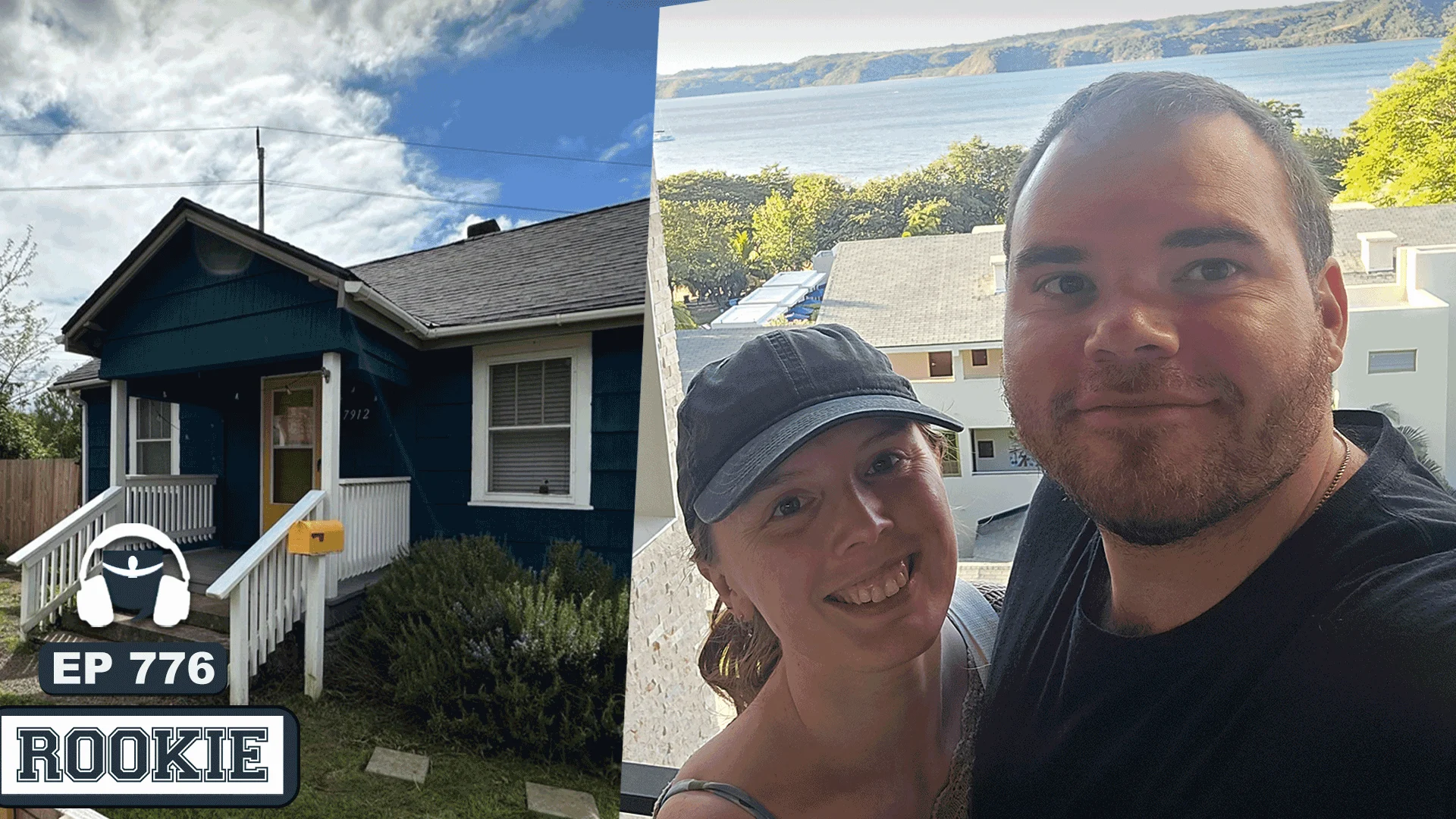
Most rookies are afraid their first purchase will become a money pit. Joshua Satimio bought a $38,000 house with termites, a tenant who had not paid rent in more than a year, and a renovation that quickly exceeded his abilities. Once the tenant left, the house sat vacant for another eight months while Josh and his wife wondered whether they had made a terrible mistake.
Tony:
Now, Josh eventually turned that property into the equity that helped fund his next two purchases. And today, he estimates his portfolio at roughly 70 properties across four partnerships. And we’re breaking down how accessible work in real estate helped him find his first deal, how he used seller financing, and an as completed appraisal after several banks rejected him, and the systems and landlord principles had helped him too.
Ashley:
This is the Real Estate Rookie Podcast. I’m Ashley Kehr.
Tony:
And I’m Tony J. Robinson. And with that, let’s give a big warm welcome to Josh. Josh, thanks for joining us on the podcast today, brother.
Josh:
Absolutely, guys. Thank you for having me. I’m excited to share.
Ashley:
Now, Josh, your first exposure to rental properties came from working at a beach service when you were in high school and college. What did you actually observe about the owner and his lifestyle that made real estate kind of feel different from taking a traditional career path?
Josh:
Yeah, it was probably one of the best jobs a high school student could have in terms of just being around the flow of money and also kind of getting to be paid to work out on the beach. But a lot of the times before we would actually do the beach service set up, there was weekly rentals where people were moving in and out for their vacation. And I worked doing the beach chairs and umbrellas for the owner of the beach rental home son. He actually owned the chairs and umbrella company, but his dad would always just need extra labor. Nobody would show up to do the cleaning on the moments and the days needed. So then he’d reach out to his son and his son would send me to go and clean these rentals hours before families were moving in. And it was just a fun experience because he was really wearing a Columbia shirt and flip-flops and sending me in his work truck that was filled with a brim with white monster energy drinks everywhere and cleaning supplies in the back of his old Chevy 2500.
And I’d just go down the beach at a couple different houses and enter these million dollar homes right on the ocean and Gulf Shores and clean the kitchens, clean the cabinets. I remember several times going up to the HVAC vents with a rag of bleach thinking this might take some years off my life. But from there, just getting a chance to talk with Mr. Young was his name about, “Hey, how’d you do all this?” And he just kind of told me about his journey in rural Alabama of buying properties and then getting lucky and then segueing those into the beach houses that really not just only paid his income, but kind of created his lifestyle of managing these properties, taking care of people and then working from there.
Tony:
I think you’re a much more mature high school kid because I don’t know if I’d trust my son who just graduated from high school to clean any of my vacation rentals and actually do a good job. So you end up moving to Arkansas for college to play some football, which is a dream of a lot of young folks growing up, make it to the big leagues, but you end up getting injured and that moment becomes a bit of a pivot point for you. So just talk us through, Josh, you get to college, injury happens and what comes next for you?
Josh:
Yeah. I think it was a pivot point in my life, but it also was kind of symbiotic and natural to everything that had happened maybe up to that point. Coming from that beach service lifestyle and seeing the margins and flow of money and again, also being rewarded financially for it, it would open my brain in the summers to just what’s out there if you kind of go and get it. And then going and playing football, I’d show up to training camp as an offensive lineman pretty much every year, 40 pounds lighter than I should have been from working on the beach all summer. And so there was kind of a weird relationship with the coaches. And this was a very small liberal arts college, NAIA line college. So there was never any NFL aspirations by any means, but it was still a job. I’d actually kind of learned some translating skills in the real estate game to actually get the scholarship to go up there is I would basically send my highlight tape out along with my unofficial transcript and just go to websites on NAIA schools, division two schools and division three schools, go to their offensive line coaches, their recruiting coordinators and email them, “Hey, this is me.
Here is my information. Please like me.” And I kind of created an artificial market for myself to talk to different schools and then learned early on with the guidance of a lot of mentors through even that beach service and through my parents and through coaches about not every opportunity is a good opportunity. There were schools that spoke about, “Hey, come play ball here.” And then I learned a lot about how scholarships actually work and how they can be partial. And I was able to take the best offer and get a full tuition scholarship to play football at a small school where they don’t really actually have a lot of those to access, but I kind of waited out, had planned on just going to the local junior college because I didn’t really get an opportunity where I wasn’t going to have to pay some money.
And then I guess some other recruits had passed up their opportunity. And then at the end of the signing season, they were like, “Well, hey, we have all this money in our budget. We really want you and here you go.” So I learned negotiation skills and market skills through that process to actually get up to Arkansas that I had never been to. And then going through that process of getting into college, being treated like an adult, I mean, I think everybody kind of has that first, “Oh my goodness, I’m on my own here. I have to make sure I feed myself. I have to just manage myself as a human.” There were just shifts of perspectives and getting the opportunities to learn the way the world worked and dealing with adults for the first time, it was like, “Oh, I’m at some point going to have to make money and support myself.”
Ashley:
So Josh, what did you go to school for? Did you have a plan for a career when you were going to college?
Josh:
Yeah. So I mentioned I had the full tuition scholarship to go to Lyon College. And then I actually went into a program called the Teach Program, which was basically learn how to get your teaching certification, excuse me. And they would pay basically like an unsubsidized or a subsidized grant of 6,500 if you went and taught in a low income area school for a certain amount of years after college. So that was how I ended up paying for housing my first year. Went into the teaching side of things, learned that they are very underpaid for what they do, what they have to go through, shadowed some schools locally. And then when I did get hurt and had the opportunity to look into the community at other opportunities and see where I could maybe make a better career path for myself, I ended up switching that teaching process to getting a psychology degree and a business degree.
Tony:
Josh, you have this interesting backstory of working on the beach and that becoming a big learning block in your life, but then it happens again. There’s a story where you got an internship at a local apartment complex. Can you walk us through that? I’ve never even thought about interning at an apartment complex. How does that happen? What was the goal behind that?
Josh:
Well, it actually started out as just needing a job after I’d gotten hurt and deciding like, “Hey, I’m just sitting around doing the schoolwork and don’t have practices to go to, don’t have just the extra work and preparation and maybe realizing that, hey, it’s getting to be the end of the line of football. Do I want to have a knee surgery here or do I want to look to the next thing?” And there was a teammate of mine, his nickname was Meat, and he had started working for a local contractor doing landscaping, tearing up slabs and things like that. And he had mentioned to me that, “Hey, they’re always looking for folks.” So I was like, “Absolutely, let’s do this. There’s a walking path to a 40 unit complex from the college campus.” And he was like, “Just come on out. Don’t meet anybody. I’ll vouch for you.” And we get paid, I think at that time it was like 10 or $12 an hour, and we are basically going to re-mulch all the flower beds, dig stuff up, and we’re working for the contractor.
I said, “Cool, let’s do it.” And then while we were doing that, the property manager for the complex that worked for a local real estate company, he would just kind of show up out of the blue. I didn’t know who he was in relation to who was paying my checks, but he would come around, walk, and he was a just very sweet guy and a nice person who would engage with me and my teammate and talk to us about school, football, our next step. And then I kind of learned that there were more opportunities. He was talking about all the properties he managed, all the work that they have to get done and just what the next steps would be like from there. And then flash forward to the next year, I though back to that moment. I just kind of picked up the phone and called him and I said, “Well, hey, I have to do this internship for my senior year to graduate.
Can I follow you around, shadow you and maybe help with anything you would need help with?” And he said, “Let me talk to my boss.” He spoke to him, said, “Absolutely.” And I just kind of became a shadow to the property management side of the real estate company.
Tony:
Josh, incredible story, but we just kind of glossed over something. Did you say that your friend’s name was Meat?
Josh:
It was. That was his nickname. He was from Stockton, California, but he was a big man. He was about 6’5″, 340 pounds.
Tony:
Geez, man. I feel like I got to have a more specific nickname. Meat is just too ambiguous. I don’t know, call me ground beef or I don’t know, something, but just meat. I feel like I need a little more distinction.
Ashley:
You know what? You got it, Tony. From now on, welcome to Real Estate Rookie. I’m Ashley and he’s ground beef.
Tony:
That’s a new intro.
Josh:
Absolutely fit him if you know him.
Ashley:
That’s it. I’m already getting t-shirts made right now.
Tony:
The funniest part is I don’t even eat ground beef. I would have to be like ground turkey or something. But Josh, I want to go back to the internship piece. I think it’s so cool.This wasn’t a job posting. You just manufactured this out of thin air. And it’s so interesting because I feel like we see this theme across so many of our guests who manufacture these opportunities that weren’t necessarily there before. And it’s simply because they weren’t afraid to ask the question. And so many of our guest stories hinge on these moments of them just going out on a limb and putting themselves in situations maybe other people would be too uncomfortable to do. When you approached this person, were you nervous in any way? Like man, I don’t even know if this is a thing. Or had you built enough rapport with him already where it just felt like an easy ask?
Josh:
Yeah. I mean, I think I didn’t know him beyond the times he would show up and then later the contractor would call and say we either did good or bad based on probably him reporting back. And I think it was just a great opportunity of not knowing what I didn’t know and not realizing that that was weird to kind of call somebody and basically see if you can add value to them and if they can add value to you. And it became a theme for me and led to a lot of great things. And it’s probably the number one thing I encourage other people to do and have so many quotes and stories about it, I guess I would say.
Ashley:
Now, after you finished up this internship, how did that lead you into real estate? What was the next step?
Josh:
Yeah, it just, again, became the most natural thing for me. I had opportunities to graduate from college and go back to working at the beach service and make a great amount for a 20-year-old for the course of three to four months. But at the same time, I graduated a year early because I took some junior college classes in high school. And my now wife, who I met the very first day of college, she still had another year. She was from Northwest Arkansas, and I was just figuring out how I could stay as close to her as possible. And then along with that, all my friends back home in Pensacola, Florida were telling me about their first apartment, that they were essentially house hacking with my other friends and they were all spending $800 a month each to share a two bedroom house. And I was looking at my market and my rates and saying this is a place that I want to stay.
So after that internship, it coincided with my last semester of college. And throughout that process, I was just at this company who luckily enough was managing the apartment right next to my college and also a block away from Lyon College. And they were also the number one real estate firm in the area. The main brokers, I should say, were people who absolutely should know. If they weren’t already doing it for so many years, they would’ve been influenced by BiggerPockets. They had tens of doors then and then now I think have hundreds of doors. So it was just an environment where I was seeing myself in all the different areas I could just create and add value for them as well as them create and add value for me as mentors and then just people who were creating this, I guess, formation of what I wanted to do.
They were leading the path for me to follow to try to get as many doors as possible. And it was something that very ingrained in me that like, “Oh, I was just going to do this.”
Tony:
There’s something about proximity that I think gives us more confidence in ourselves. There’s so many rookies who are listening who are on this island by themselves. I was talking to another rookie investor yesterday and she’s like, “I feel like I’m on a boat by myself in the middle of the ocean.” And it’s such a normal feeling, but we don’t hear it often. But I love your approach, Josh, because you went the opposite direction where you just surrounded yourself with people who were already five, 10 steps ahead of you. How did being in that space actually lead to your first deal?
Josh:
Yeah. So leaving the internship, I ended up getting my real estate license, started working on that in that senior year to summer and came back in the fall and started on as a real estate agent. I think that would’ve been fall 2019. And I started just trying to add value to as many people as I could in the market as a real estate agent. And also through the internship, I realized that the property management and leasing side of things just needed some modernization and needed some assistance. So I just inserted myself in there and helped try to lease property to people. At that time, I thought there was no difference in the world and mindset between somebody who was going to rent something and buy something. They just didn’t know they could buy anything. And to some degree, that’s still a mindset I have, but I also think there’s a little bit more of a mental hurdle there.
So getting into my first deal was a lot of just trial and error of showing other people properties and listening to what people wanted in their investment goals. And then me building relationships in the community, trying to find deals for them, trying to do everything off market and on market I could to identify what clients were telling me they wanted. And then getting to the point where it was, “Hey, this is what you’ve said you want. Here this deal is.” And then a lot of the times them saying, “Oh no, nevermind. I’m a little scared to that degree.” And then I started working that process to saying, “Okay, well, I want to buy them.” But I quickly realized being six months into a 1099, I would talk to the local banks that my mentors were using and they would always be very gracious with their advice to what they could do or what I should do, but none of them were really willing to take that chance on doing a commercial loan for somebody with that six month job history.
And then of course, I don’t know that DSCR products were as available. I know they’re not available in the market here that we’re in. And it just became about, well, I don’t want to just bring 10 grand to the table that I don’t have, so how do I find a deal and how do I find financing for it?
Ashley:
Now, Josh, what was your solution for that? And I know you ended up finding your first deal kind of through your brokerage in a sense. So maybe start by walking us through how you found the deal and what was your solution to not being able to get financing and bringing a huge down payment to the table?
Josh:
Yeah. As a real estate agent, it was kind of ingrained in me that the right way to do things was to get your financing first. So I had spent a lot of time just trying to build the relationships with bankers and not knowing what I didn’t know still. And many of them would ask a common question that I now realize why they were asking this, but they were like, “Well, do you have a deal in mind that we’re talking about?” And I’d say, “Well, no.” And I guess fast forward to just being in the real estate office and hearing another agent who’s also one of those people I would consider a mentor and a friend who owns a lot of doors, but he was going to be actually listing a property of somebody who hadn’t received rent from their tenant in a year and a half, wasn’t really a conventional landlord and wanted to sell their property, but knew it couldn’t be shown because the tenant that was in there wasn’t going to let anybody in there.
So I basically just had that conversation with my fellow agent or yes, I had that conversation with my coworker and said, “Well, would he own or finance it? Because I don’t know that I can get bank financing, but I know I could probably put my effort and energy into it and figure out a way.” And he was very deal focused and said, “Well, why don’t you go out and look at it? Why don’t you see if it’s something you’re interested in? And at the end of the day, this person hasn’t gotten a dime on this property in a year and a half. I don’t know why you proposing to start paying them monthly on it, putting some money down wouldn’t be an option.” And so I said, “Awesome, let’s do it.” And then I don’t really remember how, but somehow Bobby was able to convince the tenant to let me do a quick little walkthrough of the property.
So I got in, just saw the distress you would imagine in a $38,000 property, but also didn’t know what I didn’t know in terms of seeing what termite damage looked like versus water damage and understanding what that would mean in terms of what could be behind the walls. But I was ready to get after it and just excited that there was an actual opportunity in front of me of somebody that would accept an offer and all of a sudden I would own real estate.
Tony:
Josh, was that quick walkthrough, is that the only time you saw the property before actually purchasing it?
Josh:
Yes.
Tony:
And did you have an inspector or a contractor or anyone walking it with you?
Josh:
I didn’t. At that time, I say I didn’t know what I didn’t know, but I was also trying to become the number one resource for landlords and tenants in our area. And through the property management side, had done just walkthrough after walkthrough and talked to owners and met owners and met other investors on their properties and seen things that they would look at. And I’d sold some properties as a real estate agent and seen the inspectors go around, turn the water on, look underneath, look on the roof. And I had a little bit of a template in my head as to what I would potentially be paying 350 to $500 for. And I was like, “Oh, I’ll just do it myself.”
Tony:
Looking back, would you have done it yourself again? Because you had the experience, right? I’m just curious, for me as a rookie investor, I feel like part of the way that I get confidence going into a deal was that I knew that I had the inspector going through and I knew that I had a contractor going through, but because this whole tenant situation didn’t have that same luxury, but knowing what you now know, would you have or do you feel like it actually worked out in your favor to be able to move quickly without the inspector and the contractors going through?
Josh:
I think, and this still is true on a lot of the deals I do today, is in the situation of distress with the owners, if I had even thrown out, “Hey, I’m getting a home inspection,” they probably would’ve been more off-put by also negotiating a seller financing deal. So I think just the version that existed of making that deal happen, it was something that I would’ve done the same exact way.
Ashley:
Now with this property, what was your plan for the future of it? Was this something when you started investing, was it something you wanted to hold long term? Are you planning on expanding your portfolio at this time as to you want to buy a ton of these different properties? As a rookie investor that just got their first deal, did you have a game plan in mind for the future based off of acquiring your first deal?
Josh:
Yes. I think if you’re asking more about my mindset into how this one was going to lead to the next one, I think that’s where the proximity really helped. I had a main principal broker of the real estate firm I was with was just always multiple steps ahead of me. So I was seeing what headaches he was dealing with and he would be very candid with me. I’d ask him like, “Hey, I’m glad I’m not dealing with your problems. How are you actually dealing with them and staying cool, calm, and collected?” And he would just be very encouraging to say, “Oh, well, you’ll get there someday. Keep building your capacity.” And either he had a saying or he quoted someone else, but I’ve kept it with me. And it was just that he would constantly say for himself and for me that one day you’re going to look back and the problems you have now, the future version of yourself is going to just kind of give a giggle and wish you had those problems then.
And so that was a mentality I just kind of decided to adopt. And then the personal superpower I tried to create within myself was that there’s not going to be anybody better in my market that will operate this deal in a way that honors this $38,000 property and honors this tenant situation. And I’m just going to continue to try to let natural market effects happen. I went into this specific deal with the mindset of like, “Oh, why isn’t this tenant paid in a year and a half?” And obviously this tenant allowed me to walk through and had all the choice words of the world for a previous landlord. And I think the lease was something like $400 a month. And I knew that after putting my money down, my payment was going to be about 390 a month before insurance. But I also knew that if I could get into this and learn things that I also always said buying property is at the very least cheaper than student loans.
So that was going to be my first experience to learn. And so having another candid conversation with the tenant in the process of being under contract, I was like, “Well, would you pay rent again if I agreed to fix things?” “Oh, absolutely. Of course. “And so that was my plan. My plan was I was going to operate it better and slowly improve it and make 500 a month and let it pay for itself while I got in there and approved it. And then once it got a little better, I’d have her pay $600 a month and we would just symbiotically work together to make the property so much better.
Tony:
Josh, there’s this Mike Tyson quote that I love. He’s like,” Everyone’s got to plan until they get punched in the face. “And it sounds like you laid out this really well thought out plan. How did that actually play out once you purchased the property? Did it go that smoothly?
Josh:
It definitely went out the window. Believe it or not, the previous landlord was not the only issue. The tenant just truly was not going to pay rent and was always kind of going to find a reason that the house wasn’t worth it. And very early on, I found myself negotiating that side of things again. And then so I had to learn where empathy ends and boundaries begin. And that process is still a day-to-day learning experience and still an evolving experience. Sometimes what you do in one situation isn’t going to be what you do in the next situation in many ways.
Tony:
Josh, can I ask, I love that. How do you draw that line? Because I think for a lot of investors, both new and Ricky, that they struggle with that, “Hey, I want to be a human. I want to be empathetic, but I also have to realize that I’m running a business.” What did dealing with this tenant teach you about how to actually draw that line?
Josh:
I think it’s. Start over. Dealing with that tenant on how to draw that line, it was very much just deciding when their monkey was trying to be placed into my monkey. Their issue was trying to be word. They were trying to circle the words to find a way that them not having the financial ability to do it meant that I wouldn’t be able to financially improve my situation, which I think the great thing about real estate is it’s a free market. It really is in more ways than one, at least in the residential side. And obviously the math for them having issues translating to me not being able to pay my mortgage was going to be a hard boundary. So at that point it became like, “Hey, here’s the law. If you do not pay this amount of money in three days, then you’ve got to quit and then we’ve got to work the unlawful detainer situation.” And once you threaten something, you actually have to follow through.
And so serving that three-day notice to quit and then following up with a planned 14-day unlawful detainer, which again, each step of the way I had no idea how to actually execute, allowed her to see, okay, I was going to be sticking to my guns. And then she finally peacefully left before I had to come out of pocket with an attorney or. Do anything else like that. And then I’ve just kind of carried that forward in a boundary world where, especially as a property manager, I had to decide, okay, when is this person calling me, but they need to hang up and call the cops? Or when is this person calling me, but they need to hang up and call their mother? And I think that there’s a very empathetic way to approach that, and that’s its own muscle that can definitely get destroyed at scale of having to deal with a lot of that.
And I’ve definitely dealt with that over the last couple years. But at the end of the day, it’s taking what the market gives you and accepting a free market approach and also recognizing that even though this is a business with cap rates and cash flow and valuations, these are still humans that deserve to be treated like humans.
Ashley:
Now, what was the end result of this tenant in this property?
Josh:
Yeah. Once we started that unlawful detainer process and no longer had those conversations about pay and it was get out because this is the process I’m working to get out, then it became just a new conversation where it was, okay, well, I’m getting out. No need to put this eviction on my record. And pretty soon, once I actually started that process, which I, again, just learned I should have started it earlier, they vacated the property. And then when you see a property empty for the first time versus when there’s pictures on the wall and when there’s kitchen tables, you really start to notice what that carpet was covering up or what that tenant was willing to live with that they weren’t telling anybody.
Ashley:
In New York State, if someone has an eviction, legally you can’t not rent to that person because they have an eviction on their record. So it’s very hard to get people to not want an eviction on their record because it doesn’t really do anything because you still have to rent to them if everything else qualifies. But I’m assuming in your state it’s probably different and that’s why the tenant didn’t want it on their record. But during that process, you had said that you wish that you would’ve started it sooner. Did you have to use an attorney or was this all information that you figured out how to do this process on your own?
Josh:
So this was also during peak COVID and I was dealing with a lot of the same problems I was dealing with as an investor. And I was dealing with them as a property manager or seeing the property management staff deal with them and realizing that I guess we were also supposed to be the experts on this already. And the thing about rural Arkansas is it’s actively behind the times, but you hope you just kind of keep getting into the future and slowly but surely. So the unlawful detainer process was something that the local police was unaware of and attorneys were unaware of. They thought if people didn’t pay rent, they’re just going to leave. And I did not have to pay an attorney. I tried, I spoke to about two different ones and just kind of learned that sometimes you can be the best person for.
Sometimes you’re going to care the most in those sort of situations.
Tony:
Josh, once the house was actually vacant, I’m assuming it wasn’t ready for the next person. You had the Senate who just didn’t take the best care of it. Walk us through what that rehab process looked like to get it ready for the next tenant. Did you have a budget in mind? Were you able to stick to that budget? Did you have a scope of work? Did it change materially? Just how did you actually get through the renovation portion of this?
Josh:
I think that was the process that I was just always most eager and excited to do, not because I felt like I had the information, but because I knew that information was available for me. The BiggerPockets forums, YouTube, the BiggerPockets Facebook page was a big resource on just trying to learn standardizations. We talked about the eviction process and I remember there was a flow chart that BiggerPockets put on for a while that the, do you approve this tenant? And no evictions, period, seriously, never. And if they had any on the record, then you don’t rent to them. Well, those were just processes that I started using as resources because we got this property back. The one good thing we did, shout out free termite inspections, is we knew that it was infested previously when we purchased it. We paid something like 15 to $1,800 to get all that termite or to kill all the active termites and to bait it and preventatively care so that there wouldn’t be future termite issues.
But from there, it was something that I had planned on learning how to do flooring myself, learning how to do painting. I painted for a couple high school jobs before, like I’m sure a lot of people have. And then I was going to finance a new HVAC and finance a new roof with some local contractors, which I’ve also since learned is there’s a cost to doing financing. Those bids were probably four grand each higher than what I could have paid if I was willing and able to go to a bank later and just get the cash from the bank and pay directly to a reputable company. But diving into the deal side of things, I noticed walking through it that, hey, these floors are pretty soft. That’s not a good thing. Hoping it was just kind of subfloor damage. But we removed all the subfloor in the house to see that a lot of the floor joists had a lot of issues and that the ground, this was a 1930s, 1940s house, the ground was about 12 inches from the floor joists, which was part of why our renewal contract for the inspection company was going to be about $900 a year on the termite side.
But they had told us basically if we can get it to, I think 18 inches or 24 inches, then they would lower that cost to about $300. So we started diving into it of, “Hey, I’ve taken the floor joists out.” My wife Kayla would bring me some Domino’s pizza at night and then the next day I’d wake up and go to work and then talk to the contractors in my network, talk to the other investors in my network, tell them what I was doing and they’d tell me why what I was doing wasn’t working or what they would do. And then I would talk to the right contractor, meet the contractors out there and just very quickly decide like, “Okay, I don’t want to put these floor joists on because I don’t trust myself, but let me do this prep work and then allow you to do the actual side of things that you really only want to do and let me throw this dirt out the window and get it to 24 inches so that we can save $1,000 in the termite contract.”
Tony:
Josh, like many real estate deals, as you start opening up walls, you start to find more issues. At any point during this process, did you fear that you had made a mistake buying this property?
Josh:
At many points. There were several times over the course of us owning it where I was doing work and it was sacrificing my next day as a real estate agent where that was a time during COVID where our market was seeing a lot of early retirees and I could put as much energy as I wanted out there to try to sell and help as many people as possible sell real estate. I was having to sacrifice my quality and abilities there to do the work on my own property. I was calculating things in my head as I was digging out the dirt, realizing I was losing money in more ways than one. And for that reason, we kind of just sat on the property and figured, “Hey, let’s just ignore this because it’s a problem and we can afford $390 a month in the mortgage payment and let me focus on trying to just make as much money in my day-to-day job as possible while we just try to use our brains and use our network and use our contracts or contacts, excuse me, to figure out how to solve this problem.”
Ashley:
Now, Josh, how long did this rehab actually take and was it within the timeline that you expected?
Josh:
Took about somewhere between eight to 12 months to do the rehab. The structural stuff and the things that just we knew needed to happen to the property with the floor joists and with some of the framing, we basically financed that slowly but surely ourselves through our income sources or through our jobs and let the property sit. We secured it. We made great friends with the neighbors so that they would call in the middle of the night if they thought something weird was happening. And they were just very adamant that we put better neighbors back in there. And probably about 12 months later, after just four hours at a time of me and my wife going out there and putting some elbow grease into it, it was finally in a spot where I felt comfortable reengaging with banks and saying like, “Okay, I actually have a property now.
I have a deal and I think it’s going to be worth something.” At that point, I felt like a cheerleader to this property that I hope nobody ever actually saw. And I would just say, “I have this 2-1 in Batesville, right in the heart of town, walking distance to the chicken plant and right down the road from where all the development’s happening on the historic Oak Street. And it is 1,100 square foot. It’ll rent for 850 after we remodel it, but I mean, it needs some work right now.” And I had those same conversations with pretty much the banks that I had spoke to before, the lenders that I had spoke to before, and only spoke to the ones that were maybe a little bit more gracious. And then finally, the largest local bank in our area had kind of sent me a beginning lender to talk to about the deal.
And he said, “Well, let’s meet about it. Let’s figure all this out.” And at that point, I’d been in the business now for a year and I’d been selling real estate and I’d been helping other folks work with these local lenders. And I think the night before I printed out this huge business plan or I created this huge business plan of this is why this is a great deal still, this is why this is a great property, this is all it needs, water heater, roof, flooring, things like that. And had this business plan meeting in the bank with a new lender. And he was like, “Yeah, man, this is great. No big deal at all. I’ll get this thing done.” And then all of a sudden I was like, “Why is this easy?” And I learned then that basically once you have the deal, once you have the property, you can kind of get financing a little bit easier from there.
And we did something called an as completed appraisal. So I submitted the business plan, which he asked me to refine into basically scopes of work of what I was actually going to be doing. And then at that time I’d still planned on, “Oh, I’m going to be the one putting the floors down, doing the painting.” So I made it really lean. If I had to do it over again and to get moving quicker, I would’ve probably added some funds in there to improve the quality and not have to do as much as the work. But the as completed appraisal on this property came back at like 86,000. At that time, we had been paying down on it. We always do this thing when we buy a property, we round up what the monthly mortgage payment is. So if it’s 490, we’ll pay 500 and then we split that every two weeks.
So it kind of attacks some interest as well. So we owed about 28. We got about $20,000 in repair money to actually put a new roof on it, to put a new HVAC, put a new water heater. And then luckily by not using the finance mere roof companies, we were able to save costs. And then there was a little bit extra for me to sub out some labor and finish the bathroom on it. And I think from the moment we refinanced it and had access to capital for the first time, we had it finished in two months, which was the summer busy season. And we got it rented for 850 a month, asked the appraiser to come back and do his final inspection. He said, “Oh, this thing looks top notch.” And again, in the back of my mind the entire time I’m like, “This isn’t going to work.
This isn’t going to work.” But then all of a sudden the banker reached out and he’s like, “Hey, you’re good. Here’s your new principal and interest payment. Let’s set this up. You owe about 46, $48,000 on the property.” And all of a sudden we had a tenant in there for 850 a month. And this was also the time of six and a quarter commercial rates maybe.
So we had usable equity. He asked me if there was anything I wanted to do with it and we said, “Yes, let’s take out a line of credit.” And then I started deal sourcing again. And there was two properties that were also close to the office that I worked and close to the college that I had been working with some investors from out of state and wanted them to purchase it, but they ultimately decided it operationally needed too much. And they were worried that it just wasn’t going to work out because it kind of sounded too good to be true. It was $45,000 for each house. And I told them I though they could rent for 800 to 750 a month with just improving the rents and fixing the operational issues that the tenants are experiencing. One of them had a lot of roaches in the kitchen that the tenants had been trying to get rid of for a while without the help of their landlord.
And then I was able to basically attack that property personally and use that 20,000 of usable equity to use as a down payment to purchase that.
Tony:
Yeah. Josh, I think the best part of that story is that you went and you spoke to so many different lenders and a lot of them were like, “Oh no, we can’t touch this thing.” And then you go to this last lender and he’s like, “Oh yeah, we can definitely get you. We can solve this today.” And we see that so often where if someone would’ve stopped at lender number one or lender number two or lender number five or lender number 10, and they didn’t talk to that last person, they maybe never would’ve even become real estate investors. But because you kept going, you were able to make that connection. And for every lender that says, “Oh, we can’t do that.” There’s another lender that say, “Oh, we do hose kind of loans all day.” So I just love that you were able to stay persistent enough to find the lender who could actually work with your specific situation.
Josh:
I was just going to add on one of my mentors during this time as well, he had a saying, he was a very big baseball fan and he was like the best players in that sport hit the ball one third of a time, one third of the time. So that’s just another little nugget that was ingrained in me of don’t have to be perfect.
Ashley:
Well, Josh, what’s one thing that’s next for you that you want to do next on your real estate journey?
Josh:
The next thing is here in a few days, my wife and I are going to be purchasing the biggest complex that we’ve ever bought without partners. It’s going to be a 20 unit, about 45 minutes away from here in a little lake town. It’s an old mom and pop motel that they’ve been kind of semi-operating it in a long-term tenant model. We’ve already done the rezoning and we’ve already got the local bank kind of in place for the financing and we are going to take on that for the next 12 months and just figure out where that takes us from there, I guess.
Ashley:
Awesome. Congratulations. That’s really exciting for you. Thank you. Josh, can you let people know where they can reach out to you and find more information and also follow your story about this new 20 unit that you’re about to acquire?
Josh:
Oh goodness. Yeah. As far as putting a lot of information out, I’m kind of always scared to get feedback from just locals that maybe don’t want that development right in their backyard. So I don’t know how much I’ll be posting about it, at least in the initial side of things. But I just kind of got on LinkedIn recently and have enjoyed learning a lot about commercial real estate with that and then Facebook and I don’t think I’m going to hand my phone number out, but I don’t know if my email goes out in here. I definitely answer my email every day.
Ashley:
Well, Josh, thank you so much for joining us today on this episode of Real Estate Rookie. We appreciated you taking the time to share your journey, share your stories and the lessons learned. I’m Ashley. He’s Tony and we’ll see you guys on the next episode.
Help us reach new listeners on iTunes by leaving us a rating and review! It takes just 30 seconds and instructions can be found here. Thanks! We really appreciate it!
Interested in learning more about today’s sponsors or becoming a BiggerPockets partner yourself? Email [email protected].
