

I’m not a Shark Tank viewer. But I was intrigued by something Kevin O’Leary, aka Mr. Wonderful, said in this podcast (via a post by Nick Magiulli).
O’Leary discusses various aspects of his career, including ideal investments and what many entrepreneurs should strive for in their personal accounts. Specifically, he thinks all entrepreneurs should aim for a liquid $5,000,000 Treasury portfolio.
It’s not that this is terrible advice — it is; I get to why below. Rather, it’s that it’s so specific to O’Leary’s personal circumstances. I suspect — and I’m just speculating — that over the course of his investment career, opportunities have come and gone where the liquidity to write a big check wasn’t there at that moment, and that left its mark.
Perhaps he is projecting somewhat; maybe I am, too. How often does the real world interfere with our liquidity at the worst possible time? A down payment for a house, tuition for college, paying for a wedding — there are a million times when anyone who is not a gazillionaire will encounter demands on their capital. But that doesn’t mean any young entrepreneur should be striving to amass a $5M Treasury portfolio.
The reason why has been shaped by the probabilities of startup success and what happens to entrepreneurs over time. My experiences in multiple start-ups — as a founder and an investor — range from Crash & Burn to almost there to very successful.
In each case, there is a family to consider. The simple math is that for any young entrepreneur starting out, trying to build a company – and not knowing what the end result looks like many years down the road – a $5m treasury portfolio is just silly advice.
Why?
Start-up founders and entrepreneurs should pour all their time, effort, and money into their venture. You likely won’t have spare cash for a Treasury portfolio, much less retirement accounts. Once you get past an A and/or maybe a B round, you can start thinking about de-risking. But until then, it is not a radical concept for entrepreneurs to bet everything on the company – most of you are not buying a house, investing in equities, or buying bonds.1
Founders are all in, no hedges.
Land an A-round and a real salary? Great! Start putting some of your newfound cash flow aside as a good savings habit in an all-equity 401(k). It is a hedge against your start-up failing to beat the odds and eventually finding an exit.
~~~
Beyond the long odds that all start-ups and entrepreneurs face, another challenge is that you don’t know how its all gonna end. Every start-up I have been associated with sounded great! Nobody puts time, energy, or money into things they think will fail. One of the risks of entrepreneurship is that you don’t know what the future looks like, including how successful your firm will be. This is true as a founder or an investor.
You might launch a firm that never finds an exit; you might not be flush with sudden wealth. What happens is that eventually, you pivot to a job with a salary, 401K, health care, etc. O’Leary’s advice to sit in bonds for your 20s, 30s, 40s, and 50s is especially terrible because he is anticipating an event that is highly improbable statistically.
What anyone with a little scratch should do is put that money into the stock market over those 30 years, building a substantial pile of capital and, at the very least, a comfortable retirement. Because, realistically, you cannot plan for investment liquidity when you have no idea what your real-life needs will be. Whatever you do with your spare capital must anticipate a range of possible outcomes, not merely the best-case scenario.
On the other hand, if you’ve already had that exit and you’ve been successful, well, then you have a pile of capital and a lot of complications. And that is great. In those circumstances, you have many options. To be blunt, Treasuries are my first choice of fixed-income paper today.
For someone who has had that exit and liquidity event, there is a long list of things to do; generating taxable Treasury Bond income is not one of them.
Instead, that person should be discussing with their advisors and tax team how to minimize their capital gains taxes while creating a regular flow of tax-free income.
July 2026
Momey Market (Schwab SNAXX) 7-Day Yield 3.63%
T-Bills 4.08% Yield
Munis: 3.58% Yield; Tax Equivalent Yield 6.38%
September 2026
Momey Market (Schwab SNAXX) 7-Day Yield 3.68%
T-Bills 4.18%
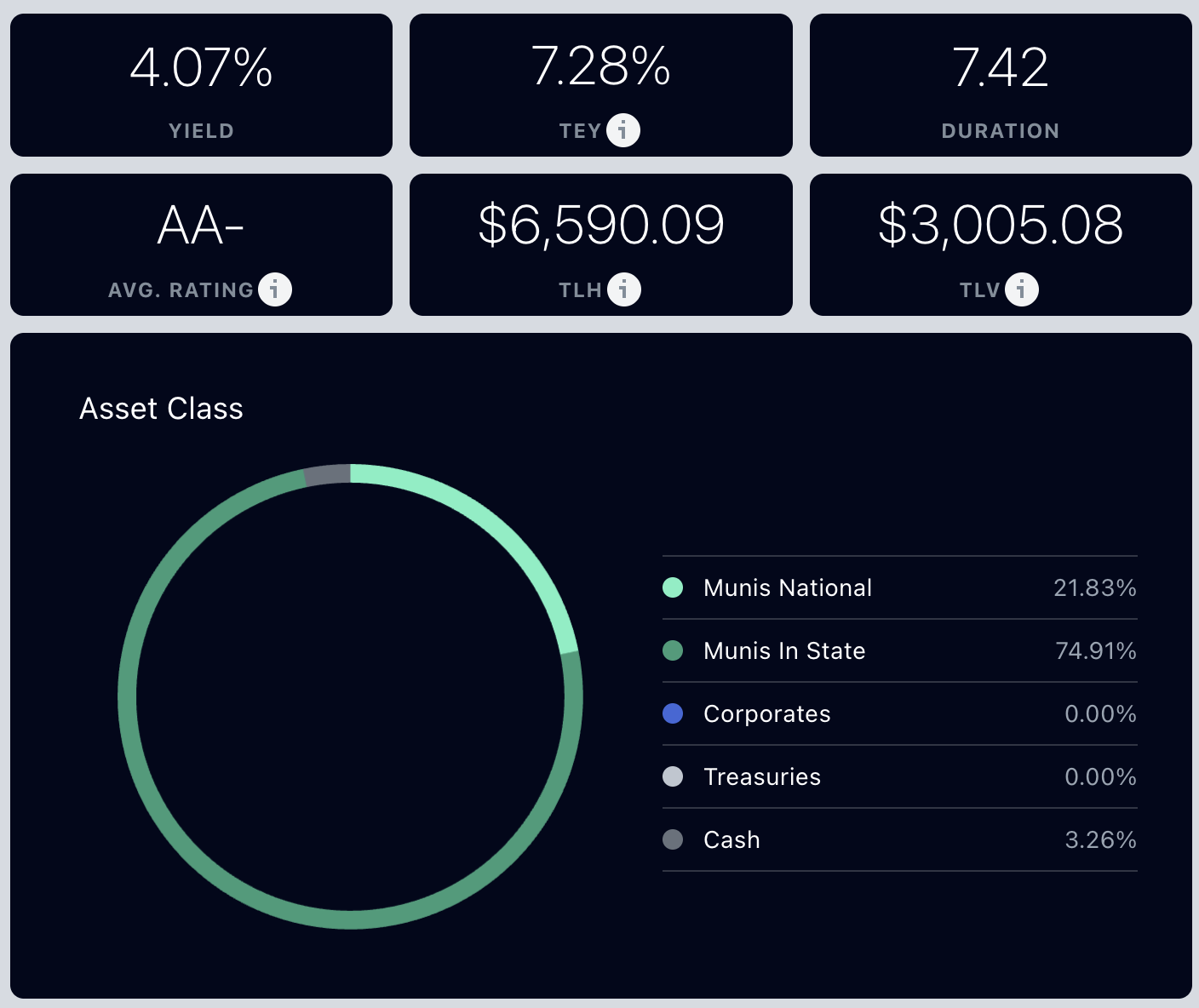
Munis: 4.07% Yield; Tax Equivalent Yield 7.28%
~~~
O’Leary is 72 years old and is worth north of $100 million. For someone at that stage of their career – really anyone in their 50s, 60s, or 70s – who’s accumulated some capital, enjoyed an exit, and knows exactly what their wealth looks like — that person has very different needs than a young entrepreneur. They likely have complicated trusts and/or estate plans, the usual family issues, complexity, ex-spouses and adult children, capital gains, the headache of K1s, and numerous tax & estate concerns.
I believe the best bet for those circumstances is tax-free municipal bonds. I’m a big fan of Canopy, which is Eric Golden’s version of direct indexing for municipal bonds (I’ll discuss that more in the future); you can personalize your Muni SMA to generate a maximum after-tax yield based on your specific income tax bracket and your state and federal tax rates. It also has the benefit of enabling tax-loss harvesting to offset capital gains realized elsewhere.
But Treasuries for a young entrepreneur who doesn’t know what the future holds? Pass. Or someone who has enjoyed a successful exit and is liquid for 9 or 10 figures? Hard pass. There are simply many better options available for the best use of your capital…
See also:
Is $5M in Treasury Bills Enough to Be Set for Life?
Nick Maggiulli
Of Dollars and Data, June 30, 2026
Kevin O’Leary’s Shocking Prediction For The Stock Market, Housing Prices, & 2026 Economy,
The Iced Coffee Hour, March 29, 2026
Previously:
The Evolution of Alpha (April 3, 2026)
NOTE: This is the first in a regular series of posts focusing on the Evolution of Alpha.
__________
1. Unless your significant other has a stable, reliable income…
