

For Labor Day I thought I’d do a celebration of working class songs and stories from the music history podcast Let It Roll, which I created under my given name.
I’ve recently revived the show, which dropped around 300 episodes from 2018 to 2024, by reposting the songs in chronological order by subject matter — they were initially posted in a random jumble based on when I read the books and could book the interviews — called “Let It Roll: From the Beginning…to the End.”
The show lives on Substack and whereever podcasts are streamed. Full episodes are for paying subscribers but the free versions include all but the last 15 minutes.
But let’s get to the labor songs and stories.
First up, the country and folk music icons who sang America through the Dust Bowl and Great Depression.
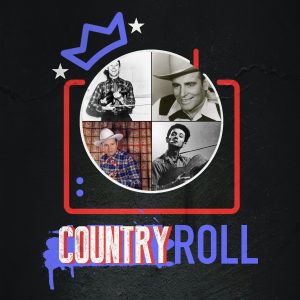
Roy Acuff, Bob Wills, Gene Autry and Woody Guthrie Led Country Music Through the Hard Times
As part of our Country Roll series which reacted to Ken Burns Country Music series on PBS, Chicago blues musician and DJ James Porter and I discussed the hard-scrabble 1930s and the country musicians who provided Americans a soundtrack to survive via live radio, touring and records.
Listen here.
Next up, the architects of the 1930s folk music revival.
Alan Lomax, Pete Seeger, Josh White & Jean Ritchie and the first Folk Revival
Before radio and records, most people had to make their own entertainment by telling stories they’d learned and playing and singing the songs they knew.
In the Romantic era, scholars like the Brothers Grimm and James Francis Child began collecting these stories and lyrics into tomes for preservation and popularization.
In the 1930s scholars and singers like Alan Lomax, Pete Seeger, Josh White & Jean Ritchie followed the lead of Child and took to the hills and nightclubs to record and popularize the songs they found among the folk.
I spoke to author Dave Thompson about his book “An Evolving Tradition: The Child Ballads in Modern Folk and Rock Music” for our Let It Folk series and this episode focused on the 1930s-40s folk revival and the people who led it.
Listen here.
Up next, what happened when that movement broke into the mainstream and smack into the McCarthy era.
The Weavers Brought Folk to the Masses and Made the Blacklist
In the early 1950s, four stalwarts of the left-wing New York “folk music” scene found themselves atop the pop charts and very quickly atop the McCarthy-era blacklists.
Lee Hays, Pete Seeger, Ronnie Gilbert, and Fred Hellerman hoped to bring the folk songs of their friends Leadbelly and Woody Guthrie to a mass audience when they signed to Decca Records and went into the studio with smooth producer Gordon Jenkins.
Their popular appeal was undeniable and so was the hate they inspired from the American right — then at its post-war paranoid zenith. Caught up in anti-communist witch hunts, the group went underground for nearly a decade before their triumphant late 50’s Carnegie Hall show.
I spoke to their biographer Jesse Jarnow about the Weavers in 2019. Listen here.
Next let’s hear what happened after the Dust Bowl chased the Okies to California and the hillbillies came down from the hills and conquered Nashville.
The Bakersfield Sound Brought Working Anthems to the Radio
The children of the Okies who’d survived The Grapes of Wrath came roaring back into the national consciousness via the electrified Bakersfield Sound and its leaders Buck Owens and Merle Haggard.
They went toe-to-toe with the Nashville establishment — itself being integrated by Charley Pride and bringing the proto-feminist anthems of Loretta Lynn — and influenced everyone from the Beatles to the Byrds and Gram Parsons.
Merle Haggard took a hard-right turn in the late ’60s via “Okie From Muskogee” and “The Fighting Side of Me” that pre-figured the GOP co-optation of the white working class that culminated in the MAGA movement and the election of Trump.
Trump’s re-election, of course came when many of the Black & Hispanic working class followed their lead into MAGA-land. Now it’s biting us all in the ass. But back to the music.
James Porter and I continued our CountryRoll mini-series’ look at Ken Burns’ Country Music documentary with a look at the turbulent 1960s in country music.
Listen here.
Up next, we’ve got the story of the Tejanos and their music.
Chula Fronteras Documented Tejano Legends Like Lydia Mendoza, Narciso Martínez and Flaco Jiménez
Working class America doesn’t get more auténtico/auténtica/auténticx than Tejano, the music of the Texicans. Les Blank told their story in his classic 1976 film Chula Fronteras.
Then South by Southwest CTO Justin Bankston and I discussed the film and the music that inspired it as part of our We Love Rock Docs mini-series in 2022. Listen here.
Next, London’s working class made themselves heard across the Atlantic in the 1960s.
The Kinks’ Class-Consciousness Made Them Wary of the Promises of Swinging London
Swinging London was driven by working class talent, but most of those who broke through to stardom like the Beatles and actor Michael Caine rarely bit the hand that fed too hard, the Kinks couldn’t help themselves.
The Davies brothers and co. initially took the rock world by storm with distorted guitar anthems like “You Really Got Me” but after conflicts with the American Federation of Musicians (Ray allegedly refused to sign his member’s agreement throughout their 1965 tour and finally decked a loud-mouthed, crew-cutted union rep backstage at the Hollywood Bowl at tour’s end) found themselves exiled home to England.
Their music took a biting turn, mocking both the British establishment first and then the music scene itself via socially conscious songs like “A Well Respected Man”, “Dedicated Follower of Fashion” before Ray settled down into celebrating the British working class which had spawned him — always with a wink and a bit of tongue in cheek, and his fangs were never all that well hidden.
In 2021 I spoke to Mark Doyle – author of “The Kinks: Songs of the Semi-Detached” about Ray Davies, his brother Dave, and the band they formed in Muswell Hill. Listen here.
Up next the rise and fall of the Detroit radicals who coulda woulda shoulda been the Great American Hard Rock Band.
The MC5’s Combination of Hard Rock and Radical Politics Was Too Volatile to Last
They may have invented hard rock, heavy metal, and punk rock all at the same time. They definitely ruled over the incredibly competitive Detroit scene that spawned Iggy and the Stooges, Alice Cooper, Grand Funk Railroad, and Ted Nugent.
But coming under the sway of local radical leader John Sinclar led these angry young men — all sons of Detroit autoworkers — too far to the left for the American record business and law enforcement to leave alone.
They were the only band that actually showed up and played at the 1968 Democratic National Convention in Chicago — breaking down their gear and bailing only minutes before Mayor Daley’s police force stormed the park.
Their commitment to “rock’n’roll, dope, and (family blogging) in the streets” got them dropped by Elektra Records and attacked both from the left and right when they toured hipster capitals on both coasts, but their impact lingers on.
In 2022, Justin Bankston and I discussed their epic and tragic tale based on the unreleased documentary MC5: A True Testimonial.
Listen here.
Next, what happened when freeways bifurcated the Bronx.
Hip-Hop Is Born In The Bronx
When America isolated and abandoned the ghettos that redlining policies forced minority groups into, landlords burned tenements in a frenzy of mass arson, the Deep State flooded the zone with cocaine & heroin and the young Black and Latinos trapped there created a world-transforming genre of music with the only tools at their disposal — turntables and records.
I did a whole series with my pals Alexei Auld and Eugene S. Robinson to discussing Netflix’ Hip-Hop Evolution.
This episode covers “The Foundation.” The conversation covers DJ Kool Herc, Afrika Bambaataa and Grandmaster Flash. Listen here.
Next, a working-class anthem and the story of the man who took it to number one on the pop charts and more than paid the price.
Johnny Paycheck Told America “Take This Job and Shove It” and Our Response Was to Make Him Rich
Johnny Paycheck was a veteran Nashville musician with a classic hardcore country body of work behind him when he cut David Allen Coe’s working class anthem “Take This Job and Shove It.”
The success of that song made Paycheck a millionaire and according to legend he spent all of that money on cocaine.
Mike Judge of Beavis and Butthead, Office Space and Silicon Valley fame did an animated music history series for Cinemax in the late 2010s called “Tales From the Tour Bus” and Johnny Paycheck featured on the first episode.
Produced and directed by Jeff Feuerzeig, best known for his classic doc The Devil and Daniel Johnston, the episode is hilarious, informative, and strangely poignant.
It’s no longer available for streaming (even if you “purchased” a copy) but there’s a Reddit thread with lots of links if you’re curious to see it.
Justin Bankston and I discussed Johnny Paycheck and Judge/Feuerzeig treatment of his story on Let It Roll. Listen here.
Next, what happened when Punk failed to make the charts in the late 1970s and its hardest-core fans refused to let that matter.
Hardcore punk was a nightmare for 80s corporate America
Between 1980 and 1986, hardcore punk bands built their own labels, their own venues, their own fanzines, and their own touring circuit, entirely outside a music business that wanted nothing to do with it.
I spoke to Steven Blush – author of “American Hardcore: A Tribal History” and maker of the 2006 documentary of the same name – in 2021 and talked about the scene I came along just too late to participate in.
Listen here.
Let’s wrap with the working class musical revolution that happened when Black (and often gay) Chicago teens got hold of samplers and drum machines.
Frankie Knuckles, Ron Hardy and the Birth of House Music in Chicago
Frankie Knuckles left a good-paying DJ gig at a gay bathhouse in Detroit for a steady gig in Chicago at a club called the Warehouse, bringing the Disco of New York City with him.
Soon he and his local rival Ron Hardy had created a whole new genre called House Music that would inspire a global dance revolution initially led by working class Black kids from Chicago and their more middle-class brethren in Detroit.
Veteran DJ Ryan Harkness and I discussed “Last Night A DJ Saved My Life – The History of the Disc Jockey” by Bill Brewster and Frank Broughton in the first part of our epic TechnoRoll series on DJ-based music forms.
Listen here.
Thanks to Yves for indulging my shameless self-promotion. I hope the songs and stories lighten your Labor Day load. And for you non-Americans, Happy (late) May Day!
